

If you’ve been dreaming of owning raw land in Hawaii — a place to build your own retreat, start a small farm, or simply hold as a long-term investment — Molokai deserves your full attention. Known as The Most Hawaiian Island, Molokai has steadfastly resisted the overdevelopment that transformed Maui and Oahu, which makes its land both rare and meaningful to own.
This guide is written for American buyers — whether you’re based in California, Texas, New York, or anywhere else in the lower 48 — who want honest, current information rather than marketing fluff. We’ll walk you through the actual state of the Molokai land market as of early 2026, break down the regions and parcel types, explain Hawaii’s unique zoning rules, and give you the actionable steps to buy with confidence.
40Active land listings island-wide (Dec 2025)
$140KMedian land sale price, Dec 2025
20 moMonths of inventory — a buyer’s market
Why Buy Land on Molokai?
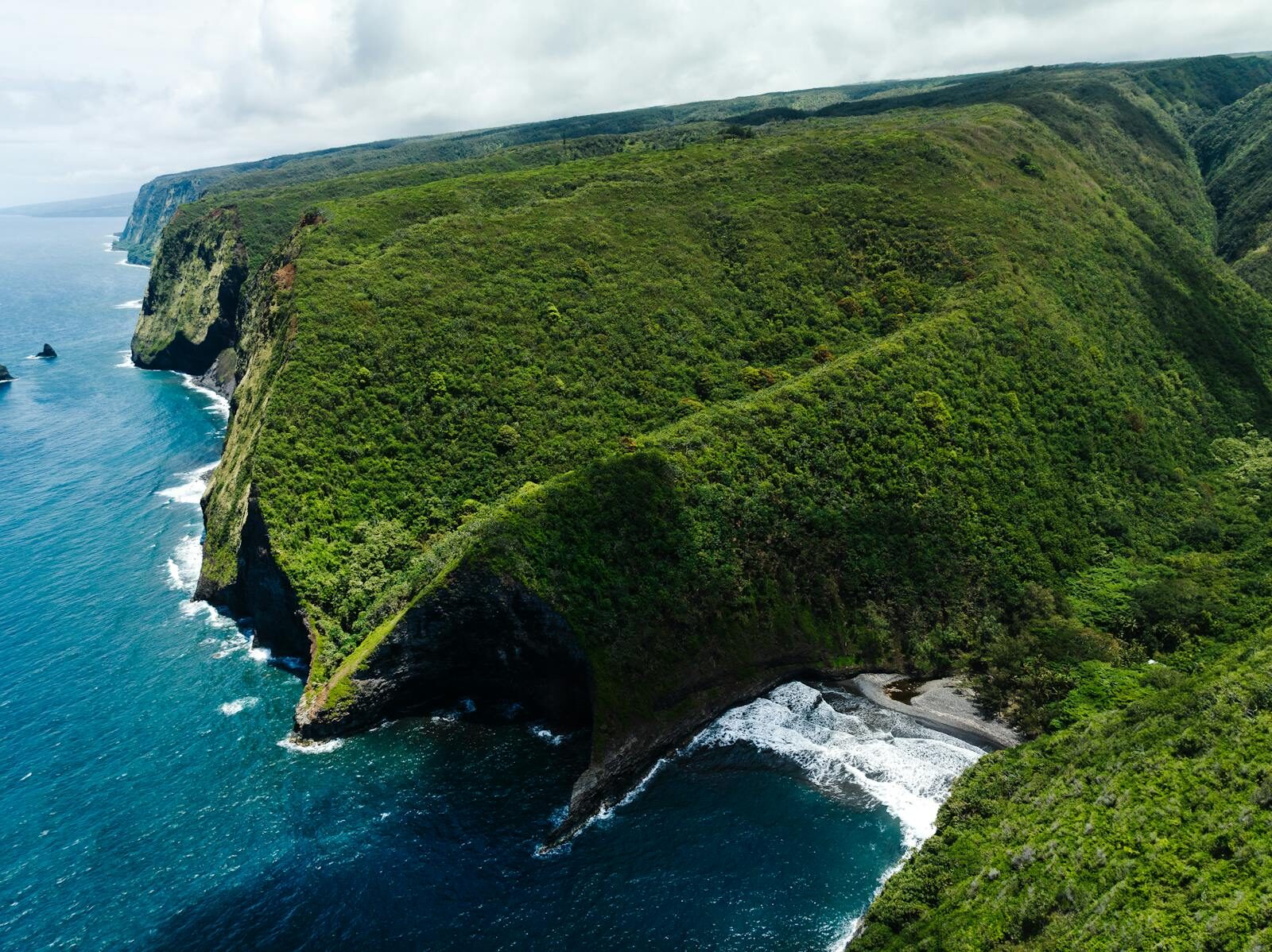
Molokai sits between Maui and Oahu, spans just 38 miles long and 10 miles wide, and is home to around 7,500 residents — most of Native Hawaiian descent. It has no traffic lights. No major resorts. No fast-food chains. What it does have is extraordinary: the world’s highest sea cliffs along its northern coast (rising 3,600–3,900 feet), the longest continuous fringing reef in the United States stretching 28 miles along the south shore, and miles of untouched white-sand beach on the west end, including the legendary Papohaku Beach.
For land buyers specifically, Molokai offers something increasingly hard to find in Hawaii — relatively affordable entry points compared to Maui or Kauai, a genuine sense of space, and a community culture that values stewardship of the land. If you’re interested in sustainable living, small-scale agriculture, or simply building a private retreat far from the mainland’s noise, this island has a compelling case.
🌺 Local context
In 2007, a global panel of 522 sustainable tourism experts ranked Molokai 10th among 111 inhabited islands worldwide, citing its pristine landscape, environmental stewardship, and deep Hawaiian cultural traditions. The neighboring islands ranked far lower: Maui at 81st, Oahu at 104th. That ranking reflects a philosophy the island’s residents actively protect — and one that shapes what’s possible to build there.
2026 Market Snapshot: What the Data Shows
The Molokai land market entering 2026 is firmly a buyer’s market. Here’s what the most current data tells us:
Vacant land posted two sales in December 2025, an improvement over the prior year but still modest. Inventory closed December at 40 active land listings, down from 47 a year earlier — meaning supply is gradually tightening even as it remains elevated. The median and average sold price for December came in at $140,000, pulled somewhat lower by the specific parcels that traded hands, but the full-year picture shows both median and average land prices finishing higher than 2024, pointing to continued long-term interest even as buyers remain careful and deliberate.
With 20 months of inventory on the market, buyers are not under pressure. Properties sit for a long time — the average days on market across all Molokai property types is around 261 days. That’s not a sign of weakness; it’s a reflection of the island’s small, slow-moving market where the right buyer for a specific parcel simply takes time to materialize.
“Molokai remains a functioning market, but not a rushed one. Buyers have options and time.” — Hawaii Life Real Estate, January 2026
For buyers, this dynamic is a genuine advantage. You have time to do thorough due diligence, negotiate from a position of knowledge, and avoid the bidding wars that characterized Hawaii land markets in 2021–2022.
Key Regions and Lot Types
Molokai isn’t uniform. Each part of the island has a distinct character, climate, and set of land-use possibilities. Understanding the geography before you shop is essential.
West End (Maunaloa / Kaluakoi)Most land listings
Drier, sunnier climate. Home to Papohaku Beach and sweeping ocean views toward Oahu. Popular for estate-style lots. Kawela Plantation II is an established neighborhood here. Strong sunset exposure makes this the most visually spectacular area for residential builds.
Central (Kaunakakai area)Closest to town
The commercial hub of the island. Land parcels near Kaunakakai town offer the best access to shopping, the harbor, and services. Agricultural lots in the Kawela area (2+ acres with hillside views) are popular here. Convenient for daily island life.
East End (Halawa Valley corridor)Most lush & private
Dramatically wetter and more tropical than the west. Beachfront parcels are extraordinarily rare and expensive. If you want dense native forest, fishpond views, and seclusion, the east end is unmatched — but infrastructure is minimal and access is real.
Upcountry (Kalae / Kualapu’u)Cooler climate
Higher elevation brings cooler temperatures and a quieter pace, perfect for off-grid retreats or small farms. Half-acre to 1-acre lots in Kalae offer gentle terrain and a cul-de-sac feel — unusual on Molokai. Fiber optic internet is accessible in some areas.
Pricing Ranges by Location and Lot Size
Molokai land pricing in 2026 spans a wide range depending on location, lot size, ocean views, and whether utilities (water meter, electric, road access) are already in place. Here’s a realistic breakdown based on current MLS listings and recent sold data:
| Parcel Type / Location | Typical Price Range | Notes |
|---|---|---|
| Small village lot (Maunaloa, Kaunakakai) | $30,000 – $120,000 | Road access, may need utility hookups |
| Agricultural lot, 2–5 acres (West End) | $150,000 – $350,000 | Ocean views common; some with water meters installed |
| Ag lot, 5–10 acres with views (West End) | $350,000 – $600,000 | Estate-scale; buildable with permit |
| Upcountry half-acre (Kalae) | $80,000 – $160,000 | Cooler temps, fiber optic available in some areas |
| Beachfront / coastal (East End) | $500,000 – $2M+ | Extremely rare; subject to SMA and coastal rules |
| Large acreage (10+ acres) | $400,000 – $1.5M+ | Varies widely by ag designation and water rights |
⚠ Price isn’t everything
A $140,000 lot with no water meter, no road access, and no approved septic plan can easily cost $100,000+ more to make buildable. Always factor total cost-to-use into your budget. The gap between raw land price and ready-to-build often represents six figures in Hawaii.
Zoning and Land Classification: What You Must Know
Hawaii was the first U.S. state to adopt a comprehensive statewide land use system, passing its Land Use Law all the way back in 1961. Every single parcel in Hawaii — including on Molokai — falls into one of four state-level classifications: Urban, Rural, Agricultural, or Conservation. This classification overrides county zoning, which means even if Maui County permits something at the local level, the state district classification can trump it.
For Molokai land buyers, this has enormous practical implications:
Agricultural (AG) land — the most common type
The vast majority of vacant land for sale on Molokai is classified as Agricultural. Under Maui County rules, agricultural lots must be at least 2 acres. You can build a primary residence on AG land, but it typically requires demonstrating an agricultural use for the property — a bona fide farm operation, livestock, or crop production. Using an AG-designated parcel purely as a residence can trigger enforcement. Many buyers work with local planners or real estate attorneys to structure their use of AG land appropriately from day one.
Another key point: AG land generally cannot be subdivided into parcels smaller than 2 acres, and many larger AG lots have already exhausted their subdivision allocations. Always check a property’s preliminary title report and subdivision history before assuming you can split a parcel later.
Conservation land — off limits for typical buyers
Conservation-classified land has the heaviest restrictions and typically cannot be developed at all. Molokai’s stunning northeast coast, including the Kalaupapa peninsula and the Nature Conservancy’s Kamakou and Pelekunu valley preserves, falls under conservation protection. These lands rarely appear for sale, and when they do, permitted uses are extremely narrow.
Special Management Area (SMA)
Coastal parcels on Molokai may fall within the Special Management Area under Hawaii’s Coastal Zone Management Program. Any development within the SMA requires a special permit from Maui County — a process that adds time and cost. If a parcel is anywhere near the ocean, confirm its SMA status before making an offer.
💡 Pro tip: check both MLS systems
Molokai falls under Maui County, which uses the Maui MLS — but many Molokai agents have recently shifted to the Oahu-based HiCentral MLS system. To see all available listings, you or your agent need access to both. This is a quirk of Molokai’s market that catches many buyers off guard.
The Buying Process: Hawaii vs. the Mainland
Buying land in Hawaii follows a structured process that’s similar in broad strokes to other U.S. states, but with some important Hawaii-specific wrinkles:
- Escrow is central. Hawaii uses escrow companies to coordinate title checks, document recording, and fund disbursement. Unlike some mainland states where attorneys handle closings, Hawaii escrow companies manage the transaction from accepted offer to recording.
- HARPTA withholding. Hawaii imposes a 7.25% withholding requirement on the gross sale price when a non-Hawaii resident seller sells real property. As a buyer, you don’t pay this — but you need to understand it if you ever sell. The equivalent federal law is FIRPTA.
- Fee simple vs. leasehold. Most Molokai land for sale is fee simple (you own the land outright), but always verify. Some older condo listings on the island are leasehold — the distinction matters enormously for financing and long-term value.
- Due diligence period. After offer acceptance, you’ll enter a due diligence phase to conduct inspections, surveys, and title review. Given Molokai’s unique factors — agricultural zoning, water availability, cesspool regulations, coastal rules — this phase demands more thoroughness than a typical mainland purchase.
Due Diligence Checklist for Molokai Land
Before committing to any land purchase on Molokai, work through each of these items. This checklist reflects the specific conditions of this market and is more detailed than what you’d need on the mainland:
- Verify state land use district (Urban / Rural / Agricultural / Conservation) via Hawaii’s State GIS Geoportal
- Confirm Maui County zoning and permitted uses — these layer on top of the state classification
- Check if parcel is in the Special Management Area (SMA) — critical for coastal lots
- Verify water source: county water meter, catchment system, or well — and check monthly water rate
- Confirm electric service availability and distance to nearest utility connection
- Investigate road access: is the driveway easement recorded? Is the access road publicly maintained?
- Check cesspool/septic status — Hawaii mandates cesspool upgrades by 2050; understand your obligations
- Review tsunami evacuation zone maps (NOAA) for any coastal or low-elevation parcels
- Check FEMA flood zone designation using Hawaii’s Flood Hazard Assessment Tool
- Review subdivision history for any AG lot to confirm remaining subdivision allocations
- Confirm whether the parcel is enrolled in the State Land Trust or subject to any conservation easement
- For any lot with approved plans (some sellers provide these), verify that permits are still valid
Expert Tips for U.S. Mainland Buyers
Buyers from the continental United States frequently make the same mistakes when approaching Hawaii land purchases. Here’s what to know going in:
Work with an agent who actually lives on Molokai
The island’s market is tiny and deeply local. A Maui-based agent who occasionally lists Molokai land simply doesn’t have the relationship network or day-to-day knowledge that a resident agent has. Firms like Molokai Realty LLC, Hawaii Life’s Molokai advisors, and a handful of other local specialists are far better positioned to give you genuine insight on a specific parcel. Ask your agent when they last visited the land you’re considering — in person, on foot.
Don’t assume infrastructure exists
On the mainland, it’s easy to assume that a platted lot comes with water and electricity ready to connect. On Molokai, never assume. Some parcels on the West End have water meters already installed and fiber optic at the road — a meaningful value-add that the listing will highlight. Others require you to drill a well, install a catchment system, or pay significant line extension fees. Get specifics in writing.
Understand the AG dwelling permit requirement
If you’re buying agricultural land and want to build a home, Maui County will generally require you to demonstrate that you’re conducting a bona fide agricultural operation. This doesn’t mean you need to become a full-time farmer, but you should have a legitimate agricultural use plan — even a modest kitchen garden or small orchard can qualify — and you should document it properly. Work with a local land use attorney on this before you build, not after.
Factor in the Maui County Bill 9 situation
If you’re considering purchasing any condo on Molokai alongside or instead of vacant land, be aware that Maui County Council Bill 9 restricts short-term vacation rentals in apartment-zoned buildings. While only two of Molokai’s five condominium complexes are directly affected, the uncertainty has created hesitation across the broader market. For land buyers, this mainly matters if you’re comparing raw land to a condo as an investment — the regulatory environment for vacation rentals is in flux.
📋 For context: foreign buyers
If you’re a non-U.S. citizen looking to buy Molokai land, the process is open — foreign nationals can legally purchase property in Hawaii. However, the federal FIRPTA law requires a 15% withholding on the sale price when you eventually sell. Hawaii’s HARPTA adds a 7.25% state withholding on top. Work with a Hawaii-licensed tax professional familiar with international buyers well before closing.
Think long-term: Molokai doesn’t flip
If you’re expecting a quick return on a Molokai land investment, readjust your timeline. This is a market where properties average 261 days on the market and buyers hold for the long term. The people who do well here are those who either build and use the land themselves, or who buy with a 10–20 year horizon and an appreciation for what makes the island irreplaceable. That’s actually what makes Molokai land compelling — it’s a real asset tied to a genuinely rare place, not a commodity.
For deeper guidance on Hawaii’s land classification rules and what to verify before buying, the legal resource LegalClarity’s Hawaii land buying guide is one of the most thorough publicly available references for U.S. buyers navigating state and county layers.
Frequently Asked Questions
Can I buy land on Molokai as an out-of-state U.S. resident?
Absolutely. There are no residency requirements to purchase land in Hawaii. Non-resident U.S. citizens buy Molokai property regularly. The main considerations are financing (many lenders treat Hawaii as a specialty market) and HARPTA withholding when you eventually sell — which, as the buyer, you don’t pay, but it affects your sale proceeds later.
Is there land for sale under $100,000 on Molokai?
Yes, though options are limited and tend to be small village lots in Maunaloa or Kaunakakai town without views or direct ocean access. The median land sale in December 2025 was $140,000, so sub-$100K parcels exist but require more diligence around infrastructure and usability.
Can I build a home on agricultural land in Molokai?
Yes, with the right permit. Maui County allows a residential dwelling on AG-zoned land, but typically requires the owner to conduct a bona fide agricultural operation on the property. The minimum AG lot size in Maui County is 2 acres. Work with a local land use attorney or experienced Molokai real estate agent to structure your purchase and permit applications correctly.
How long does a typical land transaction take to close on Molokai?
Once an offer is accepted, the escrow and due diligence process typically takes 30–60 days, similar to other Hawaii markets. However, finding the right parcel can take much longer given the limited inventory and slow-moving market. Budget 3–12 months for the full search-to-close cycle if you’re buying from the mainland.
Are there any restrictions on what I can build?
Yes, multiple layers. State land use district, Maui County zoning, SMA rules (for coastal parcels), flood zone regulations, and any HOA covenants all potentially apply. Some parcels in Kawela Plantation II, for instance, come with specific architectural guidelines. Always review the CC&Rs (Covenants, Conditions & Restrictions) before making an offer on any lot in a planned subdivision.
Is Molokai land a good investment?
That depends entirely on your investment horizon and goals. For long-term holders with a genuine connection to Hawaii and an appreciation for Molokai’s protected character, land here has historically maintained value well. It is not a short-term flip market. The island’s strict controls on development are precisely what protect land values over time — but they also limit how quickly you can monetize raw land. Think of it as owning a piece of something increasingly rare, not a quick-turn asset.