

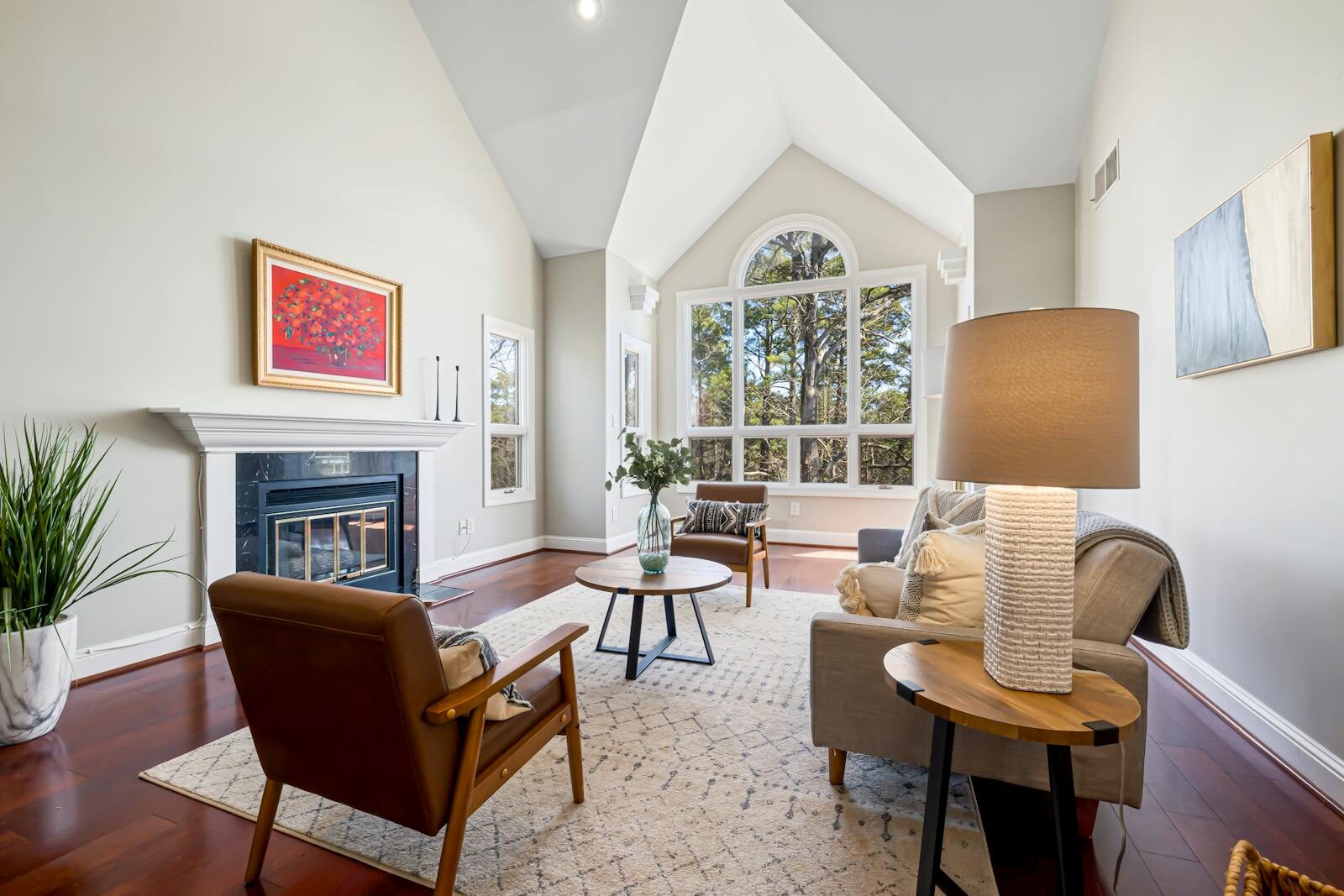
If you’ve ever walked into a completely empty house and tried to picture yourself living there, you know how hard it is. Blank walls, hollow echoes, and rooms that seem oddly small without furniture — vacant homes can be tough for buyers to connect with emotionally. That’s exactly why vacant home staging has become one of the most powerful tools in a real estate agent’s playbook.
As of early 2026, the U.S. housing market remains highly competitive in many regions. Buyers are more discerning than ever, and the majority of home searches start online, where photos make or break a listing’s first impression. If your property sits empty, you’re likely leaving serious money on the table.
In this article, we’ll break down the real, tangible benefits of staging a vacant home — backed by industry data and grounded in what’s actually working for sellers across the country right now.
What Is Vacant Home Staging?
Vacant home staging is the process of furnishing and decorating an empty property before listing it for sale. Unlike occupied home staging — where a stager works around the current owner’s belongings — vacant staging starts from scratch. Professional stagers bring in furniture, art, rugs, lighting, and décor to transform bare rooms into warm, inviting spaces that help buyers visualize living there.
It’s not interior design for the sake of personal taste. It’s strategic presentation designed to appeal to the broadest possible buyer pool and maximize the perceived value of the home.
1. Vacant Homes Sell Faster
One of the most consistent findings in the staging industry is that staged homes — including vacant ones — spend significantly less time on the market.
According to the National Association of Realtors (NAR), staged homes typically sell faster than their unstaged counterparts. In a 2025 NAR profile of home staging, a majority of sellers’ agents reported that staging reduced the amount of time a home spent on the market. You can explore the full NAR staging research here.
When a home sits empty for weeks, buyers begin to wonder if something is wrong with it. Days on market is visible data on most MLS and consumer platforms — the longer it sits, the more negotiating power shifts to the buyer. Staging helps avoid that trap entirely by creating urgency and emotional appeal right from the first showing.
2. Buyers Struggle to Visualize Empty Spaces — Staging Solves That
This is the single biggest challenge with vacant listings. Most buyers simply cannot visualize scale, flow, or function in an empty room. A living room with no furniture looks either too small or oddly cavernous. A dining area without a table offers no sense of how daily life would actually feel in the space.
Staging removes that mental barrier. When a buyer walks into a thoughtfully furnished room, the work is done for them. They see a sectional that fits perfectly, a dining table that seats six comfortably, and a bedroom that feels restful and spacious. Suddenly, the house feels like a home — and that emotional response is what drives offers.
This is especially important in markets like Dallas, TX, Phoenix, AZ, Charlotte, NC, and Nashville, TN, where new construction inventory competes heavily with resale homes. If your resale property feels cold and uninviting, it simply won’t compete.
3. Professional Staging Increases Perceived Value and Sale Price
There’s a reason top-producing agents almost universally recommend staging: it works financially.
Industry data consistently shows that staged homes sell for more than unstaged ones. The return on investment from staging can be significant — often outpacing the cost of staging by a wide margin. For a home listed at $450,000, even a 1–2% increase in sale price translates to $4,500–$9,000 in additional proceeds for the seller.
Staging signals to buyers (and appraisers) that the home has been well cared for and is move-in ready. Buyers are less likely to request concessions or lowball their initial offer on a home that looks pristine and professionally presented.
Pro Tip for USA Sellers: In high-cost markets like San Francisco, CA, Boston, MA, Seattle, WA, and New York metro areas, even modest staging investments can yield outsized returns given the high price-per-square-foot in those markets.
4. Listing Photos Look Dramatically Better
In 2026, your online listing photos are your first showing. Full stop.
Studies show that over 95% of home buyers use the internet during their home search. Buyers scroll through dozens of listings in minutes, and they stop for the ones that catch their eye. An empty room photographed by even the best real estate photographer produces flat, uninspiring images. A staged room? That’s a hero shot.
Professional staging combined with professional photography creates listing images that stand out in feed-based search interfaces like Zillow, Realtor.com, and Redfin. Better photos generate more clicks. More clicks generate more showings. More showings generate more offers.
If your listing goes live with vacant photos, you’ve already lost some of your audience before they’ve ever stepped through the door.
5. Staging Highlights the Home’s Best Features
Every home has selling points — a great fireplace, high ceilings, beautiful hardwood floors, a stunning view. In a vacant home, those features can easily get lost. There’s nothing to draw the eye, nothing to create scale or contrast, and nothing to make the architecture feel intentional.
Staging is strategic by design. A skilled stager places a low-profile sofa to emphasize tall ceilings. They use a statement rug to anchor a wide-open living space. They position a chair and lamp to draw attention to a cozy window alcove. Each placement serves a purpose — to make the buyer feel the potential of the space rather than just see the walls and floors.
This is particularly valuable in older homes with character features (crown molding, original tile, craftsman millwork) that deserve to be shown off, and in luxury listings where buyers expect a polished, magazine-worthy presentation.
6. Staging Reduces Buyer Objections During Showings
An empty home raises questions. Buyers and their agents start scrutinizing walls, floors, and corners more heavily when there’s nothing else to look at. Every small imperfection — a hairline crack in the drywall, a scuff on a baseboard, a dated light fixture — becomes magnified when there’s no context around it.
Staging doesn’t hide problems (and shouldn’t — disclosure requirements in every U.S. state require honesty), but it does create context. A beautifully furnished room naturally draws the eye to the positives and helps minor cosmetic issues recede into the background.
Agents in markets like Chicago, IL, Atlanta, GA, and Denver, CO frequently report that staged vacant homes generate cleaner, less contingency-heavy offers compared to empty listings in the same price range.
7. It Differentiates Your Listing in a Crowded Market
Whether you’re in a buyer’s market or a seller’s market, standing out matters.
In competitive seller’s markets, staged homes attract multiple offers and create bidding scenarios. In slower buyer’s markets, staged homes hold their value better and attract serious buyers faster than unstaged competition sitting on the market.
Either way, a well-staged vacant home telegraphs something important to the buyer: This seller is serious. This home is ready. This is worth your attention.
That perception translates to real dollars at the closing table.
8. Virtual Staging vs. Physical Staging: Know the Difference
In recent years, virtual staging — digitally adding furniture to listing photos — has become an affordable alternative to physical staging. It’s worth understanding the difference.
Virtual staging works well for online photo appeal and can be done for a fraction of the cost of physical staging. However, when buyers walk into a virtually staged home, they encounter an empty space, which often leads to disappointment and a disconnect.
Physical staging provides a consistent experience from the first online photo through the in-person showing. Buyers feel the scale, the warmth, and the livability of the space in real time. That emotional experience is harder to replicate digitally.
For listings priced above $300,000 — which covers a wide swath of U.S. markets in 2026 — physical staging is almost always the smarter investment. For lower price points or investment properties, virtual staging can be a practical and effective middle ground.
Related: How to Choose the Right Real Estate Agent for Your Home Sale
9. Staging Works Across All Property Types
A common misconception is that staging is only for high-end luxury homes. In reality, staging is beneficial across virtually every property type and price range:
- Single-family homes benefit from showcasing the lifestyle buyers are seeking — family dinners, entertaining, relaxing weekends.
- Condos and townhomes benefit from staging that demonstrates smart use of often-compact square footage.
- Investment and rental properties benefit from staging when being converted to resale listings.
- New construction often uses model home staging to drive sales in communities — a practice that’s been proven effective for decades.
Whether you’re selling a starter home in Columbus, OH, a luxury condo in Miami, FL, or a craftsman bungalow in Portland, OR, staging tells the same story: this space is livable, lovable, and worth buying.
How Much Does Vacant Home Staging Cost in the USA?
Staging costs vary based on location, home size, and the scope of work. As a general guide for 2026:
- Initial consultation: $150–$600
- Full vacant home staging (3-month rental of furniture/décor): $1,500–$6,000+ for a mid-range home
- Luxury home staging: $5,000–$20,000+ depending on size and market
These numbers can feel significant upfront, but when weighed against a faster sale and a higher closing price, most sellers and agents agree it’s a sound investment. Some listing agreements in premium markets now include staging costs as part of the agent’s pre-listing services.
Actionable Tips to Get the Most Out of Vacant Home Staging
- Stage before professional photos are taken — this is non-negotiable for maximum listing impact.
- Prioritize key rooms — if budget is tight, focus on the living room, primary bedroom, and kitchen/dining area first. These carry the most weight with buyers.
- Hire a certified professional stager — look for members of the Real Estate Staging Association (RESA) or Accredited Staging Professionals (ASP) for vetted expertise.
- Keep staging neutral — bold, personalized design choices can alienate buyers. Neutral palettes with warm accents appeal to the widest audience.
- Don’t forget curb appeal — staging is about the full first impression, which starts before buyers ever enter the front door.
- Ask your stager about the local buyer profile — what appeals to young professionals in Austin, TX, may differ from what resonates with retirees in Scottsdale, AZ.
Final Thoughts
Vacant home staging isn’t a luxury anymore — it’s a listing strategy that directly impacts your bottom line. In a real estate landscape where buyers swipe through listings like social media feeds, the homes that stop the scroll are the ones that sell.
Whether you’re a homeowner preparing to list, a real estate agent advising your clients, or an investor looking to maximize returns on a flip, the data and experience both point in the same direction: staging a vacant home pays.
Take the time, invest in the presentation, and watch your days-on-market drop — and your closing price rise.