

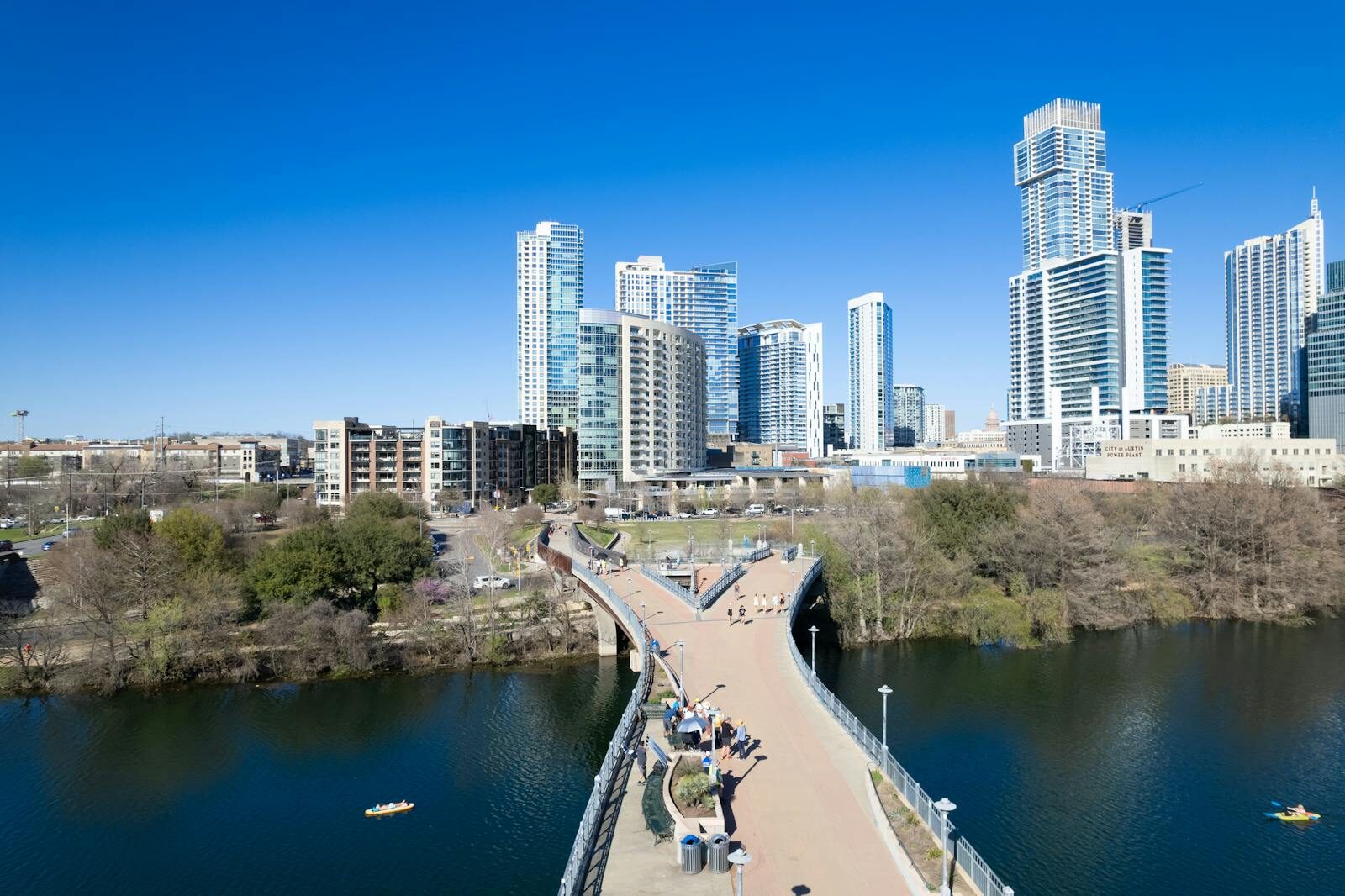
Austin, Texas has spent the last decade becoming one of the most talked-about real estate markets in the entire country. The explosive growth, the tech industry migration, the cultural energy, the no-state-income-tax advantage — it all added up to a city that investors couldn’t stop watching.
Then came the correction. Between 2022 and 2024, Austin’s market cooled significantly after its pandemic-era run-up. Prices softened. Inventory climbed. The frenzy faded.
And for serious investors, that cooldown was actually the best thing that could have happened.
In 2026, Austin sits in a position that long-term real estate investors recognize immediately: fundamentals still strong, price appreciation stabilized, rental demand holding firm, and enough market rationality returning that smart acquisitions are possible again. The speculation game has left the building. The investment game is very much still here.
This guide breaks down the best Austin investment properties available in 2026 — by neighborhood, property type, and strategy — so you can make decisions grounded in data and real market experience rather than headlines.
Why Austin Still Makes Sense for Real Estate Investment in 2026
Population Growth Hasn’t Stopped
Austin remains one of the fastest-growing metropolitan areas in the United States. The greater Austin metro — which includes Round Rock, Cedar Park, Pflugerville, Kyle, and Buda — continues to absorb significant population inflows from California, New York, Illinois, and other high-cost states.
That population growth translates directly into sustained housing demand. More people means more renters, more buyers, and more pressure on the existing housing supply.
The Employment Base Is Exceptionally Strong
Austin’s economy isn’t built on a single industry — it’s diversified across technology, semiconductor manufacturing, healthcare, education, government, and a thriving creative economy.
Major employers including Tesla, Apple, Samsung, Dell, Oracle, Meta, and dozens of high-growth startups have either relocated or significantly expanded their Austin footprint. The University of Texas at Austin and a strong state government employment base provide additional economic stability that pure tech cities often lack.
That employment diversity protects investors from the sector-specific collapses that have hurt markets dependent on a single industry.
No State Income Tax
Texas levies no personal state income tax. For real estate investors — particularly those relocating from high-tax states — this advantage compounds meaningfully over time.
Rental income, capital gains on property sales, and business income from real estate operations all benefit from Texas’s tax structure in ways that directly improve net returns compared to equivalent investments in states like California, New York, or Illinois.
Rental Demand Remains Solid
Austin’s renter population is large, relatively young, and professionally employed. The city’s median age sits in the low 30s — a demographic cohort that rents longer before buying, moves for employment opportunities, and prioritizes location and quality over ownership.
Long-term rental vacancy rates in Austin’s core neighborhoods remain low. Short-term rental demand — driven by Austin’s conference culture, live music scene, Formula 1 racing at Circuit of the Americas, and consistent tourism — keeps the Airbnb and VRBO market active year-round.
Understanding the 2026 Austin Real Estate Market
Where Prices Stand
After the dramatic appreciation of 2020–2022 and the correction that followed, Austin’s residential market has found a more sustainable footing in 2026.
Median home prices in the city proper have moderated from their peak highs, with more realistic valuations creating genuine acquisition opportunities for investors with capital ready to deploy. Suburban submarkets — particularly in the southern and eastern corridors — offer lower entry points with strong rental yield potential.
Interest Rate Environment
The broader U.S. interest rate environment in 2026 continues to shape investment math across the country. Investors in Austin are underwriting deals carefully, prioritizing cash flow fundamentals over pure appreciation plays — a discipline the market correction has effectively reinforced.
For cash buyers and investors with access to private capital, the current environment offers a meaningful competitive advantage over highly leveraged buyers.
The Institutional Investor Factor
Austin attracted significant institutional single-family rental investment during the boom years. As some institutional players have pulled back or repositioned, individual and small-group investors have regained access to inventory that was previously being swept up at scale.
This shift has meaningfully improved acquisition opportunities for the individual investor who can move decisively on the right property.
According to the Austin Board of Realtors (ABoR), Austin continues to demonstrate long-term housing demand fundamentals that position it as one of the most resilient mid-sized real estate markets in the Sun Belt. Explore current Austin market data and reports at abor.com.
Best Austin Neighborhoods for Investment Properties
East Austin
East Austin is the neighborhood that defines how dramatically a submarket can transform within a single decade.
Once overlooked and undervalued, East Austin is now one of the most in-demand residential and commercial corridors in the city. Its walkable streets, independent restaurants, live music venues, coffee shops, and creative businesses draw a demographic of young professionals and creatives who pay premium rents for proximity and culture.
Why it works for investors: Strong short-term and long-term rental demand. High walkability scores. Continued commercial development driving neighborhood appreciation. Properties near East 6th Street and Cesar Chavez command among the highest short-term rental rates in the city.
Property types to target: Single-family homes on larger lots (ADU potential), small multifamily (duplex/triplex), and bungalow-style properties with renovation upside.
Watch for: Higher entry prices relative to rental yield. East Austin works best as a long-term appreciation play combined with short-term rental income rather than a pure cash-flow investment.
South Congress (SoCo) and South Lamar Corridor
The South Congress and South Lamar corridors remain among Austin’s most iconic and tourist-visited areas — a fact that directly benefits short-term rental investors.
The energy, retail, dining, and proximity to downtown make this corridor a consistent performer for Airbnb and VRBO operators. Properties within walking distance of South Congress Avenue are particularly desirable.
Why it works for investors: Year-round tourist traffic. Strong brand recognition as an Austin destination. High occupancy rates for well-managed short-term rentals.
Property types to target: Smaller single-family homes and casitas that maximize short-term rental appeal without requiring large capital outlays.
Watch for: Austin’s short-term rental regulations, which have evolved over recent years. Always verify current STR permitting requirements with the City of Austin before acquiring a property for short-term rental purposes.
Mueller
Mueller is Austin’s celebrated urban redevelopment success story — a master-planned community built on the site of the former Mueller Municipal Airport that has grown into one of the city’s most livable and sought-after neighborhoods.
Its mix of single-family homes, townhomes, apartments, retail, parks, and proximity to UT Austin and major medical employers creates a self-contained ecosystem that generates consistent rental demand.
Why it works for investors: Stable, professional tenant base. Low vacancy. Walkability. Proximity to major employment centers including Dell Seton Medical Center and the UT campus.
Property types to target: Townhomes and smaller single-family homes that attract long-term tenants in the healthcare and academic sectors.
Watch for: HOA restrictions that may limit short-term rental activity. Mueller is primarily a long-term rental and appreciation market.
North Loop and Hyde Park
Hyde Park is one of Austin’s oldest and most architecturally distinguished residential neighborhoods — full of craftsman bungalows, Victorian cottages, and mature tree canopies that newer developments simply cannot replicate.
North Loop, its adjacent commercial corridor, has developed a thriving independent retail and dining scene that has significantly lifted the surrounding residential desirability.
Why it works for investors: Strong long-term rental demand from UT graduate students, faculty, and young professionals. Architectural character that commands premium rents and supports appreciation. Low supply of available inventory — the neighborhood is largely built out.
Property types to target: Historic bungalows with renovation potential, small multifamily, and properties with detached structures suitable for ADU conversion.
St. Elmo and South Austin (78745/78744 Zip Codes)
South Austin’s more affordable zip codes — particularly the 78745 and 78744 corridors — represent some of the strongest cash-flow investment opportunities in the Austin market in 2026.
Entry prices are lower than in East Austin or the SoCo corridor, rental yields are more favorable, and the area benefits from ongoing commercial development along South Congress and Slaughter Lane that is gradually pushing appreciation southward.
Why it works for investors: Better price-to-rent ratios than central Austin. Growing tenant demand from service industry workers and young families priced out of more central neighborhoods. Significant new commercial development driving neighborhood improvement.
Property types to target: Single-family homes in the $300,000–$450,000 range, duplexes, and small apartment complexes.
Round Rock and Pflugerville (Greater Austin Metro)
For investors prioritizing cash flow over short-term appreciation, the northern suburbs of Round Rock and Pflugerville consistently deliver better yield-to-price ratios than the city proper.
Round Rock is home to Dell Technologies’ global headquarters and a significant cluster of technology employers. Pflugerville offers affordable family housing with easy access to major Austin employment corridors — a combination that generates consistent, reliable tenant demand.
Why it works for investors: Lower acquisition costs. Stable family-oriented tenant base. Strong school districts that attract long-term tenants with children. Less regulatory complexity than the City of Austin proper.
Property types to target: Single-family homes in established subdivisions, newer construction in master-planned communities, and small multifamily.
Kyle and Buda (Southern Suburbs)
Kyle and Buda — positioned along the I-35 corridor south of Austin — have emerged as among the fastest-growing communities in the entire state of Texas.
Their affordability relative to Austin proper, combined with improved connectivity and a growing local employment base, has made them increasingly attractive to families and working professionals who commute north into Austin or south to San Marcos.
Why it works for investors: Among the lowest entry price points in the Austin metro. Strong population growth driving appreciation. Expanding local retail, dining, and employment reducing commute dependency.
Property types to target: New construction single-family homes, build-to-rent opportunities, and properties near the growing commercial corridors along Center Street and Main Street in Kyle.
Best Property Types for Austin Real Estate Investment
Single-Family Rental Homes
The most straightforward investment vehicle in the Austin market. Single-family rentals offer broad tenant appeal, easier financing, and lower management complexity than multifamily properties.
In Austin’s core neighborhoods, single-family homes with ADU potential — a detached garage apartment, a secondary dwelling unit on a larger lot — offer a meaningful income uplift that can significantly improve cash-flow metrics.
Accessory Dwelling Units (ADUs)
Austin’s ADU-friendly zoning policies have made this one of the most compelling investment strategies in the city.
Adding a permitted ADU to an existing single-family property — whether a garage conversion, a backyard cottage, or a new detached unit — can generate substantial additional rental income while increasing overall property value. In high-demand neighborhoods like East Austin and Hyde Park, a well-built ADU can generate $1,500–$2,500 per month in additional rental income.
The City of Austin has continued to streamline ADU permitting in recent years, reducing barriers for property owners seeking to add secondary units.
Small Multifamily (Duplex, Triplex, Fourplex)
Small multifamily properties — two to four units — offer the cash-flow advantages of rental income diversification while remaining eligible for residential financing.
In Austin, duplexes and triplexes in desirable in-fill locations are relatively scarce and command strong rental premiums. House-hacking — living in one unit while renting the others — remains a popular entry strategy for first-time investors in the Austin market.
Short-Term Rentals (STR)
Austin’s year-round event calendar — SXSW, Austin City Limits Music Festival, Formula 1 United States Grand Prix, UT football season, major tech conferences, and a robust convention industry — sustains short-term rental demand at levels few U.S. cities can match.
A well-located, professionally managed short-term rental in East Austin, SoCo, or the Domain area can generate significantly higher gross income than the equivalent long-term rental — though operating costs, management fees, and regulatory compliance requirements must be carefully factored into the investment analysis.
New Construction in Suburban Submarkets
For investors seeking turnkey properties with minimal deferred maintenance, new construction in the southern and northern suburbs offers a compelling combination of builder warranties, energy efficiency, and tenant appeal.
Build-to-rent communities — purpose-built single-family rental neighborhoods — have proliferated in markets like Kyle, Pflugerville, and Georgetown, offering institutional-quality assets at accessible individual investor price points.
Key Investment Metrics to Underwrite Before You Buy
Smart Austin investors are running disciplined underwriting in 2026 rather than relying on appreciation assumptions to carry weak deals.
Gross Rent Multiplier (GRM): Purchase price divided by annual gross rental income. In Austin’s core neighborhoods, GRMs in the 15–20x range are common. Suburban submarkets often offer tighter GRMs in the 12–16x range, reflecting better near-term cash flow.
Cap Rate: Net operating income divided by purchase price. Austin core properties typically trade at 4–5.5% cap rates. Suburban and value-add opportunities can offer 5.5–7% or higher depending on property condition and submarket.
Cash-on-Cash Return: Annual pre-tax cash flow divided by total cash invested. Target a minimum of 5–7% cash-on-cash return in the current interest rate environment to ensure the investment generates meaningful yield.
Vacancy Rate Assumptions: Underwrite conservatively — assume 8–10% vacancy in your pro forma even in high-demand neighborhoods. Properties that pencil only at 100% occupancy are not investment-grade.
Common Mistakes Austin Real Estate Investors Make
Overpaying based on peak comps. The 2021–2022 boom produced comp data that no longer reflects market reality. Base your acquisition price on current comparable sales, not historical peak pricing.
Ignoring property taxes. Texas’s property tax rates are among the highest in the nation — typically 2.0–2.5% of assessed value annually. This is the expense item that most frequently surprises out-of-state investors and must be fully factored into cash-flow projections.
Underestimating insurance costs. Texas homeowner’s insurance has risen significantly in recent years. Get current insurance quotes before finalizing any acquisition underwriting.
Buying in the wrong submarket for your strategy. East Austin is a phenomenal short-term rental market and a challenging cash-flow market. South suburban zip codes are strong cash-flow markets and slower appreciation plays. Match your property to your strategy, not the other way around.
Skipping the STR regulatory check. Austin’s short-term rental rules have evolved multiple times in recent years. Confirm current regulations, license requirements, and neighborhood restrictions before acquiring any property intended for short-term rental use.
Actionable Tips for Austin Real Estate Investors in 2026
- Build relationships with a local investor-focused agent — the Austin market moves quickly on desirable investment properties. An agent who specializes in investment acquisitions and knows off-market inventory is a genuine competitive advantage.
- Run your own numbers independently — never rely solely on a seller’s pro forma. Build your own income and expense projections from scratch using current market rents, actual tax records, and fresh insurance quotes.
- Visit the neighborhood at different times of day — foot traffic, noise levels, parking availability, and neighborhood character can vary dramatically between a weekday morning and a Friday night. Understand what your tenants will actually experience.
- Factor in capital expenditure reserves — budget 5–10% of gross rents annually for ongoing maintenance and capital expenditures, regardless of how new or well-maintained the property appears at purchase.
- Understand Austin’s tenant protections — Texas is a generally landlord-friendly state, but Austin has adopted specific local tenant protection ordinances. Know your obligations before you sign a lease.
- Consider a 1031 exchange if upgrading — if you’re selling an existing investment property to acquire an Austin asset, a properly structured 1031 exchange can defer significant capital gains tax liability and preserve more capital for the new acquisition.
Related: How to Evaluate Any Real Estate Investment Market Before You Buy
Final Thoughts
Austin’s real estate market in 2026 is not the frenzied, anything-goes environment of 2021. It’s something more sustainable and, for disciplined investors, considerably more interesting.
The fundamentals — population growth, employment diversity, demographic demand, and Texas’s structural tax advantages — remain as compelling as they’ve ever been. The speculation has largely cleared. What’s left is a market where real analysis produces real returns for investors willing to do the work.
The best Austin investment properties in 2026 aren’t necessarily the most glamorous or the most talked-about. They’re the ones that cash-flow at current prices, sit in neighborhoods with enduring demand drivers, and are acquired by investors who understood the numbers before they fell in love with the address.
That’s always been how smart real estate investing works. Austin in 2026 rewards exactly that approach.