

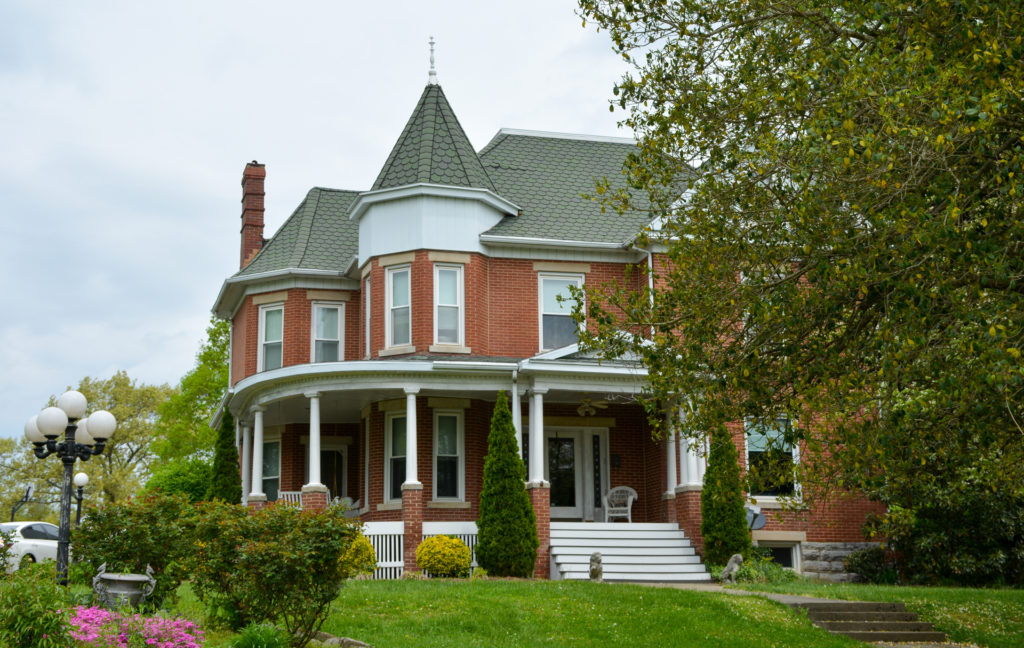
There is something almost theatrical about a Queen Anne Victorian home. The turrets rising above the roofline, the wraparound porch that seems to invite the whole neighborhood in, the fish-scale shingles layered like a peacock’s feathers — these houses do not blend into a street. They command it.
If you have ever driven through a historic district and found yourself slowing down, craning your neck at an ornate Victorian beauty, you already know the pull. And in 2026, more buyers than ever are acting on that impulse. Queen Anne style homes for sale are attracting serious interest from buyers who are tired of beige boxes and open-concept sameness, and who want a home with a genuine story to tell.
This guide walks you through everything you need to know before buying one — the architecture, the market, the costs, the best cities to look, and the honest realities of ownership.
What Exactly Is a Queen Anne Style Home?
The term gets used loosely, so it helps to be precise. Queen Anne homes are a subtype of Victorian architecture that flourished in the United States between roughly 1870 and 1910. Despite the royal name, they owe very little to England’s actual Queen Anne. The style was developed by British architect Richard Norman Shaw in the 1860s, drawing on Elizabethan and Jacobean design traditions, and it crossed the Atlantic just as America’s industrial revolution was making ornate millwork cheap and railroad networks were spreading design trends from coast to coast.
The result was a style built for expression — asymmetrical, layered, and almost aggressively decorative.
While Queen Anne homes fall under the broader Victorian umbrella, they are distinct from other Victorian sub-styles like Italianate, Gothic Revival, or Stick-style homes. What sets them apart is a specific combination of features that, once you learn to spot them, you will see everywhere.
The Defining Features of Queen Anne Architecture
No two Queen Anne homes are identical — that asymmetry is part of the philosophy. But every authentic example shares a recognizable set of characteristics.
Asymmetrical Facade The front of a Queen Anne home is deliberately unbalanced. There is no mirror-image symmetry here. The entry is often offset, a tower rises on one side, and the roofline zigzags across multiple planes. This was a deliberate rejection of the rigid formality that came before.
Turrets and Towers The rounded or octagonal tower is the single most iconic element of the Queen Anne style. It adds vertical drama, creates a quiet reading nook or corner bedroom on the upper floors, and gives the home its castle-like silhouette.
Wraparound Porch A wide, deeply detailed porch — often wrapping around two or more sides of the home — was both a social statement and a practical feature in an era before air conditioning. Decorative spindle work, turned columns, and ornate brackets made the porch an architectural feature in its own right.
Mixed Surface Textures Queen Anne homes layer textures in ways that feel almost obsessive. You might see clapboard siding on the ground floor, fish-scale shingles on the upper gable, and terracotta tile accents along the frieze — all on the same facade.
Steeply Pitched Roofs with Multiple Gables The roofline is rarely simple. Cross-gabled roofs, dormer windows, and decorative ridge caps create a silhouette that is busy in the best possible way.
Bold, Multi-Color Paint Schemes The famous “Painted Ladies” of San Francisco capture this perfectly. Queen Anne homes were originally painted in three, four, or even five colors to highlight their architectural details. Deep reds, forest greens, golden yellows, and navy blues were all common choices.
Eclectic Windows Windows in a Queen Anne home come in a remarkable variety of shapes — Palladian, stained glass, leaded glass, bay windows, and small decorative transom windows. They let light in while adding another layer of visual texture to the exterior.
A Brief History: How Queen Anne Homes Spread Across America
The timing of the Queen Anne style’s American peak was not accidental. By the 1880s, steam-powered sawmills and factory production had made elaborate wooden millwork affordable for the growing middle class. Railroads moved both materials and design ideas rapidly across the country, and pattern books — essentially Victorian-era architectural catalogs — let builders in Kansas replicate a style they had seen in a Massachusetts magazine.
The result was a democratic explosion of ornate architecture. Queen Anne homes appeared in small Midwestern towns, booming Southern cities, and on the hills above San Francisco Bay. They were aspirational homes for prosperous families who wanted to signal their success through architecture.
By the early 1900s, the style began to fade as the Craftsman movement and Colonial Revival pushed back against Victorian excess. Many Queen Anne homes were later covered in aluminum siding during mid-century renovations, their ornamental details buried under layers of practicality. Part of the joy of buying one today is uncovering what was hidden.
Queen Anne Homes for Sale in 2026: The Market Reality
The broader U.S. housing market in 2026 remains a study in tension. According to a March 2026 Reuters survey of housing analysts, U.S. home prices are expected to rise by approximately 1.8% in 2026 — a far cry from the pandemic-era surge, but still upward movement in a market constrained by affordability pressures and limited supply. Existing home sales softened to around 3.98 million units (seasonally adjusted annual rate) in early 2026, per the National Association of Realtors, reflecting cautious buyer sentiment and elevated mortgage rates that continue to slow activity.
Within that context, historic homes — and Queen Anne homes in particular — occupy a distinct niche. They are not commodities. They do not behave like tract housing. Their supply is, by definition, fixed: no one is building new Queen Anne Victorians at scale. That scarcity, combined with growing interest in authentic architecture and historic neighborhoods, means that well-preserved Queen Anne homes in desirable locations continue to hold their value and attract competitive offers.
What Are Queen Anne Homes Actually Selling For?
Prices vary enormously by location and condition. Here is a realistic picture of the 2026 market based on active listings:
- Affordable Midwest markets: Queen Anne homes in smaller Iowa, Kansas, and Missouri cities routinely list in the $150,000–$300,000 range. A four-bedroom 1901 Victorian in Webster City, Iowa, for example, is currently listed at $195,000. These offer exceptional value for buyers willing to put in restoration work.
- Mid-tier markets: States like North Carolina, Montana, and Pennsylvania see Queen Anne homes listed in the $400,000–$650,000 range. A well-preserved 1901 example in Valdese, NC recently listed at $425,000; a Montana property in Missoula came in at $399,000.
- Premium coastal and urban markets: In California, New England, and major metro historic districts, Queen Anne homes often list from $800,000 into the millions. A Ferndale, California 1898 Victorian recently listed at $1,695,000.
- Trophy properties: Grand examples — large acreage, exceptional preservation, landmark status — can exceed $2 million. A 1902 Queen Anne in Fargo, North Dakota recently listed at $2.25 million, a remarkable figure that speaks to the property’s scale and condition.
In April 2026, a notable example made headlines in Maine: the Moody Mansion, a Queen Anne Victorian built in 1890 with nearly 6,000 square feet across three stories and sitting on 5.7 acres, was listed for $600,000 — proof that extraordinary historic homes can still offer remarkable value in the right market.
Best Places in the USA to Find Queen Anne Homes for Sale
Queen Anne homes are genuinely spread across the country, but certain regions have higher concentrations of well-preserved stock.
San Francisco, California — The Painted Ladies Capital No city is more synonymous with Queen Anne Victorians. The famous Painted Ladies near Alamo Square are the most photographed examples, but the Haight-Ashbury and Castro districts are full of Queen Anne homes at various price points. Expect to pay a premium, but San Francisco’s historic neighborhoods offer unmatched walkability and cultural context.
New England — Massachusetts, Rhode Island, Connecticut Boston, Newport, and Providence are rich in Victorian architecture, particularly Queen Anne homes built for prosperous merchant and industrial families. These homes often sit in formally designated historic districts, which adds both protection and a layer of renovation complexity.
The Pacific Northwest — Portland and Seattle Both cities have well-preserved Victorian neighborhoods. Portland’s Irvington and Ladd’s Addition districts, and Seattle’s Capitol Hill and First Hill neighborhoods, contain strong concentrations of late-19th-century homes including Queen Anne examples.
The Midwest — Iowa, Illinois, Kansas, Missouri This is where buyers on a budget find the most opportunity. Smaller cities throughout the Midwest have extraordinary Queen Anne homes at prices that seem almost impossible by coastal standards. Many are structurally sound but cosmetically tired, making them ideal for patient, hands-on buyers.
The South — Nashville, Savannah, Charleston Nashville’s Edgefield historic district and Savannah’s landmark squares are increasingly popular with buyers seeking Victorian character in a warmer climate. These markets have seen strong price appreciation, but Queen Anne homes still represent value relative to new construction.
Upstate New York and Pennsylvania Cities like Buffalo, Rochester, and Scranton have significant Queen Anne inventory at accessible prices. Many sit in neighborhoods experiencing genuine revitalization, making them interesting from both a lifestyle and an investment perspective.
The Honest Pros and Cons of Buying a Queen Anne Home
Buying a historic Queen Anne home is not like buying a new build. The rewards are real and significant, but so are the challenges. Here is a balanced picture.
The Pros
Irreplaceable Character No amount of money will buy you craftsman-made spindle work, original wide-plank hardwood floors, or a leaded glass transom window in a new construction home. These details exist only in original homes.
Strong Curb Appeal and Community Value Queen Anne homes are conversation starters. They generate genuine warmth in their neighborhoods and tend to anchor historic districts as community landmarks.
Solid Construction Homes built between 1870 and 1910 were built with old-growth timber — denser, more durable wood than what is used today. The structural bones of a well-maintained Queen Anne can be extraordinary.
Appreciation in the Right Markets In established historic districts, Queen Anne homes tend to hold value and often appreciate above the market average, driven by fixed supply and sustained demand from buyers seeking authenticity.
Potential Tax Benefits Many Queen Anne homes qualify for state and federal historic preservation tax credits, which can offset significant renovation costs. Some states offer property tax freezes or reductions for designated historic properties.
The Cons
Maintenance Is Ongoing and Specialized The same ornamental details that make these homes beautiful are expensive to repair. Matching original millwork often requires custom fabrication or salvage sourcing. Deferred maintenance on a Victorian home compounds quickly.
Energy Efficiency Challenges Original single-pane windows, minimal insulation, and older HVAC systems mean higher energy costs. Upgrading these systems while maintaining historic character requires thoughtful planning and often specialized contractors.
Renovation Restrictions Homes in designated historic districts must follow preservation guidelines when making exterior changes. This protects the neighborhood’s character but limits your renovation flexibility.
Hidden Surprises Knob-and-tube wiring, original plumbing, lead paint, asbestos insulation, and foundation settling are all common in homes of this age. A thorough pre-purchase inspection by a contractor experienced with historic properties is not optional — it is essential.
How to Evaluate a Queen Anne Home Before You Buy
Walking through a Victorian home is an experience. Staying objective takes discipline. Here is a practical framework for assessing any Queen Anne home you are seriously considering.
Start With the Foundation and Structure Look for cracks in the foundation, sagging floors, and signs of water intrusion in the basement. These are the most expensive problems to fix and the most important to identify before making an offer.
Assess the Roof Carefully Victorian-era rooflines are complex — multiple planes, dormers, and decorative elements create many opportunities for water infiltration. Ask for the age of the roof and look for evidence of active or past leaks in the attic and upper-floor ceilings.
Check the Mechanical Systems Electrical, plumbing, and HVAC systems in older homes may have been updated at various points, sometimes poorly. Have a licensed inspector specifically evaluate each system. Bringing electrical up to modern code in a Victorian home can cost $10,000–$25,000 or more.
Evaluate the Exterior Wood Wood rot is the enemy of Victorian homes. Probe the porch columns, window sills, and decorative trim with a screwdriver. Soft spots indicate rot. Assess how much millwork is original versus replaced, and with what materials.
Research the Local Historic District Rules If the property is in a designated historic district, request the guidelines before making an offer. Understand what exterior changes require approval and what the process looks like in that jurisdiction.
Budget for a Specialist Inspector A standard home inspector may not have the expertise to properly evaluate a home of this age and construction type. Seek out an inspector with specific experience in historic properties. The additional cost — typically $100–$300 more than a standard inspection — is well worth it.
Restoring vs. Renovating: Understanding the Difference
This distinction matters enormously in the Queen Anne home context.
Restoration means returning the home to its original appearance and materials — repairing or replicating original millwork, stripping paint to expose original wood, sourcing period-appropriate hardware. This approach preserves historical integrity and is often required in designated historic districts.
Renovation means updating the home for modern living, which may involve altering original features. An open-concept kitchen where a parlor once stood, modern bathrooms in original tiled spaces, or replacement windows that approximate Victorian proportions without being period-accurate — these are renovations.
The best outcomes typically combine both: restoring what is salvageable, renovating what must function for modern life, and being honest about the difference. The National Trust for Historic Preservation publishes detailed guidance on balancing preservation and livability that any prospective Victorian homeowner should read.
For buyers serious about historic properties, reading our complete guide to buying and restoring a Victorian home walks through the full process from search to move-in.
Financing a Queen Anne Home: What You Need to Know in 2026
Historic homes present specific financing considerations that buyers should understand before starting their search.
Conventional Mortgages work fine for Queen Anne homes that are in habitable condition and appraised appropriately. The challenge is that unique historic properties can be difficult to appraise accurately because comparable sales may be limited.
FHA 203(k) Loans are worth knowing about. These rehabilitation loans allow buyers to finance both the purchase price and the cost of renovations in a single mortgage. They are specifically useful for Queen Anne homes that need significant work.
Historic Preservation Tax Credits at the federal level offer a 20% tax credit on qualified rehabilitation costs for income-producing historic properties. Many states offer additional credits of 10–25% for both commercial and residential historic properties.
State and Local Grant Programs exist in many states for homeowners in designated historic districts. Programs vary widely — some offer low-interest loans, others outright grants for exterior restoration work that is visible from the street.
Working with a lender who has experience financing historic properties will save you significant frustration. Not every loan officer understands the nuances of historic home appraisals or rehabilitation financing.
What to Look for in a Real Estate Agent
Buying a Queen Anne home is not a transaction that benefits from a generalist. Look for an agent who has:
- Demonstrated experience selling properties in local historic districts
- Relationships with inspectors and contractors who specialize in Victorian-era homes
- Familiarity with local historic preservation guidelines and the review process
- A genuine understanding of what makes these homes valuable — and what makes them risky
Ask specifically about their experience with historic homes, not just “older homes.” There is a meaningful difference between someone who has sold 1970s ranch houses and someone who understands the specific dynamics of a Queen Anne in a National Register district.
Actionable Steps for Buyers in 2026
If you are serious about purchasing a Queen Anne style home this year, here is a clear starting point:
- Define your restoration tolerance honestly. Be truthful with yourself about how much project you can manage emotionally, financially, and practically. A lightly updated Queen Anne with good mechanicals is a very different proposition from a diamond-in-the-rough that needs full restoration.
- Get pre-approved before you start searching seriously. In desirable historic markets, well-priced Queen Anne homes can move quickly. Having financing in order puts you in a position to act.
- Use specialized listing platforms. Sites like OldHouses.com and CircaOldHouses.com aggregate Queen Anne and Victorian listings nationally. They also often include more architectural detail than general real estate portals.
- Visit the neighborhood at different times. Historic neighborhoods have character that varies enormously by block and time of day. Walk the area in the morning and the evening before committing.
- Budget a contingency of 15–20%. On any historic home purchase, unexpected costs are not a possibility — they are a certainty. Build that cushion into your purchase budget from the beginning.
- Connect with local preservation organizations. Local historic preservation societies are extraordinary resources. They know which properties are coming to market, which contractors do quality work, and which grant programs are available in their area.
The Lasting Appeal of Queen Anne Homes
There is a reason these homes have survived not just structurally but culturally. In an era of engineered lumber, vinyl siding, and floor plans optimized for resale value rather than human experience, a Queen Anne home represents something genuinely different — a commitment to beauty as a worthy goal in architecture.
The families who built them in the 1880s and 1890s wanted to live in homes that said something about who they were and how they valued their surroundings. That impulse has not gone away. If anything, it has intensified in a housing market where new construction increasingly looks the same from Portland, Oregon to Portland, Maine.
Buying a Queen Anne style home in 2026 is not the simplest path to homeownership. But for the right buyer — patient, curious, willing to become a temporary steward of something irreplaceable — it may be the most rewarding one.
Frequently Asked Questions
How much does a Queen Anne Victorian home cost in 2026? Prices range widely — from under $200,000 in smaller Midwest cities to well over $1 million in coastal markets like San Francisco. The national median for a historic Victorian home in good condition runs roughly $350,000–$600,000 depending on location, size, and condition.
Are Queen Anne homes hard to insure? They can be. Standard homeowners insurance policies may not cover the full replacement cost of original architectural details. Look for insurers who specialize in historic homes and offer agreed-value or guaranteed replacement cost policies.
Can I make changes to a Queen Anne home in a historic district? Interior changes are generally unrestricted. Exterior changes visible from the street typically require review and approval from the local historic preservation commission. The process is manageable but adds time to any renovation project.
What is the difference between a Queen Anne Victorian and a regular Victorian home? “Victorian” refers broadly to homes built during Queen Victoria’s reign (1837–1901) and encompasses many styles. Queen Anne is one specific sub-style characterized by asymmetry, turrets, wraparound porches, and heavy ornamentation. Not all Victorian homes are Queen Anne style.
Where can I find Queen Anne homes for sale right now? OldHouses.com, CircaOldHouses.com, and Zillow’s historic/Victorian filters are good starting points. Working with a local agent who specializes in historic properties will give you access to off-market and pre-market opportunities that rarely appear on public portals.