

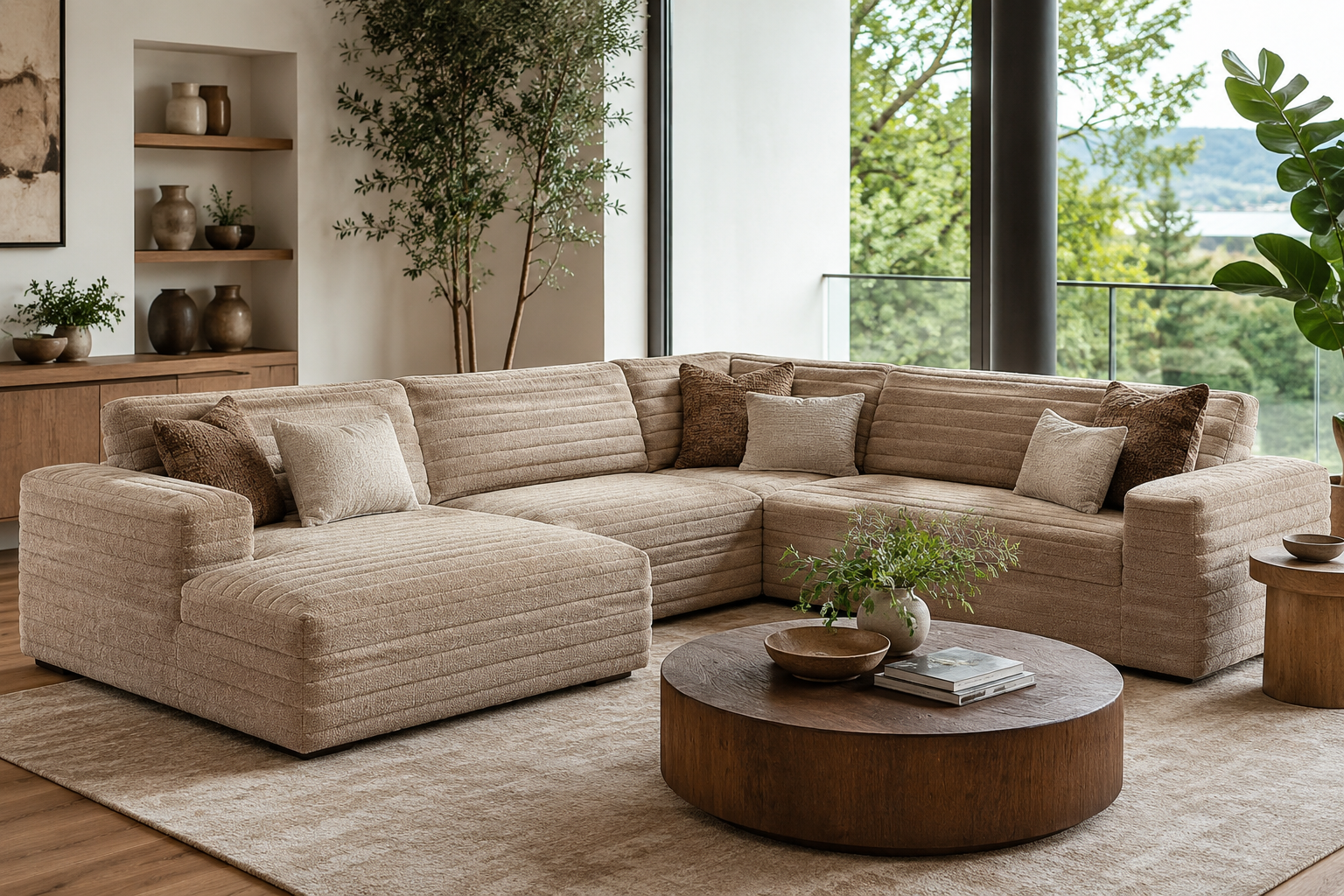
If you’ve been scrolling furniture sites lately, you’ve probably noticed one color popping up everywhere: fossil. It’s warm. It’s neutral. It somehow works with almost any design style. A fossil sectional sofa has quietly become one of the most requested pieces in living room makeovers this year. Honestly, the appeal makes sense.
I’ve spent years helping friends and family pick furniture for real homes, not showroom photos. Fossil-toned sectionals keep coming up because they solve a common problem. Bold colors date quickly. Stark white shows every stain. Fossil sits right in that sweet spot between beige and gray. It tends to age well no matter how your other decor changes over time. This guide breaks down what “fossil” actually means as a furniture color. It also covers which sectionals are worth your money in 2026, plus what to check before you buy.
What Does “Fossil” Mean in Furniture Colors?
Fossil isn’t a specific brand. Instead, it’s a color and fabric tone used across multiple furniture makers. Think of it as a warm, muted taupe-gray, somewhere between driftwood and stone. Manufacturers like Ashley Furniture and various retailers use “fossil” to describe both faux leather finishes and woven performance fabrics. The exact shade can shift slightly depending on the brand.
That said, the core idea stays consistent. Fossil tones read as neutral without feeling cold. They pair easily with wood tones, brass fixtures, and both warm and cool accent colors. Because of that flexibility, designers often recommend fossil-colored upholstery for buyers who aren’t ready to commit to a bold trend. It still offers something more interesting than plain beige.
Why Fossil Sectionals Are Trending in 2026
Neutral, texture-forward interiors have dominated home design for a few years now, and that trend hasn’t slowed down. Homeowners want spaces that feel calm and grounded rather than busy. Fossil fits perfectly into that mindset.
Additionally, more buyers now prioritize durability alongside looks. Many fossil-toned sectionals use faux leather or performance fabric. Both resist stains and wear better than traditional fabric upholstery. That matters a lot for households with kids, pets, or anyone who simply wants furniture that survives daily life.
There’s also a resale and longevity angle worth mentioning. Fossil sits in neutral territory. Because of that, it doesn’t lock you into a specific era of design the way trendier colors sometimes do. Do you plan to sell your home eventually? Neutral furniture photographs better and appeals to a wider range of buyers. That matters more than people usually expect during a listing.
Social media has played a role here too. Home design accounts on Instagram and Pinterest have pushed neutral, textured living rooms hard over the past two years. Fossil-toned sectionals show up constantly in these feeds, often paired with woven baskets, linen curtains, and natural wood accents. That visibility alone has driven a lot of the current demand.
Top Fossil Sectional Sofas Worth Considering
Here’s a look at some popular fossil-toned sectionals on the market right now. I based these picks on design, material quality, and overall value.
Best Overall: Ashley Navi Fossil Sectional
The Navi collection from Signature Design by Ashley remains one of the most popular fossil sectionals available today. It uses a faux leather with a weathered hue and a subtle pebbled texture. That gives it the look of genuine leather without the higher price tag or maintenance demands. The design features angled side profiling and track armrests with extra padding. It feels more tailored than a basic boxy sectional.
Ashley builds this piece with a tested frame construction. The design is meant to handle wear and tear from both home use and shipping. Do you want a modern silhouette with a warm, livable color? This sectional checks most of the boxes without stretching into premium pricing.
Best for Traditional Spaces: Cindy Crawford Home Sugar Shack Fossil Sectional
Does your home lean toward a more classic or transitional style? The Cindy Crawford Home Sugar Shack collection offers a softer, more traditional silhouette in the same fossil tone. This option tends to suit buyers who want the neutral color trend without a fully modern shape. It works particularly well in family rooms, where comfort and a relaxed profile matter more than sharp, angular lines.
Best Budget-Friendly Option: Retailer Fossil-Tone Sectionals
Beyond named collections, most major furniture retailers now carry their own fossil or fossil-adjacent sectional options. Rooms To Go and various regional chains fall into this category. These typically cost less than designer-branded pieces while still delivering the same neutral, on-trend look. Is your budget tight? Visit a local showroom or browse a retailer’s website directly, since availability and configurations shift frequently.
Best for Small Spaces: Compact Fossil Sectionals
Smaller apartments and condos benefit from more compact sectional configurations. These are often labeled as apartment-size or reversible sectionals. Many fossil-toned options now come with reversible chaise pieces. That means you can configure the sectional to fit either side of a room. This flexibility matters more than people expect, especially if you’re unsure how your furniture layout will work until it’s actually in the space.
What to Look for Before Buying a Fossil Sectional
Choosing a sectional involves more than picking a color you like. A few practical factors determine whether your purchase holds up over time.
Fabric type. Faux leather offers easy cleaning and a polished look. However, it can feel warmer to sit on during summer months. Performance fabric, meanwhile, tends to breathe better. It often resists stains just as well, though price varies by brand. Think about your household’s daily habits before deciding which material suits you best.
Sectional configuration. Sectionals typically come in left-arm-facing (LAF) or right-arm-facing (RAF) configurations. These terms refer to the arm’s position as you face the piece. Before ordering, measure your room. Decide which configuration actually fits your layout. This step trips up more buyers than almost anything else in the process.
Frame construction. Look for sectionals with tested or reinforced frame construction. This affects how well the piece holds up over years of daily use. Reputable manufacturers usually mention frame testing or warranty details directly on their product pages. Don’t hesitate to ask a salesperson for specifics if it isn’t listed.
Cushion fill. High-density foam holds its shape longer than low-density alternatives, though it usually costs more upfront. Does long-term comfort matter to you? Ask specifically about cushion fill before finalizing your purchase. This detail often gets overlooked in the excitement of choosing a color.
Delivery and assembly. Many sectionals ship in multiple pieces and require in-home assembly or professional delivery. Confirm delivery timelines and any assembly fees before you check out. These costs can add up unexpectedly if they aren’t included in the sticker price.
How Much Does a Fossil Sectional Cost?
Pricing for fossil sectionals varies widely depending on brand, size, and material. Budget-friendly options from major retailers often start around $800 to $1,200 for a basic configuration. Mid-range collections, including branded options like the Ashley Navi series, generally run between $1,200 and $2,000. The exact price depends on size and current promotions.
Premium or designer-branded sectionals, such as certain Cindy Crawford Home pieces, can climb toward $2,000 to $3,000. Larger configurations with additional pieces, like a chaise or ottoman, push costs even higher. Keep in mind that furniture pricing shifts frequently with seasonal sales. It’s worth checking for promotions around major holiday weekends, since discounts of 20 to 30 percent aren’t unusual during those periods.
Delivery fees add another variable to the total cost. Many retailers charge separately for delivery and setup. These fees often range from $99 to $250, depending on your location and the size of the piece. Always confirm this cost before finalizing your order, since it can meaningfully change the overall price.
Caring for a Fossil-Toned Sectional
Fossil tones often use faux leather or performance fabric. Because of that, maintenance stays relatively simple compared to traditional light-colored upholstery.
For faux leather pieces, wipe down spills quickly with a damp cloth. Avoid harsh chemical cleaners, since they can crack or discolor the material over time. A gentle soap and water solution usually handles everyday grime without damaging the finish.
For performance fabric sectionals, most spills blot out easily with a clean cloth. These fabrics are specifically designed to resist staining. That said, always check the manufacturer’s care tag before using any cleaning product, since fabric treatments vary between brands.
Rotating and fluffing cushions regularly helps maintain even wear, especially on frequently used seating areas. Vacuuming with an upholstery attachment every few weeks also helps. This prevents dust and pet hair from settling into fabric fibers over time.
If you want a deeper breakdown of maintaining different upholstery types long-term, our complete guide to caring for fabric and leather furniture covers specific cleaning products and techniques for various materials.
Styling a Fossil Sectional in Your Home
Fossil sits in neutral territory, so it pairs easily with a wide range of design styles. For a warmer, more traditional look, combine it with wood furniture, warm brass accents, and layered textiles like knit throws or patterned pillows. For a more modern space, pair it with matte black fixtures, clean-lined coffee tables, and simple geometric accent pieces.
Lighting also plays a bigger role than most people expect. Warm-toned lighting tends to enhance the cozy, grounded feel of fossil upholstery. Cooler lighting can shift the tone slightly toward gray instead. Are you unsure which direction to go? Testing a few lamp options in your space before committing to a full room redesign can save you from an unexpected mismatch later.
Rugs matter here too. A patterned or textured rug underneath a fossil sectional adds visual interest without competing with the neutral upholstery. According to the Consumer Reports furniture buying guide, choosing durable, well-constructed pieces upfront tends to save money over time compared to replacing lower-quality furniture every few years. That’s worth keeping in mind as you plan out the rest of your room.
Don’t forget wall color, either. Soft whites, warm greiges, and muted sage tones all tend to complement fossil upholstery well. Bold or highly saturated wall colors can sometimes clash, so it helps to test a paint swatch near your sectional before committing to a full repaint.
Fossil vs. Other Popular Neutral Sofa Colors
Fossil isn’t the only neutral tone dominating furniture showrooms right now, so it helps to know how it compares. Greige, a blend of gray and beige, has been popular for years and remains a safe, versatile choice. Fossil tends to sit slightly warmer than greige, which gives it a cozier feel in rooms with a lot of natural light.
Charcoal and dark gray sectionals offer a bolder, more dramatic look, but they show dust and pet hair more easily than fossil tones do. If you want something that hides everyday wear without looking overly stark, fossil often strikes a better balance. Meanwhile, cream and ivory sectionals still have their fans, but they require more careful maintenance, especially in households with kids or pets.
Ultimately, the right choice comes down to your room’s lighting, your existing decor, and how much maintenance you’re willing to do. Fossil tends to work well as a flexible middle ground, which is a big part of why it’s gained so much traction heading into 2026.
Common Mistakes to Avoid When Buying a Sectional
Even experienced furniture shoppers make a few predictable mistakes. Avoiding them can save you time, money, and a frustrating return process.
One common issue is skipping the measuring step entirely. A sectional that looks reasonably sized online can overwhelm a smaller room once it arrives. Always measure your space, including doorways and stairwells, since delivery teams sometimes can’t get oversized pieces into a room without extra maneuvering.
Another mistake involves ignoring return and warranty policies. Some retailers charge restocking fees or limit returns on special-order fabrics and colors, including certain fossil tones that aren’t kept in standard stock. Read the fine print before you commit, especially if you’re ordering a custom configuration.
Finally, many buyers underestimate how much natural light affects fabric color. A fossil sectional that looks perfect under warm showroom lighting can appear slightly different in your living room. If possible, request a fabric swatch before your final purchase, and view it in your own space at different times of day.
Final Thoughts
Fossil sectional sofas have earned their popularity in 2026 for good reason. The color feels warm without being stark. It pairs with nearly any design style. Many of the top options come in durable, easy-to-clean materials that hold up well under daily life. Whether you choose a modern option like the Ashley Navi collection or a softer, more traditional silhouette like the Cindy Crawford Home Sugar Shack series, the key is matching the configuration, fabric type, and price point to your actual household needs.
Before you buy, measure your space carefully and confirm delivery costs. Don’t be afraid to ask about frame construction and cushion fill. These details matter more over time than the initial showroom impression. Getting them right now means fewer regrets a few years down the road.
Frequently Asked Questions
What color is “fossil” in furniture upholstery? Fossil is a warm, muted taupe-gray tone, somewhere between beige and stone. It’s used across multiple brands for both faux leather and performance fabric sectionals.
Is a fossil sectional a good neutral choice for resale value? Generally, yes. Neutral tones like fossil tend to appeal to a wider range of buyers and photograph well, which can help if you plan to sell your home eventually.
How much does a fossil sectional sofa typically cost? Prices usually range from $800 to $1,200 for budget options, $1,200 to $2,000 for mid-range branded collections, and $2,000 to $3,000 or more for premium, larger configurations.
Is faux leather or performance fabric better for a fossil sectional? It depends on your household. Faux leather cleans easily and looks polished. Performance fabric breathes better and resists stains just as effectively. Consider your daily habits before choosing.
How do I know if I need a left-arm or right-arm facing sectional? This depends on your room layout. Measure your space and decide which side you want the chaise or longer section to sit on before ordering, since this detail is easy to get wrong.
How do I clean a fossil-toned sectional sofa? Wipe faux leather with a damp cloth and mild soap, and avoid harsh chemicals. For performance fabric, blot spills quickly and always check the manufacturer’s care tag first.
Do fossil sectionals go on sale often? Yes. Furniture retailers frequently offer seasonal discounts, especially around major holiday weekends, so it’s worth timing your purchase around those sales periods when possible.
What should I check before finalizing a sectional purchase? Confirm the fabric type, frame construction, cushion fill, delivery timeline, and any assembly or delivery fees before checking out, since these details affect both cost and long-term durability.