

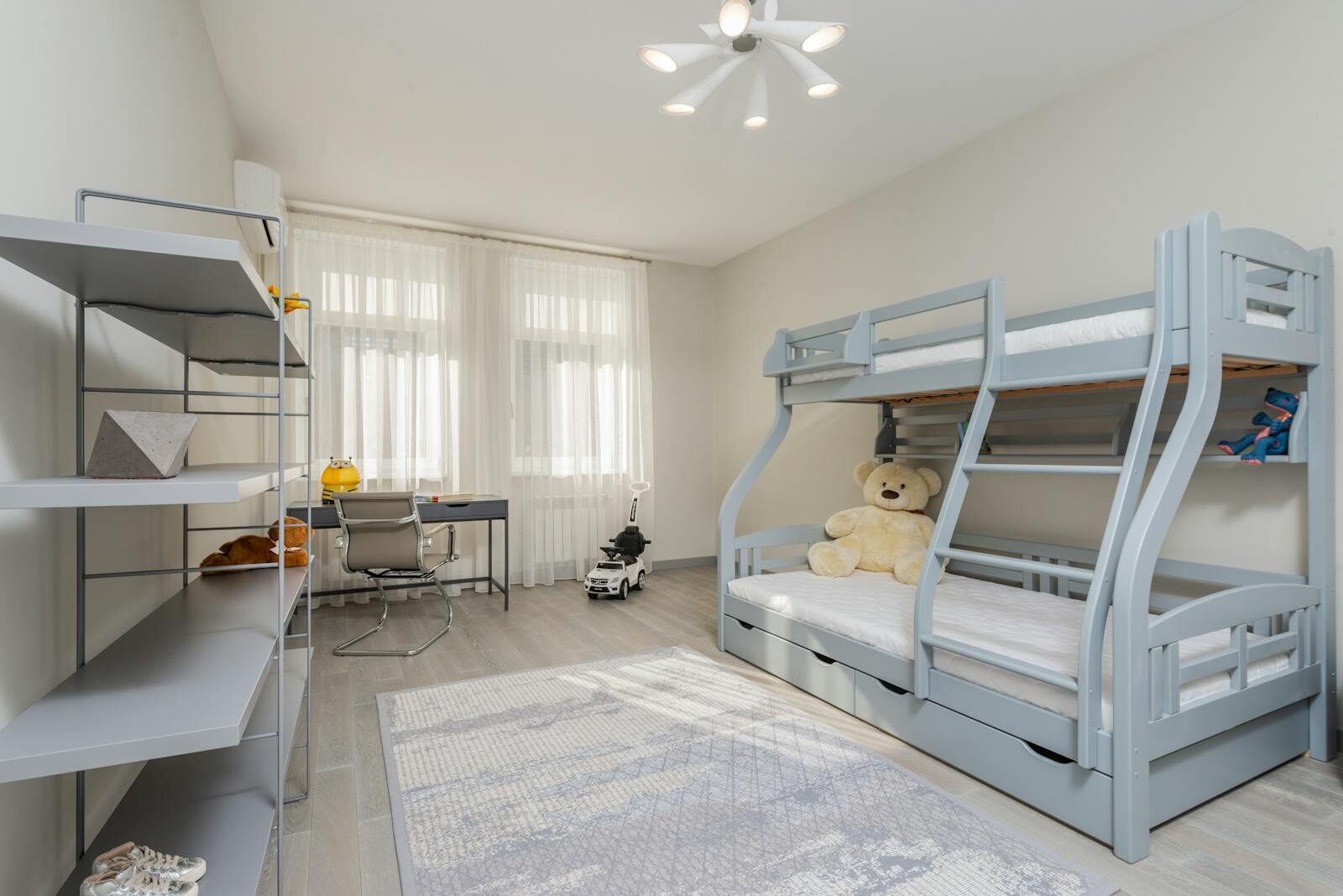
There’s something genuinely timeless about a solid pine bunk bed. Walk into any family home across the country — from a craftsman bungalow in Portland to a new build in suburban Dallas — and there’s a good chance a pine bunk bed has been part of the bedroom furniture at some point. It’s warm, natural, surprisingly durable, and holds up through years of jumping, late-night reading, and the occasional pillow fight.
But shopping for one in 2026 is more complicated than it used to be. You’ve got budget flat-pack options from big-box retailers sitting alongside artisan-crafted solid-wood frames built to last a generation. Safety standards have tightened. Finish quality has become a real concern for parents, with GREENGUARD Gold certification and low-VOC finishes now considered non-negotiable by many buyers. And the sheer number of choices — twin over twin, twin over full, L-shaped, with stairs, with storage — can feel overwhelming.
This guide cuts through all of that. I’ve reviewed the top solid pine wood bunk beds available to US buyers in 2026, broken down exactly what to look for, and put together an honest buying guide based on real criteria, not just spec sheets. Whether you’re outfitting a shared kids’ bedroom, a lake house, or a vacation rental that needs to take a beating and still look good, there’s a pine bunk bed in here for you.
Why Choose Solid Pine? The Case for This Wood
Before we get into the picks, it’s worth spending a moment on the wood itself — because “solid pine” gets thrown around a lot in furniture marketing, and not all pine is created equal.
Pine is a softwood, which means it’s more susceptible to dents and surface scratches than hardwoods like oak or maple. If that sounds like a negative, flip it around: pine is also significantly lighter, easier to work with, naturally resistant to warping when kiln-dried properly, and considerably more affordable.
New Zealand pine (also called radiata pine) has become the dominant species used by most reputable US-market bunk bed manufacturers. It’s farmed under certified sustainable forestry practices, grows faster than many other species, has a consistent grain and density, and takes paint and stain well. Brands like Max & Lily, Babyletto, and Harriet Bee all use New Zealand pine as the primary material in their solid-wood bunk bed lines.
Southern yellow pine, meanwhile, is the species of choice for more rustic and custom-made American bunk beds. It’s denser than New Zealand pine, has a pronounced grain, and develops a rich amber color over time. If you want a bunk bed with real character that gets better looking as it ages, Southern yellow pine — or its cousin, Douglas fir — is worth seeking out.
What “solid pine” should mean (and how manufacturers sometimes fudge it):
Always look for beds described as “100% solid pine” or “solid New Zealand pine.” Some listings use “pine wood” or “pine construction” to describe frames that mix solid wood posts with particleboard or MDF panels for the sides and ends. There’s nothing inherently wrong with that construction, but it’s not the same product, and it won’t last the same way or refinish as easily.
What to Look for in a Solid Pine Bunk Bed in 2026
1. Safety Certifications — Non-Negotiable
Federal law requires that bunk beds comply with CPSC mandatory rules, and children’s bunk beds must be tested by a CPSC-accepted third-party laboratory before a manufacturer can issue a Children’s Product Certificate (CPC) certifying compliance. That certificate should be findable — either listed on the product page or available on request.
The ASTM F1427 Standard Consumer Safety Specification for Bunk Beds contains performance requirements addressing hazards associated with falls from the upper bunk, entrapment, and structural integrity of the foundation support system, as well as requirements for warning labels and consumer information.
Updated guardrail safety codes took effect for newly manufactured bunk beds from January 2026, meaning bunk beds purchased after mid-2026 will automatically comply with enhanced safety features — but beds purchased before that date may still adhere to older standards. If you’re buying in 2026, ask retailers specifically whether the bed meets the current 2026 guardrail requirements.
In addition to CPSC and ASTM compliance, look for:
- GREENGUARD Gold Certification — confirms the bed has been tested for chemical emissions and is safe for indoor air quality
- Low-VOC or non-toxic finish — particularly important given that children spend 8–10 hours a night inches from the wood surface
- Guardrail height — when the thickest recommended mattress is in place, the top of the guardrail must extend at least 5 inches above the top of the mattress
2. Weight Capacity
Most twin-over-twin pine bunk beds designed for children are rated for 200–250 lbs per bunk. If you have older kids, teenagers, or expect adults to occasionally sleep on the bed (vacation home scenario), look for beds rated at 400 lbs per level.
3. Wood Grade and Construction
Look for knot-free or low-knot pine, which is structurally more consistent and takes finish more evenly. The joinery method matters too: mortise-and-tenon or bolt-through joints are significantly stronger than simple dowel construction. For beds that will see hard use, metal bolt connections through the solid wood posts are ideal.
4. Finish Quality
Painted pine bunk beds are the most popular choice in American children’s bedrooms — white and gray are the dominant colors in 2026. Stained natural pine (honey, walnut, or walnut-brown tones) appeals to parents going for a Scandinavian, farmhouse, or rustic aesthetic.
Whatever the finish, confirm it’s low-VOC and, ideally, GREENGUARD certified. Certifications like GREENGUARD Gold confirm that the bed is safe for indoor air quality — a non-negotiable given how much time children spend sleeping inches away from the wood surface.
5. Convertibility
The best solid pine bunk beds can be separated into two standalone twin beds when your kids get older and no longer want to share. This effectively doubles the product’s lifespan and gives you genuine furniture flexibility as your family grows. Not all bunk beds offer this — confirm it before buying.
Top Solid Pine Wood Bunk Beds: Our 2026 Reviews
Here are our top picks across different categories, chosen based on wood quality, safety certification, real-world durability, design, and value for money in the current US market.
1. Max & Lily Low Bunk Bed — Best Overall
Why it stands out: Max & Lily has built a strong reputation among American parents for combining solid New Zealand pine construction with thoughtful, child-safe design. Their low bunk bed sits closer to the ground than most competitors — a design decision that makes top-bunk access safer and reduces fall distance.
The weight capacity is 400 lbs per bunk — well above the children’s average — which means this bed grows with your family rather than aging out when kids hit their teens.
Configuration: Twin over twin
Weight capacity: 400 lbs per bunk
Available finishes: White, Natural, Grey
Certifications: GREENGUARD Gold, CPSC/ASTM compliant
Best for: Families with younger children; bedrooms with lower ceilings
Price range: $550–$750
What real buyers say: Parents consistently praise the sturdy feel, with very little creaking even after years of use. A small minority note that assembly instructions could be clearer, but most describe the build process as manageable for two people over a few hours.
2. IKEA MYDAL — Best Budget Solid Pine Bunk Bed
Why it stands out: The IKEA MYDAL is built from solid pine — not pine-effect laminate, not particleboard with pine veneer — and sells for a price that undercuts virtually every comparable option. IKEA describes it as “made of solid wood, which is a durable and warm natural material — a good solution where space is limited,” and confirms the slatted bed base is included.
The ladder can mount on either the left or right side of the bed, and the maximum weight per bunk is 220 lbs, which is appropriate for children but worth noting if you anticipate adults using it.
Some buyers note that a few boards can arrive slightly warped, and the instructions, while diagrammatic, are less clear than IKEA’s usual standard. That said, for parents who want a genuine solid pine bunk bed at the lowest possible entry point, the MYDAL delivers real wood quality that flat-pack imitators can’t match.
Configuration: Twin over twin
Weight capacity: 220 lbs per bunk
Available finishes: Natural pine
Best for: Budget-conscious buyers; guest rooms; starter setups
Price range: $229–$279
Assembly note: Most buyers report 2–4 hours to assemble with two people. TaskRabbit and IKEA’s own assembly service are both available if you’d rather not DIY.
3. Babyletto Tiptoe Bunk Bed — Best for Non-Toxic & Eco-Conscious Families
Why it stands out: The Babyletto Tiptoe uses responsibly sourced solid New Zealand pine alongside TSCA-compliant engineered wood, finished with a non-toxic paint and staining process. The result is GREENGUARD Gold certified, giving parents genuine assurance that no harmful VOCs are entering the bedroom.
It converts easily into two twin beds and the ladder can be placed on either side, making it suitable for any room configuration. The design is clean and contemporary — it would look at home in a Scandinavian-influenced nursery or a modern minimalist bedroom.
This is the premium pick in our lineup. The price reflects the certification rigor, the thoughtful convertibility, and the brand’s track record in the non-toxic nursery furniture space.
Configuration: Twin over twin (converts to two twins)
Certifications: GREENGUARD Gold, TSCA compliant, CPSC compliant
Best for: Parents prioritizing chemical safety; eco-conscious homes; design-forward nurseries
Price range: $900–$1,200
4. Max & Lily Triple Bunk Bed — Best for Three Kids or Vacation Rentals
Why it stands out: The Max & Lily Triple Bunk Bed is made of solid New Zealand pine finished with a low-VOC coating, carries GREENGUARD Gold certification, and has a weight capacity of 400 lbs — making it sturdy enough for toddlers through teenagers. The design is flexible: it can be separated into three free-standing beds.
For families with three children sharing a room, or vacation rental owners looking to maximize sleeping capacity in smaller rooms, this is a genuinely smart solution. The minimalist white finish works in almost any bedroom aesthetic.
One practical note: the bed arrives in multiple boxes over several days, so plan your delivery window accordingly — this matters if you have time-sensitive guests arriving at a rental property.
Configuration: Triple bunk (twin over twin over twin)
Weight capacity: 400 lbs per level
Certifications: GREENGUARD Gold, CPSC/ASTM compliant
Best for: Families with three or more children; Airbnb and vacation homes; bunkhouse applications
Price range: $900–$1,100
5. Woodland Creek Sawmill Rough Sawn Timber Bunk Bed — Best Rustic/Custom Option
Why it stands out: Woodland Creek’s Post & Beam bunk bed begins with thick vertical beams to form a solid foundation. Horizontal posts create a sturdy framework, with solid pine used throughout — no veneers. The beams are rough sawn for rustic character, and the bed is available in a variety of sizes including twin over twin, twin over full, and full over full.
Finish options include rustic barnwood, weathered gray, American chestnut, and honey — all developed to fit current popular color trends in American interiors. This is a direct-from-manufacturer product, which keeps pricing competitive for the level of craftsmanship involved.
This isn’t a flat-pack product. It’s a handcrafted piece with real weight and presence. It’s best suited to log cabins, mountain retreats, ranch homes, or any bedroom where you want the bunk bed to be a design feature rather than a background piece.
Configuration: Twin/twin, twin/full, full/full
Best for: Rustic, farmhouse, cabin, or lodge interiors; vacation rental properties; adult bunk rooms
Price range: $1,200–$2,000 depending on configuration and finish
6. Pine Hill Farmhouse Twin Bunk Bed (JustBunkBeds) — Best American-Made Option
Why it stands out: The Pine Hill Farmhouse Twin Bunk Bed is made of US solid pine wood, manufactured in Brazil and assembled in the USA, with a 300 lb weight capacity and compliance with CFR 1513 federal safety standards for bunk beds. A one-year manufacturer’s warranty covers materials and craftsmanship.
The farmhouse styling — with its clean lines and mahogany brown finish — gives this bed a timeless, versatile look that works equally well in a child’s bedroom and a guest room. If buying American-assembled is a priority for you, this is the pick.
Configuration: Twin over twin
Weight capacity: 300 lbs
Best for: Farmhouse and transitional bedroom styles; buyers prioritizing US assembly
Price range: $700–$950
Pine Bunk Bed Configuration Guide: Which Layout Is Right for You?
| Configuration | Best For | Typical Room Size Needed |
|---|---|---|
| Twin over Twin | Two children of similar age; equal sleeping space | 10 x 10 ft minimum |
| Twin over Full | Siblings of different ages; one needs more space | 10 x 12 ft minimum |
| L-Shaped | Rooms with awkward layouts; maximizing floor space | 12 x 12 ft minimum |
| Triple Bunk | Three kids; vacation rentals; bunkhouses | 10 x 10 ft; 9 ft ceiling minimum |
| Loft Bed | One child who needs desk/play space below | 10 x 10 ft |
| Bunk with Stairs | Toddlers or children with mobility concerns | 12 x 10 ft minimum |
Ceiling height matters more than most people realize. For a standard twin-over-twin bunk bed with an average mattress, you need at minimum 8-foot ceilings to be comfortable on the top bunk.
Solid Pine vs. Other Wood Types: How Does Pine Compare?
Lots of parents consider oak, maple, or birch bunk beds as alternatives to pine. Here’s how they stack up:
| Wood Type | Hardness | Weight | Price Premium Over Pine | Best Suited For |
|---|---|---|---|---|
| Pine (NZ Radiata) | Soft | Light-medium | — (baseline) | Kids’ beds, painted finishes, budget builds |
| Pine (Southern Yellow) | Medium | Medium | 10–20% | Rustic, stained finishes, cabin use |
| Oak | Hard | Heavy | 40–80% | Heirloom pieces, heavy daily use |
| Maple | Hard | Heavy | 50–100% | High-end builds, clear or light stains |
| Birch | Medium-hard | Medium | 20–40% | Scandinavian-style, painted finishes |
| MDF/Particleboard | N/A | Heavy | −30–50% | Budget builds (not true solid wood) |
The difference in durability between wood species often comes down to construction methods rather than species alone — a well-made pine bed with proper joinery can outlast a poorly constructed oak bed. Prioritize build quality over species if budget is a factor.
Bunk Bed Safety: What Every American Parent Needs to Know in 2026
Safety is where this purchase decision is most consequential. A few facts worth having front of mind:
In the United States, the CPSC sets mandatory safety rules for bunk beds, and the ASTM F1427 standard tests whether a bed can withstand heavy weight without collapsing and verifies that every gap in the structure is sized to prevent head entrapment.
Guardrails serve as the primary safety feature preventing falls during sleep or play — children may move considerably during sleep without awareness of height dangers.
Practical safety rules for use (not just purchase):
- Children under 6 should not sleep on the top bunk. This is a firm recommendation from the CPSC and the ASTM standard — the risk of injury from falls is simply too high for young children.
- Don’t hang ropes, belts, or cords from bunk bed posts. Hooks and handles screwed onto the bed frame, or ropes and belts that children can become caught in while playing, are serious hazards.
- Check and tighten all bolts and connections every 6 months. Pine is softer than hardwood and connections can loosen with active use.
- Use the mattress thickness specified by the manufacturer. A mattress that’s too thick reduces the effective guardrail height.
- Guardrails should be present on both sides of the top bunk, including the wall side.
For a complete and current breakdown of federal bunk bed safety requirements, the US Consumer Product Safety Commission’s bunk bed guidance page is the most authoritative source available.
Mattress Guide for Pine Bunk Beds
The mattress you pair with a pine bunk bed matters as much as the bed itself. A few important guidelines:
Thickness. Most bunk bed frames specify a maximum mattress thickness of 6–8 inches for the top bunk. Exceeding this reduces your guardrail effectiveness. Memory foam mattresses in the 6-inch range are ideal for the top bunk. You have more flexibility on the bottom.
Weight. A heavy mattress is harder to install on the top bunk and adds load to the frame. Lightweight foam mattresses in the 30–50 lb range are much easier to manage.
Box spring. Most pine bunk beds use a slatted base and do not require a box spring. Confirm this before purchasing — adding a box spring raises the mattress height and can compromise guardrail safety.
Recommended mattress types for pine bunk beds:
- Top bunk: 6-inch memory foam or innerspring (lightweight, within manufacturer’s max thickness spec)
- Bottom bunk: Any twin or full-size mattress up to 10 inches; standard foam, memory foam, or innerspring all work
Common Pine Bunk Bed Questions, Answered
Do solid pine bunk beds wobble? A well-assembled solid pine bunk bed with proper bolt connections should have minimal wobble. Some movement is normal and doesn’t indicate structural failure. If you notice significant rocking, check that all bolts are fully tightened. Pine is softer than hardwood, so connections benefit from periodic re-tightening.
Can you paint a pine bunk bed? Yes — and pine is one of the better woods to paint because it has a relatively smooth grain that takes paint evenly. Sand lightly with 120-grit paper, prime with a shellac-based primer (pine can bleed tannins through water-based primer), then apply your chosen latex paint. Two coats of a satin or semi-gloss finish will be durable and washable.
How long do solid pine bunk beds last? A well-constructed pine bed with proper joinery and solid steel connector hardware can last for generations — quality of construction matters more than species alone. Reasonably expect 15–20 years of active use from a well-made solid pine bunk bed with normal care.
Are pine bunk beds safe for adults? Most children’s pine bunk beds are rated for 200–400 lbs per bunk — which covers most adults on the bottom bunk. For the top bunk, check the specific weight rating carefully. Heavy-duty options like the Woodland Creek timber frame beds are explicitly designed to hold adult weight on both levels.
What’s the best way to care for a pine bunk bed? Wipe down with a lightly damp cloth — never soak the wood. For painted finishes, use a mild soap solution. For natural or stained finishes, a light application of furniture wax or oil once a year will protect the wood and enhance the grain. Fix any dents with a wood filler matched to the finish before they become larger issues.
Where to Buy Solid Pine Bunk Beds in the US
Online Retailers
- Wayfair — largest selection, frequent sales, delivers to most US addresses
- Amazon — good for budget and mid-range options; read recent reviews carefully
- Target / Walmart — decent entry-level options, often with free store pickup
Specialty Retailers
- Max & Lily direct site — best place for their GREENGUARD-certified solid pine line
- Pottery Barn Kids — premium pricing but excellent quality control and finish
- Rooms To Go Kids — strong in-store selection across the South and Southeast US
Custom and Artisan
- Woodland Creek Furniture — handcrafted rustic and timber pine options, ships nationwide
- Local custom furniture makers — particularly strong in the Pacific Northwest, Appalachian region, and New England, where timber traditions run deep
Buying tip: If you’re purchasing in-store, bring your room measurements and ceiling height, a photo of the existing floor and wall colors, and the mattress dimensions you plan to use. Most salespeople can run through configuration options on the spot.
Final Verdict: Which Pine Bunk Bed Should You Buy?
Here’s the short version for those who’ve scrolled to the bottom:
- Best overall value with safety certifications: Max & Lily Low Bunk Bed
- Best budget solid pine: IKEA MYDAL
- Best for chemical-sensitive and eco-conscious families: Babyletto Tiptoe
- Best for three kids or vacation rentals: Max & Lily Triple Bunk Bed
- Best rustic/custom statement piece: Woodland Creek Sawmill Timber Bunk Bed
- Best American-assembled farmhouse style: Pine Hill Farmhouse Bunk Bed
Whatever your budget or aesthetic, the key things to get right are the safety certification, the mattress spec, and the room dimensions. Get those three things right and any solid pine bunk bed on this list will serve your family well for years to come.
For more on how to set up and style a shared kids’ bedroom around a bunk bed, check out our complete guide to planning a kids’ bedroom layout.