

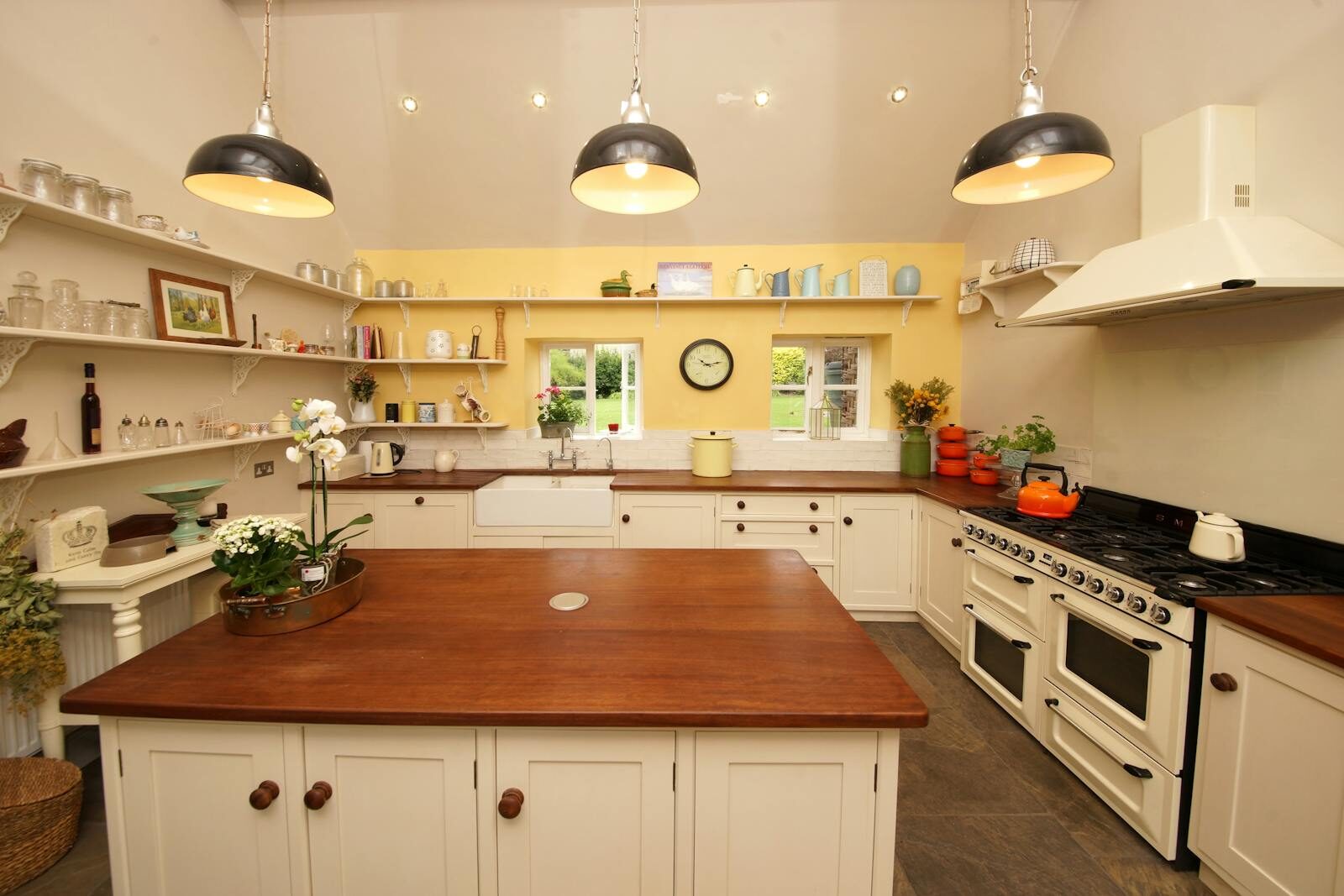
If you’ve spent more than ten minutes on Pinterest or Houzz recently, you’ve probably noticed that kitchens have changed — dramatically. The cluttered, dark-wood, builder-grade look of the early 2000s is long gone. What homeowners across the United States want now is clean, intentional, and deeply personal. That’s exactly the space Trilogy Kitchens has built its reputation in.
Whether you’re planning a full gut renovation in a Chicago brownstone, refreshing the heart of a suburban Phoenix ranch home, or designing a new build in the Carolinas, understanding what Trilogy Kitchens brings to the table — and how to make the most of that investment — is worth your time.
This guide walks through everything: the brand’s philosophy, cabinet lines and materials, design approaches, price expectations, and the practical decisions that separate a kitchen you love in year one from one you still love in year fifteen.
What Makes Trilogy Kitchens Stand Apart in the Premium Market
The premium kitchen cabinet market in the US is crowded. You have big-box options, semi-custom regional brands, and full custom shops all competing for the same renovation dollars. Trilogy Kitchens has carved out a distinct position by focusing on three things: construction quality, design versatility, and the design consultation experience.
Where many cabinet manufacturers treat style as a layer applied on top of a standard box, Trilogy approaches it differently. Their cabinetry is built around the idea that the structural quality and the aesthetic finish are equally important — neither one works without the other. The result is a product that holds up over decades, not just seasons.
For American homeowners who’ve been burned by cabinets that warp, hinges that loosen, or finishes that chip at the first scratch, that construction-first philosophy lands well.
The Core Cabinet Lines: What Trilogy Offers
Trilogy Kitchens organizes its offerings into distinct collections, each designed to serve different aesthetic sensibilities and kitchen configurations. Here’s a practical breakdown.
1. The Contemporary Flat-Panel Line
This is the collection that defined Trilogy’s reputation in modern kitchen design. Flat-panel (also called slab-door) cabinetry is the backbone of the minimalist, European-influenced kitchen aesthetic that has dominated design publications and social media for the past several years.
What sets Trilogy’s flat-panel offerings apart is the range of materials and finishes available. Options typically include:
- High-gloss lacquer finishes in neutral and bold palettes
- Matte paint options with low-sheen, tactile surfaces
- Wood veneer overlays for warmth without sacrificing the clean silhouette
- Textured laminate options that mimic natural materials at a lower price point
For kitchens in urban settings — New York City apartments, Los Angeles lofts, Miami condos — this line is consistently the go-to.
2. The Transitional Shaker Collection
Shaker-style cabinets aren’t going anywhere, and for good reason. The simple recessed-panel door is one of those rare design elements that works in a farmhouse in rural Tennessee just as well as it does in a suburb of Boston or a craftsman home in the Pacific Northwest.
Trilogy’s shaker collection elevates the standard with tighter tolerances, better joinery, and a finish quality that doesn’t show brush marks or uneven sheen. If you’ve looked at a lot of kitchen remodels, you know how rare that actually is.
3. The Integrated & Handle-Free Series
One of the strongest trends in kitchen design heading into 2026 is the handle-free cabinet — push-to-open mechanisms, integrated grip channels routed into the door edge, or Gola-profile aluminum rails. Trilogy offers all three approaches.
For open-concept floor plans where the kitchen is visible from the living area, handle-free cabinetry creates an unusually clean visual line that’s hard to achieve with hardware.
4. The Natural Wood & Rift-Cut Collection
There’s been a significant shift back toward natural materials across American home design, partly driven by sustainability conversations and partly because homeowners are pushing back against the all-white-everything aesthetic that peaked around 2018. Trilogy’s natural wood collection uses rift-cut and quarter-sawn oak, walnut, and white oak in ways that highlight grain consistency without looking rustic or unfinished.
Materials, Construction, and Why They Matter More Than You Think
A cabinet’s finish is what you see. Its construction is what you live with. Here’s what to look for — and what Trilogy Kitchens emphasizes in their builds.
Box Construction
The cabinet box (the carcass) should be made from furniture-grade plywood, not particleboard. Plywood holds screws better, resists moisture far more effectively, and won’t sag under the weight of dishes and cookware over time. Trilogy uses plywood box construction throughout their premium lines.
Dovetail Drawer Boxes
Drawer boxes are one of the highest-stress components in any kitchen. They’re opened and closed thousands of times a year. Dovetail joinery — where the drawer sides interlock with the front and back in a wedge pattern — is the gold standard for longevity. It’s not just aesthetic. It’s mechanical.
Soft-Close Hardware
This has essentially become standard in any premium kitchen offering, but the quality of soft-close hinges and drawer slides varies significantly. Trilogy sources from established hardware manufacturers, which matters more than you might think. Cheap soft-close mechanisms fail within a few years; quality ones last the life of the cabinet.
Finish Durability
Painted finishes are only as good as the prep and application process. Trilogy uses a multi-stage finishing process that includes sanding between coats and a final catalyzed topcoat that resists chipping, yellowing, and moisture damage better than typical brush-applied finishes.
Design Principles That Drive Modern Kitchen Success
Knowing what cabinets are available is one thing. Knowing how to put a kitchen together that actually functions beautifully is another. Here are the design principles that Trilogy’s approach is built on — and that any homeowner planning a renovation should understand.
The Kitchen Work Triangle Is Dead — Long Live Zones
For decades, kitchen design was organized around the “work triangle” — the path between the refrigerator, sink, and cooktop. It’s an outdated model for how modern families actually use kitchens. Trilogy’s design team (and most serious kitchen designers today) think in zones instead: a prep zone, a cooking zone, a cleanup zone, a beverage/coffee zone, and a storage/pantry zone.
Designing around zones rather than a triangle produces better workflow, especially in households where multiple people cook at the same time.
Vertical Storage Is Underutilized
Most American kitchens leave significant storage potential on the table by not running cabinets to the ceiling. Trilogy offers ceiling-height cabinetry configurations that eliminate the awkward soffit space above standard upper cabinets — a space that collects dust and rarely gets used productively. In smaller kitchens, this can be genuinely transformative.
Mixed Materials Prevent the Showroom Effect
A kitchen where every surface is the same material and finish can look stunning in a photo and feel sterile in person. Mixing cabinet finishes — say, a white upper with a wood-toned lower, or an island in a contrasting color — adds visual depth that makes a kitchen feel curated rather than installed.
Lighting Is Part of the Design, Not an Afterthought
Trilogy’s design solutions often include integrated lighting specifications because cabinet lighting — under-cabinet task lighting, interior cabinet lighting, toe-kick lighting — transforms how a kitchen reads in the evening and makes it genuinely more functional during meal prep.
What Does a Trilogy Kitchen Actually Cost? A Realistic Look for US Homeowners
Kitchen renovation budgets vary enormously across the United States, driven by regional labor costs, kitchen size, and the scope of work involved. Here’s an honest framework for thinking about cost.
Cabinet costs alone for a mid-size American kitchen (roughly 150–200 square feet of floor space) using Trilogy’s premium lines typically run between $15,000 and $45,000, depending on the collection, finish selections, and the complexity of the layout. This is for cabinets and hardware only — not installation, countertops, appliances, or any structural work.
Full kitchen renovation costs in the United States in 2026 — including cabinets, labor, countertops, backsplash, and appliances — range from roughly $40,000 on the modest end for a standard-size kitchen with premium cabinets, to $150,000 or more for large, fully custom kitchens in high-cost markets like San Francisco, New York, or Boston.
Regional context matters. Labor in the Southeast and Midwest tends to run 20–35% lower than in coastal metros. If you’re in Dallas, Nashville, or Columbus, your total project cost for a comparable scope of work will be meaningfully lower than a homeowner doing the same project in Los Angeles or Washington D.C.
A note on ROI: According to Remodeling Magazine’s annual Cost vs. Value report, a major kitchen remodel in the US returns an average of 38–54% of its cost at resale, depending on the market. A minor kitchen remodel (updates to existing footprint without moving walls) often returns better — closer to 70–80% — because the scope is smaller relative to impact. Premium cabinets tend to return better value in upper-tier real estate markets where buyers expect and recognize quality finishes.
How to Work With a Trilogy Kitchen Designer: What to Expect
The design consultation process is where a lot of homeowners either get it right or leave value on the table. Here’s what a productive engagement typically looks like.
Step 1 — Bring measurements and photos. Floor plan dimensions, ceiling height, window and door locations, and photos of your current kitchen give a designer the raw material to work with. The more accurate your measurements, the more reliable the initial design concepts.
Step 2 — Clarify your priorities. Storage, aesthetics, workflow, entertaining capacity — different households weight these differently. A designer who understands your priorities can make better trade-offs when constraints appear (and constraints always appear).
Step 3 — Review the 3D rendering. Trilogy and most premium kitchen designers use 3D rendering software that lets you see your kitchen before anything is built. Use this stage actively. This is when changes are cheap.
Step 4 — Understand the lead time. Custom and semi-custom cabinets take time. Depending on the collection and current production schedules, expect lead times between 8 and 16 weeks from order confirmation to delivery. Plan your renovation timeline around this, not the other way around.
Step 5 — Confirm installation details. Installation quality is the last mile of a cabinet project. Even excellent cabinets can look wrong if they’re not level, square, and properly scribed to walls.
2026 Kitchen Design Trends Shaping Trilogy’s Most Popular Configurations
Design trends are useful as context, not as gospel. That said, understanding what’s resonating across American homes in 2026 helps clarify why certain Trilogy configurations are consistently popular.
Warm neutrals are dominant. The cold gray-and-white palette that ruled American kitchens for nearly a decade has given way to warmer tones — creamy whites, greige, warm taupes, and earthy terracottas. Trilogy’s finish palette has shifted accordingly.
Integrated appliances are mainstream. Panel-ready refrigerators, dishwashers, and even range hoods integrated behind matching cabinetry panels used to be a luxury reserved for high-end projects. They’re increasingly expected at the premium level.
Open shelving has moderated. The open-shelving trend peaked and receded. Most homeowners who went fully open have added at least some closed storage back. Trilogy’s hybrid configurations — mixing open display sections with traditional closed cabinetry — represent a design maturation that works better practically.
Sustainable materials are increasingly requested. FSC-certified wood, low-VOC finishes, and locally sourced materials are no longer fringe requests. A meaningful number of American homeowners — particularly in markets like Seattle, Portland, Austin, and the Northeast — are asking specifically about material sourcing and finish chemistry.
Actionable Steps to Start Your Trilogy Kitchen Project Right
If you’re ready to move from inspiration to action, here’s a practical sequence that protects your investment and your sanity.
- Define your non-negotiables first. What absolutely must this kitchen have? What would be nice but isn’t essential? Separating these two categories before you talk to anyone prevents scope creep.
- Set a realistic budget with a contingency. Whatever number you’re working with, plan for a 15–20% contingency. Renovation projects reveal surprises — plumbing that needs relocation, electrical that needs updating, structural issues behind old walls. This isn’t pessimism; it’s standard practice.
- Research your local installation options. Trilogy kitchens are best installed by experienced kitchen installers, not general contractors who occasionally hang cabinets. Ask for references from recent similar projects specifically.
- Visit a showroom if possible. Photos and renderings are useful, but touching a door, feeling the drawer glide, and seeing finishes in person under real lighting is irreplaceable before committing to a significant purchase.
- Read the warranty carefully. Premium cabinetry comes with manufacturer warranties that vary in what they cover and for how long. Understand what’s included before you sign.
- Plan for the disruption. A full kitchen renovation takes four to eight weeks on average once work begins. Set up a temporary kitchen space — a microwave, electric kettle, mini-fridge, and one counter surface — before demo day.
Why Premium Kitchen Investment Still Makes Sense in 2026
There’s always a version of the question: “Is it worth it?” For premium cabinetry, the honest answer is: it depends on how long you’re staying, what your market expects, and how much you value daily quality in your home.
For homeowners planning to stay in their home for ten or more years, the math on premium cabinets is usually favorable. The cost per day of a kitchen you use every morning, cook in every evening, and gather in with family is remarkably small when amortized across a decade. The difference between a kitchen that makes you happy and one that makes you mildly frustrated is worth real money.
For homeowners in markets where buyers recognize and pay for quality finishes — and that includes most major metros across the US in the current market — premium kitchen cabinetry is one of the better investments within a home renovation budget.
For a deeper look at how kitchen investments compare to other remodeling projects in terms of return on investment, the National Kitchen & Bath Association (NKBA) publishes annual research on kitchen design trends and renovation economics that’s worth reading before any major project.
And if you’re weighing kitchen renovation against other home improvement projects for your overall property value, our guide on high-ROI home renovation projects for US homeowners walks through the comparison in detail.
Final Thoughts
A kitchen is the most used room in most American homes. It’s where coffee happens at 6 a.m. and where guests congregate at 9 p.m. Getting it right — really right — has a compounding effect on daily life that’s hard to overstate.
Trilogy Kitchens has built a reputation in the premium segment by combining construction quality with design flexibility and a process that actually serves homeowners rather than just selling them cabinets. Whether your project is a focused refresh or a complete transformation, the principles in this guide — understanding what you’re buying, how to design for function as well as beauty, and what to realistically expect from the process and the investment — apply regardless of the scope.
The best kitchen projects start with clarity: clarity about priorities, clarity about budget, and clarity about what daily life in this kitchen should look like five years from now. Start there, and the rest of the decisions become considerably easier.