

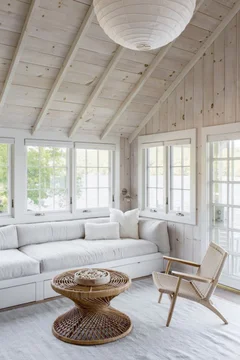
There’s something about knotty pine that divides people into two camps. One side sees those swirling amber knots and honey-toned grain as warm, character-rich wood begging to be celebrated. The other sees dated 1970s paneling and immediately starts pricing out drywall. If you’re in that second camp — or even somewhere in the middle — whitewashing might be exactly the technique that changes your mind entirely.
Whitewashing knotty pine lets you keep the texture, the grain, and all that beautiful natural character while dialing back the orange-yellow warmth that can make a room feel dim and dated. The result is something that genuinely earns the phrase “rustic modern” — an aesthetic that’s been dominating American interior design for several years now and shows no signs of slowing down in 2026.
The best part? This is a real DIY project. Not “DIY if you’re a contractor” DIY — actually doable on a weekend with basic supplies, a brush, and a willingness to experiment on a small test section first.
Here’s everything you need to know.
What Does Whitewashing Actually Do to Knotty Pine?
Before you pick up a brush, it helps to understand what whitewashing is and isn’t. Whitewashing is a semi-transparent finish that coats the wood surface while still allowing the grain, knots, and natural variation to show through. It’s fundamentally different from painting, which covers and hides the wood beneath an opaque layer of color.
With whitewashing, you’re not painting over the pine — you’re filtering it. The result is a lighter, cooler, airier tone that still reads unmistakably as wood. The knots and grain lines typically show up slightly darker beneath the white, which actually enhances the visual depth rather than flattening it.
On knotty pine specifically, whitewashing does something particularly interesting. The resin-rich knots resist the wash slightly more than the surrounding wood, creating a subtle halo effect around each knot that gives the finished surface a genuinely artisan, hand-crafted quality. It’s the kind of detail you’d pay premium prices for in a boutique hotel or a high-end cabin rental — and you can recreate it yourself for a fraction of the cost.
Why Knotty Pine Is Having a Design Moment (Again)
Knotty pine paneling has a complicated reputation in American homes. It was enormously popular in mid-century cabins, basements, and rec rooms, and a lot of that original installation has aged poorly — not because the wood itself is bad, but because the orange-tinted stains and glossy finishes that were applied to it have yellowed and darkened over the decades.
But the underlying material is genuinely excellent. Knotty pine is affordable, widely available at lumber yards and home improvement stores across the country, relatively easy to work with, and it has an organic, imperfect beauty that more uniform woods simply don’t. The design world has been rediscovering this for the better part of a decade.
The farmhouse aesthetic that swept through American interiors after shows like Fixer Upper normalized shiplap and reclaimed wood has continued to evolve into something more refined — what designers now often call “rustic modern” or “organic modern.” In this style, knotty pine with a whitewash finish fits perfectly: it’s casual without being sloppy, natural without being heavy, and light without being sterile.
Whether you’re refreshing an old paneled room, building a new accent wall, or updating knotty pine kitchen cabinets, the whitewash technique is one of the most versatile tools in the DIY decorator’s toolkit right now.
What You’ll Need: Materials and Tools
One of the great things about this project is that you don’t need anything exotic. Here’s a complete list of what to gather before you start.
For the Whitewash Mixture
- White latex paint (flat or matte finish works best — avoid eggshell or satin for your first attempt)
- Water (plain tap water is fine)
- Mixing container (an old bucket or large yogurt container works perfectly)
- Stir stick
The basic ratio is 1 part paint to 1 part water for a standard whitewash, though you’ll adjust this based on your desired opacity (more on that below).
Tools and Supplies
- Natural bristle brush or a chip brush (2–3 inches wide for paneling; wider for large flat surfaces)
- Clean lint-free rags or old t-shirt material — you’ll use these to wipe and blend
- Painter’s tape
- Drop cloth or plastic sheeting
- Sandpaper (120-grit and 220-grit)
- Tack cloth or a slightly damp rag for removing dust
- Bucket of clean water for rinsing your brush between sections
- Nitrile gloves — whitewash gets into every crease of your hands
Optional But Recommended
- Wood conditioner or pre-stain conditioner — helps the wash absorb more evenly on raw or stripped pine
- Clear matte topcoat or wax — for protecting the finished surface, especially on high-traffic areas like floors or cabinet faces
- Fine steel wool (0000 grade) — for a final light buffing if you want an ultra-smooth finish
Paint Selection Tips
Don’t overthink the paint. A standard interior flat latex paint in bright white (think Sherwin-Williams Extra White, Benjamin Moore White Dove, or even a basic store-brand flat white) is exactly what you want. You don’t need specialty whitewash products — though they exist and work fine — because the DIY mixture is simpler to control and adjust.
Avoid paints with built-in primer for this application. Primer-inclusive paints are thicker and less transparent, which makes achieving the right washed look much harder.
Preparing Your Knotty Pine Surface
Preparation is where most whitewash projects succeed or fail. Rushing through this step is the single most common DIY mistake, and it shows in the finished result.
Step 1: Clean the Surface Thoroughly
If you’re working with existing knotty pine paneling or furniture, it needs to be completely clean before you apply anything. Years of dust, cooking grease, furniture polish, or cigarette residue create an invisible barrier between the wood and your wash. Use a degreasing cleaner (TSP substitute is widely available at hardware stores) diluted in water, scrub with a sponge, and let it dry completely — at least 24 hours.
For new knotty pine lumber straight from the store or lumberyard, a wipe-down with a tack cloth is usually sufficient.
Step 2: Sand the Surface
For previously finished pine (stained, varnished, or painted), you need to break through that old finish so the wash can actually penetrate the wood. Start with 120-grit sandpaper to scuff the surface and remove any sheen, then follow up with 220-grit to smooth it out. You’re not trying to strip the wood completely — just roughening it enough for the new finish to grab.
For raw or already-stripped pine, a light pass with 220-grit is enough to open the grain and give the wash something to adhere to.
Always sand in the direction of the grain. Cross-grain scratches will be visible under a whitewash finish.
Step 3: Remove Dust
Sanding creates fine dust that will ruin your finish if it gets trapped under the wash. Vacuum the surface, then wipe it down with a tack cloth or a barely-damp lint-free rag. Let it dry completely before moving to the next step.
Step 4: Seal the Knots (If Needed)
This step is optional but worth knowing about. Knotty pine knots are rich in resin, which can bleed through water-based finishes over time and cause yellowing or spotting. If you’re whitewashing older pine that has dark, resin-heavy knots, consider applying a shellac-based sealer (like Zinsser BIN) specifically to the knots before whitewashing. Let it dry completely before proceeding.
For newer pine or light-colored knots, this is usually unnecessary.
Step 5: Protect What You’re Not Painting
Tape off trim, baseboards, ceilings, and adjacent surfaces with painter’s tape. Lay down drop cloths. Whitewash is thin and drippy, and it travels further than you expect.
How to Whitewash Knotty Pine: Step-by-Step
Now for the actual technique. Read through all of these steps once before you begin, because the timing of the wipe-back is crucial and you’ll want to understand the whole sequence before you start.
Step 1: Mix Your Whitewash
In your mixing container, combine 1 part white flat latex paint with 1 part water. Stir thoroughly until completely blended. The mixture should have roughly the consistency of whole milk — thin and very fluid, but not completely transparent.
This is your starting ratio. Before committing to the whole surface, test it on an inconspicuous area or a scrap piece of pine and adjust:
- For a lighter, more transparent wash, add more water (try 1:2 paint to water)
- For a denser, more opaque finish, use less water (try 2:1 paint to water)
- For an ultra-light barely-there wash, go as thin as 1:3 or even 1:4
There’s no universally correct ratio — it depends entirely on the starting color of your pine and how much of the natural wood you want to show through. Take your time on this step. Ten minutes of testing saves hours of regret.
Step 2: Work in Small Sections
Whitewash dries quickly, especially in a warm room or in dry climates like the Southwest. Work in manageable sections of about 2–3 linear feet at a time rather than trying to cover an entire wall at once. This keeps the wash wet and workable while you apply and blend.
Step 3: Apply the Wash
Dip your brush into the whitewash mixture, remove the excess on the rim of the container, and apply it to the pine using long, even strokes in the direction of the grain. You want good coverage but don’t need to be perfectly even at this stage — variation is part of the charm.
Work the brush into the grain and knots, making sure the wash gets into any recesses, grooves, or texture in the wood. On tongue-and-groove paneling, take a moment to work the wash into the grooves with the tip of the brush.
Don’t rush this application — you want the wash to sit on the surface for a moment and begin to penetrate the grain before you move to the next step.
Step 4: Wipe Back While Wet
This is the defining step of the whitewash technique — and the one that gives you control over the final look. Before the wash dries (usually within 1–5 minutes depending on temperature and humidity), take a clean lint-free rag and wipe across the surface in the direction of the grain.
The wiping motion removes the wash from the surface while leaving it in the grain, pores, and texture of the wood. The harder and faster you wipe, the more you remove and the lighter the final result. A gentle, slower wipe leaves more wash on the surface and produces a denser, more opaque finish.
Around the knots, you may notice the wash naturally stays a bit thicker — that’s the resin providing slight resistance. You can enhance or soften this halo effect by adjusting how you wipe in those areas.
Step 5: Assess and Layer
Once the first section is wiped back and the wash has fully dried (20–30 minutes), step back and evaluate the coverage. Is it too light? Apply a second coat using the same technique — it will build opacity gradually without losing transparency. Is it too heavy in spots? Lightly sand with 220-grit and a very light touch, then apply a thinner wash over the top.
Whitewashing is a forgiving process. Multiple thin layers almost always produce better results than one heavy coat, and each layer is an opportunity to adjust.
Step 6: Let It Cure
Once you’ve achieved the coverage you want, let the final coat cure for at least 24 hours before applying any topcoat or returning furniture and fixtures to the area. In humid climates like Florida or the Gulf Coast, give it 48 hours.
Finishing and Protecting Your Whitewashed Pine
Whether you need a topcoat depends on where the whitewashed pine is located and how much wear it will see.
For wall paneling and accent walls: A topcoat is generally optional. The wash itself is reasonably durable on vertical surfaces that won’t be touched constantly. If you want to protect against scuffing or make the surface easier to clean, a single coat of flat clear matte polyurethane or furniture wax applied with a clean rag will do it without adding unwanted sheen.
For floors: Absolutely seal the surface. Whitewashed pine floors need a durable topcoat — at minimum two coats of water-based polyurethane in a matte or satin finish — to withstand foot traffic without wearing through.
For furniture and cabinets: A topcoat is strongly recommended. Use a water-based polycrylic or furniture wax and apply it according to the manufacturer’s instructions. This protects against moisture, oil from hands, and general wear.
For exterior applications: Standard interior latex whitewash isn’t suitable for outdoor use. If you’re whitewashing exterior pine siding, porch boards, or outdoor furniture, use an exterior-grade product specifically formulated for wood and exposed conditions.
Design Inspiration: Ways to Use Whitewashed Knotty Pine at Home
The whitewash technique is versatile enough to work across a wide range of interior applications.
Accent Walls
A single whitewashed knotty pine accent wall in a living room, bedroom, or dining room is one of the most impactful and affordable design upgrades you can make. Pair it with neutral linen furniture, matte black fixtures, and natural fiber rugs for the quintessential rustic modern look.
Full Room Paneling
In smaller spaces like a home office, mudroom, or powder bath, floor-to-ceiling whitewashed knotty pine paneling creates a cozy, cabin-inspired atmosphere that feels intentional rather than dated. The whitewash keeps the space from feeling too dark.
Shiplap and Tongue-and-Groove Applications
Knotty pine shiplap — whitewashed and installed horizontally — has become a hallmark of the modern farmhouse interior. The wash lightens the natural wood tone while preserving all the texture and variation that makes the look work.
Kitchen Cabinets
Updating knotty pine kitchen cabinets with a whitewash rather than a full paint job is a growing trend, particularly in mountain homes, lake houses, and coastal cottages across the South and Mountain West. The technique preserves the cabinet character while modernizing the color palette.
Ceilings
Whitewashed knotty pine ceiling planks add warmth and texture overhead without weighing a room down the way stained or varnished pine can. This works especially well in rooms with high ceilings or exposed beams.
Common Mistakes to Avoid
Even a forgiving technique like whitewashing has a few pitfalls. Here’s what to watch for.
Skipping the test section. Never commit to a full surface without testing your mixture and technique on a hidden area or scrap piece first. The same mix produces very different results on new versus old pine.
Applying the wash too thick. A common impulse is to load up the brush and get good coverage quickly. Resist it. Thin application followed by proper wipe-back is always better than a gloopy coat that dries before you can work it.
Working too large a section at a time. Once the wash dries, you can’t wipe it back cleanly. In warm, dry conditions, work in sections no larger than 2 feet wide.
Using glossy paint. Glossy or semi-gloss paints create a finish that looks plasticky and artificial on wood. Stick with flat or matte latex.
Forgetting to seal resin-heavy knots. On older pine with dark, sticky knots, unsealed resin can bleed through and yellow the white finish within months. Spot-seal the knots with shellac primer and save yourself the frustration.
Rushing the dry time between coats. Applying a second coat before the first is fully dry can lift the first coat and create a muddy, uneven result. When in doubt, wait longer.
Whitewash vs. Other Knotty Pine Treatments: Which Is Right for You?
Whitewashing is a great solution, but it’s not the only option. Here’s how it compares to a few common alternatives.
| Finish Type | Opacity | DIY Difficulty | Reversibility | Best For |
|---|---|---|---|---|
| Whitewash | Semi-transparent | Easy | Moderate | Rustic modern, farmhouse, coastal |
| Full paint | Opaque | Easy | Difficult | Complete color change, hiding damage |
| Limewash | Very transparent | Easy–Moderate | Moderate | Aged, European-inspired looks |
| Gray wash | Semi-transparent | Easy | Moderate | Industrial, Scandinavian, modern rustic |
| Natural oil/wax | Clear | Easy | Easy | Preserving original tone with protection |
| Bleaching | Lightens wood | Moderate | Low | Driftwood look, very light finish |
Whitewash sits in a sweet spot: more character than full paint, more finished than raw wood, and easier to achieve than more complex techniques like limewashing or bleaching. For most homeowners tackling a knotty pine refresh, it’s the right place to start.
You can find more ideas for transforming wood surfaces in your home through our Complete Guide to DIY Wood Finishing Techniques, which covers everything from staining and sealing to advanced decorative finishes.
Budget Breakdown: What This Project Actually Costs
One of the most appealing aspects of whitewashing knotty pine is how affordable it is compared to alternatives like replacing paneling, installing drywall, or hiring a painter for a full paint job.
Here’s a realistic cost estimate for a 200-square-foot project (roughly a 10×10 room with full wall paneling):
- 1 quart of flat white latex paint: $8–$15
- Chip brushes (pack of several): $5–$10
- Lint-free rags or old t-shirts: Free–$5
- Sandpaper (assorted grits): $5–$10
- Painter’s tape and drop cloth: $10–$15
- Optional clear matte topcoat (1 quart): $12–$20
- Optional shellac sealer for knots: $8–$15
Total estimated project cost: $35–$80 for materials, depending on whether you add the topcoat and sealer. Labor is your own time — typically one full day for prep and application, plus drying time.
Compare that to the cost of installing new drywall over existing paneling ($800–$2,000 for a room this size including labor), and the value proposition becomes obvious.
Expert Tips for a Professional-Looking Result
A few finishing details separate a DIY whitewash that looks great from one that looks rushed.
Vary your wipe pressure intentionally. Rather than wiping with identical pressure across the whole surface, let your wipe be slightly lighter around knots and slightly firmer on flat grain sections. This creates natural variation that looks handcrafted.
Use a dry brush technique for depth. After your final whitewash coat has dried, dip a dry brush into undiluted white paint, wipe off most of it on a paper towel, and lightly drag the brush across the grain in certain areas. This adds a subtle layered depth that’s particularly effective on the highest-grain sections of the wood.
Consider a warm white instead of a stark white. Pure brilliant white can look cold on pine, especially in rooms with lots of natural wood accents. A warm white (Sherwin-Williams Alabaster or Benjamin Moore White Dove are favorites among designers) keeps the finish feeling inviting rather than clinical.
Embrace imperfection. Whitewashing is not a technique that rewards obsessive precision. Slight variation in opacity, areas where the grain comes through more strongly, subtle differences between boards — these are features, not flaws. They’re what makes whitewashed wood look authentic rather than manufactured.
According to the experts at This Old House, one of the most trusted sources for American homeowners tackling renovation projects, the key to any successful DIY wood finish is thorough surface preparation — and whitewashing is no exception. The technique itself is forgiving; the surface underneath needs to be properly prepped to hold it.
Final Thoughts: Is Whitewashing Knotty Pine Worth It?
If you’re sitting in a room lined with dark, orangey knotty pine and wondering whether you need to gut the whole thing to get a fresh, updated look — the answer is almost certainly no.
Whitewashing is genuinely one of the best value-for-effort DIY projects available to homeowners right now. A single weekend, less than $100 in materials, and a willingness to experiment can transform a space that felt oppressively dated into something that looks deliberately designed, warmly textured, and completely current.
The knotty pine itself doesn’t need to disappear. It needs to be seen differently — and a well-executed whitewash does exactly that. Those knots, that grain, that natural imperfection — under a light wash of white, they stop looking like a problem you need to solve and start looking like the best feature in the room.
Start with a test section. Mix a small batch. Get your hands into it. You might surprise yourself.