

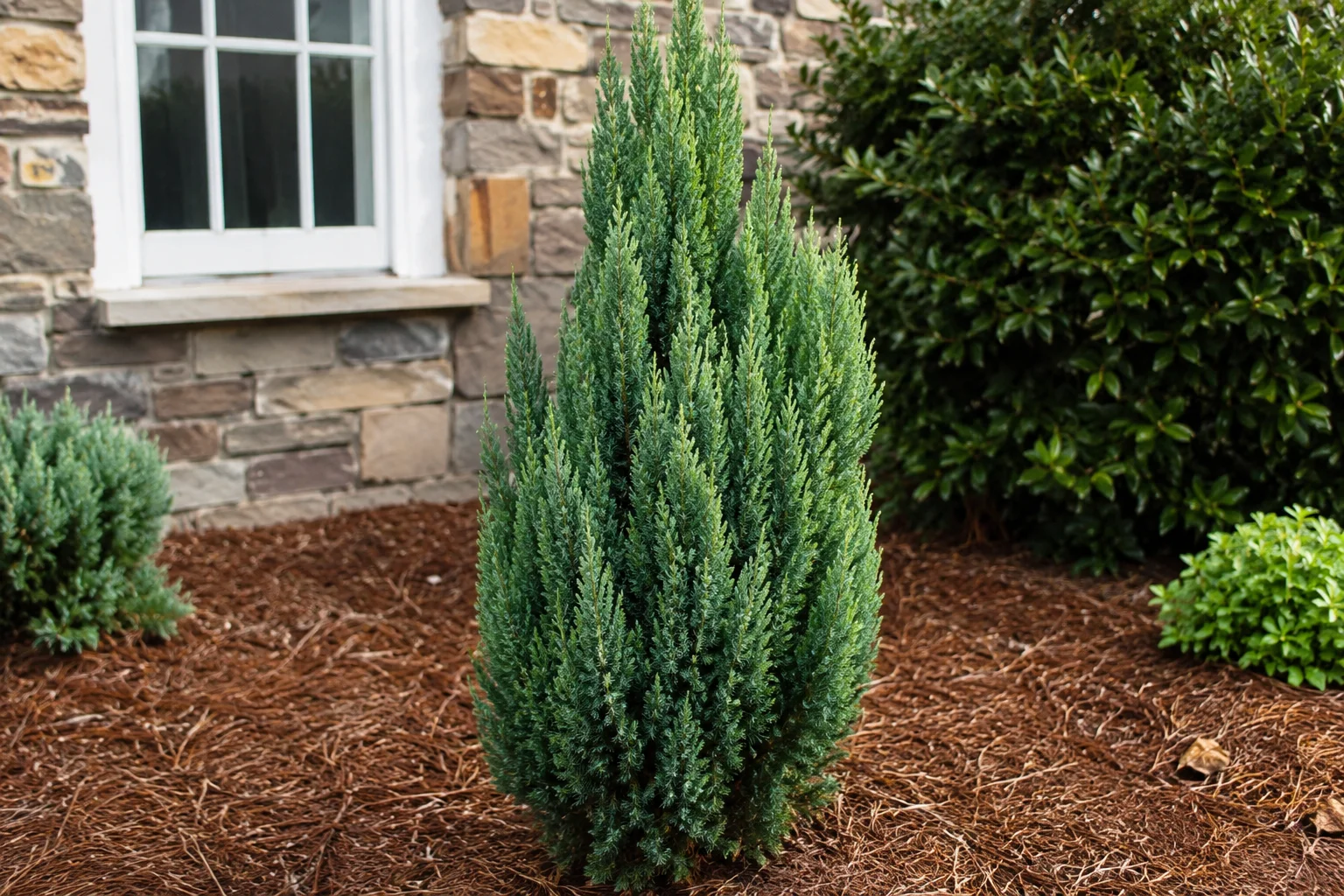
If you’ve driven through a suburban neighborhood, you’ve probably seen a Spartan juniper. You just might not have known its name. That tall, narrow, deep-green column beside a garage or driveway? Chances are good it’s a Spartan.
I’ve planted and maintained this variety across several climate zones. It’s earned its reputation as one of the most forgiving evergreens you can grow. It’s not fussy. It doesn’t demand constant attention. And it looks sharp twelve months a year.
That said, “low-maintenance” doesn’t mean “no-maintenance.” A few details separate a thriving Spartan juniper from one that struggles.
This guide covers everything you need for 2026. That includes planting, watering, feeding, pruning, common problems, and smart landscaping uses.
What Is a Spartan Juniper?
The Spartan juniper (Juniperus chinensis ‘Spartan’) is a cultivar of Chinese juniper. Growers in East Asia cultivated this plant for centuries. It later made its way into American landscapes decades ago.
Gardeners prize it for its columnar, pyramidal shape. Its foliage is dense and dark green. And it holds that shape with very little pruning.
Left alone, a mature Spartan juniper usually reaches 12 to 15 feet tall. Its spread stays narrow, around 3 to 5 feet. Older, well-established specimens can grow even taller under ideal conditions.
That narrow footprint explains its popularity. It delivers height and screening without eating up yard space. A wider shrub simply can’t compete on that front.
The plant stays evergreen year-round. It tolerates many soil types once established. It handles cold winters and hot, humid summers with relative ease.
That versatility is why it shows up everywhere. You’ll spot it in landscapes from the Upper Midwest to the Southeast. It’s just as common across much of the Southwest.
USDA Hardiness Zones and Where It Grows Best
Spartan junipers thrive in USDA hardiness zones 4 through 9. That range covers most of the continental United States. It stretches from colder parts of Minnesota and Wisconsin down through Georgia and Texas. It even reaches into parts of Arizona and California.
Not sure which zone you’re in? The USDA’s plant hardiness zone map is the standard reference. Most nurseries and extension offices rely on it too.
A few regional notes are worth knowing:
- In colder northern zones (4-5), Spartan junipers do fine. Young plants benefit from a sheltered spot away from harsh winter winds.
- In the humid Southeast (zones 7-9), air circulation matters more than usual. Well-drained soil helps too, since heat and moisture together raise the risk of fungal issues.
- In hot, dry Southwestern climates, established plants handle drought well. Young plants still need consistent watering through their first one or two summers.
Planting Your Spartan Juniper the Right Way
Getting the planting stage right saves you headaches later. Junipers tolerate poor soil surprisingly well. They do not tolerate soggy roots.
1. Pick a full-sun spot. Spartan junipers want at least six hours of direct sun daily. In partial shade, they’ll survive. But the foliage thins out, and that classic dense look suffers.
2. Check your drainage. This is the most common mistake I see. Junipers planted in low, water-collecting spots often struggle. The same goes for heavy clay soil that drains poorly. Both raise the risk of root rot. If your soil is heavy clay, amend the planting area first. A slightly raised bed can help too.
3. Dig the hole correctly. Dig a hole roughly twice as wide as the root ball. Keep the depth no deeper than the root ball itself. Planting too deep causes stress and slow decline. Loosen the roots gently before placing the plant. This stops them from growing in the same tight circle they had in the container.
4. Backfill and water thoroughly. Fill in around the roots with native soil. Tamp gently to remove air pockets. Water deeply right away to help the roots settle.
5. Mulch, but don’t smother. Add a 2 to 3-inch layer of mulch around the base. This retains moisture and regulates soil temperature. Keep mulch a few inches from the trunk. Piled against the bark, it traps moisture and invites problems.
Best planting time: early spring or fall. Temperatures are moderate then, and the plant isn’t under heat or freeze stress. Avoid planting during peak summer heat if you can.
Watering: Getting the Balance Right
Most Spartan juniper problems start here. During the first growing season, the roots haven’t spread out yet. The plant depends on you for consistent moisture. Water deeply once or twice a week. Adjust for rainfall as needed. Frequent shallow sips won’t cut it.
Once established, usually after the first full year, Spartan junipers turn genuinely drought-tolerant. At that point, back off significantly. Water only during extended dry spells.
Overwatering is the bigger risk for established plants. Soggy soil is the fastest route to root rot and browning foliage. If you’re in a region with clay-heavy soil or frequent summer rain, water less rather than more.
Feeding and Fertilizing
Spartan junipers aren’t heavy feeders. One application of slow-release, balanced fertilizer in early spring usually covers the year. Avoid high-nitrogen fertilizers. They push soft, leggy growth that’s more vulnerable to winter damage and pests. If your soil is already fertile, some established junipers need no supplemental feeding at all.
Pruning: Less Is Usually More
This cultivar naturally holds a tidy, columnar shape. It doesn’t need the regular shearing many shrubs require. Left alone, a Spartan juniper still looks intentional.
That said, a little maintenance pruning goes a long way:
- Light shearing in late spring or early summer keeps a crisp outline. This matters most if you’re using it as a formal hedge or screen.
- Remove dead or browning interior growth as you spot it. This improves air circulation and lowers disease risk.
- Avoid heavy pruning in extreme heat or cold. The plant is under more stress during those periods. It recovers more slowly too.
- Never cut back into bare wood. Junipers, like most conifers, don’t reliably regrow from old, leafless wood. Cut too far back, and you can end up with a permanent bare patch.
Want the spiral or pom-pom topiary look some Spartan junipers wear? Start young, and work slowly. Use hand pruners for precision instead of a hedge trimmer.
Common Pests and Problems
Spartan junipers are generally healthy, low-drama plants. Still, a few issues deserve attention:
- Spider mites can appear during hot, dry stretches. They cause fine webbing and a dusty, bronzed look. A strong hose spray or insecticidal soap usually handles minor infestations.
- Bagworms are small caterpillars. They build cone-shaped bags out of foliage. Hand-picking them off in early summer often solves light infestations.
- Root rot almost always ties back to poor drainage or overwatering. It shows up as browning, dying branches, often starting at the base. Good drainage prevents this far more easily than any treatment fixes it.
- Cedar-apple rust is a fungal disease. It cycles between junipers and apple or crabapple trees. It’s rarely fatal to the juniper. Still worth knowing about if you grow fruit trees nearby.
Check your plants during regular watering rounds. That’s usually enough to catch these issues early.
Landscaping Uses: Where a Spartan Juniper Really Shines
The narrow, upright habit makes this plant genuinely versatile:
- Privacy screening. It stays narrow while growing tall. Plant several in a row, and you get a green wall without the wide footprint of hedges like arborvitae.
- Foundation accents. A single Spartan juniper beside an entryway or garage adds vertical structure. It won’t overwhelm the space.
- Windbreaks. In open, windy areas, a row of Spartans buffers wind well. They still fit a relatively narrow side yard.
- Topiary and formal gardens. Dense branching holds up well to shaping. That’s why you’ll often see it trained into spirals in Mediterranean-style landscapes.
For spacing, use this rule of thumb: plant 3 feet apart for a solid, continuous screen. Space them 5 feet apart if you’re fine with individual columns and more breathing room.
Weighing this variety against other narrow evergreens for a privacy planting? It helps to compare growth habits and mature size side by side. Our guide to choosing the best evergreen trees for privacy screening breaks down how Spartan juniper stacks up against arborvitae and Italian cypress across different climates and yard sizes.
A Quick Seasonal Care Checklist
- Spring: Apply slow-release fertilizer. Do any light shaping or shearing. Check for winter damage.
- Summer: Watch for spider mites and bagworms. Water deeply during dry stretches. Skip heavy pruning during peak heat.
- Fall: This is a good window for new planting. Reduce watering frequency as temperatures drop.
- Winter: In colder zones, watch for heavy wet snow on branches. It can cause splaying or breakage. Gently brush it off after storms.
Frequently Asked Questions
How fast does a Spartan juniper grow? Under good conditions, Spartan junipers grow about 12 inches per year. That’s fast for an evergreen. It’s a big reason homeowners choose it when they want a privacy screen established within a few years, not a decade.
How tall and wide does a Spartan juniper get at maturity? Most mature specimens reach 12 to 15 feet tall. Their spread stays narrow, usually 3 to 5 feet. Exact size depends on growing conditions, pruning habits, and how long the plant has been in the ground.
Do Spartan junipers need full sun? Yes, ideally at least six hours of direct sunlight daily. They’ll tolerate light shade. But foliage density and color both decline in shadier spots. The plant also becomes more prone to a leggy, sparse look.
Why is my Spartan juniper turning brown? Browning usually points to one of three things: poor drainage and root rot, winter desiccation from cold wind, or spider mite damage during hot, dry weather. Check soil moisture first. Overwatering is a more common culprit than underwatering once a plant is established.
Can Spartan junipers be grown in containers? They can, especially while young. Keep the plant’s eventual height in mind. Most container-grown specimens eventually need ground planting. Or you can swap in a smaller cultivar for long-term container use.
How close together should I plant Spartan junipers for a privacy screen? Space them roughly 3 feet apart for a solid, continuous hedge. Prefer a more open, columnar look? Space them up to 5 feet apart instead.
Is Spartan juniper deer resistant? Junipers generally resist deer better than many landscape shrubs. Their aromatic, prickly foliage is the main reason. That said, no plant is completely deer-proof in areas with heavy deer pressure.
What’s the best time of year to plant a Spartan juniper? Early spring and fall both work well. Moderate temperatures reduce transplant stress during these windows. Avoid planting during peak summer heat. Skip the dead of winter too, when the ground may be frozen.
Final Thoughts
The Spartan juniper earns its popularity honestly. It offers fast growth, a naturally tidy shape, and genuine drought tolerance once established. And it asks very little of your weekend time in return.
Get the planting site and drainage right from the start. Stay consistent with watering through that first year. Do that, and you’ll likely have a healthy, structured evergreen for decades to come.
Want more on juniper species and regional growing considerations? The Clemson Cooperative Extension Home & Garden Information Center offers a detailed factsheet. It covers juniper varieties, spacing, and common pest and disease issues across different U.S. growing regions.