

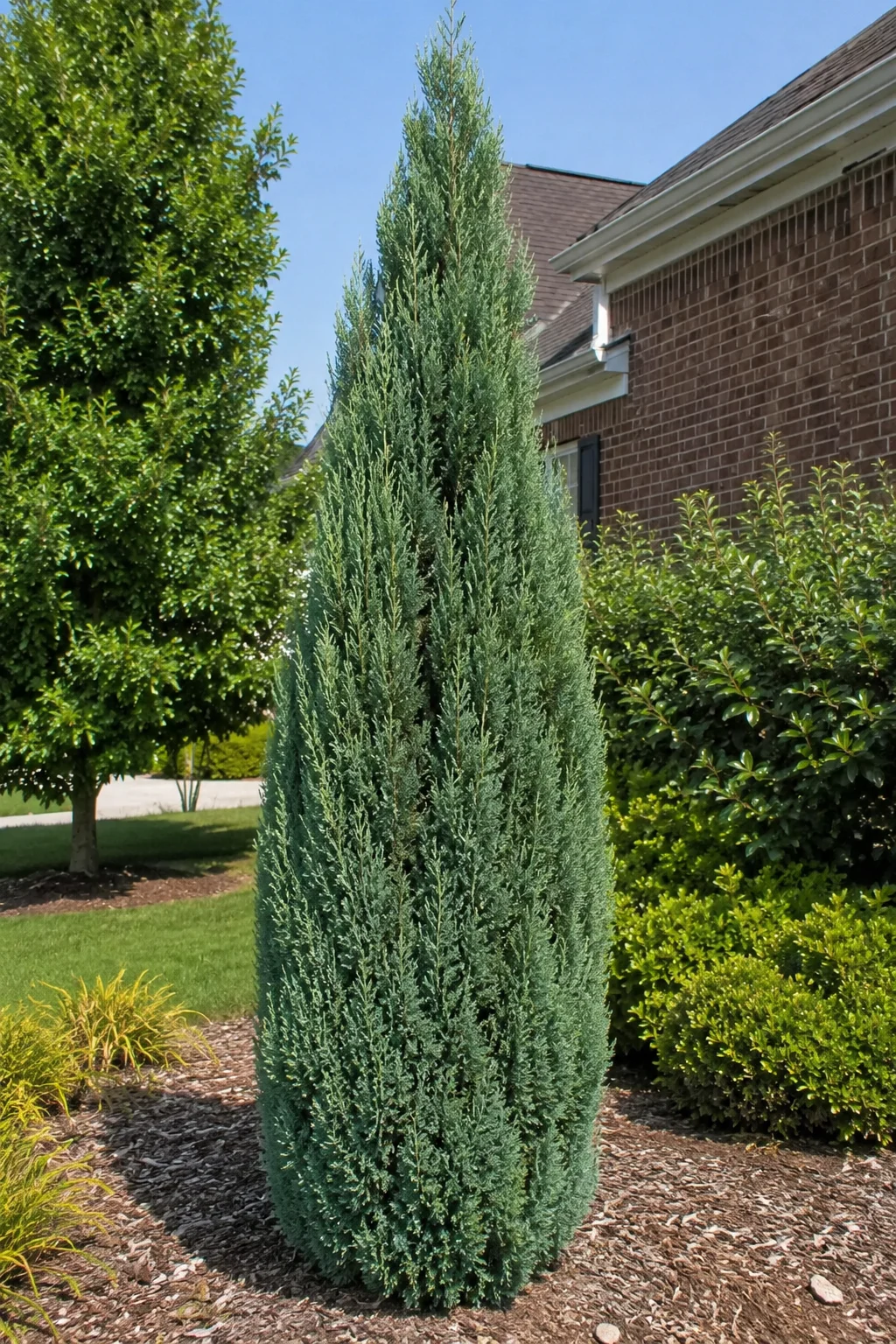
If you want a low-maintenance evergreen that looks sharp year-round, the Blue Point Juniper deserves a spot on your shortlist. It’s one of the most popular landscaping shrubs across the US, and it’s easy to see why. The dense, blue-green foliage holds its color through every season. The pyramidal shape adds structure without constant pruning.
This guide covers everything you need to plant, grow, and maintain a healthy Blue Point Juniper. You’ll find current growing zone information, spacing tips, watering schedules, and troubleshooting advice pulled from real horticultural sources. Whether you’re planting a single specimen or a full privacy screen, you’ll find practical answers here.
What Is a Blue Point Juniper
The Blue Point Juniper, botanically known as Juniperus chinensis ‘Blue Point,’ is a dense evergreen shrub with a pyramidal growth habit. Its needle-like foliage carries a striking blue-green color that stays vibrant through winter. Unlike many evergreens, it holds a naturally tidy shape. That means it needs very little pruning to look formal and well-kept.
Landscapers often use it as a focal point near entrances and patios. It also works well as a tall privacy screen when planted in a row. Because of its narrow, upright form, it fits into smaller yards without overwhelming the space the way broader evergreens sometimes do.
Blue Point Juniper Growing Zones and Climate Fit
The Blue Point Juniper thrives in USDA hardiness zones 4 through 9. In practice, that covers most of the continental United States, from the upper Midwest and New England down through the Southeast, and across much of the central and southern states. It handles both cold winters and hot summers well, though it does need consistent sunlight to maintain its shape and color.
Gardeners in the Pacific Northwest and coastal regions will also find success with this shrub, since it tolerates moderate salt exposure. That makes it a solid choice for coastal landscaping projects where many other conifers struggle. Meanwhile, gardeners in the hottest zones, particularly parts of Texas, Arizona, and the Deep South, should focus on consistent watering during the first two growing seasons to help the plant establish strong roots.
Mature Size and Growth Rate
At maturity, a Blue Point Juniper typically reaches 10 to 12 feet tall and 6 to 8 feet wide. Growth happens at a moderate pace, generally 6 to 8 inches per year once the plant is established. As a result, it takes several years to reach full size, so patience matters here.
This growth rate actually works in your favor for most landscaping plans. You get a shrub that fills in steadily without becoming unmanageable within a season or two. If you’re planning a privacy screen, though, factor in that timeline. It may take three to five years before the shrubs form a solid, continuous wall of foliage.
How to Plant a Blue Point Juniper
Getting the planting process right sets the foundation for years of healthy growth. Here’s how to do it correctly.
Choosing the Right Location
Full sun works best for this shrub. Aim for at least six hours of direct sunlight daily. Partial shade is tolerable, but too little light causes the foliage to thin out and lose its rich blue-green color. Before you plant, walk your yard at different times of day to confirm the spot gets consistent sun exposure.
Soil Requirements
Blue Point Junipers prefer well-draining soil and tolerate a range of soil types, including sandy or slightly clay-heavy ground. However, they don’t do well in areas where water pools after rain. If your yard has heavy clay soil, consider amending the planting area with compost or coarse sand to improve drainage before you plant.
Spacing Guidelines
For a privacy screen, space individual plants 4 to 6 feet apart. This spacing allows room for mature spread while still creating a fairly continuous visual barrier once the shrubs fill in. If you’re planting a single specimen as a focal point, give it plenty of open space away from structures and other plants so its natural pyramidal form isn’t crowded.
Planting Steps
Dig a hole roughly twice the width of the root ball, but no deeper than the root ball itself. Planting too deep is one of the most common mistakes gardeners make with junipers, and it can lead to root rot over time. Set the plant in place, backfill with native soil, and water thoroughly to settle the roots. Adding a two- to three-inch layer of mulch around the base helps retain moisture and regulate soil temperature.
Watering and Feeding Schedule
Newly planted Blue Point Junipers need regular watering during their first growing season. Water deeply whenever the top two inches of soil feel dry, rather than sticking to a rigid schedule. This approach encourages deep root growth instead of shallow roots that struggle during dry spells.
Once established, typically after twelve to eighteen months, this shrub becomes notably drought-tolerant. That’s one of its biggest advantages for homeowners in warmer, drier climates. Fertilizing isn’t strictly necessary, though a balanced, slow-release fertilizer applied in early spring can support stronger growth, especially in poor or sandy soils.
Pruning and Maintenance
One of the biggest selling points of the Blue Point Juniper is how little maintenance it actually needs. It naturally holds a clean, pyramidal shape without heavy shearing. That said, light pruning in early spring, before new growth begins, helps maintain a tidy appearance and removes any dead or damaged branches.
Avoid pruning back into old wood that no longer shows green growth, since junipers generally don’t regenerate foliage from bare branches. In other words, always cut just above green, living growth rather than deep into the woody interior of the plant.
Common Problems and How to Fix Them
Even a low-maintenance shrub like this one can run into occasional issues. Here’s what to watch for.
Browning or Sparse Foliage
This usually points to insufficient sunlight or overly wet soil. Check both factors first before assuming disease is the cause. If drainage is the issue, consider improving the soil or relocating young plants before their root systems become too established to move.
Spider Mites
Junipers can attract spider mites, especially during hot, dry weather. Look for fine webbing and stippled, discolored needles. A strong blast of water on the foliage every few days can help control minor infestations, while more serious cases may need an insecticidal soap treatment.
Juniper Blight
Fungal blight can appear during periods of high humidity, particularly in the Southeast. Symptoms include browning tips and dieback on individual branches. Pruning out affected areas and improving air circulation around the plant typically resolves the problem.
Best Uses for Blue Point Juniper in Landscaping
This shrub works well in several common landscaping roles. As a privacy screen, it creates a tall, dense barrier along property lines. As a specimen plant, its formal, symmetrical shape makes it a strong anchor near entryways or patios. It also pairs nicely with ornamental grasses and lower-growing perennials, since its vertical form adds contrast to a mixed border.
If you’re planning a broader landscaping project, our guide to low-maintenance evergreen shrubs for US gardens covers additional options that pair well alongside Blue Point Junipers for year-round structure and color.
Actionable Tips for Long-Term Success
Test your soil’s drainage before planting by digging a small hole, filling it with water, and checking how quickly it drains. Slow drainage signals you’ll need to amend the soil first. Additionally, water new plantings consistently through their first full year, since establishment during that period determines how drought-tolerant the shrub becomes later on.
Mulch generously, but keep it a few inches away from the trunk to prevent moisture buildup against the bark. Finally, inspect your junipers each spring for winter damage or early signs of pests, since catching problems early almost always makes treatment easier.
For additional research-backed guidance specific to your region, the University of Florida’s IFAS Extension office offers detailed growing information that’s worth reviewing, especially if you’re planting in a warmer climate zone. You can view their Blue Point Juniper plant guide for more region-specific details.
Final Thoughts
The Blue Point Juniper earns its popularity through a rare combination of low maintenance and consistent visual appeal. It handles a wide range of US climates, needs minimal pruning, and becomes genuinely drought-tolerant once established. Whether you’re building a privacy screen or adding a single formal accent to your landscape, this shrub delivers reliable, long-term results with relatively little effort on your part.
Frequently Asked Questions
How fast does a Blue Point Juniper grow?
It grows at a moderate rate of about 6 to 8 inches per year. Most plants reach their mature size of 10 to 12 feet within several years of consistent growth.
What growing zones work best for Blue Point Juniper?
This shrub thrives in USDA hardiness zones 4 through 9, which covers most of the continental United States.
How much sunlight does a Blue Point Juniper need?
It needs full sun, ideally at least six hours of direct light daily. Too much shade causes the foliage to thin and lose its blue-green color.
How far apart should I plant Blue Point Junipers for a privacy screen?
Space them 4 to 6 feet apart for a continuous screen once they reach maturity. Tighter spacing fills in faster but may require more pruning to prevent overcrowding.
Does Blue Point Juniper need a lot of water?
Newly planted shrubs need regular watering during their first year. Once established, they become quite drought-tolerant and need only occasional deep watering during dry spells.
Why is my Blue Point Juniper turning brown?
Browning often points to poor drainage, insufficient sunlight, or pest issues like spider mites. Check soil moisture and sun exposure first, then inspect closely for pests or signs of fungal blight.
Can Blue Point Juniper tolerate coastal or salty conditions?
Yes, it has moderate salt tolerance, which makes it a solid option for coastal landscaping where many other conifers struggle.
Do Blue Point Junipers need regular pruning?
Not really. They naturally maintain a tidy, pyramidal shape. Light pruning in early spring helps remove dead branches and keep the form clean, but heavy shearing generally isn’t necessary.