

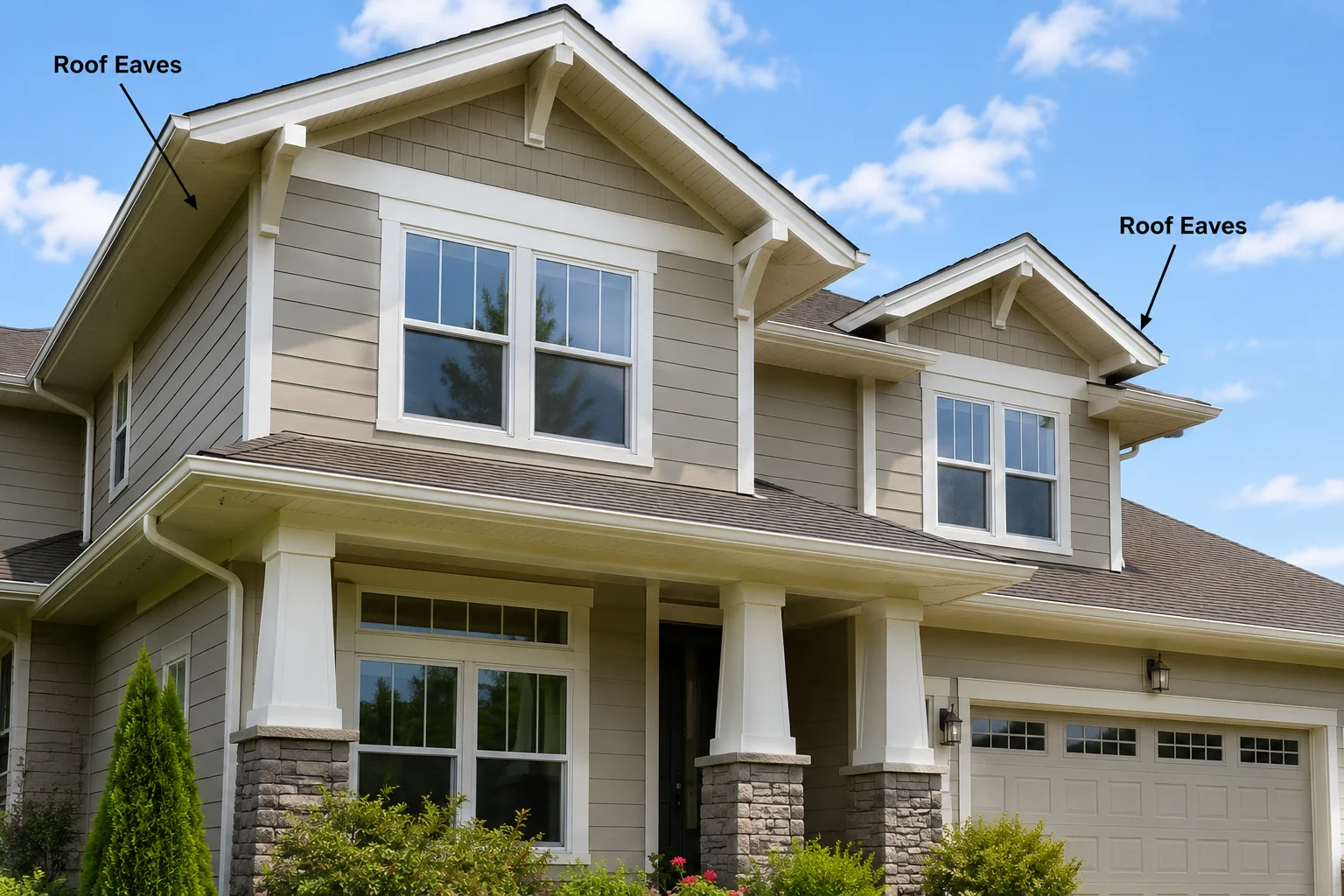
Most homeowners never think about their roof eaves until something goes wrong. Then suddenly, a water stain shows up on the siding, or a squirrel finds its way into the attic. At that point, eaves become impossible to ignore.
This guide breaks down what roof eaves actually do, the different types you’ll see across US homes, current 2026 repair and replacement costs, and practical maintenance steps that help you avoid expensive damage down the road. Whether you’re troubleshooting an existing problem or planning ahead, you’ll find clear, actionable answers here.
What Are Roof Eaves
Roof eaves are the parts of your roof that extend beyond the exterior walls of your home. They form the roof’s edge, and they play a bigger structural role than most people realize. Two main components make up the eave system: the soffit and the fascia.
The soffit is the horizontal panel installed underneath the overhang. It closes the gap between your exterior wall and the roofline. It also allows attic ventilation when it includes vents. The fascia, on the other hand, is the vertical board that runs along the roof’s edge, sitting directly behind the gutters. It supports your gutter system and protects the roof deck from weather exposure.
Together, these two components form the first line of defense against water damage. When they fail, water gets behind the gutters. From there, it moves into the roof deck and eventually into your attic and walls.
Why Roof Eaves Matter
Eaves do far more than add visual detail to your roofline. First, they direct rainwater away from your siding and foundation, which helps prevent moisture damage over time. Second, they provide shade for your windows and walls, which can reduce cooling costs during summer months. Third, properly vented soffits allow air to circulate through your attic, helping regulate temperature and reduce moisture buildup that leads to mold.
Without functioning eaves, water tends to run straight down your exterior walls. Over time, this leads to rot, staining, and even foundation issues in severe cases. In short, well-maintained eaves protect nearly every major system of your home, from the roof deck to the foundation.
Types of Roof Eaves
Not all eaves look or function the same way. Here are the main types you’ll come across on US homes.
Open Eaves
Open eaves leave the rafter tails and roof structure exposed underneath, without a soffit covering them. This style creates a rustic, exposed-beam look that’s popular in craftsman and mountain-style homes. However, open eaves offer less protection against pests and weather, so they require more frequent inspection.
Closed Eaves
Closed eaves use a soffit panel to fully enclose the underside of the overhang. This is the most common style on modern US homes, since it offers better protection against moisture, pests, and temperature fluctuations. Closed eaves also create a cleaner, more finished appearance.
Boxed Eaves
Boxed eaves are a specific type of closed eave where the fascia and soffit form a neat, boxed-in shape around the roofline. This design is especially common on traditional and colonial-style homes throughout the Northeast and Midwest.
Flush Eaves
Flush eaves sit close to the exterior wall with little to no overhang. You’ll often see this style in modern or minimalist architecture. That said, flush eaves offer less rain and sun protection, so homeowners in rainy climates should weigh this trade-off carefully.
Roof Eave Materials
Material choice affects both cost and long-term durability. Wood remains a classic option, especially for historic or craftsman-style homes, though it requires regular painting and sealing to prevent rot. Aluminum offers a low-maintenance, budget-friendly alternative that resists moisture well, making it a popular pick across most US regions. Vinyl is another affordable option, though it can become brittle in extreme cold, so it’s better suited to milder climates. Composite and PVC materials cost more upfront but resist rot, pests, and weather damage exceptionally well, which makes them a smart long-term investment in humid or storm-prone areas.
Roof Eave Repair and Replacement Costs in 2026
Pricing varies based on material, location, and the extent of damage. Here’s what current data shows for 2026.
Small soffit and fascia repairs typically run $9 to $34 per linear foot, while a full replacement generally costs between $900 and $6,800 depending on home size and material choice. Nationally, homeowners spend an average of $500 to $2,600 to repair rotted eave sections, fix rafter tails, or repaint damaged areas.
Fascia board replacement alone usually costs around $2,500, with typical ranges between $1,050 and $3,300. Labor rates for roofing professionals generally fall between $40 and $80 per hour, though homes with steep rooflines or hard-to-reach eaves often see a 7% to 15% increase in labor costs.
Regional pricing also plays a role. Metropolitan areas tend to carry higher labor rates than rural regions, and homes in the Northeast or along the coasts often see costs at the higher end of these ranges due to labor market differences and stricter building codes.
Signs Your Roof Eaves Need Attention
Catching problems early almost always saves money. Watch for these warning signs.
Peeling paint on the fascia often signals that moisture has already reached the wood underneath. Water streaks or stains on your siding usually point to a drainage issue at the eave or gutter line. Sagging sections, soft spots, or visible cracks in the soffit suggest rot or structural weakening. Pest activity, including birds, squirrels, or wasps nesting near the roofline, often means there’s a gap or hole that needs sealing. Finally, unusually warm upstairs rooms during summer can indicate blocked or failing soffit vents that aren’t allowing proper attic airflow.
Maintenance Tips to Extend the Life of Your Eaves
Regular upkeep goes a long way toward avoiding costly repairs. Here are practical steps worth adding to your seasonal home maintenance routine.
Clean your gutters at least twice a year, especially before winter and after major storms, since clogged gutters force water to back up against the fascia. Inspect your soffits and fascia visually each spring, looking for peeling paint, discoloration, or gaps. Trim overhanging tree branches that could scrape against the eaves or drop debris into the gutters. Repaint or reseal wood eaves every few years to maintain their protective coating, particularly in humid climates where moisture exposure is constant.
If you notice minor wear, addressing it quickly with caulk or a small patch is often far cheaper than waiting for the damage to spread into the framing. On the other hand, ignoring small issues almost always leads to more expensive repairs later.
Regional Considerations Across the US
Climate plays a real role in how you should approach eave maintenance. In the humid Southeast, wood eaves face a higher risk of rot and pest damage, so composite or well-sealed materials tend to perform better long-term. In snow-heavy regions like the Northeast and Upper Midwest, ice dams can form along the eaves during winter, forcing water backward under the shingles. Proper attic insulation and ventilation help prevent this issue significantly.
Meanwhile, homeowners in wildfire-prone areas of California and parts of the West should check local building codes, since many jurisdictions now require ember-resistant vents and fire-rated eave materials. Coastal homeowners, particularly along the Gulf Coast and Atlantic Seaboard, should prioritize corrosion-resistant materials like aluminum or vinyl, given regular exposure to salt air and storm conditions.
DIY vs. Hiring a Professional
Minor tasks, like cleaning gutters or applying caulk to small gaps, are reasonable DIY projects for most homeowners. However, anything involving structural repair, working at heights on a multi-story home, or addressing widespread rot should go to a licensed roofing professional. Beyond safety concerns, incorrect installation can lead to bigger, more expensive problems later, particularly around ventilation and moisture control.
If you’re already planning broader exterior work, it’s worth reading our complete guide to roof maintenance and inspection, which covers how eaves fit into your home’s overall roofing system and when a full inspection makes sense.
For homeowners comparing repair quotes, Angi’s contractor cost data offers a reliable, frequently updated benchmark for current soffit and fascia repair pricing across different regions and materials.
Final Thoughts
Roof eaves rarely get much attention until a problem forces the issue. That said, understanding what they do, how they’re built, and what they cost to maintain puts you in a much stronger position as a homeowner. Regular inspection, quick repairs, and smart material choices based on your local climate will extend the life of your eaves significantly. In the long run, that small amount of attention protects your entire roofing system, your attic, and your home’s structural integrity.
Frequently Asked Questions
What is the difference between a soffit and a fascia?
The soffit is the horizontal panel underneath the roof overhang, while the fascia is the vertical board that runs along the roof’s edge behind the gutters. Together, they form the eave system.
How much does it cost to repair roof eaves?
Most homeowners pay between $500 and $2,600 to repair rotted eave sections, though small repairs can cost as little as $180, and severe damage involving 300 linear feet can reach $9,000 or more.
How often should I inspect my roof eaves?
Inspect your eaves at least twice a year, ideally in spring and fall, and again after any major storm that could cause damage.
What material lasts the longest for roof eaves?
Composite and PVC materials generally offer the best long-term durability, resisting rot, pests, and weather damage better than wood or vinyl.
Can damaged eaves cause bigger roof problems?
Yes. Damaged eaves allow water to reach the roof deck, attic, and framing, which can lead to structural rot and significantly more expensive repairs if left unaddressed.
Do roof eaves need ventilation?
Yes, in most cases. Vented soffits allow air to circulate through the attic, helping regulate temperature and prevent moisture buildup that can lead to mold or wood rot.
How do I know if my eaves need to be repaired or fully replaced?
Small, localized damage usually calls for a repair, while widespread rot, structural sagging, or damage affecting the framing typically requires a full replacement.
Are roof eaves required by building code?
Requirements vary by location, though many US building codes do specify minimum ventilation and material standards for eaves, particularly in wildfire-prone or high-humidity regions.