

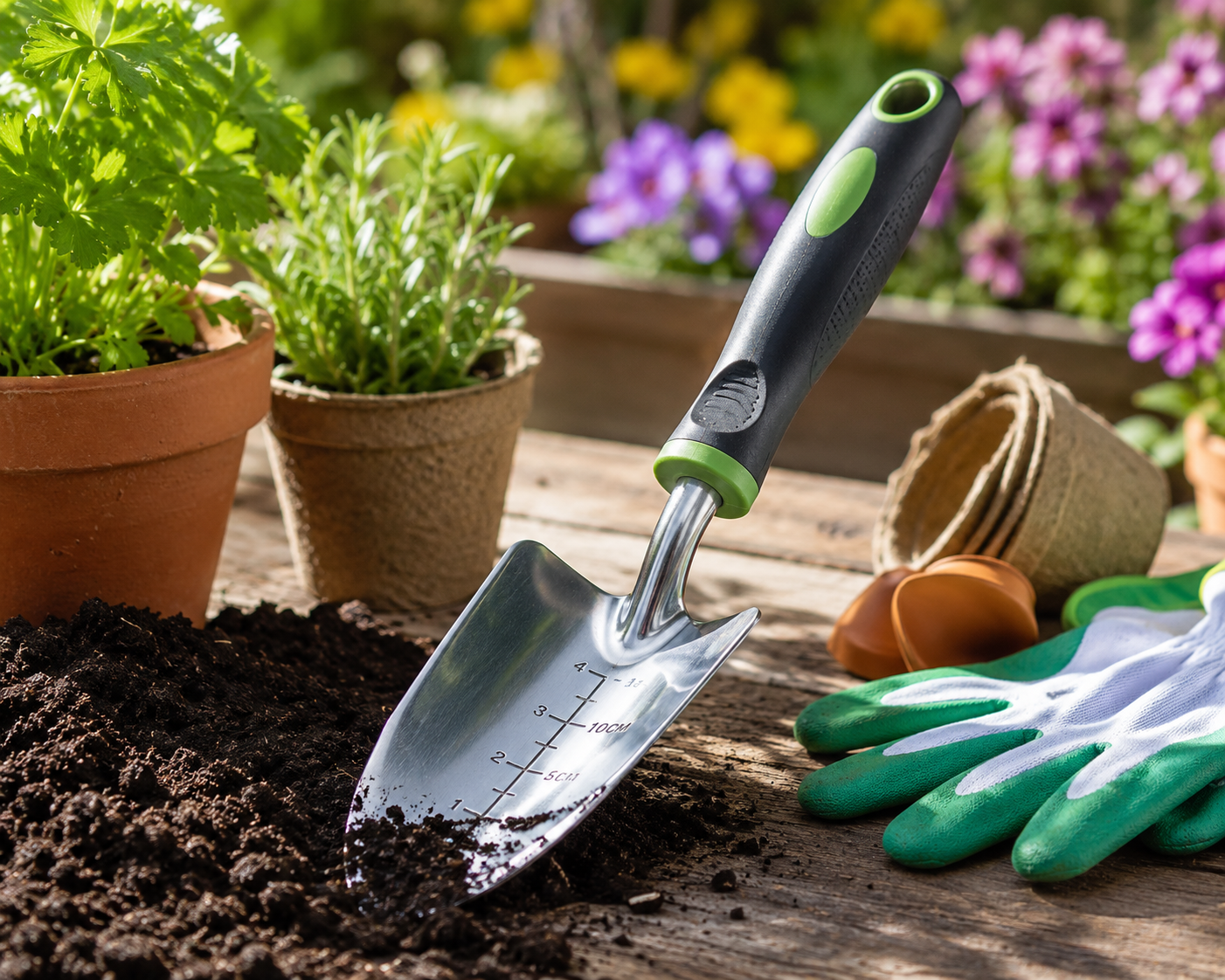
A garden trowel seems like the simplest tool in the shed. Grab one, dig a hole, plant something. But the wrong trowel can turn a quick planting session into a frustrating fight. You might end up battling compacted soil or a bent blade. The right one, on the other hand, makes almost every garden task faster and easier.
This guide walks through every trowel type on the market in 2026. You will learn which blade materials actually hold up over time. You will also learn how handle design affects hand fatigue, and which style fits your soil and your garden tasks. By the end, you will know exactly what to look for before you buy.
What Is a Garden Trowel, and Why Every Gardener Needs One
A garden trowel has three main parts. The blade does the digging. The tang connects the blade to the handle. The handle gives you grip and leverage. That simple design has stayed mostly unchanged for generations. Yet small differences in each part create huge differences in performance.
Gardeners use trowels for planting, transplanting, weeding, and mixing soil amendments into beds and containers. A shovel or spade handles bigger jobs. But a trowel gives you the precision you need for seedlings, bulbs, and container gardening. If you only own one hand tool for your garden, it should be a good trowel.
Types of Garden Trowels
Not every trowel does the same job well. Here are the main styles you will see in 2026.
Narrow or planting trowels. These have a slim, pointed blade built for digging deep, narrow holes. They work great for bulbs, seedlings, and tight planting spots between existing plants.
Wide, concave trowels. These feature a broad, scooped blade designed to move soil, compost, or potting mix efficiently. Reach for this style when you need to fill containers or move material between beds.
Transplanting trowels. These combine a narrow tip with depth markings etched into the blade. That marking helps you plant seedlings at a consistent, correct depth every time.
Serrated or root slayer trowels. These have aggressive, saw-like teeth along the blade edges. They cut through roots and compacted soil that would stop a standard trowel cold. That makes them excellent for renovating overgrown beds.
Bulb trowels. These have a long, narrow blade with depth markings specifically built for bulb planting. Many gardeners planting large batches of spring bulbs prefer this style over a general-purpose trowel.
Soil knife hybrids. These blur the line between a trowel and a knife. Many feature a serrated edge on one side and a smooth digging edge on the other. They work well for gardeners who want one tool that handles several jobs.
Top Garden Trowel Picks by Category in 2026
Different gardening tasks call for different tools. It helps to think in categories rather than searching for one universal “best” trowel.
Best for tough roots and weeding. Radius Garden’s Root Slayer style trowels use aggressive serrated edges and an inverted V-shaped tip. The design cuts through roots rather than pushing past them. This style consistently outperforms standard trowels in compacted, root-filled beds.
Best for everyday digging and planting. A stainless steel trowel with a wide, concave blade and an ergonomic thumb rest handles most everyday tasks well. That includes digging planting holes and scooping potting mix. Brands like Fiskars and Garden Guru offer solid options in this category at reasonable prices.
Best for professional and heavy-duty use. Carbon-steel, full-tang trowels from established manufacturers like DeWit, Niwaki, and Spear & Jackson tend to outperform consumer-grade alternatives. They win on both strength and longevity. Landscapers and serious hobby gardeners often prefer these for daily use across multiple properties.
Best for bulb planting. A dedicated bulb trowel with a narrow blade and clear depth markings makes planting large batches of spring bulbs far more consistent. It beats eyeballing depth with a general-purpose trowel.
Best budget option. Several trowels under 10 dollars perform surprisingly well in testing. This holds especially true for models with FSC-certified wood handles and polished stainless steel blades. These make sense for casual gardeners who dig only occasionally throughout the season.
Best for sustainability-focused gardeners. Some manufacturers now offer trowels made from recycled stainless steel with carbon-neutral certifications. These options cost a bit more. But they appeal to gardeners who want their tool purchases to reflect broader environmental values.
Blade Materials Compared
Blade material affects strength, weight, and how well your trowel resists rust over time.
Stainless steel. This is the most popular choice for home gardeners. It resists rust well and requires little maintenance, which matters if you garden in a humid or rainy climate. Quality stainless steel blades also release soil cleanly instead of caking up with mud.
Carbon steel. This material offers exceptional strength and holds an edge longer than stainless steel. Carbon steel can rust if you neglect it, so it needs occasional oiling. Still, many gardeners consider the added strength worth the extra care.
Aluminum. This is the lightest blade option, and it works well for light tasks like potting and container gardening. However, aluminum bends more easily than steel. Avoid it for digging in rocky or heavily compacted soil.
Handle Materials and Ergonomics
The handle affects comfort just as much as the blade affects performance, especially during long gardening sessions.
Wood handles. These feel warm and comfortable in the hand, and high-quality wood can last for years with proper care. Ash and hickory are common choices, since both resist splitting under regular use.
Plastic handles. These cost less upfront, but they can crack or separate from the blade over time, particularly with heavy use. Look for a molded, one-piece design if you go this route.
Fiberglass and composite handles. These resist moisture and temperature swings better than wood, and they rarely crack the way plastic can. Many premium trowels now pair a steel blade with a fiberglass or composite handle for the best of both worlds.
Ergonomic features matter too. Look for a thumb rest, contoured grip, or finger grooves if you garden frequently or deal with hand fatigue or arthritis. These small design touches make a real difference after twenty minutes of digging.
Tang Construction: Why It Matters
The tang is the metal neck connecting the blade to the handle, and this part fails more often than the blade itself. A full-tang design runs the metal all the way through the handle. That creates a far stronger connection than a partial tang bonded with glue or a simple rivet.
If you plan to use your trowel regularly or tackle tough soil, prioritize full-tang construction. Cheaper trowels often skip this detail. That is usually where they break first, right at the point where the blade meets the handle.
You can often check tang construction before buying. Look closely at product photos or read the specifications listed by the manufacturer. If the blade appears to disappear into the handle with a visible metal line running through it, that is a strong sign of full-tang construction. When in doubt, favor established brands that clearly describe their construction method, since manufacturers confident in their build quality tend to highlight it directly.
How to Choose the Right Trowel for Your Garden
Start with your soil type. Sandy or loose soil works fine with almost any trowel. Heavy clay or rocky ground, though, demands a stronger blade, ideally carbon steel with full-tang construction. Gardeners in the Midwest and parts of the Mid-Atlantic, where clay soil is common, benefit especially from investing in a sturdier blade.
Next, think about your most frequent task. If you mainly plant seedlings and bulbs, a narrow trowel with depth markings will serve you best. If you move soil and compost often, choose a wide, concave blade instead. Gardeners fighting persistent weeds or root systems should consider a serrated model.
Finally, consider your hand size and grip strength. A trowel that feels comfortable in a store display can feel very different after ten minutes of real digging. So read reviews that mention comfort during extended use, not just initial impressions.
It also helps to think about how you store your tools. If your trowel hangs on a pegboard or sits in a bucket with other tools, a hanging hole in the handle keeps it organized and easy to find. Gardeners who travel between multiple garden beds or a community plot often prefer a lightweight design. That way, they can carry it easily in one hand alongside other supplies.
What Garden Trowels Cost in 2026
Budget trowels typically run under 10 dollars, and some perform surprisingly well for casual gardeners. Mid-range trowels, often priced between 15 and 30 dollars, usually add better ergonomics, full-tang construction, or upgraded materials like FSC-certified wood handles.
Premium trowels can cost 30 to 50 dollars or more, particularly from established tool brands with lifetime warranties. These higher-end options often use carbon steel blades, hand-welded joints, or specialized serrated edges. Spending more upfront frequently means you never need to replace the tool again. That makes premium trowels a reasonable investment for gardeners who dig often.
Caring for Your Garden Trowel
A little maintenance extends the life of any trowel by years, regardless of material. Clean soil off the blade after each use, since leftover dirt holds moisture against the metal and speeds up rust. A quick rinse and wipe-down takes less than a minute.
Dry your trowel completely before storing it. Never leave a wet blade in a damp shed or garage. According to garden tool maintenance guidance from the University of Illinois Extension, removing soil promptly and applying a light protective coating helps prevent rust. This also keeps blades sharp for longer use.
If your trowel has a wood handle, apply linseed oil once or twice a season to prevent cracking and splintering. For carbon steel blades, a light coat of oil after cleaning helps block moisture. That keeps the edge in good working condition.
Local Climate Considerations Across the US
Climate affects which trowel makes the most sense for your garden. In humid regions like the Southeast and Gulf Coast, stainless steel resists rust better than carbon steel would in that moisture. In drier climates like the Southwest, wood handles need more frequent oiling, since intense sun and low humidity can dry them out and cause cracking.
Gardeners in rocky New England soil or the Mountain West should prioritize full-tang, carbon steel construction. Lighter aluminum blades bend quickly against stone and hard-packed ground. Meanwhile, gardeners with sandy coastal soil in places like Florida or coastal California have more flexibility, since lighter blades handle loose soil just fine without extra strength requirements.
If you are setting up a new garden bed and want guidance on soil preparation before you start planting, check out our guide to building the best soil for raised garden beds. It pairs naturally with choosing the right hand tools for the job.
Final Thoughts on Choosing a Garden Trowel
The best garden trowel depends on your soil, your tasks, and how often you garden. Prioritize full-tang construction and a blade material suited to your climate. That might mean rust-resistant stainless steel or the added strength of carbon steel. Pair that with a comfortable handle, and you will have a tool that makes gardening easier for years, not a frustrating one that bends or breaks after a season.
Frequently Asked Questions
What is the best material for a garden trowel blade? Stainless steel works well for most home gardeners, since it resists rust and needs little maintenance. Carbon steel offers more strength for tough soil, though it requires occasional oiling to prevent rust.
How do I know if a trowel has full-tang construction? Look at where the blade meets the handle. If the metal appears to run continuously through the handle rather than stopping at a small rivet or glued joint, the trowel likely has full-tang construction. That construction holds up much better over time.
What is the difference between a garden trowel and a hand shovel? The terms often get used interchangeably. A trowel typically refers to a smaller, more precise hand tool, while a hand shovel may describe a slightly larger digging tool. Both serve similar purposes for planting and moving soil.
Do I need a serrated trowel? Only if you regularly deal with roots, weeds, or compacted soil. A serrated or root slayer style trowel cuts through tough material far better than a standard blade. It works best as a specialty tool alongside a general-purpose trowel.
How often should I replace my garden trowel? A quality trowel with proper care can last many years, sometimes decades. Replace it if the blade bends permanently, the tang loosens, or the handle cracks beyond repair.
Is a wood or plastic handle better for a garden trowel? Wood handles feel more comfortable and durable long term, provided you oil them occasionally. Plastic handles cost less but tend to crack or loosen from the blade sooner, especially with frequent use.
Can I use a garden trowel in clay soil? Yes, but choose a stronger blade material like carbon steel with full-tang construction. A lightweight aluminum trowel can bend quickly under the resistance that heavy clay soil creates.
How much should I spend on a good garden trowel? Most gardeners find a solid trowel in the 15 to 30 dollar range. That price typically includes better ergonomics and sturdier construction than budget models under 10 dollars. Premium trowels above 30 dollars make sense if you garden frequently or work with tough soil conditions, since the added cost usually reflects better steel and a lifetime warranty.
What should I look for in a trowel if I have arthritis or hand pain? Look for a wide, ergonomic handle with a thumb rest and finger grooves, since these features reduce grip strain during use. A lighter blade material like aluminum can also help, as long as your soil is loose enough that you do not need extra digging strength.