

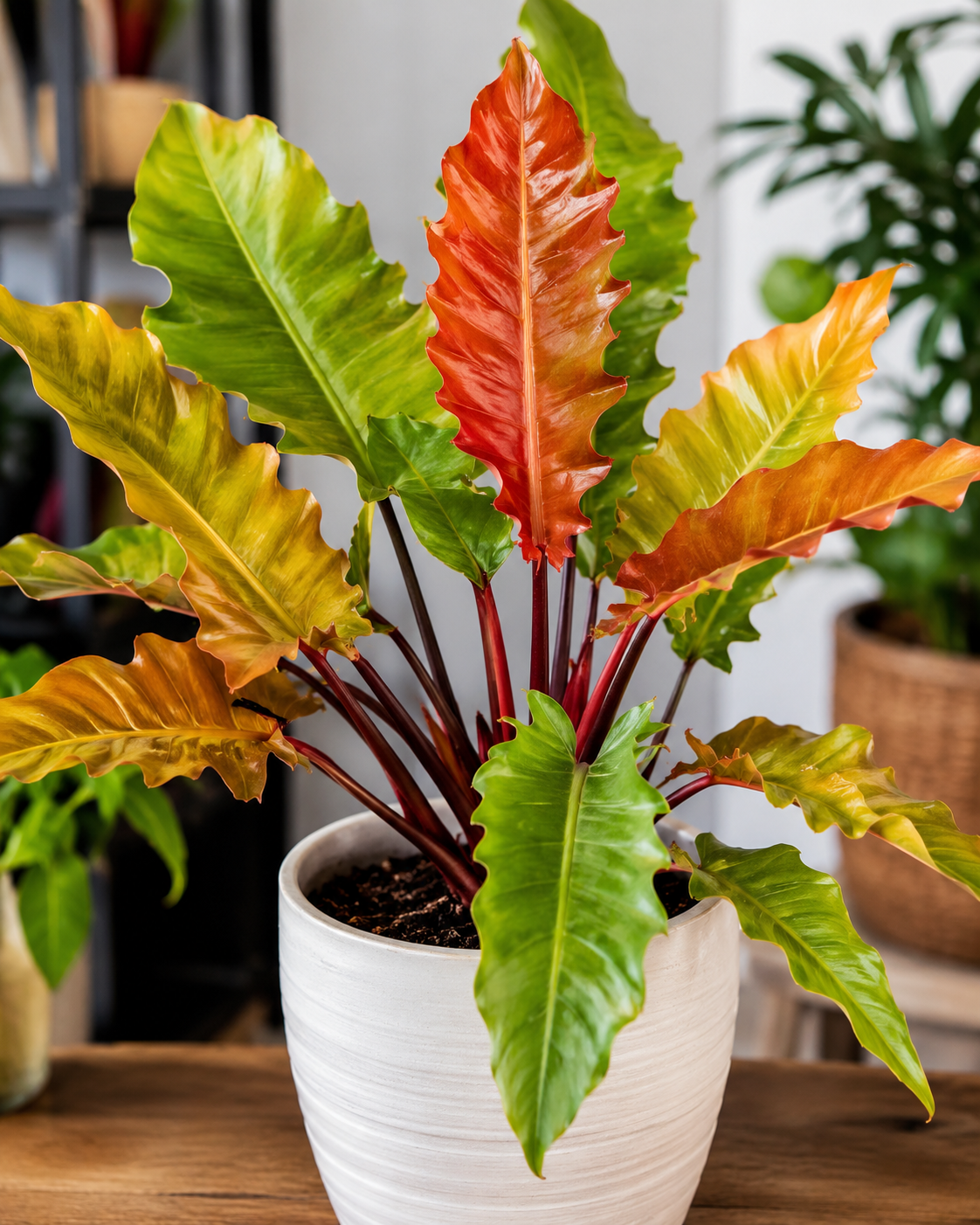
If you scroll through houseplant forums or plant shop feeds lately, you have probably spotted a Ring of Fire Philodendron. Its splashy mix of green, cream, yellow, and pink on a single leaf makes it one of the most photographed houseplants of the year. However, that bold coloring comes with a few care quirks that new owners often overlook.
I have grown several variegated philodendrons over the years, and the Ring of Fire is one of the more forgiving varieties, as long as you understand its light and humidity needs. This guide covers everything you need to know in 2026, including what makes this plant special, how to care for it properly, and what to look for before you buy one.
What Is a Ring of Fire Philodendron?
The Ring of Fire Philodendron is a variegated cultivar known for its unpredictable leaf patterns. Each leaf can display swirls of dark green, lime, cream, and even reddish-pink streaks. No two leaves look exactly alike, which is part of why collectors love it so much.
This variety belongs to the larger Philodendron genus, a group of tropical plants native to Central and South America. Because it thrives in warm, humid environments, it does especially well as an indoor houseplant across most of the United States, where indoor climates stay fairly stable year-round.
Unlike some rare variegated plants that command extremely high prices, the Ring of Fire has become more widely available through tissue culture propagation. As a result, prices have dropped significantly compared to just a couple of years ago.
Why This Plant Has Become So Popular in 2026
Variegated houseplants have dominated plant-collecting trends for several years now, and the Ring of Fire fits right into that wave. Its coloring shifts as the plant matures, so a single specimen can look completely different after a year of growth. This unpredictability keeps collectors engaged in a way that solid-colored plants simply cannot match.
Social media has also played a major role. Plant influencers frequently showcase this variety because its color changes make for compelling before-and-after content. Additionally, wider availability through big-box retailers and online nurseries has made it accessible to casual plant owners, not just serious collectors.
Interior design trends favoring bold, maximalist decor have added to the appeal too. Homeowners looking to add a statement piece to a neutral room often gravitate toward this plant because of its vibrant, almost painterly leaf patterns.
Ring of Fire Philodendron Light Requirements
Light is the single biggest factor influencing how well this plant grows and how vivid its variegation stays. Bright, indirect light works best. A spot near an east-facing or filtered south-facing window typically provides the right balance.
Too little light causes the plant to revert toward solid green leaves, since variegation requires energy the plant may not prioritize in low-light conditions. On the other hand, direct afternoon sun can scorch the lighter, cream-colored sections of the leaves, since those areas lack the chlorophyll needed to handle intense light.
If your home does not get much natural light, a grow light positioned twelve to eighteen inches above the plant can help maintain strong variegation, especially during winter months in northern states like Minnesota, Michigan, or Maine.
Watering and Humidity Needs
This philodendron prefers consistent moisture without sitting in soggy soil. Water thoroughly when the top one to two inches of soil feel dry, then allow excess water to drain completely. Overwatering remains one of the most common mistakes, since it often leads to root rot, especially in pots without drainage holes.
Humidity matters more for this variety than for many common philodendrons. Aim for humidity levels between fifty and sixty percent when possible. In drier climates, such as Arizona, Colorado, or inland California, a small humidifier placed near the plant can make a noticeable difference in leaf health and coloring.
Misting alone does not provide lasting humidity, so it should not be relied on as a primary solution. Grouping plants together or using a pebble tray can help raise ambient humidity more effectively.
Soil and Potting Recommendations
A well-draining, chunky potting mix works best for this plant. Combine standard potting soil with perlite, orchid bark, and a small amount of coco coir to mimic the loose, airy substrate found in its native tropical habitat.
Choose a pot with drainage holes, since standing water around the roots quickly leads to rot. Terracotta pots work particularly well because they allow excess moisture to evaporate through the material, reducing the risk of overwatering.
Repot every one to two years, or once you notice roots circling the bottom of the pot. Spring and early summer tend to be the best times for repotting, since the plant is actively growing and recovers more quickly from the disturbance.
Fertilizing Your Ring of Fire Philodendron
During the growing season, which typically runs from early spring through late summer, feed the plant every four to six weeks using a balanced liquid fertilizer diluted to half strength. Reduce or pause fertilizing during fall and winter, since growth naturally slows during these months.
Over-fertilizing can cause leaf tip burn and salt buildup in the soil, so it is better to under-fertilize slightly than to overdo it. Flushing the soil with plain water every few months also helps prevent mineral accumulation, particularly if you use tap water with a high mineral content.
Common Problems and How to Fix Them
Leaves reverting to solid green: This usually happens due to insufficient light. Moving the plant closer to a bright window or adding supplemental grow lights typically restores variegation on new growth, though existing solid green leaves will not change back.
Yellowing leaves: This often points to overwatering. Check the soil moisture before watering again, and make sure the pot drains properly.
Brown, crispy leaf edges: Low humidity is the most common cause. Increasing humidity through a humidifier or pebble tray usually resolves this within a few weeks.
Slow or stalled growth: This can result from insufficient light, low humidity, or a plant that has become root-bound. Checking the roots during repotting often reveals whether the plant simply needs a larger container.
Pest issues: Spider mites and mealybugs occasionally target philodendrons, especially in dry indoor environments. Wiping leaves periodically and inspecting the undersides regularly helps catch infestations early, before they spread to nearby plants.
Buying Guide: What to Look for Before You Purchase
Because variegation appears differently on every plant, careful selection matters more with this variety than with solid-colored houseplants.
Check the variegation pattern. Look for a healthy mix of colors rather than a plant that is almost entirely white or cream, since low-chlorophyll sections struggle to photosynthesize and may weaken the plant over time.
Inspect the leaves closely. Avoid plants with yellowing, browning, or visible pest damage. Healthy leaves should feel firm rather than soft or mushy.
Examine the stem and roots if possible. A sturdy stem without dark, mushy spots usually indicates a healthier plant. If the nursery allows it, gently checking the root ball for white, firm roots is a good sign.
Compare pricing across sources. Prices for a small starter plant typically range from $25 to $60 in 2026, while larger, more established specimens with striking variegation can cost $100 or more. Prices have become more reasonable as tissue culture propagation has expanded availability.
Buy from a reputable source. Local nurseries, established online plant shops, and verified sellers on plant marketplaces tend to offer healthier specimens than unverified third-party sellers, where plants may have been shipped in poor conditions.
If you already have a Monstera or Pothos at home, our indoor plant care guide covers general watering and light principles that apply across most tropical houseplants, which can help you build consistent care habits.
Pet and Family Safety Considerations
Like most members of the Philodendron genus, the Ring of Fire contains calcium oxalate crystals, which can cause oral irritation if chewed or ingested by pets or children. The ASPCA maintains a detailed reference on philodendron toxicity, which is worth reviewing if you share your home with curious pets.
Placing the plant on a high shelf or in a room pets do not frequent helps reduce risk. If you suspect a pet has chewed on the plant, contact your veterinarian promptly rather than waiting to see if symptoms develop.
Propagating a Ring of Fire Philodendron
Propagation is fairly straightforward, though patience helps since growth can be slow. Cut a stem section containing at least one node, then place it in water or moist sphagnum moss. Roots typically develop within two to four weeks under warm, humid conditions.
Once roots reach about two inches long, transplant the cutting into a well-draining potting mix. New growth from propagated cuttings does not always retain the same variegation pattern as the parent plant, so results can vary from one cutting to the next.
Final Thoughts
The Ring of Fire Philodendron earns its popularity through genuinely striking, ever-changing foliage that few other houseplants can match. It does require a bit more attention to light and humidity than a standard green philodendron, but the payoff in color and texture makes it well worth the effort for most plant owners.
Before bringing one home, take time to plan the right spot in your house, invest in a chunky, well-draining soil mix, and keep an eye on humidity levels, especially if you live in a drier climate. With reasonably consistent care, this plant can become one of the most eye-catching pieces in your indoor collection.
Frequently Asked Questions
Why is my Ring of Fire Philodendron losing its variegation? Insufficient light is the most common cause. Moving the plant to a brighter spot, ideally with bright indirect light, typically restores variegation on new leaf growth over time.
How often should I water a Ring of Fire Philodendron? Water when the top one to two inches of soil feel dry, which usually works out to roughly once every seven to ten days indoors, though this varies based on humidity and light levels.
Is the Ring of Fire Philodendron toxic to pets? Yes, like most philodendrons, it contains calcium oxalate crystals that can irritate the mouth and throat if ingested. Keeping the plant out of reach of curious pets is the safest approach.
Why are the leaves on my plant turning brown at the edges? Low humidity is usually the culprit. Increasing humidity through a humidifier, pebble tray, or grouping plants together typically resolves this issue within a few weeks.
How much does a Ring of Fire Philodendron typically cost? Small starter plants generally range from $25 to $60, while larger, more established specimens can cost $100 or more, depending on size and variegation quality.
Can I grow this plant in low light conditions? It can survive in lower light, but variegation tends to fade and growth slows significantly. Bright, indirect light produces the best color and healthiest growth overall.
How do I propagate a Ring of Fire Philodendron? Cut a stem section with at least one node, then root it in water or moist sphagnum moss. Once roots reach about two inches, transplant the cutting into a well-draining potting mix.
What is the ideal humidity level for this plant? Aim for humidity between fifty and sixty percent. In drier homes or climates, a small humidifier placed near the plant helps maintain healthy leaf coloring and texture.