

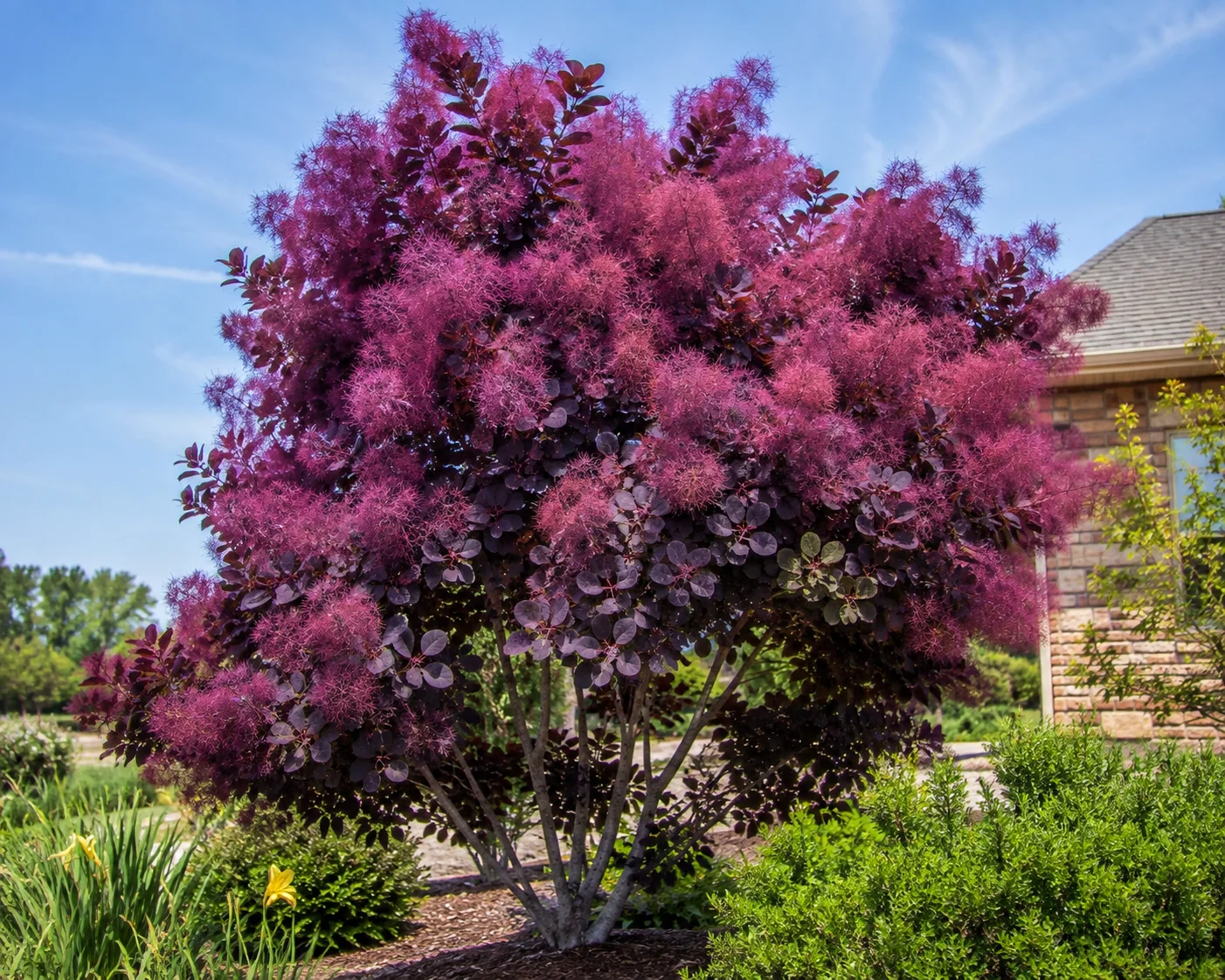
The Royal Purple smoke tree delivers bold color in American gardens. Its deep purple leaves catch the eye right away. Soft smoky plumes appear in summer and add extra drama. Gardeners from coast to coast choose this plant for good reason. As of August 2026 it still ranks among the most reliable ornamental shrubs for USA landscapes.
This complete guide walks you through every step. First you will learn the best ways to grow it. Then you will discover how to care for it and prune it correctly. Finally you will find practical landscaping ideas that work across different regions. The advice comes from years of hands-on experience with this cultivar. Therefore follow these steps and your plant should perform well for many seasons.
What Is the Royal Purple Smoke Tree?
The Royal Purple smoke tree is a popular cultivar of Cotinus coggygria. People often call it the Royal Purple smoke bush as well. It grows as a multi-stemmed shrub or small tree. Mature plants usually reach 10 to 15 feet in height. They also spread 10 to 20 feet wide.
In spring the leaves emerge a rich maroon shade. They deepen into royal purple during summer. Then in fall they shift to scarlet or orange-red tones. The real highlight arrives in late spring and early summer. Tiny yellow flowers form large airy panicles. These create the famous smoke-like effect in pink or purple hues.
This plant belongs to the Anacardiaceae family. It shares close ties with sumacs. Originally native to southern Europe and central Asia, the Royal Purple form arrived in American gardens in the 1950s. It grows successfully in USDA hardiness zones 4 through 9. Therefore it suits most of the continental United States. In addition its reliable performance has made it a favorite for decades.
Why Choose Royal Purple for Your Landscape?
Gardeners select this plant for several clear benefits. First the foliage color stays strong all season when the plant receives full sun. Second it becomes drought tolerant after it establishes. Third it resists most common pests and needs very little fertilizer.
In the USA it adapts to many different settings. Midwest gardeners use it for striking borders. Southern growers value its ability to handle heat. Western states appreciate its drought strength. Northeastern yards enjoy the bright fall color against cooler skies.
Moreover it attracts butterflies and supports local pollinators. Deer usually leave it alone. As a result it fits low-maintenance designs especially well. In addition its multi-season interest keeps gardens looking lively from spring through fall. Furthermore the plant offers excellent value for the space it occupies. Besides that it requires minimal ongoing effort once established.
Best Growing Conditions in the USA
Success begins with the right location. Choose a site that receives full sun. The plant needs at least six hours of direct light every day. Full sun keeps the purple color intense and vibrant. Partial shade often leads to greener leaves and thinner growth instead.
Soil must drain freely. Loamy sandy or even rocky ground works well. It tolerates clay soil as long as water does not stand. Aim for a pH range from slightly acidic to alkaline. Avoid rich and constantly moist soil. Lean conditions produce the strongest leaf color.
In hotter southern zones afternoon shade can prevent leaf scorch during peak summer heat. Northern gardeners should protect young plants from strong winter winds. A sheltered spot therefore helps them settle in more easily. Additionally good air circulation reduces disease risk. Consequently site selection remains the most important early decision.
Plant in spring or fall. Spring works best in colder zones. Fall planting succeeds where winters stay mild. Dig a hole twice as wide as the root ball but no deeper. Set the plant so the top of the root ball sits level with the soil surface. Backfill gently and water deeply. Space plants 10 to 15 feet apart for natural growth. Plant them closer if you want a hedge. Consequently proper spacing supports healthy long-term development. Moreover correct planting depth prevents future problems.
Watering and Establishing Your Plant
New plants need consistent moisture. Give them a deep soak once or twice a week during the first growing season. Always check the soil first. It should dry slightly between waterings. Overwatering quickly causes root problems.
After the first year the plant becomes quite drought tolerant. Water only during extended dry spells. In most USA climates that means every 10 to 14 days in summer if rain stays scarce. Apply two to three inches of organic mulch around the base. Keep the mulch a few inches away from the stems. This holds moisture and reduces weeds.
In arid western regions occasional deep watering still helps during extreme heat. Meanwhile humid southeastern areas need careful drainage to avoid fungal issues. Consequently proper watering habits make a big difference in plant health. In addition mulch provides year-round benefits. Furthermore consistent early care builds a strong root system.
Fertilizer and Soil Care
This plant prefers lean soil. Heavy fertilizer leads to weak leggy growth and fades the purple color. Skip chemical feeds most years. Instead add a light layer of compost around the base in early spring. That supplies gentle nutrients without excess.
In very poor soils you may apply a balanced slow-release product once in spring. Use it sparingly. Test your soil every few years if growth seems slow. Most American yards already provide enough nutrition for healthy plants. Furthermore excess fertility can shorten the plant’s lifespan so less is usually better. Therefore restraint with fertilizer pays off over time. Additionally lean soil enhances the famous purple tones.
Pruning the Royal Purple Smoke Tree
Pruning shapes the plant and improves its performance. Do major work in late winter or early spring before new growth begins. This timing works across all USA zones.
You have two main approaches. Light pruning keeps the natural form and allows plenty of smoke plumes. Remove dead damaged or crossing branches. Thin crowded stems for better air flow. Cut back no more than one-third of the plant each year.
Hard pruning also called coppicing creates larger leaves and deeper color. Cut all stems back to six to eight inches above ground. New growth emerges vigorous and colorful. However you lose most flowers that year because blooms form on older wood. Many gardeners therefore alternate methods. They hard prune every two or three years and use light pruning in between.
To train a tree form select one strong central stem early. Remove lower suckers and side branches as they appear. Keep shaping over several seasons. The result is a small ornamental tree with an open canopy.
Always use sharp clean tools. Wear gloves because the sap can irritate skin for some people. Avoid heavy cuts in summer or fall. New growth may not harden before winter arrives. In addition regular light maintenance prevents the plant from becoming overgrown. Moreover proper timing protects next year’s display. Consequently careful pruning extends the plant’s ornamental value.
Common Problems and Solutions
The Royal Purple smoke tree stays relatively trouble-free. Still a few issues can appear in American gardens.
Verticillium wilt sometimes strikes in poorly drained soil. Leaves wilt and branches die back. Improve drainage right away and remove affected parts. Avoid planting in known problem spots.
Powdery mildew shows as a white coating on leaves in humid weather. Increase air circulation by thinning the interior. Water at the base rather than overhead. As a result the problem often clears up.
Leaf spot or rust may appear in wet seasons. Rake fallen leaves and dispose of them properly. Most plants recover without chemicals. Spider mites sometimes appear in hot dry conditions. A strong spray of water or insecticidal soap usually controls them. Overall healthy plants in the right site rarely need intervention. Furthermore prevention through good culture remains the best strategy. In addition early detection stops small issues from growing.
Landscaping Ideas for USA Gardens
This plant shines as a specimen. Place one near a patio or entry for a strong focal point. The purple leaves contrast beautifully with green lawns or silver foliage plants.
Use it in mixed borders. Pair it with Russian sage lamb’s ears or ornamental grasses. The soft textures play against the bold leaves. Yellow or chartreuse companions create high contrast. In cottage gardens it mixes well with roses and perennials.
For privacy plant a row as an informal hedge. Space them closer and prune regularly. The dense growth blocks views while adding color. In smaller yards train it as a single-stem tree. Underplant with shade-tolerant ground covers once the canopy spreads. On slopes it helps with erosion control because of its fibrous roots.
Coastal gardeners appreciate its wind tolerance once established. Mountain regions value its cold hardiness. Across the country it fits both formal and naturalistic designs. For more ideas on pairing purple foliage plants see our guide to creating high-contrast garden borders. That post expands on color combinations that work nationwide.
Seasonal Care Calendar
Spring brings planting or transplanting opportunities. Apply compost and prune if needed. Watch for strong new growth.
Summer is the time to enjoy the smoke plumes and foliage. Water only in drought. Deadhead spent flowers if desired though many gardeners leave them for extra interest.
Fall highlights the changing leaf colors. Clean up fallen debris. Reduce watering as temperatures drop.
Winter requires protection for young plants in zone 4 with extra mulch. Avoid late pruning. The structure looks attractive against snow in northern states. Meanwhile the plant rests and prepares for the next season. In addition winter is a good time to plan future plantings. Furthermore the bare form still adds structure to the garden.
Propagation Tips
Home gardeners can start new plants from softwood cuttings in early summer. Take six-inch pieces of new growth. Dip them in rooting hormone and place them in well-drained mix. Keep the mix moist until roots form. Seed propagation is possible but seedlings may not match the parent exactly.
Most people buy container plants from local nurseries. Choose healthy stock with good color and no signs of stress. Therefore you get a strong start right away. Additionally local stock often adapts faster to regional conditions. Consequently nursery plants usually establish more reliably.
Long-Term Performance and Longevity
With proper care these plants live 15 to 20 years or more in average conditions. They grow at a medium rate. Expect several feet of growth each year once established. In ideal sites they reach full size in about a decade.
Regular light maintenance keeps them looking fresh. Hard pruning every few years renews older specimens. In rich soil they sometimes live shorter lives so stick to lean conditions. As a result your investment lasts longer and looks better. Furthermore consistent care reduces the need for replacements. Therefore good habits from the start produce lasting rewards.
For detailed botanical information and additional cultural notes consult the Missouri Botanical Garden plant finder page on Cotinus coggygria ‘Royal Purple’ . That resource offers reliable research-based details trusted by professionals.
Final Thoughts on Growing Success
The Royal Purple smoke tree rewards simple care with dramatic beauty. Give it sun good drainage and thoughtful pruning. Then step back and enjoy the show. Whether you garden in Texas heat Midwest plains or New England seasons this plant adapts and performs.
Start with one specimen this season. Watch how it transforms your space. Over time you will discover new ways to feature its color and texture. Happy gardening.
FAQ Section
How tall does a Royal Purple smoke tree grow?
It typically reaches 10 to 15 feet tall and spreads 10 to 20 feet wide. Size depends on climate soil and pruning habits.
What USDA zones support Royal Purple smoke tree?
It thrives in zones 4 through 9. That includes most of the lower 48 states with proper site selection.
Does the Royal Purple smoke tree need full sun?
Yes. Full sun produces the deepest purple leaves and best flowering. Partial shade reduces color intensity.
When should I prune my Royal Purple smoke tree?
Prune in late winter or early spring. Light cuts preserve flowers. Hard cuts encourage larger colorful leaves.
Is the Royal Purple smoke tree drought tolerant?
Once established it handles dry periods well. Water regularly only during the first year.
What causes purple leaves to turn green?
Too much shade or overly rich soil often fades the color. Move the plant to full sun and reduce fertilizer if needed.
Can I grow Royal Purple smoke tree as a hedge?
Yes. Plant closer together and prune regularly for a dense screen. It makes an attractive informal barrier.
Are there any toxic concerns with this plant?
The sap can irritate skin for some people. Wear gloves when pruning. It is also toxic if ingested in quantity so keep pets and children from chewing leaves.