

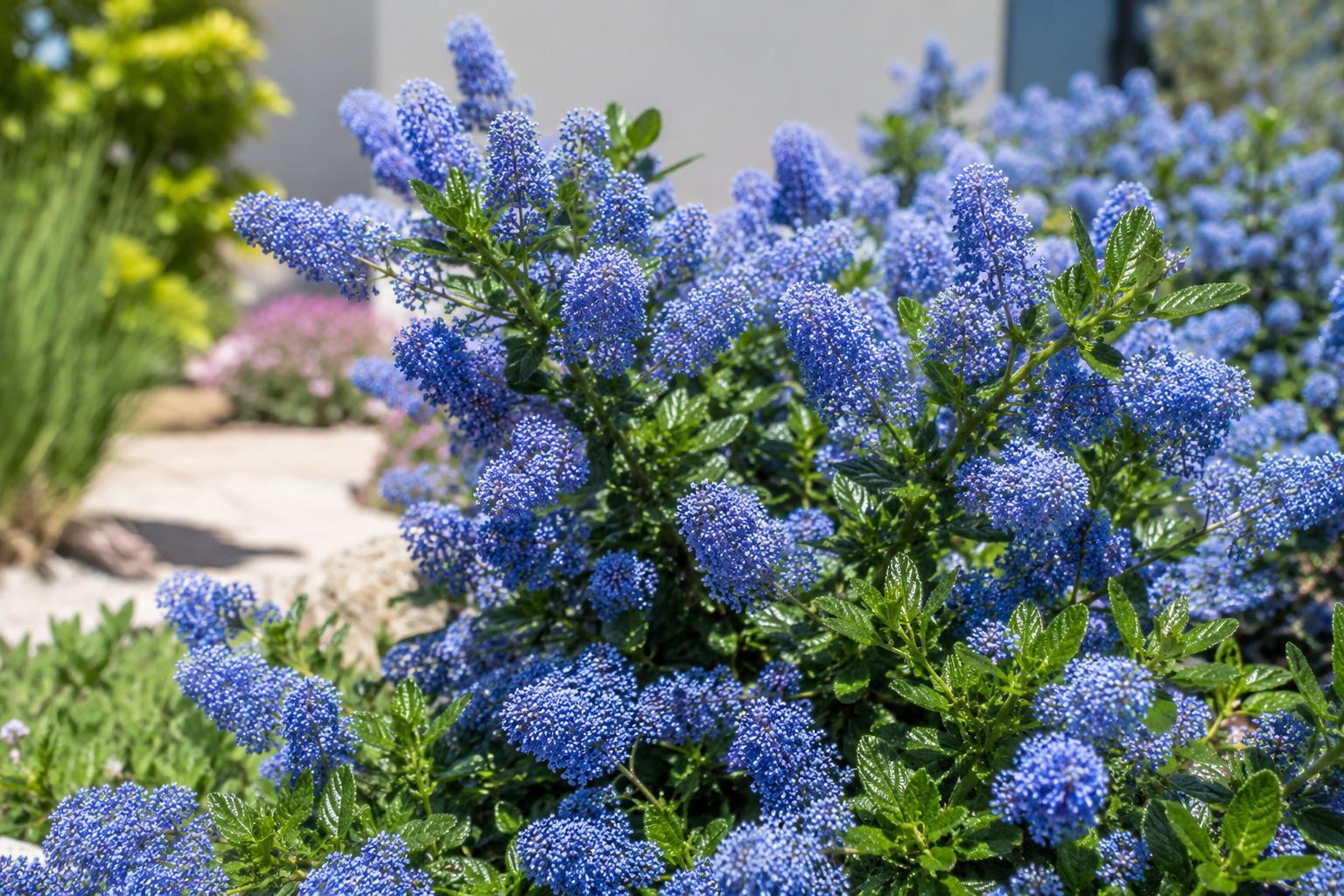
Have you ever driven through the California hills in April and seen entire hillsides glowing blue? That’s usually California lilac in bloom. It’s one of the most rewarding native shrubs you can plant in a western garden. And it asks for very little in return.
I’ve grown several Ceanothus varieties in my own yard over the years. I’ve also watched neighbors kill just as many with good intentions. This plant doesn’t behave like most nursery shrubs. It thrives on neglect once it’s established. It punishes overwatering more than almost anything else you’ll plant.
This guide walks through what California lilac actually is. You’ll learn which varieties suit different gardens. And you’ll find out how to keep yours alive and blooming for decades rather than a couple of seasons. Whether you’re starting your first native plant bed or replacing a thirsty lawn, this shrub deserves a serious look.
What Is California Lilac?
California lilac isn’t a true lilac at all. It belongs to the genus Ceanothus, part of the buckthorn family. It has no direct relation to the Syringa lilacs you might remember from a grandparent’s garden. The name stuck for a simple reason. Its fragrant, cone-shaped flower clusters resemble true lilac blooms from a distance.
Ceanothus includes somewhere around 50 to 60 species. Nearly all of them are native to the West Coast. Some grow as low, spreading ground covers that hug rocky slopes. Others grow as small trees reaching 20 feet tall. Most fall somewhere in between, forming rounded shrubs between 3 and 10 feet in height. Flower color ranges from deep indigo blue to soft powder blue. Some varieties produce white or pale pink blooms instead.
Bees love this plant. So do butterflies and hummingbirds. If you’re building a pollinator garden anywhere in California, Oregon, Washington, or similar dry-summer climates, Ceanothus belongs on your shortlist.
Why California Lilac Deserves More Attention in 2026
Native plant gardening has kept gaining momentum across the West. California lilac sits right at the center of that shift. Water agencies throughout California continue to offer rebates for replacing thirsty lawns with drought-tolerant native plantings. Ceanothus consistently shows up on recommended plant lists for exactly that reason.
It also fits neatly into the broader fire-resistant landscaping conversation happening across California and other wildfire-prone western states. No plant is truly fireproof, of course. But low-water native shrubs generally pose less risk than dense, resin-heavy ornamentals, especially when planted with proper spacing. Many local extension offices and fire departments now recommend native, low-maintenance shrubs like Ceanothus for defensible space zones. Just remember to prune out dead wood regularly.
Popular California Lilac Varieties
With so many species and cultivars available, picking the right one comes down to your space, your soil, and how you plan to use the plant. Here are some of the most popular options for home gardens.
Ceanothus ‘Julia Phelps’
This variety produces small leaves and vivid, deep blue flowers each spring. It handles drought exceptionally well once established. Many gardeners consider it one of the easiest Ceanothus cultivars to grow. It typically reaches 6 to 8 feet tall. It works well as a specimen shrub or informal screen.
Ceanothus ‘Dark Star’
‘Dark Star’ brings some drama to the garden. Its flower buds start out nearly black before opening into rich, deep blue blossoms. It grows into a dense, mounding shrub, usually 4 to 6 feet tall. It makes a striking focal point near a patio or entryway.
Ceanothus ‘Ray Hartman’
If you want height, ‘Ray Hartman’ delivers. This hybrid can grow into a small tree, sometimes reaching 20 feet with some shaping. Gardeners often use it as a large screening plant. It also works as a natural, low-water alternative to non-native flowering trees.
Ceanothus gloriosus ‘Anchor Bay’
This low, spreading variety works beautifully on slopes and in coastal gardens. It stays under 2 feet tall while spreading several feet wide, which makes it useful for erosion control on hillsides. Its blue flowers appear in dense clusters each spring.
Ceanothus ‘Concha’
‘Concha’ is a reliable, mid-sized favorite among landscapers. It grows 5 to 7 feet tall and produces deep cobalt blue flowers. It also tolerates a wider range of soil conditions than some pickier cultivars.
Deciduous Varieties for Colder Climates
Most California lilacs are evergreen. But a few deciduous types, like ‘Gloire de Versailles’, handle colder winters and more exposed sites better than their evergreen relatives. These varieties flower on new growth each year. They benefit from an annual spring pruning to encourage fresh blooming stems.
Where California Lilac Grows Best
Most Ceanothus varieties thrive in USDA hardiness zones 8 through 10. This covers coastal and inland California, much of the Pacific Northwest, and parts of the Southwest. Gardeners in the desert Southwest can grow certain drought-adapted cultivars as well, provided they avoid summer irrigation.
Outside the West Coast, results get trickier. Ceanothus struggles in regions with humid summers, heavy clay soil, or freezing winters without reliable snow cover for insulation. Gardeners in the Southeast or Midwest generally have better luck with true lilacs (Syringa) instead. Ceanothus simply isn’t built for those growing conditions.
If you’re unsure whether a specific variety suits your region, check your exact planting zone first. Then confirm the native range using Calscape, a native plant database maintained by the California Native Plant Society. It lets you search by zip code to see which Ceanothus species grow naturally near you.
How to Plant California Lilac
Getting the planting stage right matters more with Ceanothus than with most garden shrubs. Follow these steps for the best long-term results.
Choose the Right Spot
Pick a location with full sun. Most varieties need at least six hours of direct sunlight daily to bloom well and stay compact. Partial shade works for a few cultivars, but flowering usually suffers.
Check Your Drainage
Drainage matters more than almost anything else with this plant. Heavy clay soil that holds water through winter kills more California lilacs than any pest or disease. If your soil drains slowly, consider planting on a slope or in a raised bed instead.
Dig a Wide, Shallow Hole
Dig a hole about twice as wide as the root ball. Keep the depth no deeper than the root ball itself. Planting too deep traps moisture around the crown and encourages rot.
Skip the Soil Amendments
Resist the urge to add compost or rich organic matter to the planting hole. Ceanothus evolved in lean, rocky soil. Overly rich amendments can actually work against it. Native soil, even if it seems poor, usually works better.
Check Your Soil pH
Most California lilac varieties prefer slightly acidic to neutral soil. That’s generally in the range of 6.0 to 7.0. Highly alkaline soil can sometimes cause nutrient deficiencies, showing up as yellowing between the leaf veins. A basic soil test kit from a garden center can tell you where you stand before you plant. In most cases, though, native soil in California and the Pacific Northwest falls within an acceptable range without any adjustment needed.
Water Through the First Summer
Water your new plant regularly through its first dry season to help the roots establish. After that first year, most varieties need little to no supplemental water at all.
Ongoing Care and Maintenance
Once established, California lilac asks for surprisingly little. Here’s what ongoing care actually looks like.
Watering
This is where most people go wrong. Established Ceanothus plants generally don’t need summer irrigation once they’re a year or two old. Overwatering during summer dormancy is the single most common cause of premature plant death. If you’re irrigating a lawn or nearby garden beds, try to keep sprinklers away from your Ceanothus.
Fertilizing
Skip it. Ceanothus doesn’t need fertilizer, and heavy feeding can actually shorten its lifespan by encouraging fast, weak growth. These plants fix their own nitrogen through a relationship with soil bacteria, so they rarely need outside help.
Pruning
Prune evergreen varieties lightly after flowering to maintain shape and remove dead wood. Avoid cutting into old, bare wood, since many varieties don’t resprout well from it. Deciduous types tolerate harder pruning and actually benefit from it, since they flower on new growth each spring.
Mulching
A light layer of mulch helps retain moisture around young plants. Keep it a few inches away from the trunk, though, since piled mulch against the base can encourage rot.
When to Plant California Lilac
Timing matters almost as much as placement. Fall is the best planting window across most of California and the Pacific Northwest. Cooler temperatures and winter rains let roots establish before the plant faces its first dry summer. Spring planting works too, especially in cooler coastal areas, but it means you’ll need to water more attentively through that first summer heat.
Avoid planting during the peak of summer if you can help it. Young roots struggle to establish in hot, dry soil, and the plant faces more transplant stress than it would in cooler months. If a fall or spring planting isn’t possible, just be prepared to water more consistently and watch for signs of stress.
Common Problems and How to Fix Them
Even a tough, low-maintenance plant runs into occasional trouble. Here are the issues gardeners run into most often.
Root Rot
Yellowing leaves, wilting despite adequate rainfall, and a generally unhealthy appearance usually point to root rot. This almost always traces back to poor drainage or summer overwatering. Unfortunately, once root rot sets in, there’s rarely a fix. Prevention through proper drainage is the real solution.
Short Lifespan
Some gardeners report that their Ceanothus only lasted a few years. In most cases, this comes down to too much water, too much fertilizer, or soil amendments that hold excess moisture. With correct care, many varieties live 20 to 25 years or longer.
Deer Damage
Ceanothus does attract deer in some regions. Well-established, unfertilized plants tend to be less appealing than lush, well-watered ones, though. If deer pressure is heavy in your area, consider fencing young plants until they toughen up.
Powdery Mildew
Overhead watering or overly humid microclimates can sometimes cause powdery mildew on leaves. Improving airflow around the plant and avoiding sprinkler irrigation usually solves the problem.
Designing With California Lilac
Because Ceanothus varieties range so widely in size and habit, you can use them almost anywhere in a western landscape. Low, spreading types work well on slopes, as living erosion control, or cascading over retaining walls. Mid-sized shrubs make excellent informal hedges, privacy screens, or focal points near a patio. Taller tree-form varieties can replace thirsty ornamental trees while still providing shade and habitat value.
Pair Ceanothus with other California natives that share its love of sun and dry soil. Manzanita, California poppy, and native sages all make natural companions. They thrive under the same conditions and won’t compete for supplemental water. Toyon and coffeeberry also pair well as taller background plants, especially in a larger native hedgerow. If you’re planning a broader native plant landscape, it helps to review our guide to drought-tolerant landscaping for California yards alongside this one. Many of the same principles apply, from soil prep to irrigation scheduling.
Final Thoughts
California lilac rewards patience and a light touch far more than heavy care. Choose the right variety for your space. Give it good drainage and full sun, and then step back once it’s established. Many gardeners who struggle with this plant are, ironically, taking too good care of it. Skip the extra water and skip the fertilizer. Let Ceanothus do what it’s evolved to do for thousands of years across the West. With the right start, you’ll get decades of fragrant blue blooms and happy pollinators. You’ll also have one of the lowest-maintenance shrubs in your entire garden.
Frequently Asked Questions
Is California lilac the same as regular lilac?
No. California lilac belongs to the Ceanothus genus, while common lilac belongs to Syringa. They share a similar fragrance and flower shape, but they’re not related botanically. California lilac also tolerates drought far better and needs a completely different care approach.
When is the best time to plant California lilac?
Fall is generally the best time to plant, since cooler temperatures and winter rain help roots establish before summer heat arrives. Spring works too, particularly in coastal areas, but expect to water more often through that first summer. Avoid planting during peak summer heat whenever possible.
How fast does California lilac grow?
Most varieties grow quickly, often adding a foot or more per year once established. Some cultivars reach their mature size within just three to five years. That makes them a good choice if you want fast coverage or screening.
Does California lilac need a lot of water?
No, and that’s actually the key to keeping it alive. Water regularly during the first summer after planting, then reduce watering significantly. Established plants generally need little to no supplemental water, and overwatering is the leading cause of plant failure.
Why did my California lilac die after a few years?
Overwatering is the most common culprit, especially summer irrigation meant for lawns or other plants nearby. Rich soil amendments and heavy fertilizing can also shorten its lifespan. With correct care, many varieties live 20 years or more.
Can I grow California lilac outside of California?
Yes, in similar dry-summer climates. Most varieties thrive in USDA zones 8 through 10, which includes much of the Pacific Northwest and parts of the Southwest. Humid or freezing climates generally aren’t suitable, since the plant evolved for wet winters and dry summers.
When does California lilac bloom?
Most varieties bloom in late spring to early summer, typically between March and May depending on your region. A few varieties, like ‘Autumnal Blue’, bloom later in summer or early fall instead.
Is California lilac good for pollinators?
Absolutely. Bees, butterflies, and hummingbirds are all drawn to its abundant flower clusters. It’s considered one of the best native shrubs for supporting pollinator populations across California and the broader West Coast.
Do deer eat California lilac?
Sometimes, though it’s not their favorite target. Well-established, unfertilized plants tend to be less appetizing to deer than lush, well-watered specimens. If deer pressure is high in your area, protect young plants with fencing until they mature.