

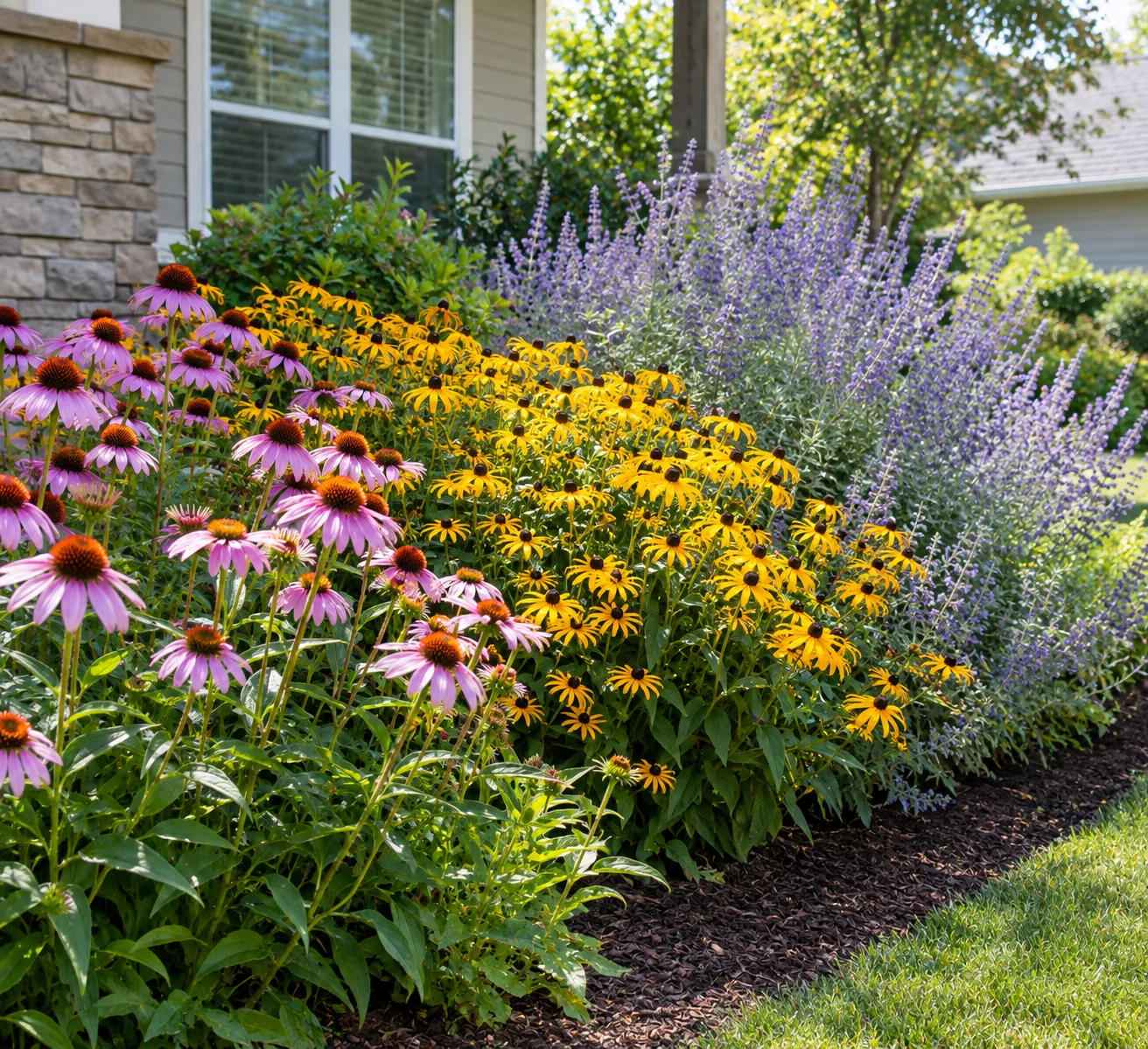
If your yard bakes in direct sun from mid-morning until evening, most nursery-tag plants will struggle there. The ones below don’t just survive that heat — they actually thrive in it. Below, you’ll find 30 plants that hold up to intense sun and high temperatures across most of the U.S., and I’ve organized them by type so you can quickly match them to the spot you’re trying to fill.
Quick Answer
“Full sun” means a spot gets six or more hours of direct sunlight a day. Heat-tolerant plants, meanwhile, are the ones that keep growing and blooming once summer temperatures climb into the 90s. The most reliable choices generally share a few traits: deep or fibrous root systems, waxy or fuzzy leaves that cut water loss, and origins in naturally hot, dry regions like the American Southwest, the Mediterranean, or South America.
For most of the country, black-eyed Susan, purple coneflower, Russian sage, lantana, zinnia, agave, and crape myrtle all perform well. That said, your exact list still depends on your USDA hardiness zone, your soil, and how much supplemental water you’re willing to give a plant during its first year.
What “Full Sun and Heat” Actually Means for Plant Selection
Full sun and heat tolerance aren’t the same thing, and nursery labels sometimes blur the two. A plant might handle six hours of direct light just fine in Maine, yet fail completely in six hours of direct light in Phoenix. That’s because afternoon sun in a hot climate adds radiant heat on top of the light itself. So a plant tagged “full sun” at a big-box store in the Northeast can easily scorch in Texas or Arizona without extra water.
Heat tolerance usually comes down to how well a plant manages water loss. Succulents like agave store water in thick leaves. Silvery-leaved plants such as Russian sage and lamb’s ear reflect light instead of absorbing it. Deep-rooted natives like coneflower and little bluestem reach moisture that shallow-rooted lawn grass simply can’t touch. Once you understand which strategy a plant relies on, you’ll have a much better sense of where it will actually thrive in your yard, not just whether it survives one hot week.
Your USDA Plant Hardiness Zone matters here too, though in a different way — it tells you the coldest temperatures a plant can survive over winter, not how well it handles summer heat. The American Horticultural Society’s Plant Heat Zone Map addresses that other half of the equation, even though nurseries print it far less often than the USDA zone. For most home gardeners, cross-referencing your USDA zone with your region’s typical summer highs gives a good enough picture to shop by.
Quick-Reference Table
| Plant | Type | USDA Zones | Height | Water Needs |
|---|---|---|---|---|
| Black-eyed Susan | Perennial | 3–9 | 1–3 ft | Low-moderate |
| Purple coneflower | Perennial | 3–9 | 2–4 ft | Low once established |
| Russian sage | Perennial | 4–9 | 3–4 ft | Low |
| Autumn sage | Perennial/shrub | 6–9 | 2–3 ft | Low |
| Yarrow | Perennial | 3–9 | 1–3 ft | Low |
| Blanket flower | Perennial | 3–10 | 1–2 ft | Low |
| Threadleaf coreopsis | Perennial | 4–9 | 1–2 ft | Low-moderate |
| Daylily | Perennial | 3–9 | 1–4 ft | Moderate |
| Sedum (Autumn Joy) | Succulent | 3–10 | 1–2 ft | Low |
| Ice plant | Succulent groundcover | 5–10 | 3–6 in | Low |
| Moss rose (portulaca) | Annual | Grown as annual everywhere | 4–8 in | Very low |
| Agave | Succulent | 8–11 | 1–6 ft | Very low |
| Zinnia | Annual | Grown as annual everywhere | 1–4 ft | Moderate |
| Lantana | Annual/perennial | 8–11 (annual elsewhere) | 1–6 ft | Low |
| Vinca (Madagascar periwinkle) | Annual | Grown as annual everywhere | 6–18 in | Low-moderate |
| Angelonia | Annual | Grown as annual everywhere | 1–2 ft | Moderate |
| Marigold | Annual | Grown as annual everywhere | 6 in–3 ft | Moderate |
| Cosmos | Annual | Grown as annual everywhere | 2–4 ft | Low |
| Crape myrtle | Shrub/tree | 6–9 | 6–25 ft | Low-moderate |
| Texas sage (cenizo) | Shrub | 8–11 | 5–8 ft | Very low |
| Esperanza (yellow bells) | Shrub | 8–11 | 3–6 ft | Low |
| Rosemary | Shrub/herb | 7–10 | 2–4 ft | Low |
| Butterfly bush | Shrub | 5–9 | 4–10 ft | Moderate |
| Oleander | Shrub | 8–10 | 6–12 ft | Low |
| Muhly grass | Ornamental grass | 6–10 | 2–4 ft | Low |
| Little bluestem | Ornamental grass | 3–9 | 2–4 ft | Low |
| Okra | Vegetable | Grown as annual everywhere | 3–6 ft | Moderate |
| Hot peppers | Vegetable | Grown as annual everywhere | 1–3 ft | Moderate |
| Lavender | Herb | 5–9 | 1–3 ft | Low |
| Sunflower | Annual | Grown as annual everywhere | 3–10 ft | Moderate |
Perennials That Handle Full Sun and Heat
Black-eyed Susan and purple coneflower stand out as the two most reliable prairie natives for hot, sunny beds anywhere in the country. Both tolerate poor soil, need almost no fertilizer, and attract pollinators for months at a time. Coneflower’s taproot makes it especially drought-hardy once it’s had a full growing season to establish, but it resents constant moisture — in fact, overwatering kills more coneflowers than heat ever does.
Russian sage and autumn sage (a Salvia greggii cultivar popular in Texas and the Southwest) both rely on silvery or aromatic foliage to shrug off intense afternoon light. Russian sage handles cold winters better and grows well as far north as USDA zone 4. Autumn sage, on the other hand, prefers milder winters and does best in zones 6 and up.
Yarrow, blanket flower, and threadleaf coreopsis round out the low-maintenance perennial category. All three spread readily, bloom through the hottest part of summer, and tolerate the kind of thin, rocky soil that would stunt most garden perennials. The tradeoff is that they can look a little ragged by late summer if you skip deadheading — so a quick trim after the first flush of bloom keeps them tidy.
Daylilies also deserve a mention, since gardeners often overlook them for hot climates even though they handle full sun better than most flowering perennials at the same price point. They do need more consistent moisture than the others on this list, particularly during bud formation, so they work best if you’re willing to water occasionally rather than leave the bed alone all summer.
Succulents and Groundcovers for the Hottest, Driest Spots
If you have a spot that gets reflected heat off pavement or a south-facing wall, succulents will outperform almost anything else. Sedum (Autumn Joy is the most widely sold cultivar) stores water in its thick leaves and actually prefers being left alone — rich soil and regular watering just make it flop over instead of standing upright.
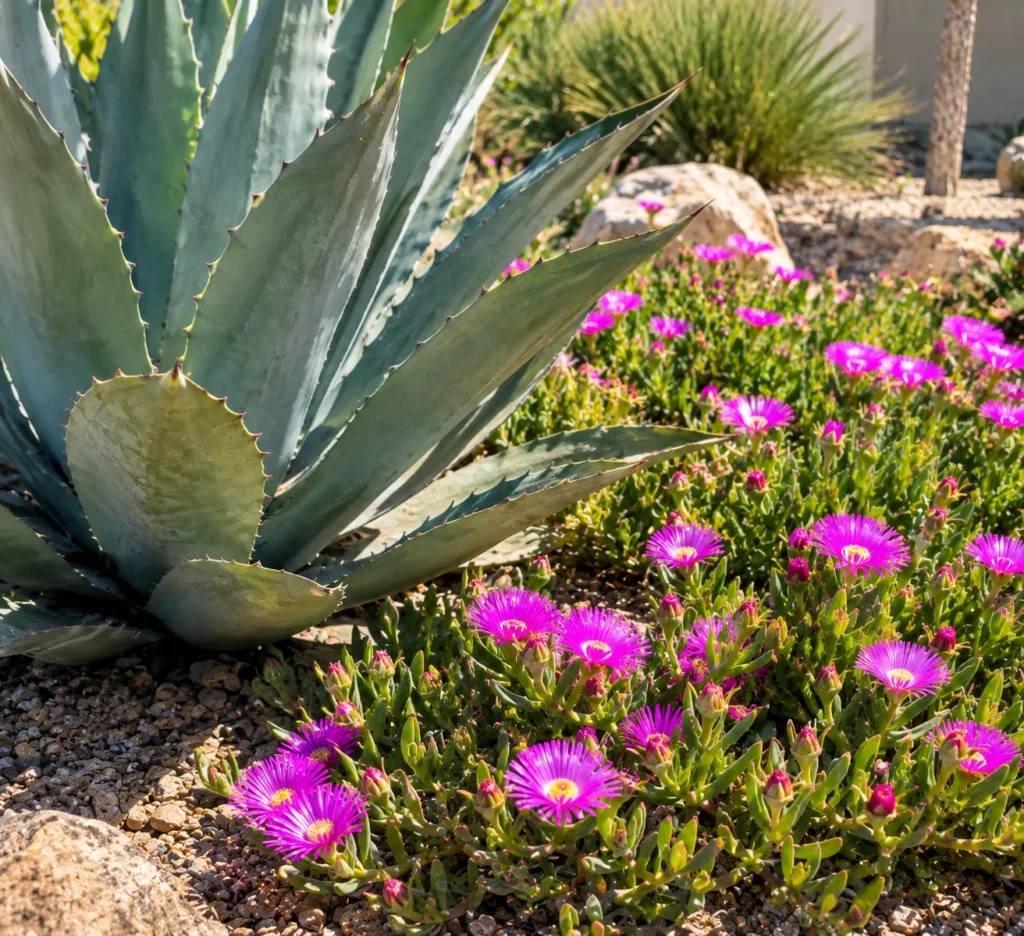
Ice plant, meanwhile, works well as a flowering groundcover in the hottest, driest parts of a yard where grass won’t establish. It spreads fast, blooms in vivid colors, and needs sharp drainage, since standing water will rot it within days.
For zones 8 through 11, agave is the plant to reach for when you want something architectural that needs essentially no irrigation once established. It’s a poor choice for anywhere with wet winters or heavy clay soil, though, since soggy roots are the one thing that reliably kills it.
Moss rose, sold as portulaca, technically grows as an annual almost everywhere, but it reseeds so readily in hot climates that many gardeners simply treat it as a returning plant. It’s also one of the few flowering options that genuinely thrives in poor, sandy soil with almost no supplemental water.
Annuals That Keep Blooming Through Peak Summer Heat
Annuals give you color fast, and a handful of them are specifically bred or selected for heat performance rather than just tolerating it.
Zinnias and cosmos make an easy starting point if you’re new to gardening in a hot climate. Both grow readily from seed sown directly in the ground after the last frost, and both keep blooming as long as you cut flowers or deadhead spent ones.
Lantana technically behaves as a perennial shrub in zones 8 through 11, though it dies back to the ground as an annual farther north. Either way, it remains one of the most heat-proof flowering plants sold in the U.S., and it needs almost no attention once it’s rooted in.
Vinca (Madagascar periwinkle, not to be confused with the groundcover vinca vine) often replaces impatiens in beds that get more sun than shade-loving flowers can handle. It also resists the fungal diseases that plague many annuals during humid Southern summers.
Angelonia and marigold both hold their form in extreme heat without wilting during the hottest part of the afternoon, which makes them solid choices for containers on a south-facing patio, where soil temperatures run even higher than in-ground beds.
Shrubs and Small Trees for Structure and Shade
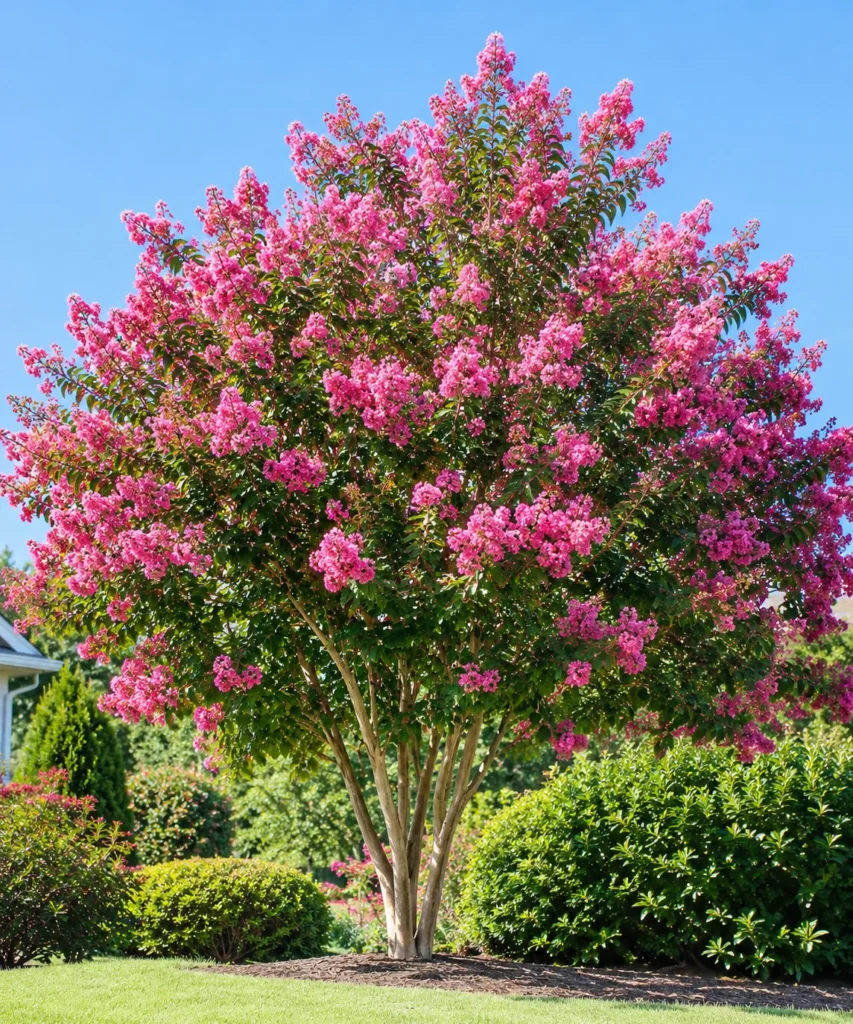
Crape myrtle stands as arguably the signature hot-climate flowering tree across the South, since it blooms for weeks during the peak of summer heat, right when most trees have already finished flowering. It needs full sun to bloom well, though — planted in shade, it grows leggy and flowers poorly instead.
Texas sage, also called cenizo or Texas ranger, brings silvery foliage and a reputation for blooming right before a rain event, which has earned it the nickname “barometer bush” in parts of Texas. It ranks among the most drought-proof flowering shrubs available, though it struggles in humid climates with heavy summer rainfall.
Esperanza, or yellow bells, adds tropical-looking yellow trumpet flowers to hot Southwestern gardens and tolerates reflected heat from driveways and walls better than most flowering shrubs.
Rosemary and lavender work as both herbs and ornamental shrubs, and both trace back to the Mediterranean, where lean, dry soil is the norm. In fact, both actually perform worse in rich, well-watered soil than in the dry conditions many gardeners assume would be a problem. So if your rosemary keeps dying, overwatering — not underwatering — is the more likely culprit.
Oleander and butterfly bush both tolerate intense sun and neglect well. However, oleander is toxic if ingested by people or pets, which matters if you’re planting near a yard where kids or animals spend time.
Ornamental Grasses and Edibles Worth Growing in Hot, Sunny Spots
Muhly grass and little bluestem bring movement and texture to a hot landscape without demanding much water once established. Muhly grass has become especially popular across the South over the past decade, thanks to its pink autumn plumes.
On the edible side, okra and hot peppers rank among the most heat-tolerant vegetables you can grow. Both actually produce better in extreme heat than in mild spring weather. Okra, in particular, struggles in cool soil and only takes off once nighttime temperatures stay reliably above 70°F. Sunflowers follow a similar pattern: they germinate fast in warm soil and hold up to heat that would otherwise stress cool-season crops like lettuce or peas.
Common Mistakes When Planting for Full Sun and Heat
The biggest mistake is treating “drought-tolerant” as “no-water” from day one. Nearly every plant on this list still needs regular watering during its first growing season while roots establish. Skip that step, and you’ll likely lose an otherwise tough plant within its first summer.
The second common mistake is ignoring soil drainage. Many of the plants here — agave, Texas sage, rosemary, lavender, sedum — actually fail from root rot in heavy clay soil that holds water, not from heat itself. So if your soil stays soggy after rain, amend it with coarse sand or grit, or plant in a raised bed instead.
The third mistake is skipping mulch. A two- to three-inch layer keeps soil temperatures down and cuts water loss dramatically, and that matters even for plants rated as heat-tolerant. After all, bare soil in full sun can reach temperatures that stress roots, no matter how tough the plant above ground looks.
Regional Notes for U.S. Gardeners
Gardeners in the Southwest and inland California deal mainly with dry heat, so succulents, Mediterranean herbs, and Southwestern natives like agave and Texas sage tend to perform best there. And gardeners in the Southeast, by contrast, face humid heat, which makes life harder for plants prone to fungal disease. Vinca, crape myrtle, and lantana handle that combination better than many Mediterranean natives, which often rot in humid, wet summers regardless of how heat-tolerant they’re supposed to be. In the upper Midwest and Northeast, meanwhile, “heat tolerant” mostly just means surviving shorter but still intense heat waves, so cold-hardy perennials like coneflower, black-eyed Susan, and little bluestem are usually a safer bet than tender Southwestern natives that won’t make it through winter anyway.
If you’re planning a full landscape redesign around heat and drought tolerance rather than picking individual plants Our guide on Tuscan Blue Rosemary covers broader landscaping and outdoor living considerations for hot climates.
Frequently Asked Questions
What flowers bloom the longest in full sun and extreme heat?
Lantana, zinnia, and angelonia typically bloom from late spring through the first frost with minimal care, and they generally outlast most other annuals through the hottest weeks of summer.
Do heat-tolerant plants still need watering?
Yes, especially during their first growing season. Most drought-tolerant plants need consistent water while roots establish, then need much less once mature — usually within one to two years.
What’s the difference between full sun and partial sun plants?
Full sun means six or more hours of direct sunlight daily, while partial sun or partial shade plants need only three to six hours. Give a partial-sun plant more direct afternoon light than it’s bred for, and it will likely scorch or stop blooming.
Can I grow heat-tolerant plants in containers?
Yes, but keep in mind that containers heat up faster than ground soil. So plants in pots typically need more frequent watering than the same species planted in-ground, even when that species is otherwise considered drought-tolerant.
Which plants on this list are safe around pets?
Most annuals and perennials here carry low risk, but oleander is toxic to humans and animals if ingested, and lantana berries are toxic as well. Before planting near pets that graze on foliage, it’s worth checking the ASPCA’s plant toxicity list.
What USDA zone am I in, and why does it matter for heat-tolerant plants?
Your USDA Plant Hardiness Zone reflects average winter minimum temperatures, not summer heat, so it tells you whether a perennial will survive winter where you live. You can look up your zone on the USDA’s official hardiness zone map by ZIP code.
Do heat-tolerant plants need less fertilizer?
Generally, yes. Many of the toughest heat- and drought-tolerant plants, including Russian sage, yarrow, and rosemary, actually bloom and perform worse in rich, heavily fertilized soil than they do in lean, average soil.
Sources & References
- USDA Plant Hardiness Zone Map
- University of Missouri Extension, Integrated Pest Management: heat-tolerant ornamental recommendations
- Texas A&M AgriLife Extension Service, Texas Superstar plant program