

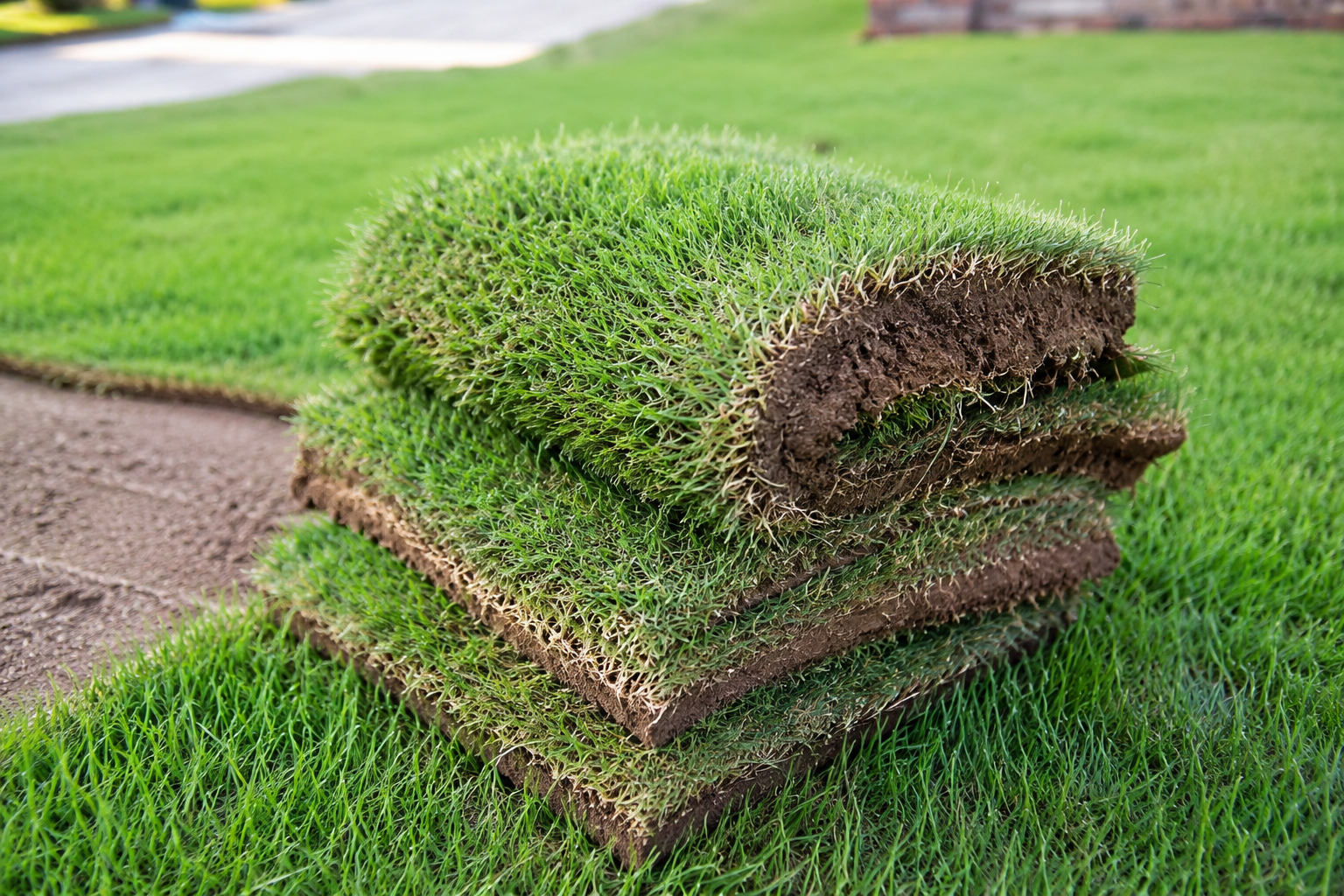
If you’ve driven through a neighborhood in Florida, coastal Texas, or the Gulf South, you’ve probably admired a thick, blue-green lawn. In fact, it often looks almost too perfect to be real. There’s a good chance you were looking at St. Augustine grass. It’s the go-to warm-season turf for millions of homeowners across the southern United States, and for good reason. It fills in fast. It also handles humidity without blinking. On top of that, it tolerates more shade than almost any other warm-season variety.
That said, St. Augustine sod isn’t cheap, and it isn’t foolproof either. I’ve spent years working with landscapers and sod suppliers on installation projects, so I’ve seen the same mistakes trip people up again and again. For example, laying sod at the wrong time of year, skipping soil prep, or mowing too short. Because of that, this guide walks through what St. Augustine sod actually costs in 2026. It also covers how to install it correctly and how to keep it healthy long-term.
What Is St. Augustine Grass?
St. Augustine grass (Stenotaphron secundatum) is a warm-season, creeping turfgrass. It’s known for its broad, coarse blades and dense, carpet-like growth. Specifically, it spreads through above-ground stolons rather than underground rhizomes. As a result, it establishes quickly, but it also doesn’t recover well from heavy foot traffic or close mowing.
Its biggest selling points are shade tolerance, salt tolerance, and heat resistance. These matter a lot if you live near the coast or under mature tree cover. However, it’s less cold-hardy than Bermuda or Zoysia. Therefore, you’ll rarely see it thriving much north of the Coastal Plain or Piedmont regions.
Where St. Augustine Grass Grows Best in the U.S.
St. Augustine is, above all, a true regional grass. It performs best in USDA hardiness zones 8 through 10, which covers:
- Florida — the single largest market for St. Augustine sod in the country
- The Gulf Coast — including Louisiana, southern Mississippi, southern Alabama, and coastal Texas
- Coastal South Carolina and Georgia
- Southern and coastal California — especially warmer spots around San Diego and the Central Valley
In these regions, St. Augustine is often the default lawn choice for HOAs and new construction, mainly because it establishes fast and looks lush almost immediately. Outside these zones, though, it struggles. For instance, in Tennessee or North Carolina’s Piedmont, hard frosts hit regularly. Consequently, it’s generally not recommended in those areas.
St. Augustine Sod Varieties Worth Knowing
Not all St. Augustine sod is the same. Instead, the variety you choose affects disease resistance, shade tolerance, and more:
- Floratam — The most widely planted variety in Florida and Texas. It has excellent heat and drought tolerance, but it needs full sun and is more prone to chinch bugs.
- Palmetto — A popular pick for homeowners who want finer texture and, additionally, better cold tolerance than Floratam.
- Seville — Fine-bladed and shade-tolerant, so it’s a good option under tree canopy.
- Raleigh — More cold-hardy, and therefore common in the transition zone between warm and cool climates.
- CitraBlue — A newer University of Florida cultivar that’s gained traction lately for its deeper blue-green color and denser growth. It also resists disease better than Floratam.
Because this varies more by microclimate than most people expect, your local sod farm or extension office is the best source for advice. They’ll know which variety actually thrives in your soil and light conditions.
St. Augustine Sod Cost in 2026
Overall, sod pricing has stayed fairly stable heading into 2026. However, regional delivery costs and labor rates continue to push installed totals higher in urban markets.
Material cost only:
- $0.45 to $0.90 per square foot
- $200 to $450 per pallet (a standard pallet covers roughly 400–500 square feet)
Professional installation (materials + labor):
- $0.95 to $2.40 per square foot
- For an average 5,000-square-foot lawn, you can expect a total installed cost between $4,750 and $12,000. Of course, the exact number depends on your region, site prep needs, and old lawn removal.
Additional costs to budget for:
- Site grading and topsoil: $0.25–$0.50 per square foot
- Old sod removal: $0.50–$2.00 per square foot
- Delivery: $50–$250 per load depending on distance
- Soil testing: $10–$50
Generally, prices run higher in Florida’s coastal metros, while they tend to be lower closer to sod farms. So, if you live near the Gulf Coast growing regions, you may pay noticeably less. On the other hand, someone ordering the same grass shipped inland will likely pay more.
How to Install St. Augustine Sod
Timing and prep matter more with St. Augustine than with most other turfgrasses. That’s because it’s slower to root than Bermuda, and it’s also less forgiving of poor soil contact.
- Time it right. Lay sod in late spring through early summer, once soil temperatures stay consistently above 65°F. Otherwise, installing during a summer heat wave without an irrigation plan is a common reason new sod fails.
- Test and prep the soil. St. Augustine prefers a soil pH between 5.0 and 8.5, in well-draining soil. So, remove old grass, till the top few inches, and then rake it level.
- Add starter fertilizer. A phosphorus-rich starter fertilizer helps roots develop during the first few weeks.
- Lay the sod in a brick-like pattern. Meanwhile, stagger seams so they don’t line up row to row, and push pieces tightly together. Otherwise, gaps dry out and invite weeds.
- Roll it. A lawn roller presses the sod into firm contact with the soil, which is essential for rooting.
- Water immediately and heavily. New sod needs about an inch of water right after installation. After that, keep watering daily for the first 7–10 days to keep the root zone moist.
- Avoid mowing for two to three weeks. Instead, wait until the sod resists a gentle tug, since that’s a sign the roots have taken hold.
St. Augustine Grass Care Guide
Mowing: Keep it taller than you’d think — 3 to 4 inches is ideal. Otherwise, cutting it shorter stresses the grass and opens the door to weeds and disease, since St. Augustine’s growing point sits higher than most turfgrasses.
Watering: Once established, St. Augustine needs about 0.75 to 1 inch of water per week. Importantly, apply it deeply and infrequently rather than daily, because overwatering is actually a common cause of fungal problems like gray leaf spot.
Fertilizing: Feed with a nitrogen-based lawn fertilizer roughly every 6–8 weeks during the growing season, meaning spring through early fall. However, avoid fertilizing during dormancy.
Pests and disease to watch for:
- Chinch bugs — the biggest pest threat to St. Augustine lawns, especially Floratam, in hot, dry conditions
- Gray leaf spot — a fungal disease that thrives in overly wet, overly fertilized lawns
- Take-all root rot — often triggered by stress, compacted soil, or overwatering
Since catching these early makes a big difference, watch for irregular brown patches that spread outward. If you spot them, then have a local lawn care pro or your county extension office take a look before it spreads.
If you’re still deciding between grass types for your climate, check out our guide to choosing the right lawn grass for your region. It breaks down how St. Augustine compares to Bermuda, Zoysia, and Centipede for different soil and sun conditions.
Pros and Cons of St. Augustine Sod
Pros:
- Establishes quickly and, as a result, fills in bare spots fast
- Offers excellent shade and salt tolerance compared to other warm-season grasses
- Grows thick and dense, which naturally chokes out many weeds
Cons:
- Is not cold-hardy, so it struggles or dies back in hard freezes
- Is more prone to chinch bugs and certain fungal diseases than Bermuda or Zoysia
- Needs more water than drought-adapted grasses like Bermuda
- Doesn’t handle heavy foot traffic as well as other turf types
For a deeper technical breakdown, the University of Florida IFAS Extension’s St. Augustinegrass lawn guide covers disease identification and regional planting calendars. Overall, it’s one of the most trusted resources out there, so it’s worth bookmarking.
Frequently Asked Questions
How long does it take St. Augustine sod to root? Most St. Augustine sod resists a gentle tug within 2 to 3 weeks, meaning it has enough root contact to hold. However, full establishment can take 6 to 8 weeks, depending on soil temperature and watering consistency.
What is the best time of year to install St. Augustine sod? Late spring through early summer is ideal, so wait until soil temperatures stay consistently above 65°F. Also, avoid installing during peak summer heat unless you have reliable irrigation. Similarly, avoid fall or winter installation in most regions, since the grass won’t have time to establish before dormancy.
How much does a pallet of St. Augustine sod cost? Generally, expect to pay between $200 and $450 per pallet for materials alone. A standard pallet covers roughly 400 to 500 square feet, though prices vary by region, variety, and how close you are to a sod farm.
Can St. Augustine grass grow in shade? Yes. In particular, St. Augustine’s Seville variety tolerates more shade than most warm-season grasses. Still, it needs at least 4 to 6 hours of sunlight a day to stay healthy and dense.
Why is my St. Augustine grass turning brown in patches? Usually, irregular brown patches point to chinch bug damage, fungal disease like gray leaf spot, or improper watering. So, dig up a small section at the edge of the patch and check the roots and blades, or ask a local extension office or lawn pro to diagnose it.
How often should I water new St. Augustine sod? Water new sod daily for the first 7 to 10 days, since this keeps the root zone consistently moist. After that, gradually reduce to deep watering 2 to 3 times a week until it’s fully established.
Is St. Augustine grass better than Bermuda grass? It really depends on your priorities. St. Augustine handles shade and salt exposure better, while Bermuda tolerates drought, foot traffic, and cold better. Therefore, sunny, high-traffic yards often do better with Bermuda, whereas shadier residential lawns often do better with St. Augustine.
Does St. Augustine grass go dormant in winter? In its typical growing zones (8–10), St. Augustine thins out and loses color during cooler months, but it generally doesn’t go fully dormant the way northern grasses do. In marginal zones, though, hard freezes can cause significant dieback or even kill the lawn entirely.