

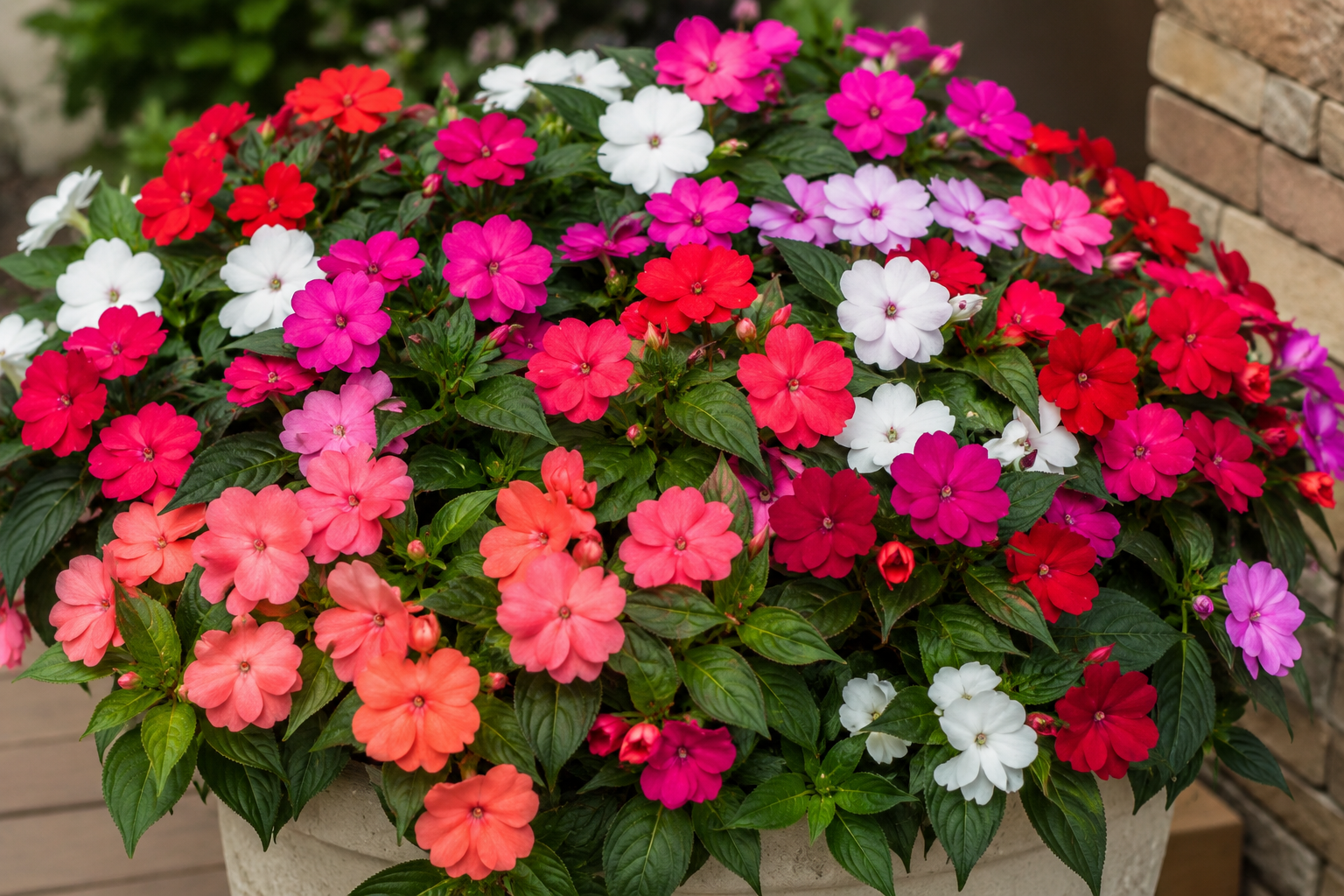
Tired of classic garden impatiens dying out from disease halfway through summer? Supersonic Impatiens might be exactly what your garden needs. This series belongs to a different group of impatiens entirely. It offers some of the largest, most vibrant flowers available in the New Guinea impatiens category. And it comes without the disease risk that has plagued traditional shade impatiens for over a decade.
This guide covers everything you need to grow Supersonic Impatiens successfully. We will walk through light, water, soil, and feeding. We will also clear up some common confusion about what this plant actually is, since that detail matters more than most gardeners realize.
Quick Care Summary
- Light: Part shade, with morning sun and afternoon shade
- Water: Water thoroughly, then let the top inch or so of soil dry
- Soil: Well-drained, moisture-retentive
- Fertilizer: Balanced, water-soluble, every two to three weeks
- Size: Roughly 14 to 16 inches tall and 14 to 18 inches wide
- Pinching: Not needed; it branches well on its own
- Hardiness: Perennial only in USDA zones 10 and 11; a warm-season annual elsewhere
What Is Supersonic Impatiens?
Supersonic Impatiens, sometimes written Super Sonic, is a New Guinea impatiens series. Its botanical name is Impatiens hawkeri. It was bred by Syngenta Flowers. The series is known for producing some of the largest flowers of any New Guinea impatiens on the market. Plants form a strong, full, mounded habit. Colors span a wide range, including white, pink, red, purple, orange, and dark red shades.
This distinction matters. Many gardeners assume all impatiens belong to the same shade-loving, disease-prone group sold in flats at every garden center each spring. That older group, Impatiens walleriana, is a completely different species from Supersonic. Confusing the two can lead to real disappointment. Their care needs and disease risks differ significantly.
Why Supersonic Impatiens Resist Downy Mildew
This is arguably the most important thing to understand about Supersonic Impatiens. Starting around 2011, a serious fungal disease called impatiens downy mildew devastated plantings of classic Impatiens walleriana across the United States. The outbreak essentially wiped out the traditional shade impatiens market in many regions for years. For a related New Guinea-type group, see NC State Extension’s SunPatiens plant profile.
New Guinea impatiens, including the Supersonic series, are highly tolerant of this same disease. That tolerance is a major reason New Guinea impatiens surged in popularity as classic impatiens struggled. Have you avoided planting impatiens in recent years because of downy mildew concerns? Supersonic offers a genuine solution rather than just a different look.
Light Requirements
Supersonic Impatiens performs best in part shade. Morning sun paired with afternoon shade tends to produce the fullest plants and the brightest blooms. Classic walleriana impatiens struggles in direct sun. New Guinea impatiens, by contrast, tolerates noticeably more light exposure.
That said, Supersonic is not bred specifically for full sun the way some newer New Guinea hybrids are. In hot climates, especially across the South and Southwest, too much afternoon sun can stress the plant. It can also reduce flower size. Does your space get more than a few hours of strong afternoon sun? Consider a sun-bred alternative instead, and reserve Supersonic for spots with some relief from peak afternoon heat.
Soil and Planting
Well-drained, moisture-retentive soil gives Supersonic Impatiens the best foundation for healthy growth. Amend heavy clay soil with compost before planting. This improves both drainage and nutrient content. In containers, a quality potting mix with good drainage works well. These plants dislike sitting in waterlogged soil for extended periods.
When planting, space plants roughly 14 to 18 inches apart, matching their expected mature spread. Crowding plants too closely restricts airflow. That restriction can increase the risk of fungal issues like botrytis, especially in humid climates or during rainy stretches.
Watering Supersonic Impatiens
Consistent moisture keeps Supersonic Impatiens blooming steadily throughout the season. That said, these plants prefer soil that dries out somewhat between waterings, rather than staying constantly saturated. A good rule of thumb: water thoroughly, then let the top inch or so of soil dry before watering again.
Containers and hanging baskets dry out faster than garden beds, especially during hot summer stretches. Check container plantings daily during peak summer heat. Supersonic Impatiens in a basket can wilt quickly once soil dries out completely. In-ground plantings generally need less frequent attention, particularly once established.
Fertilizing for Vibrant Blooms
Regular feeding makes a real difference in bloom size and color intensity. Apply a balanced, water-soluble fertilizer every two to three weeks throughout the growing season. Container plantings benefit from slightly more frequent feeding than in-ground plants. Regular watering flushes nutrients out of potting soil faster than it does garden soil.
Avoid heavy nitrogen fertilizers. These push leafy growth at the expense of flowers. A balanced fertilizer formulated for flowering annuals generally produces better bloom performance than an all-purpose lawn or vegetable fertilizer.
Do You Need to Pinch or Prune?
Good news here. Supersonic Impatiens naturally develops a full, mounded habit without regular pinching. Commercial growers generally do not recommend pinching this series, since it branches well on its own. For home gardeners, this means less routine maintenance. Some other flowering annuals need regular pinching to stay full and compact. Supersonic does not.
Light deadheading, removing spent blooms, can help keep plants looking tidy. It is not strictly necessary for continued flowering, though, the way it is with some other annuals. Do plants become leggy or stretched by mid-summer? A light trim can encourage fresh, fuller growth for the second half of the season.
Common Pests and How to Spot Them
Aphids, thrips, spider mites, and broad mites are the most common pests affecting Supersonic Impatiens. Aphids cluster on new growth and stems. They often leave a sticky residue behind. Spider mites cause fine stippling on leaves. In severe infestations, you may notice faint webbing, particularly during hot, dry conditions.
Thrips deserve special attention. They can spread impatiens necrotic spot virus, a serious viral disease with no cure once a plant is infected. Watch for distorted new growth, streaked or spotted flowers, and stippled foliage. All of these can indicate thrips activity. Do you suspect a thrips infestation? Remove and dispose of affected plants promptly to reduce spread to healthy plants nearby.
Common Diseases
Botrytis, also known as gray mold, is the most common disease issue for Supersonic Impatiens. It tends to develop in humid conditions with poor air circulation. This is especially true when plants are spaced too closely, or when spent blooms and foliage are left to decay in place. Proper spacing and prompt removal of dead plant material go a long way toward preventing this issue.
As mentioned earlier, downy mildew is not a significant concern for this New Guinea series. That disease devastated classic garden impatiens for years. Supersonic’s resistance is one of its strongest selling points compared to older impatiens varieties still found in some garden centers.
Mature Size and Spacing
Expect mature plants to reach roughly 14 to 16 inches tall and 14 to 18 inches wide under good growing conditions. That mounded, full habit makes Supersonic Impatiens well suited to both garden beds and container plantings. It will not become leggy or sparse the way some annuals do by midsummer.
Growing Zones: Annual vs Perennial
Supersonic Impatiens grows as a perennial only in USDA hardiness zones 10 and 11. Those zones cover South Florida, Hawaii, and small pockets of coastal Southern California. Everywhere else in the continental United States, treat it as a warm-season annual. It cannot survive frost or freezing temperatures.
Want to try overwintering a favorite plant? Bring it indoors before the first frost. Place it in a bright location with warm, consistent temperatures. Success varies. Many gardeners find it simpler to purchase new plants each spring rather than maintaining impatiens through winter indoors.
Best Uses in the Landscape
Supersonic Impatiens works beautifully in hanging baskets, patio containers, and mixed combination plantings. Its full, mounded shape and vibrant, long-lasting color make it a natural fit. It also performs well as a landscape bedding plant in part-shade garden beds, borders, and foundation plantings around the home.
The flowers are notably large for a New Guinea impatiens series. That makes Supersonic a strong focal point in container arrangements, rather than simply filling in as background color. Pair it with trailing plants like sweet potato vine or lobelia for hanging baskets that spill attractively over the container’s edge.
Comparing Supersonic to Other New Guinea Impatiens Series
Supersonic sits alongside several other well-known New Guinea impatiens series on the market. SunPatiens, developed by Sakata, tolerates significantly more direct sun. It also grows considerably larger. That makes it a better fit for full-sun landscapes rather than part-shade settings. Divine and other compact New Guinea series tend to stay smaller and more uniform. Those suit tighter container plantings or formal bedding schemes better.
Supersonic’s main advantage is flower size. Large, showy blooms matter more to you than sun tolerance or extreme compactness? Supersonic remains one of the stronger choices within the broader New Guinea impatiens category.
Regional Growing Notes Across the US
Climate shapes how well Supersonic Impatiens performs in different parts of the country. In humid Southeastern states, from Georgia through the Carolinas, good airflow matters even more than usual. Combine that humidity with poor spacing, and botrytis risk climbs quickly. Give plants a bit more room than the minimum spacing guidelines suggest if you garden in a particularly humid region.
In hot, dry Southwestern climates like Arizona and inland California, afternoon shade becomes especially important. Even though New Guinea impatiens tolerates more sun than classic walleriana types, intense desert heat can still stress Supersonic plants and shorten bloom life. Consider an east-facing spot that gets gentler morning light instead of harsh western exposure.
Gardeners in the Upper Midwest and Northeast get a shorter growing season overall. Wait until nighttime temperatures reliably stay above 50 degrees Fahrenheit before planting outdoors, typically late May in most of these regions. A late frost can damage or kill young plants quickly, so patience at planting time pays off with stronger performance through summer.
Companion Planting Ideas
Supersonic Impatiens pairs naturally with other shade and part-shade lovers. Consider combining it with hostas, ferns, or coleus for a layered, textural look in garden beds. The bold, saturated colors of Supersonic blooms stand out especially well against the green backdrop of ferns or hostas, creating strong visual contrast without clashing.
In containers, trailing plants make excellent companions. Sweet potato vine, lobelia, and creeping Jenny all spill nicely over container edges, complementing the upright, mounded shape of the impatiens itself. For a monochromatic container design, pair Supersonic with other part-shade annuals in the same color family, like begonias or torenia, for a cohesive look that still offers varied texture and bloom shape.
Actionable Tips for Vibrant Blooms All Season
- Start with a part-shade location that gets some morning sun. Avoid harsh afternoon exposure in hot climates.
- Water consistently, but let the soil dry slightly between waterings rather than keeping it constantly wet.
- Feed every two to three weeks with a balanced fertilizer formulated for flowering plants. Skip high-nitrogen products that favor foliage over blooms.
- Space plants properly at planting time to maintain good airflow. This helps prevent botrytis in humid conditions.
- Scout regularly for thrips. Catching an infestation early can prevent the spread of impatiens necrotic spot virus to nearby plants.
- Skip the pinching. Supersonic Impatiens fills out on its own, which is one less task on your gardening list.
Looking for more color? Our orange flowers guide covers shade-friendly options, and if part of your garden gets hot afternoon sun, see our guide to the best plants for full sun and heat.
Final Thoughts
Supersonic Impatiens delivers exactly what its name suggests: bold, oversized blooms with far less disease risk than classic garden impatiens. Give it part shade, consistent but not soggy moisture, and regular light feeding. Do that, and this New Guinea series will reward you with vibrant color from planting through frost. Did you give up on impatiens after downy mildew outbreaks years ago? This is a genuine reason to reconsider.
Frequently Asked Questions
Is Supersonic Impatiens the same as regular garden impatiens?
No. Supersonic belongs to the New Guinea impatiens group, Impatiens hawkeri, which is a different species from classic Impatiens walleriana sold as traditional shade bedding plants. The two differ in size, sun tolerance, and disease resistance.
Does Supersonic Impatiens get downy mildew?
New Guinea impatiens, including the Supersonic series, are highly tolerant of impatiens downy mildew, the disease that devastated classic garden impatiens starting around 2011. This makes Supersonic a safer choice if downy mildew has been a problem in your garden previously.
How much sun does Supersonic Impatiens need?
It performs best in part shade, ideally with some morning sun and afternoon shade. It tolerates more sun than classic walleriana impatiens, but too much strong afternoon sun in hot climates can stress the plant and reduce flower size.
How big does Supersonic Impatiens grow?
Mature plants typically reach 14 to 16 inches tall and 14 to 18 inches wide, forming a full, mounded shape well suited to both garden beds and container plantings.
Do I need to pinch Supersonic Impatiens to keep it full?
No. This series naturally develops a full, mounded habit without regular pinching, which is one less maintenance task compared to many other flowering annuals.
Is Supersonic Impatiens a perennial or an annual?
It grows as a perennial only in USDA zones 10 and 11. In all other regions of the continental United States, it is grown as a warm-season annual, since it cannot tolerate frost.
What pests should I watch for on Supersonic Impatiens?
Aphids, thrips, spider mites, and broad mites are the most common pests. Thrips deserve particular attention, since they can spread impatiens necrotic spot virus, a serious disease with no available cure.
How often should I water Supersonic Impatiens?
Water thoroughly, then let the top inch of soil dry before watering again. Container plantings and hanging baskets typically need more frequent watering than in-ground plantings, especially during hot summer weather.