


If you’re buying a home, the inspection is the one step that can save you from a five- or six-figure surprise. A qualified inspector spends two to four hours going through the property system by system — roof, foundation, electrical, plumbing, HVAC, and more — and then hands you a report that tells you what’s working, what’s failing, and what’s likely to fail soon.
This checklist walks through what inspectors actually check, roughly in the order most of them work through a house. It also covers what a lot of competing checklists skip: what falls outside the scope of a standard inspection, which issues are negotiable, and which ones should make you think twice.
Quick Answer: What’s Covered in a Standard Home Inspection
A general home inspection, based on the standards that organizations like the American Society of Home Inspectors (ASHI) and the International Association of Certified Home Inspectors (InterNACHI) maintain, covers the home’s major systems and components. Specifically, inspectors examine:
- Roof, attic, and visible insulation
- Foundation, structure, and grading
- Exterior siding, windows, doors, and drainage
- Electrical panel, wiring, and outlets
- Plumbing supply and drain lines, and the water heater
- HVAC system (heating and cooling)
- Interior walls, ceilings, floors, and stairs
- Kitchen and bathroom fixtures
- Basement, crawl space, or slab
- Garage and any attached structures
However, a standard inspection does not cover the inside of walls, chimneys past the firebox, sewer lines, pools, wells, or septic systems. Those require separate, specialized inspections — more on that further down.
Why This Matters More Than People Expect
Most buyers treat the inspection as a formality between the accepted offer and closing. It shouldn’t be, because the report becomes your leverage. In most U.S. states, a home inspection contingency gives you the right to renegotiate the price, request repairs, ask for a credit, or cancel the contract entirely if serious issues turn up — but only within a specific window, usually 7 to 14 days after the offer is accepted. If you miss that window, you’ve likely waived your right to act on anything the inspector finds.
It also helps to understand what an inspection is not. It’s not an appraisal, it’s not a guarantee, and it’s not a pass-or-fail test. Instead, inspectors document the current condition of visible, accessible components. They won’t move furniture, cut into drywall, or promise how many years a 20-year-old water heater has left.
Exterior: Where Most Expensive Problems Start
Roof
Inspectors check for missing, curling, or cracked shingles, exposed nail heads, sagging rooflines, and damaged flashing around chimneys and vents. From there, they estimate the roof’s remaining life based on material and wear. Asphalt shingle roofs typically last 20–25 years, but that figure swings a lot depending on ventilation, climate, and how many layers of shingles were installed underneath.
In hail-prone regions such as Texas, Oklahoma, Colorado, and much of the Midwest, inspectors pay especially close attention to granule loss and bruising on shingles, since insurance claims often hinge on documented hail damage.
Foundation and Grading
This is where a good inspector earns their fee. Specifically, they’re looking for:
- Horizontal or stair-step cracks in foundation walls (generally more concerning than vertical hairline cracks)
- Doors and windows that stick or don’t close square
- Uneven or sloping floors
- Water stains or efflorescence (white mineral deposits) in the basement or crawl space
- Grading that slopes toward the house instead of away from it
That last item — grading — is one of the most common issues inspectors find, and also one of the cheapest to fix, which makes it easy for buyers to overlook. When a yard slopes the wrong way, water pools against the foundation instead of draining away from it, and over time that causes more structural damage than almost anything else on this list. The fix is often as simple as adding soil and regrading, rather than a costly foundation repair.
Siding, Windows, and Drainage
Inspectors also look for rot, gaps, or damage in siding, along with caulking failures around window and door frames. In addition, they check whether the gutters and downspouts actually direct water away from the foundation — a downspout that dumps water two feet from the house, after all, defeats its own purpose. In coastal and humid climates, particularly the Southeast and Gulf Coast, moisture intrusion around windows shows up as a recurring finding.
Interior Systems
Electrical
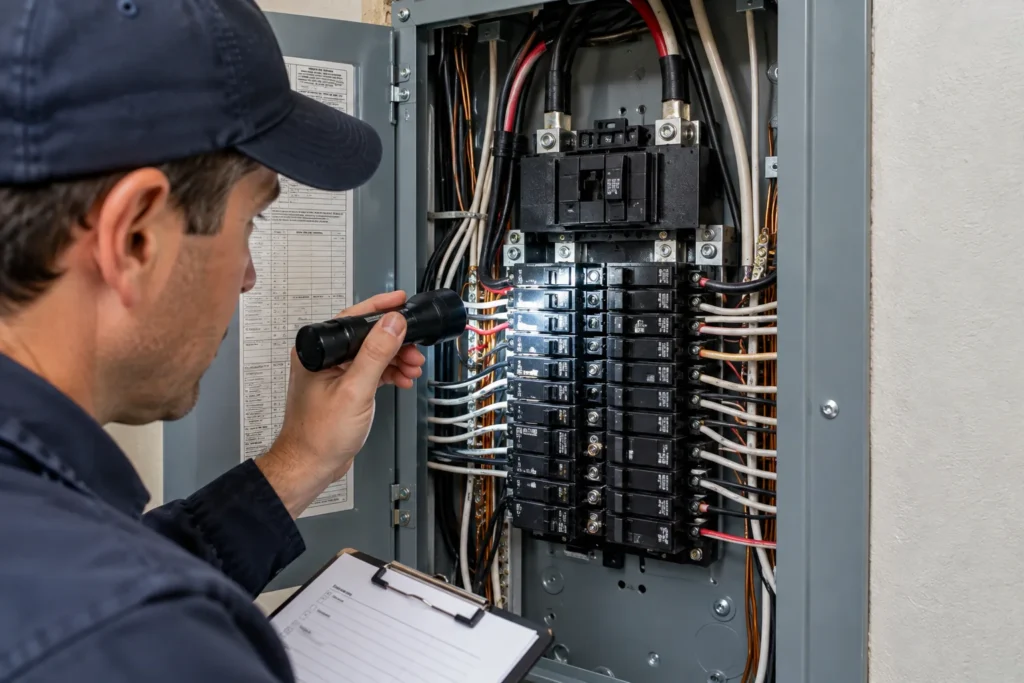
The inspector opens the electrical panel and checks several things at once:
- The panel brand and overall condition (older brands like Federal Pacific and Zinsco carry a known fire-risk reputation, and some insurers refuse to cover them)
- Whether the panel has proper grounding and bonding
- Signs of DIY wiring, double-tapped breakers, or exposed wiring
- GFCI outlets in kitchens, bathrooms, garages, and outdoor areas — modern code requires these, yet many homes built before the 2000s still don’t have them
- Aluminum branch wiring, which was common in the late 1960s and early ’70s and poses a fire hazard unless an electrician has properly retrofitted it
Plumbing
Inspectors run water at every fixture, check water pressure, and look for active leaks under sinks. They also check the water heater’s age, condition, and pressure relief valve. Beyond that, they flag outdated pipe materials: polybutylene pipe, common in homes built between 1978 and 1995, and galvanized steel pipe both tend to fail or corrode from the inside, so most inspectors and insurers consider them red flags.
HVAC
Inspectors test the furnace and AC unit for basic function, though they can’t fully evaluate efficiency or internal wear without specialized tools. Still, they’ll note the system’s age (most furnaces last 15–20 years, AC condensers 10–15), check filter condition, and look for rust, unusual noise, or improper venting.
Attic and Insulation
This is a section a lot of buyers overlook mentally, but they shouldn’t. Inspectors climb into the attic to check insulation depth and type, ventilation, and signs of roof leaks from underneath. Importantly, they also look for evidence of pest activity — squirrel and rodent damage to wiring and insulation shows up often enough in older suburban homes that it’s worth asking about specifically.
What a Standard Inspection Does NOT Cover
This is the part most checklists leave out, and it matters a lot for budgeting:
| Not Included | Why It Matters | What to Do Instead |
|---|---|---|
| Sewer/septic lines | Root intrusion or a collapsed pipe can cost $10,000+ to repair | Order a separate sewer scope inspection |
| Radon levels | Radon is the second leading cause of lung cancer in the U.S. (EPA) | Order a standalone radon test |
| Mold (lab-confirmed) | Visible staining alone doesn’t prove active mold | Hire a certified mold inspector if you notice signs |
| Wells | Water quality and flow rate fall outside a general inspection | Order a well inspection and water test |
| Pools/spas | Equipment and structural issues need a specialist | Hire a pool inspector |
| Pest/termite damage | Termites can damage structural wood without visible signs | Order a WDO (wood-destroying organism) inspection |
| Chimney interior | A general inspector can’t see flue liner condition | Hire a certified chimney sweep for a Level 2 inspection |
If you’re buying an older home, a home with a septic system, or a property in a region with known radon issues — parts of the Midwest, Northeast, and Mountain West show notably higher readings on EPA zone maps — budget for these add-ons upfront. They typically cost extra on top of the general inspection fee, but they’re worth it: sewer line failures and radon mitigation rank among the more expensive surprises buyers run into after closing.
Common Mistakes Buyers Make During Inspections
Not attending the inspection. Most contracts allow you to be there, and you should take advantage of that. Photos and a written report help, of course, but watching the inspector open the panel or point out a moisture reading in real time teaches you far more than reading about it later ever will.
Treating every finding as a deal-breaker. Every home, including new construction, will have some findings. The real question isn’t whether the report comes back clean — it never does — but whether the findings are cosmetic, ordinary deferred maintenance, or genuine structural and safety issues.
Skipping the specialist inspections to save money. A sewer scope costs a fraction of what a collapsed sewer line repair runs. As a result, skipping it to save that small amount is a common regret among buyers of older homes.
Not reading the full report. Inspectors often note minor issues, like a loose handrail, right alongside major ones, like double-tapped breakers, in the same format. Because of that, skimming just the summary page can mean missing something that actually matters.
Assuming the seller will fix everything. In most markets, sellers only negotiate on a subset of findings, usually the safety and structural issues, rather than every item on a multi-page report.
Negotiating After the Inspection
Once you have the report, there are generally four paths forward: ask the seller to make repairs before closing, ask for a credit at closing so you can handle repairs yourself, renegotiate the price, or walk away if your contract includes an inspection contingency. Which path makes the most sense usually depends on the local market. In a seller’s market, for instance, buyers often have less leverage to demand repairs and instead take a credit or move forward as-is on minor items. In a buyer’s market, on the other hand, requesting actual repairs before closing tends to be more realistic.
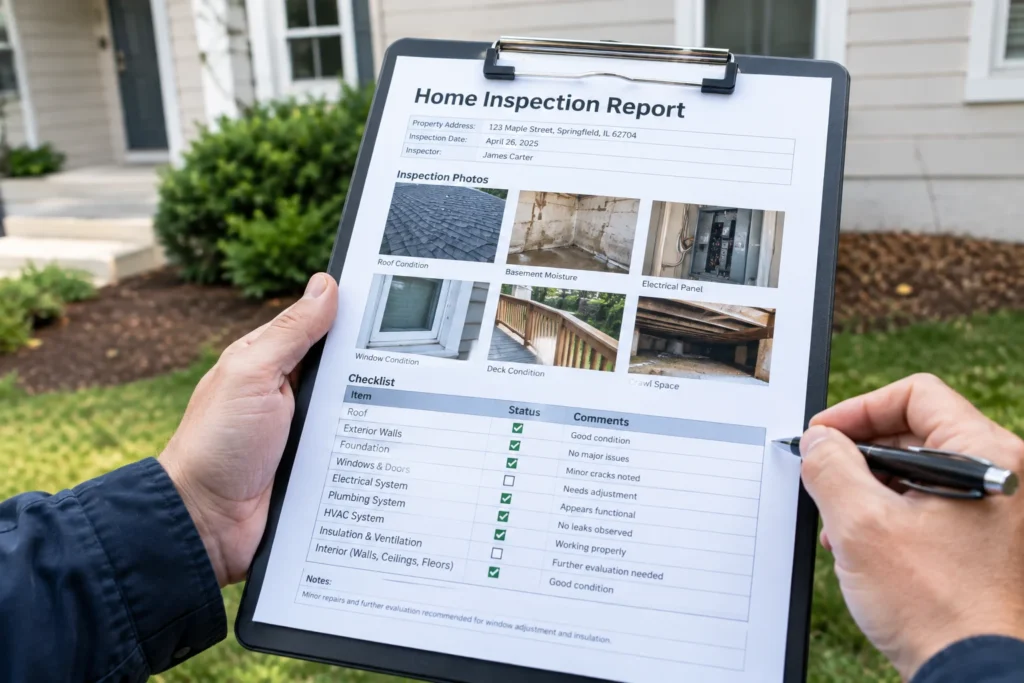
Experienced agents generally follow one rule of thumb here: prioritize safety and structural items — electrical hazards, foundation movement, roof leaks, HVAC failure — for negotiation, and let cosmetic or maintenance items go, especially if the price already reflects the home’s condition.
What Homebuyers Often Overlook
A few things rarely make it into a typical checklist article, even though they consistently matter:
- The inspector’s license and standards. Licensing requirements vary by state, and some states don’t license inspectors at all. Because of that, it’s worth asking whether the inspector follows ASHI or InterNACHI standards of practice regardless of local licensing rules.
- Report format and photos. A report with dated photos of every issue proves far more useful during negotiation than a checklist with vague notes.
- Re-inspection after repairs. If the seller agrees to repairs, it’s reasonable to request a follow-up visit, sometimes at added cost, to confirm the contractor did the work correctly rather than just completing it.
- Insurance implications. Certain findings, such as old wiring, an aging roof, or foundation issues, can affect whether you can get homeowners insurance at a reasonable rate, or at all, in some states. This has become increasingly relevant in wildfire- and hurricane-prone states, where insurers have tightened underwriting significantly.
Frequently Asked Questions
How long does a home inspection take? Most single-family home inspections take two to four hours, depending on the size and age of the home. Naturally, larger or older homes with more systems to check can take longer.
Should I be there for the inspection? Yes, if your schedule allows it. Attending lets you ask questions in real time and see issues firsthand, rather than relying solely on the written report afterward.
What’s the difference between a home inspection and an appraisal? An inspection evaluates the physical condition of the home for the buyer, while an appraisal estimates the home’s market value for the lender. They serve completely different purposes, and different professionals usually handle them.
Can I back out of a purchase after a bad inspection? If your contract includes an inspection contingency, yes, within the timeframe the contract specifies. Without that contingency, though, backing out could mean forfeiting your earnest money deposit.
Do new construction homes need an inspection? Yes. Builders make mistakes too, so a pre-drywall inspection plus a final inspection before closing can catch issues while they’re still easy and cheap to fix.
What’s a ‘four-point inspection’? It’s a limited inspection that insurance companies usually require for older homes, covering just the roof, electrical, plumbing, and HVAC systems, rather than the full scope of a general inspection.
Is radon testing really necessary? Most home purchases don’t require it, but the EPA considers radon a leading cause of lung cancer in non-smokers, and levels vary significantly even between neighboring homes. Given how inexpensive and quick a test is, it’s usually worth doing anyway.
What happens if the inspector finds something serious? You and your agent review the report together, decide which items to negotiate, and then submit a formal request to the seller — repairs, a credit, a price reduction, or, in serious cases, contract cancellation if your contingency allows it.
Sources & References
- U.S. Environmental Protection Agency, A Citizen’s Guide to Radon
- American Society of Home Inspectors (ASHI), Standards of Practice
Flashing issues are a common culprit behind roof-related inspection findings — see this guide to GI flashing types, installation, and cost for what to check before a buyer’s inspector gets there.