

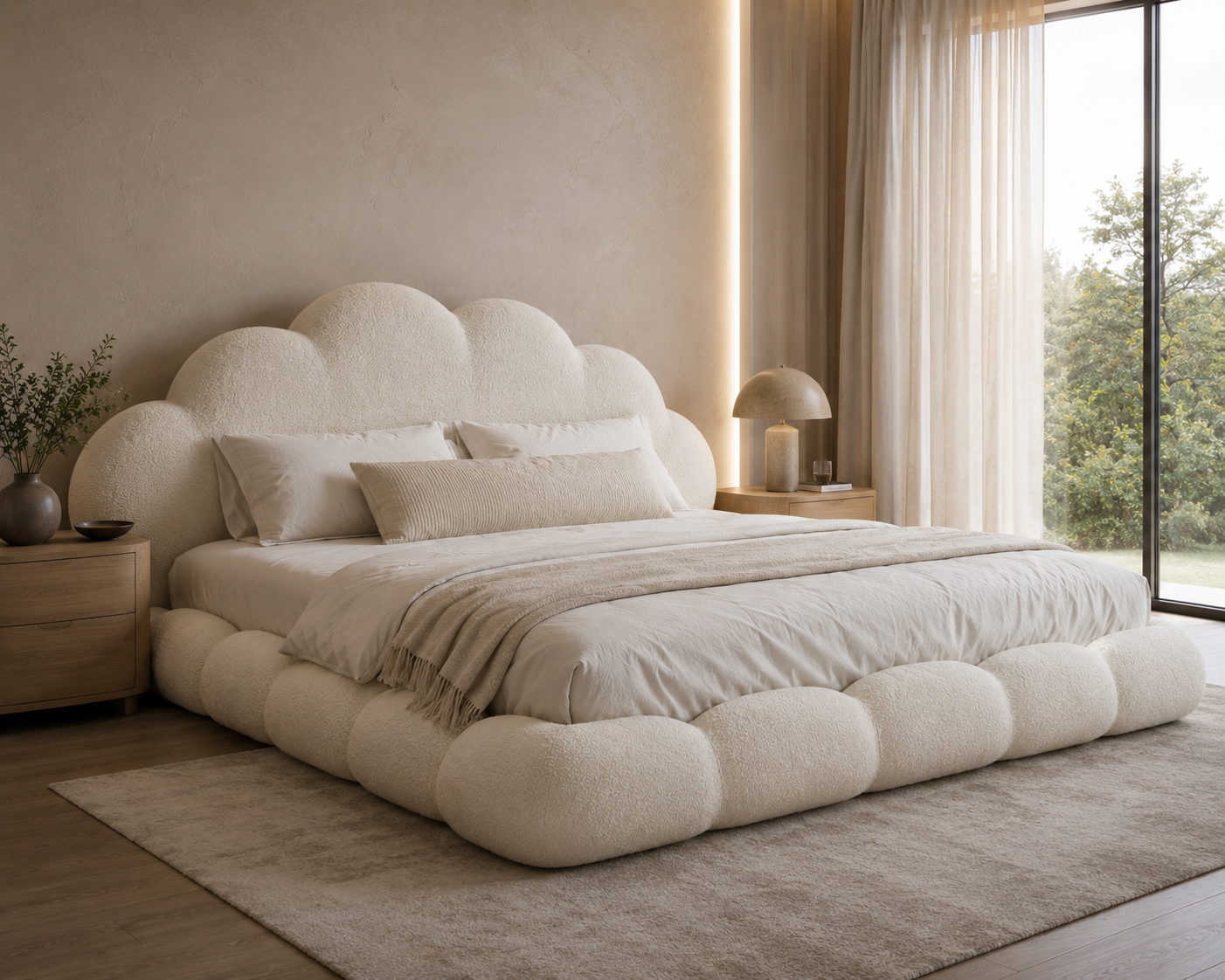
If you’ve spent any time on Pinterest, TikTok, or Instagram lately, you’ve probably seen it. A bed that looks like it’s floating on a soft, padded cloud. There are no visible legs and no hard edges. Just an oversized upholstered perimeter wrapped around a low, cozy sleeping surface. That’s the cloud bed frame. In 2026, it has become one of the most requested bedroom upgrades across the United States.
This guide breaks down everything you need to know before buying one. We’ll cover construction quality, sizing, price ranges, and small-bedroom strategies. Whether you’re furnishing a first apartment in Chicago or upgrading a primary suite in Austin, you’ll find practical advice here. This isn’t recycled marketing copy. It’s grounded, experience-based guidance you can actually use.
What Exactly Is a Cloud Bed Frame?
A cloud bed frame is a low-profile platform bed. Thick, padded upholstery wraps around its entire perimeter, including the headboard, footboard, and side rails. Unlike a traditional bed frame, there are no sharp corners or exposed wood. Instead, the whole structure feels soft to the touch. It’s almost like a giant cushion built around your mattress.
The design became a viral sensation for a simple reason. It combines two things people genuinely want: a distinctive, photograph-worthy look and a real comfort upgrade. According to Amerisleep, the trend pulled in over 114 million views on social media by early 2023. It has only grown since then. More furniture brands keep releasing their own versions every season.
What makes it different from a standard upholstered bed is scale. Cloud frames use noticeably thicker padding. They also feature rounded silhouettes and an oversized headboard. Often, that headboard extends beyond the width of the mattress itself. Pair it with layered white or neutral bedding, and the effect really works. The bed genuinely looks like it’s hovering.
Why Cloud Bed Frames Are Trending Across the US in 2026
Interior design trends usually move fast. This one, however, has proven surprisingly durable. Several factors are driving its popularity this year, especially in American homes.
First, more people are working from home. Others are simply spending longer stretches indoors. This shift has made bedrooms feel less like an afterthought. Instead, they’ve become a primary living space. As a result, homeowners and renters alike are investing more in how their bedrooms look and feel.
Second, city living has changed the equation. In places like New York, San Francisco, and Boston, smaller footprints have pushed low-profile furniture into the spotlight. A cloud frame sits closer to the floor. This visually opens up a room. It also works especially well in apartments with lower ceilings. Talk Beds, a furniture review site, notes that low-to-the-ground frames are one of the most searched bed styles in 2026. They solve real, practical problems, including sloped ceilings, loft situations, and easier access for children, pets, or people with limited mobility.
Third, this year’s broader furniture trends favor grounded, calming spaces. Tall, imposing pieces are losing ground. Ornate Home describes this shift clearly. The site notes that low platform beds create an optical illusion that makes ceilings appear higher and rooms feel more expansive. The cloud bed fits neatly into that movement. At the same time, it delivers a cozy, hotel-like feel that many people associate with better rest.
Key Features to Look for Before You Buy
Not every cloud-style bed on the market is built the same way. This is where a lot of buyers get tripped up. Here’s what actually matters.
Padding density. Cheaper frames use thin foam that flattens within months. As a result, the plush look disappears almost immediately. Look for high-density foam or a multi-layer fill listed in the product description. This is usually the biggest difference between a frame that stays soft for years and one that sags by winter.
Frame material underneath the upholstery. Solid wood slats or a reinforced steel frame will hold up far better than particleboard. Since the padding hides the structure, it’s worth reading reviews specifically about sturdiness. Don’t just focus on appearance.
Fabric type. Boucle, velvet, and linen are the most common covers in 2026. Boucle photographs beautifully. However, it tends to trap pet hair and dust. It may not be ideal if you have allergies or shedding pets. Performance fabric or removable, washable covers are worth prioritizing if easy cleaning matters to you.
Slat spacing and support. These frames sit low and skip the box spring entirely. Because of that, proper slat spacing is essential for mattress support and airflow. Gaps that are too wide can cause premature mattress sagging. Check that the listing specifies center support beams for queen and king sizes.
Weight capacity and noise. Some budget frames squeak or shift over time. Reviews mentioning stability after several months are more reliable than early impressions. Read recent feedback rather than just the top-rated review.
Sizing Guide for US Bedrooms
American mattress sizing follows a standard set of dimensions. It’s worth double-checking these against your room before ordering.
- Twin: 38 by 75 inches, best for kids’ rooms or small guest rooms
- Full: 54 by 75 inches, a solid choice for single sleepers who want extra space
- Queen: 60 by 80 inches, the most popular size for primary bedrooms nationwide
- King: 76 by 80 inches, ideal for couples or larger primary suites
- California King: 72 by 84 inches, better suited to taller sleepers and longer rooms
Cloud frames have an extra-wide upholstered perimeter. Because of this, they typically require more total floor space than a standard frame of the same mattress size. A queen cloud frame, for example, can add six to ten inches per side. That accounts for the padded rails and headboard. Measure your room before buying. Leave at least two feet of clearance for walking space. This small step can save you a returns headache later.
Style Options You’ll See in 2026
Cloud frames now come in a range of finishes to match different design directions.
Warm neutrals remain the most popular choice for achieving that classic floating aesthetic. Think oatmeal, ivory, and taupe boucle. However, 2026 has also brought a wave of deeper tones. As Ornate Home points out, deep, moody wood accents and darker upholstery are making a comeback after years of light oak dominating bedroom design. If you want the cloud silhouette without an all-white palette, charcoal or forest green velvet versions are worth considering.
There are also hybrid designs on the market. These combine a padded headboard with wood-finished side rails. The result gives you some of the cloud look with slightly more visual grounding. This tends to work well in rustic or mid-century interiors, where an all-soft frame might feel out of place.
Pros and Cons, Honestly
No furniture piece is perfect for everyone. It’s worth weighing the tradeoffs before you commit.
On the plus side, cloud frames genuinely feel comfortable to lean against while reading or working from bed. They also tend to be quieter than metal frames, since there’s no hardware rattling against the mattress. Additionally, the low profile makes them a strong fit for small apartments, converted attics, or rooms with sloped ceilings.
On the downside, most cloud frames sit too low for under-bed storage. This can be a real drawback if you’re working with limited closet space. Light-colored fabric also shows stains quickly. It requires more frequent cleaning than a wood or metal frame would. Some buyers with knee or hip issues find that a very low platform makes getting in and out of bed harder. If that’s a concern for you, test the height in a showroom first.
How to Choose Based on Your Space and Needs
Think through a few honest questions before adding one to your cart.
Are you furnishing a small apartment or a guest room? A lower-cost upholstered frame in a light neutral will likely give you the look you want without a huge investment. Are you instead outfitting a primary bedroom you’ll use every night for years? Then it makes sense to spend more on a frame with genuinely dense padding and a solid wood or steel base. That’s where wear and tear shows up fastest.
Families with young children or seniors should also weigh accessibility. A frame that sits only a few inches off the ground looks striking. Yet it can be genuinely hard to get up from for someone with joint pain. In that case, a slightly taller platform with the same padded aesthetic is usually the better call.
Not ready to commit to a full frame swap? You don’t necessarily need to. Amerisleep notes that you can recreate much of the look with a foam slipcover over your existing mattress paired with oversized duvet inserts and all-white bedding. It’s a smart way to test the trend before investing in new furniture.
Are you also reconsidering your mattress alongside the frame? Our mattress firmness buying guide walks through how to match support level to your sleep position. This matters even more on a low-profile platform, since there’s no box spring adding extra cushioning underneath.
What You Should Expect to Pay in 2026
Pricing varies widely depending on materials and brand. Here’s a realistic breakdown for the US market this year.
Budget options generally start around $250 to $450 for a queen-size frame. These typically feature basic foam padding and a polyester blend fabric. Mid-range frames run from $500 to $900. They usually include denser foam and higher-quality boucle or velvet. Premium versions can range from $1,000 to $1,800 or more, especially from boutique furniture brands. These often feature solid wood slats, reinforced steel frames, and designer fabric options.
Shipping across the US is usually included with online purchases. However, larger frames may ship in multiple boxes. Assembly can take one to two hours for two people. Living in a walk-up apartment or a building with narrow stairwells? Check the packaged box dimensions in advance. Some king-size headboards don’t fit through standard doorways once fully assembled.
Maintenance and Care Tips
Keeping a cloud frame looking good takes a bit more effort than a standard wood or metal frame. Most of that extra work comes down to the fabric.
Vacuum the upholstery weekly using a soft brush attachment. This helps prevent dust and pet hair buildup, especially if you have allergies. Spot clean stains immediately with a fabric-safe cleaner. Boucle and linen absorb spills quickly and can be difficult to clean once a stain sets. Does your frame have a removable cover? Washing it every few months will help maintain hygiene and appearance.
It’s also worth rotating your mattress regularly, just as you would with any platform bed. Low-profile frames don’t always provide the same airflow as a traditional box spring setup. For general guidance on mattress care and sleep hygiene, the Sleep Foundation offers detailed, research-backed recommendations worth reviewing alongside your new purchase.
Safety Considerations Worth Knowing
Cloud frames eliminate hard edges, and they’re often marketed as a safer option for households with children or pets. There’s some truth to that claim. Rounded corners and padded rails do reduce the risk of bumps and bruises compared to metal or sharp-edged wood frames. That said, always check that any frame you’re considering meets standard furniture safety certifications. Avoid frames with loose or exposed fasteners. These can pose a tipping or entrapment risk over time, particularly in a child’s room.
Final Thoughts
A cloud bed frame is one of those rare furniture trends that actually delivers. It offers both style and comfort, not just good photos. Still, the market is flooded with options at every price point, and not all of them are built to last. Padding density, frame material, and fabric type matter more than color in the long run. Measure your space first. Think honestly about accessibility. Invest in solid construction where it counts. Do that, and a cloud bed frame can transform how your bedroom looks and feels for years to come.
Frequently Asked Questions
Is a cloud bed frame worth the extra cost compared to a regular platform bed? It depends on your priorities. If padded comfort and a soft, cocooning aesthetic matter to you, the extra cost is usually justified. This is especially true with a frame built on solid wood or steel. If budget is the main concern, a standard platform bed paired with a padded headboard cushion can offer a similar feel for less.
Do cloud bed frames work in small bedrooms? Yes, in most cases they actually help. The platform sits low to the ground, which creates a more open, spacious feeling in the room. That said, the padded perimeter does take up slightly more floor space than a standard frame of the same mattress size.
Can I put a cloud bed frame together myself? Most frames are designed for at-home assembly. This typically takes one to two hours with two people. Instructions usually include labeled hardware and step-by-step diagrams. Heavier king-size frames, though, can be easier with an extra set of hands.
How do I clean a cloud bed frame’s fabric? Vacuum weekly with a soft brush attachment. Spot clean stains right away using a fabric-safe cleaner. If the cover is removable, follow the manufacturer’s washing instructions. Not all fabric types are machine washable.
Are cloud bed frames good for people with allergies? Boucle and other textured fabrics can trap dust and pet hair more easily than smooth materials. Frequent vacuuming is important as a result. If allergies are a serious concern, look for frames with removable, washable covers. A smoother performance fabric is another good option.
Do I still need a box spring with a cloud bed frame? No. Cloud bed frames are built as platform beds with wood slats designed to support the mattress directly. A box spring is unnecessary here. It would actually raise the bed higher than the intended low-profile look.
What mattress works best on a cloud bed frame? Memory foam and hybrid mattresses tend to pair well with this style. They complement the plush, cushioned aesthetic of the frame. Just make sure the mattress thickness matches the visual scale of the upholstered rails. A very thin mattress can look out of proportion against a thick, padded perimeter.
Will a cloud bed frame still look trendy in a few years? Most signs point to yes. Some viral bedroom trends fade quickly, but this one seems different. The low-profile, upholstered look is considered an update on classic platform bed design rather than a passing fad. That suggests it should stay stylish well beyond 2026.