

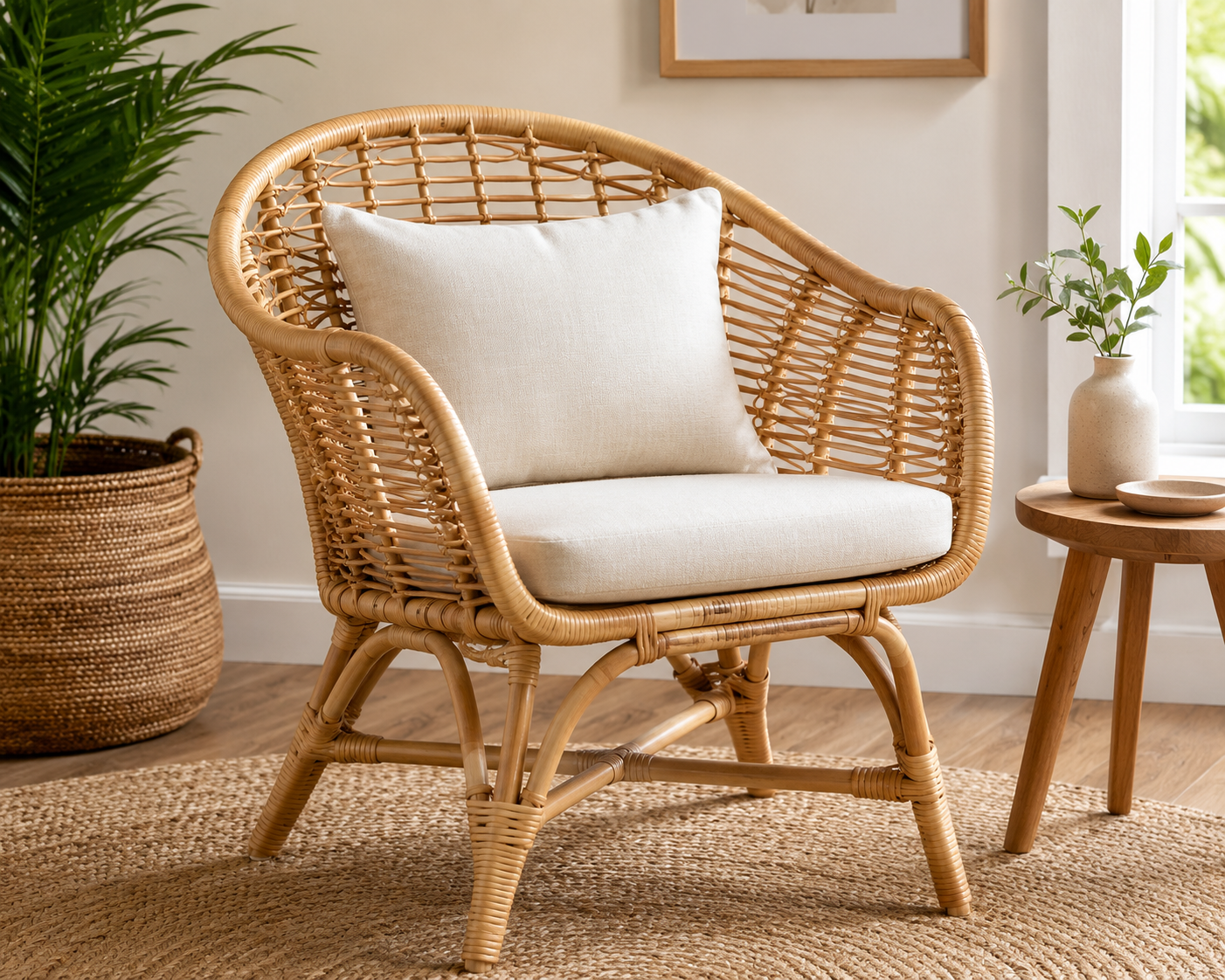
I bought my first rattan chair for a sunroom years ago. Mostly, I chose it because it looked good in photos. Then I sat in a few different models at the store. That’s when I realized how much variation hides under one simple word: “rattan.” Some chairs felt sturdy and built to last decades. Others felt flimsy the moment I leaned back.
If you’re shopping for a rattan chair right now, that variation is exactly why understanding matters. This guide breaks down what rattan really is. It also covers the main types of rattan chairs available in 2026, plus what to check before you spend your money.
What Exactly Is a Rattan Chair?
Rattan is a type of climbing palm, not a tree. It grows naturally in tropical regions like Southeast Asia, Africa, and parts of Australia. Its long, flexible stems bend and weave easily around a frame. That flexibility has made it a favorite material for furniture makers for centuries.
A rattan chair, then, is any chair built using this material, either as the main frame or as a woven accent. However, the term now covers synthetic versions too. Manufacturers design these to mimic rattan’s texture and flexibility. Because of this, it helps to understand both the natural and synthetic sides of the category before you shop.
Rattan vs Wicker: What’s the Difference?
This mix-up trips up a lot of shoppers, so let’s clear it up quickly. Rattan refers to the raw material itself, the palm vine. Wicker, on the other hand, describes a weaving technique. Furniture makers can use that technique on many different materials.
In other words, weavers can turn rattan into wicker furniture. But they can also weave wicker from bamboo, willow, or synthetic resin. So when someone says “wicker chair,” they’re describing a construction method. When someone says “rattan chair,” they’re usually describing the material, even if the finished piece uses a wicker-style weave.
Types of Rattan Chairs
Rattan chairs come in several distinct styles. Each one suits different rooms, climates, and budgets.
Natural Rattan Chairs
Natural rattan chairs use the actual palm material. This gives them a warm, organic texture that synthetic versions struggle to fully replicate. These chairs tend to shine indoors. Sunrooms, living rooms, and covered patios all protect them from direct rain and extreme temperature swings.
That said, natural rattan isn’t ideal for constant outdoor exposure. Moisture and prolonged UV rays can dry it out or crack it over time. Humid climates make this problem worse, and mold can develop too. If you love the natural look but need something more weather-resistant, synthetic rattan is usually the better call.
Synthetic (PE) Rattan Chairs
Manufacturers developed synthetic rattan, often made from polyethylene (PE), to solve natural rattan’s durability issues. It resists fading and doesn’t crack in cold weather. It also holds up well against rain, which makes it the go-to choice for patios, decks, and poolside seating.
Quality varies significantly across brands, though. A well-built synthetic rattan chair should comfortably support 250 to 300 pounds. It should also feature a tightly woven texture that doesn’t sag or stretch under regular use. Cheaper versions often use thinner weaves over weaker frames. These tend to loosen or snap within a year or two of outdoor use.
Papasan Chairs
Papasan chairs feature a large, round, bowl-shaped seat cushion. A rattan frame holds that cushion in place, creating a deep and cozy look. Because of this, they’re a popular choice for reading nooks, dorm rooms, and relaxed living spaces.
Manufacturers don’t typically design these frames for heavy daily impact. Because of this, papasan chairs work best as accent seating rather than a primary dining or office chair.
Peacock and Egg Chairs
Peacock chairs, sometimes called egg chairs or fan chairs, feature a tall, dramatic woven back. That back fans out behind the seat, creating a striking silhouette. They’ve become a popular statement piece for both indoor reading corners and covered outdoor patios, largely thanks to how photogenic they look.
These chairs tend to prioritize style over everyday durability. Because of this, they’re better suited to occasional lounging than constant daily use.
Cane-Back Dining Chairs
Cane-back chairs pair a woven rattan panel with a solid wood frame around the backrest. Meanwhile, the seat itself might use upholstery, wood, or a woven rattan panel as well. This combination gives you the breathable, textured look of rattan. At the same time, it places the more durable material in the highest-wear zone, the seat.
This style has become especially popular in dining rooms recently. It blends natural texture with the practicality that daily use demands.
Indoor vs Outdoor Rattan Chairs: Which Do You Need?
Before buying, be honest with yourself about where the chair will actually live. Indoor spaces, like sunrooms and living rooms, generally suit natural rattan well. Rain, direct sun, and temperature extremes rarely reach these protected spaces.
Outdoor spaces, meanwhile, call for synthetic rattan almost every time. Even in milder climates, leaving natural rattan outside year-round typically speeds up wear and tear. If you’re using an enclosed but unheated sunroom, natural rattan can still work. That said, it’s smart to bring pieces indoors during particularly humid or freezing stretches of the year.
How to Choose the Right Rattan Chair
A few practical checks can save you from an expensive, disappointing purchase. First, check the weight capacity the manufacturer lists. A sturdy chair should typically support at least 250 pounds. Higher capacities usually signal a reinforced frame underneath the weave.
Second, look closely at the weave itself. A tight weave, whether natural or synthetic, holds its shape far longer than a loose, gappy one. That loose weave might look fine in photos, but it often sags within months. Third, check the frame material hiding underneath the rattan. Aluminum frames resist rust well for outdoor pieces. Indoor furniture, meanwhile, often uses solid wood frames instead.
Finally, think about cushions and upholstery separately from the rattan itself. Outdoor cushions should use quick-drying, mildew-resistant fabric. Even the best synthetic rattan frame can’t make up for cushions that trap moisture.
What Rattan Chairs Typically Cost
Pricing varies widely depending on material quality and craftsmanship. Budget synthetic rattan chairs for a patio can start around $80 to $150 each. These often use thinner weaves and lighter frames, though. Mid-range options typically run $150 to $400. These usually offer sturdier aluminum frames and tighter weaves.
At the higher end, prices climb further. Natural rattan furniture from established brands often reaches $500 to $1,000 or more per piece. Designer peacock or egg chairs land in that same range too. Generally speaking, spending a bit more upfront on a well-built frame saves money over time. Cheaper pieces often need replacing within just a couple of seasons.
Sustainability: Why Sourcing Matters
Rattan grows quickly compared to hardwood trees. That makes it a genuinely more renewable choice, as long as growers harvest it responsibly. However, unsustainable harvesting practices in some regions have raised concerns among environmental groups in recent years.
If sustainability matters to you, look for FSC-certified furniture instead. The Forest Stewardship Council (FSC) is an internationally recognized nonprofit. It verifies responsible sourcing practices across the furniture and forestry industries. Rattan-specific certifications are still developing across the industry. Even so, FSC certification on any wood or rattan-adjacent components is a strong signal that a brand takes sourcing seriously.
Regional Buying Tips for US Homeowners
Climate should genuinely influence your decision here. Take humid regions like Florida, the Gulf Coast, and much of the Southeast. In these areas, synthetic PE rattan is almost always the smarter buy for anything outdoors. Natural rattan simply struggles against constant moisture.
Drier climates tell a different story. In places like Arizona, New Mexico, and much of the Southwest, natural rattan can perform reasonably well, even in covered outdoor spaces. Low humidity slows down mold and warping there. Meanwhile, colder Northern states bring their own challenge. Homeowners in the Midwest and Northeast should plan on bringing natural rattan indoors for winter. Freezing temperatures combined with moisture can cause cracking over time.
If you’re furnishing a full patio setup rather than just a single chair, we’ve got you covered. Our complete guide to outdoor patio furniture materials compares rattan against teak, aluminum, and resin wicker in more detail.
Frequently Asked Questions
1. Is rattan the same thing as wicker? Not exactly. Rattan is the raw material, a type of palm vine. Wicker describes the weaving technique instead. Weavers often use rattan to make wicker furniture, but they can also weave wicker from bamboo or synthetic resin.
2. Can rattan chairs stay outside all year? Natural rattan generally shouldn’t stay outside year-round. Moisture and UV exposure cause it to crack or mold over time. Synthetic PE rattan, however, is specifically built to withstand outdoor conditions across most seasons.
3. How much weight can a rattan chair hold? A well-built rattan chair, natural or synthetic, should typically support 250 to 300 pounds. Chairs rated below that range often use thinner weaves or weaker frames underneath.
4. Are rattan chairs comfortable for everyday use? It depends on the style. Cane-back dining chairs and well-cushioned lounge chairs work fine for daily use. Decorative styles like peacock chairs, though, suit occasional lounging better than constant everyday seating.
5. What’s the difference between natural and synthetic rattan? Natural rattan comes directly from the palm plant, giving it a warmer, more organic texture. Synthetic rattan, usually made from polyethylene, mimics that look while holding up much better against rain, sun, and temperature swings.
6. How do I know if a rattan chair is good quality? Check the weight capacity first, then look for a tight, even weave. Also inspect the frame material underneath. Aluminum frames hold up well outdoors, while solid wood remains common for quality indoor pieces.
7. Is rattan furniture environmentally friendly? Rattan grows quickly and can be a genuinely renewable choice when harvested responsibly. Look for FSC-certified furniture, or ask manufacturers directly about their sourcing practices, for a more sustainable purchase.
8. How much should I expect to pay for a quality rattan chair? Budget synthetic options often start around $80 to $150. Sturdier mid-range chairs typically run $150 to $400. High-end natural rattan or designer statement chairs can exceed $500 to $1,000 per piece.