

Quick Answer
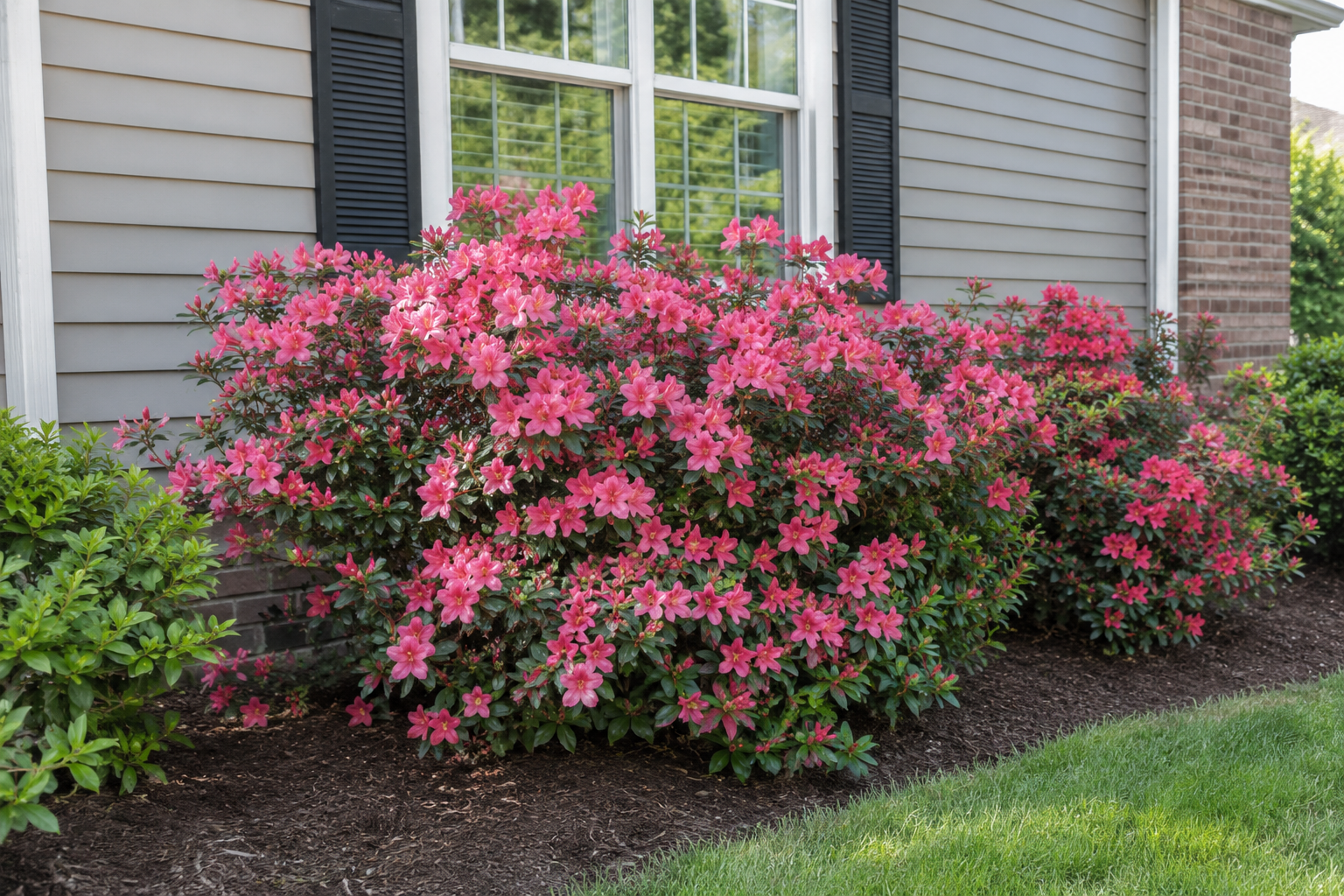
Azaleas are flowering shrubs in the Rhododendron genus. First, they need acidic, well-drained soil, with a pH between 4.5 and 6.0. They also want dappled morning sun and afternoon shade, plus steady moisture without waterlogging. So plant them in spring or fall, and keep the root ball slightly high instead of burying it. After that, mulch heavily. Finally, prune only in the two to four weeks right after they finish blooming.
Get those five things right, and most azaleas need little care for decades. But get the soil pH or drainage wrong, and no amount of fertilizer will fix the yellowing leaves and thin blooms that follow.
That’s the short version. Below, though, you’ll find which azalea type actually fits your yard, how planting depth and soil prep shape the first two years, and the mistakes that show up most often in home landscapes.
What Azaleas Actually Are
Azaleas aren’t a separate plant from rhododendrons. Instead, they’re a subgroup within the Rhododendron genus. Smaller leaves, funnel-shaped flowers, and usually five stamens per bloom set them apart from other rhododendrons. Over time, though, the line has blurred. As a result, some nurseries just label everything “Rhododendron” and let the growth habit sort out which is which.
For a home gardener, however, the distinction that matters isn’t botanical. Instead, it’s evergreen versus deciduous. That one choice, in turn, drives hardiness, bloom timing, fragrance, and how the plant looks in winter.
Types of Azaleas
Evergreen Azaleas
These are what most people picture: tight, mounded shrubs lining foundations and property borders across the South and mid-Atlantic. In fact, a few groups dominate the nursery trade.
Southern Indica azaleas, for example, grow large and vigorous, often reaching 6–8 feet at maturity. Because of that size, they’re common in older Southern landscapes. Each spring, they bloom heavily for a few weeks, and then they stay quiet the rest of the year.
Kurume azaleas, by contrast, stay smaller and denser, usually 2–4 feet tall. Even so, they produce a mass of small flowers in early spring. As a result, they fit well in foundation plantings, where a Southern Indica would eventually crowd the walkway.
Satsuki azaleas bloom later, often into early summer. For this reason, gardeners prize them for larger flowers, sometimes multicolored on a single plant. They’re also a favorite for bonsai.
Encore and other reblooming azaleas, meanwhile, flower in spring and then produce a second, lighter flush in summer or fall. That’s a genuinely useful trait if you want color beyond the typical three-week spring window. Still, the repeat bloom usually runs smaller than the spring show, and it depends on enough sun and low drought stress.
Deciduous Azaleas
Deciduous azaleas drop their leaves in fall. As a group, though, they’re tougher and more cold-hardy than their evergreen cousins. This group includes several species native to the eastern U.S., such as flame azalea (R. calendulaceum), swamp azalea (R. viscosum), and sweet azalea (R. arborescens) — good companions if you’re already growing native shade perennials like our Japanese Anemone. It also includes hybrid groups like the Exbury and Knap Hill azaleas, bred from those same natives.
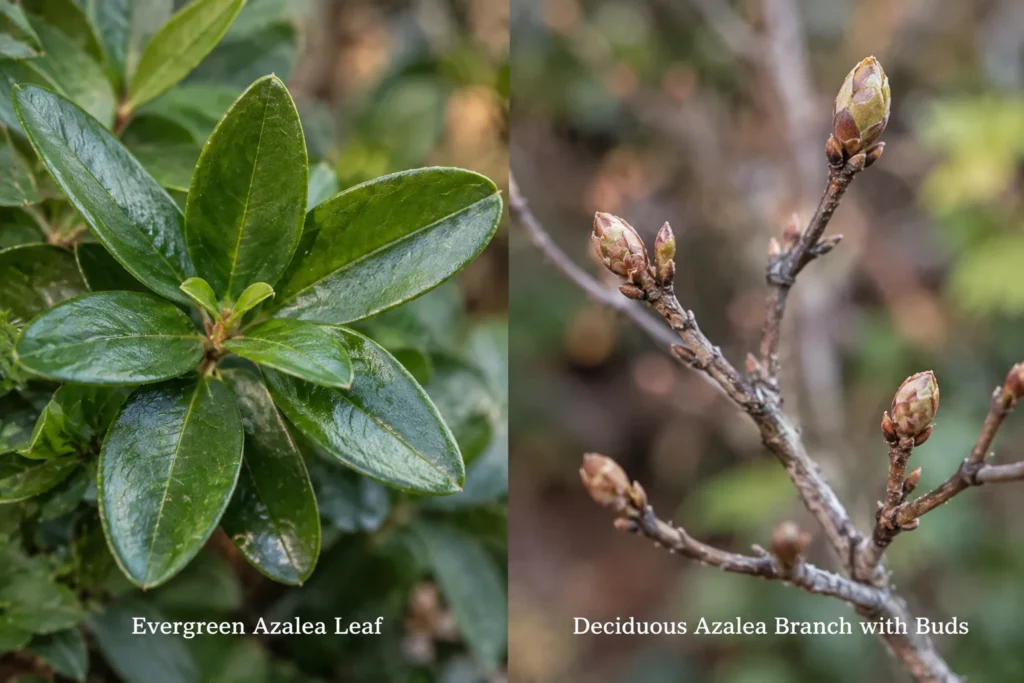
Here’s a trade-off most people don’t expect, though: deciduous azaleas are often fragrant, while most evergreen garden azaleas have little to no scent. So if you want an azalea you can smell from the porch, look at the native deciduous species instead of the evergreen hybrids sold at big-box stores.
Comparison at a Glance
| Evergreen Azaleas | Deciduous (Native) Azaleas | |
|---|---|---|
| Winter foliage | Retains leaves (fully in mild climates) | Bare in winter |
| Typical hardiness | USDA zones 6–9 | Several natives hardy to zone 4–5 |
| Fragrance | Usually minimal | Often strongly fragrant |
| Bloom season | Spring (some rebloom in summer/fall) | Late spring into summer |
| Mature size | 2–8 feet, varies by cultivar | 4–10 feet, often more open/airy habit |
| Best for | Foundation plantings, hedges, year-round structure | Woodland gardens, naturalized areas, fragrance |
Where Azaleas Grow Best in the U.S.
Hardiness depends heavily on the type you plant. Because of that, a lot of buyers get burned by a plant tag that just says “azalea,” with no cultivar name attached.
Overall, most evergreen garden azaleas do well in USDA zones 6 to 9, and they hold their leaves through winter on the milder end of that range. Deciduous natives, however, run considerably tougher. Several North American native azaleas and their hybrids shrug off zone 5 winters, and some sources even rate certain natives hardy down to zone 4.
So, here’s what that means by region:
- Deep South and coastal Southeast (zones 8–9): Nearly the full range of evergreen and deciduous azaleas will work here. But afternoon shade matters more in this heat, since it helps prevent leaf scorch.
- Mid-Atlantic and Upper South (zones 6–7): Most evergreen garden azaleas do fine. Still, check the specific cultivar’s cold tolerance before planting an exposed spot.
- Midwest and Northeast (zones 4–5): Evergreen azaleas are a gamble outside sheltered microclimates. Instead, native deciduous azaleas and cold-hardy hybrids, like some Northern Lights series plants bred in Minnesota, tend to be the safer bet.
- Pacific Northwest: The mild, consistently moist climate suits azaleas well. However, heavy clay soils, common in parts of the region, need serious amendment before planting.
- Southwest and inland California: Low humidity and alkaline soil pose the two big obstacles here. Even so, azaleas can work in irrigated, amended beds with afternoon shade, though they’re fighting their native woodland instincts the whole time.
If you’re not sure what grows well where you live, skip the national plant tag. Instead, ask a local nursery or your state’s Cooperative Extension office, since they’ll know which cultivars actually perform in your regional soil and winter conditions.
Soil and Site: The Part Most People Get Wrong
Overall, bad soil conditions kill more azaleas than cold, pests, or neglect combined. Three things matter most here, and they connect to each other.
pH. Azaleas need acidic soil, generally in the 4.5 to 6.0 range — very close to what our acid-loving plants guide recommends across other species too. Above that, and especially above 6.0, plants develop nutrient deficiency. Usually, you’ll see it first as yellowing leaves with green veins, a sign of iron chlorosis. And here’s the critical point extension services keep repeating: more fertilizer won’t fix it. Because when the pH runs wrong, the plant can’t absorb nutrients even when they’re sitting right there in the soil. So test your soil before planting, not after the shrub starts struggling. Fortunately, most state Cooperative Extension offices offer cheap soil testing.
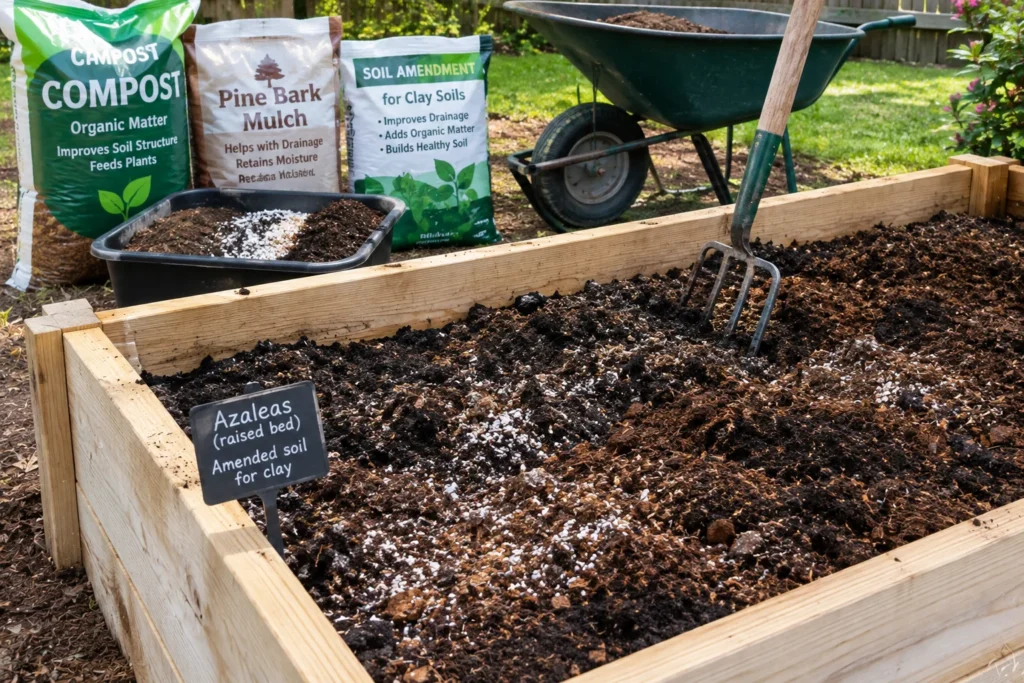
Drainage. Azaleas grow shallow, fine roots, so they will not tolerate “wet feet.” If your soil holds water, and heavy clay is the usual culprit, don’t skip the azalea. Instead, build up. Plant poorly drained sites in raised beds, built up 8 to 12 inches above grade with landscape timbers or by hilling the soil. Unfortunately, people skip this step constantly, and it’s a major reason azaleas planted near low spots or downspouts decline within a couple of years.
Organic matter. Azaleas evolved as woodland understory plants, so they want soil that mimics a forest floor: loose, moisture-retentive, and rich in decomposed organic material. Peat moss, compost, and shredded pine bark, worked into the planting area, help with both drainage and moisture retention at once. That’s partly why they show up in nearly every azalea planting recommendation.
Planting Azaleas: Step by Step
- Time it right. Plant in fall or early spring, since both windows give roots time to establish before summer heat or winter cold hits. Container-grown plants, though, can technically go in almost any time. Bare-root stock, on the other hand, needs planting during winter dormancy.
- Dig wide, not deep. Make the hole two to three times as wide as the root ball. Even so, keep the plant itself at the same depth it grew in the container, or even slightly higher. That’s because azaleas planted too deep often decline slowly over time, and their shallow roots need to breathe near the surface.
- Amend the backfill. Mix the native soil with organic matter. Don’t fill the hole with pure potting mix, though, since that can create a “bathtub” effect, where water fails to move between the amended hole and the surrounding native soil.
- Water thoroughly at planting. Then keep the root zone consistently moist, not soggy, through the first full growing season while roots establish.
- Mulch 2–3 inches deep. Keep it a few inches back from the stem, though. Mulch does double duty here, since it conserves moisture and moderates soil temperature, both more critical for azaleas than for deeper-rooted shrubs.
Watering and Fertilizing
Once established, azaleas want even moisture: not drought-stressed, but also not standing in water. So a soaker hose or drip line under the mulch works better than overhead sprinklers, and it also helps avoid petal blight on open flowers.
For fertilizer, extension guidance generally points to an acid-based fertilizer with a 2-1-1 nitrogen-phosphorus-potassium ratio. Apply it at 2 to 4 pounds per 100 square feet of bed if you haven’t tested the soil, or roughly a quarter to half cup per established plant, in a ring at least a foot from the base. Timing, however, matters as much as the product. So fertilize in early spring, then again in early summer, right after the plants finish flowering. Feed too late in the season, though, and you push tender new growth that won’t harden off before winter. Over-fertilization, meanwhile, can also reduce flowering and cause winter damage instead of helping the plant.
Pruning: Timing Is Everything
This is the single most common azalea mistake. Because azaleas set next year’s flower buds during the summer and fall after this year’s bloom, you should prune the plant right after it finishes its spring bloom, generally within a two-to-four-week window. Prune later than that, though, or prune in late summer or fall to “clean up” the shrub, and you cut off next spring’s buds in the process. So a healthy-looking azalea that suddenly produces almost no flowers usually points to a late-pruning problem, not disease or a nutrient issue.
Beyond timing, however, most azaleas need surprisingly little pruning. Just thin out crossing or dead branches, and shape lightly if needed. Otherwise, resist the urge to shear them into tight geometric balls, since that removes flower buds and tends to build a dense outer shell over a hollow, leafless interior over time.
Common Problems and What They Actually Mean
Yellow leaves with green veins: Almost always high soil pH limiting iron uptake, not a nitrogen deficiency. So test pH before reaching for fertilizer.
No blooms despite a healthy-looking plant: You likely pruned at the wrong time and removed next year’s buds. Alternatively, too much shade or over-fertilization, which pushes leafy growth instead of flowers, can also cause this.
Wilting even with regular watering: Usually a drainage problem, not underwatering. That’s because roots sitting in saturated soil can’t take up water effectively, so the plant produces the same wilted look as drought stress, which is exactly why people reach for the wrong fix.
Silvery, stippled leaves: A classic sign of azalea lace bugs, a sap-feeding insect common on azaleas across the eastern U.S. Typically, damage shows up as pale speckling on the upper leaf surface, with small dark specks (their excrement) on the underside. Fortunately, healthy azaleas in good light tend to tolerate light infestations. Heavy infestations, however, may need a targeted insecticide or horticultural oil, applied to the leaf undersides where the insects feed.
A Note on Toxicity
Azaleas are genuinely toxic, not a folk myth. Every part of the plant, in fact, contains grayanotoxins, and the ASPCA lists Rhododendron species as toxic to dogs, cats, and horses. Clinical signs include vomiting, diarrhea, weakness, and cardiac problems. So grazing livestock face a real risk from ingestion, and so do small children, who might mistake the flowers or nectar for something edible.
Because of this, if you have pets, young kids, or grazing animals with yard access, plant azaleas where they can’t easily reach them. Also, don’t leave pruned branches or fallen flowers lying around, since an animal could chew on them. If you suspect a pet has eaten azalea material, call the ASPCA Animal Poison Control Center (888-426-4435) or head to an emergency vet right away, rather than waiting to see if symptoms show up.
Buying Advice: What to Check Before You Plant
- Confirm the exact cultivar name, not just “azalea,” on the plant tag. Otherwise, hardiness, mature size, and bloom time vary enormously within the genus, and a generic tag tells you almost nothing useful.
- Match mature size to the actual space. For instance, plant a Southern Indica azalea 18 inches from a foundation, and you’ll prune it constantly within a few years. A Kurume or dwarf Encore variety, by comparison, usually fits tight foundation beds better.
- Ask about rebloom performance in your specific light conditions, especially if you’re buying an Encore-type azalea, since the second flush drops off noticeably in heavy shade.
- Check the root ball, not just the top growth, when buying container-grown stock. Circling, girdled roots, for example, show up often in azaleas that sat too long in a container, and that can limit establishment even when the top growth looks healthy.
Planning a broader foundation or entryway planting rather than a single specimen shrub? Then it helps to think about azaleas as part of the overall landscape design, not a standalone purchase. For ideas on pairing shrubs for year-round structure and curb appeal, see PlazmaHomes’ Ivory Halo Dogwood Care Guide, which covers foundation planting, mixed shrub borders, and how to plan mature spread around an entryway.
Frequently Asked Questions
How fast do azaleas grow?
Overall, most azaleas grow slowly to moderately, adding a few inches to a foot per year depending on the cultivar. So a young azalea usually takes three to five years to fill out a foundation planting.
Can azaleas grow in full sun?
Some cultivars tolerate more sun than others. As a group, though, azaleas prefer partial shade or dappled morning light, since full, hot afternoon sun tends to scorch leaves and stress the plant, especially in the South.
Why did my azalea’s leaves turn purple or reddish in winter?
Actually, that’s normal for many evergreen azaleas. It’s simply a cold-weather pigment response, not disease, and the leaves typically green back up as spring temperatures rise.
Do azaleas need fertilizer every year?
Not always. Established, healthy azaleas in decent soil often need only light annual feeding, if any, since overfeeding causes more problems, like reduced blooming and winter damage, than modest underfeeding does.
How do I lower soil pH for azaleas?
Typically, you work elemental sulfur or aluminum sulfate into the top 6–8 inches of soil. Even so, apply it at label rates, and recheck with a soil test rather than guessing, because over-application can burn roots.
Are Encore azaleas worth the extra cost over standard evergreen azaleas?
If a second bloom period matters to you and the site gets enough sun, then yes. The reblooming trait is real, though the fall flush usually runs lighter than spring. But if you’re planting mostly for one strong spring show, a standard evergreen cultivar often costs less and performs just as reliably.
Can I move an established azalea to a new spot?
Yes, and azaleas transplant reasonably well thanks to their shallow, fibrous root systems. Timing matters, though: move them in early spring before new growth starts, or in fall after the heat breaks, and expect to water heavily for the first season afterward.
What’s the difference between an azalea and a rhododendron for landscaping purposes?
Generally, azaleas have smaller leaves, a more compact habit, and funnel-shaped flowers in dense clusters, while true rhododendrons tend toward larger, leathery evergreen leaves and bigger, bell-shaped flower trusses. Since both share the same soil and light preferences, though, the real choice usually comes down to size and bloom style, not care requirements.
Sources & References
- Mississippi State University Extension Service, “Azaleas for the Landscape”
- University of Georgia Cooperative Extension, “Azaleas: Issues and Care”
- ASPCA Animal Poison Control Center, Toxic and Non-Toxic Plant List