

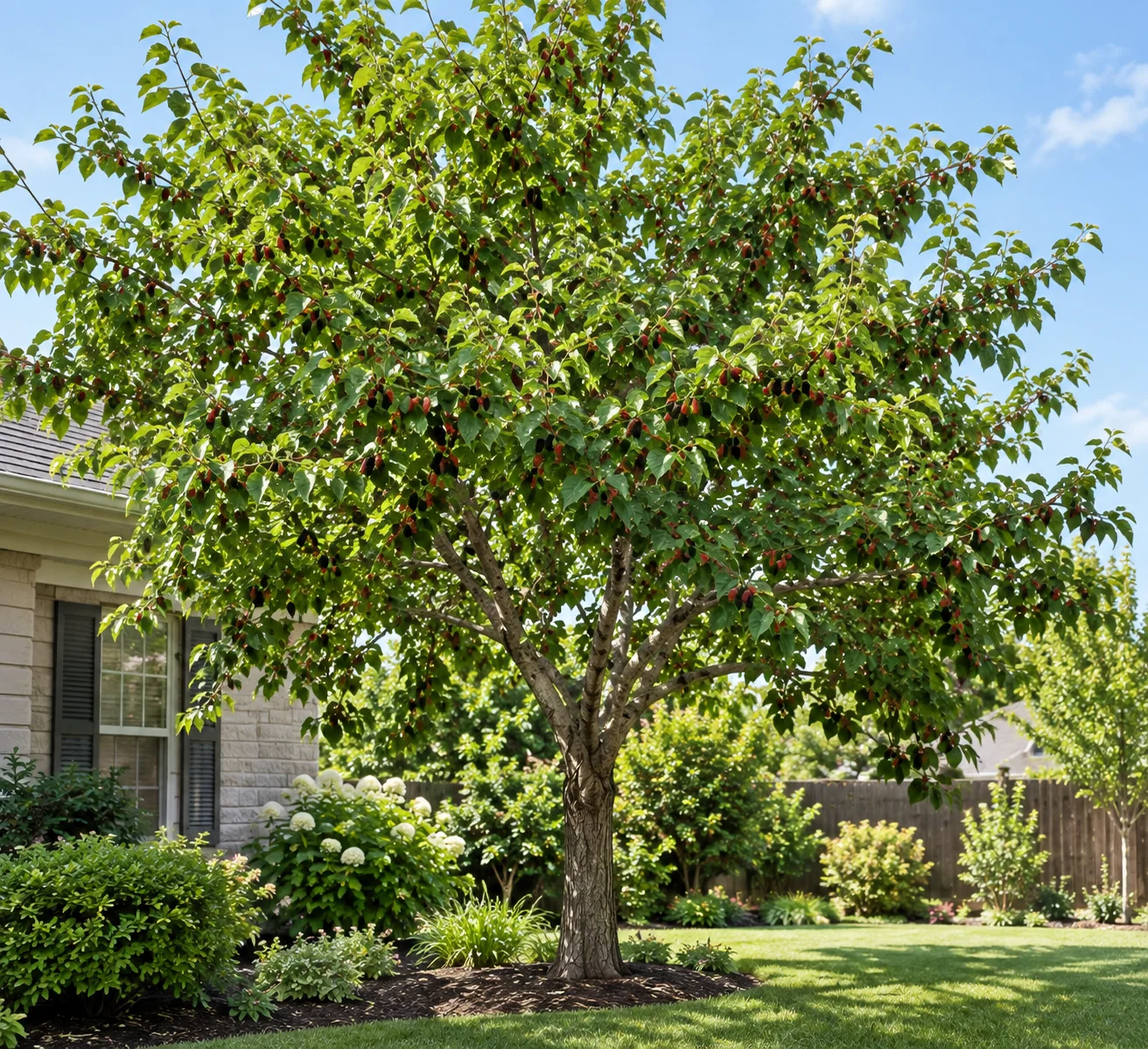
Did you grow up singing “here we go round the mulberry bush”? You probably pictured a low, rounded shrub. But most mulberries are trees. Many reach 40 feet or more. The “bush” in the rhyme almost certainly refers to a blackthorn or bramble instead, since true mulberries rarely stay small. The exception is a dwarf cultivar, or a tree you prune hard every year.
That distinction matters before you plant one. A tree you expected to stay compact can outgrow a small yard fast.
This guide covers what mulberries actually are, which type to choose, and where they will (and won’t) grow well in the U.S. You’ll also learn how to plant and maintain one without running into the two most common regrets: a tree that’s too big for the space, or one that drops so much fruit it stains everything underneath it.
Quick Answer
Mulberries (genus Morus) are fast-growing deciduous trees. They’re hardy in USDA zones 4–10, depending on the species. Plant them in full sun, in well-drained soil. Give them at least 15–20 feet of space away from structures, walkways, and parking areas. Water them regularly the first year. After that, expect them to become largely drought-tolerant.
Check your state and city regulations before you plant. White mulberry carries invasive status or restrictions in several states, including Illinois, Kentucky, Pennsylvania, and Tennessee. A handful of cities also ban it locally because of pollen allergies. Want fruit without a 40-foot tree? Look for a dwarf cultivar like ‘Issai’ or ‘Dwarf Everbearing.’ Both stay under 15 feet, and you can even grow them in a large container.
What a Mulberry Actually Is
Mulberries belong to the genus Morus. This puts them in the same plant family as figs (Moraceae). Three species show up most often in U.S. home landscapes:
- Black mulberry (Morus nigra) — This species comes from southwest Asia. It produces the richest-flavored fruit of the three, and it also grows the slowest and stays the most compact. That combination makes it a more realistic choice for a home garden.
- Red mulberry (Morus rubra) — This one’s native to the eastern and central U.S. You’ll find it naturally along streams and in moist bottomland. It can reach 40 feet tall and produces good-quality reddish-black fruit.
- White mulberry (Morus alba) — Growers originally brought this Chinese species to the U.S. for silkworm cultivation. It self-seeds more aggressively than the other two, and you’ll now find it in nearly every U.S. state. It’s also the species most often flagged as invasive. Part of the reason: it cross-pollinates with native red mulberry, and this can weaken the native species’ genetics over generations.
There isn’t a botanical species called a “mulberry bush.” Nurseries sell bush-form or dwarf mulberries under names like ‘Issai’ and ‘Dwarf Everbearing.’ These are grafted or naturally compact cultivars, not a separate bush species. Most top out around 10–15 feet. Prune them annually, or grow them in a container, and they’ll stay even shorter.
Choosing the Right Type for Your Yard
| Type | Mature Size | Fruit Quality | Best For | Watch Out For |
|---|---|---|---|---|
| Black mulberry (M. nigra) | 15–30 ft, slower growing | Excellent, sweet-tart | Home orchards, flavor-focused growers | Slower to establish; less cold-hardy (roughly zones 6–9) |
| Red mulberry (M. rubra) | Up to 40 ft | Good | Naturalized areas, wildlife plantings, shade | Large mature size; messy drop zone |
| White mulberry (M. alba) | 30–50 ft (species); dwarf cultivars 10–15 ft | Mild, sweet | Silkworm feed, fast shade (species form) | Invasive/restricted in multiple states; check locally |
| Dwarf cultivars (‘Issai,’ ‘Dwarf Everbearing’) | 6–15 ft | Good, repeat harvests | Small yards, containers, easy picking | Still need full sun; fruit set can be lighter than full-size trees |
Want fruit for eating fresh or making jam? Choose a named cultivar instead of a wild or volunteer seedling. Nurseries graft these cultivars, and grafted trees generally give you more reliable flavor and production. Just want shade and don’t care about fruit? Some cultivars are male and produce no fruit at all. That eliminates the staining and mess problem. Keep in mind, though, that male trees also produce the heaviest pollen loads.
Where Mulberries Will (and Won’t) Grow
Mulberries as a genus tolerate USDA zones 4–10, but the range narrows by species. Red and white mulberry survive zone 4 winters without trunk damage. Black mulberry can’t handle cold as well, and it does best in zones 6–9. Check your zone using the USDA Plant Hardiness Zone Map, updated in 2023 and still the standard reference.
Sun exposure matters more than most people expect. Mulberries need at least 6–8 hours of direct summer sun to set flower buds for next year’s crop. Plant one in partial shade, and it may survive for years without ever fruiting well.
Regional notes
- Northeast and Upper Midwest: Stick to cold-hardy white or red mulberry selections. Black mulberry often struggles here.
- South and Gulf Coast: Red mulberry and heat-tolerant white mulberry selections handle sandy, low-fertility soils with little irrigation once established. Humidity raises the risk of fungal leaf issues, so good air circulation matters more here than in drier climates.
- Southwest (Phoenix, Tucson, Las Vegas, El Paso, Albuquerque): Several cities in this region restrict or ban fruiting, pollen-producing mulberries. The reason: allergy complaints tied to white mulberry pollen. Check municipal code before you buy. This is one of the most overlooked steps in mulberry planting, and skipping it can mean the difference between a legal planting and a required removal.
- Pacific Northwest: Cooler, wetter summers can reduce fruit sweetness compared to hotter climates. Sugar development benefits from heat, and this region doesn’t offer much of it.
- California: Some counties classify certain mulberry types as limited or restricted. Check with your county agricultural commissioner’s office before planting, especially near property lines shared with agricultural land.
The invasive species question
Most quick “how to grow” articles skip this part. White mulberry carries invasive or restricted status in Illinois, Kentucky, Pennsylvania, and Tennessee, among other states. Its aggressive self-seeding raises real ecological concerns. Birds eat the berries and spread seed widely, and the roots can sprout even from cut stem sections left in the soil.
Drawn to mulberry for wildlife value or fast shade? Ask your county extension office which species, or which specific cultivar, works for your area. This matters even more if you live near a natural area, waterway, or undeveloped land where seedlings could spread unchecked.
Planting a Mulberry Tree
Timing: Plant bare-root or container trees in late winter to early spring, while the tree is still dormant or just breaking dormancy. Live in a mild-winter region, like much of the South or West Coast? Fall planting works well there too, and it gives roots a head start before summer heat arrives.
Site selection: Choose full sun and well-drained soil. Mulberries aren’t picky about soil pH or fertility, but they do poorly in soil that stays waterlogged. Skip spots near driveways, patios, decks, sidewalks, or parking areas. Ripe mulberries stain concrete, pavement, and fabric. Birds feeding on the fruit will also drop more of it, along with droppings, onto whatever’s below.
Spacing: Give standard varieties 15–20 feet from buildings, fences, septic systems, and other trees. Mulberry roots grow vigorously and spread wide; in some urban plantings, they’ve lifted sidewalks and cracked curbs. Keep mature trees well away from foundations and underground utility lines. Dwarf cultivars can sit closer together, roughly 8–10 feet apart, or you can grow one alone in a large container (15+ gallons) on a patio.
Planting steps:
- Dig a hole twice as wide as the root ball but no deeper. Planting too deep is one of the most common reasons young trees struggle.
- Loosen the roots gently if the tree is pot-bound. Set it so the root flare, where trunk meets roots, sits at or slightly above grade.
- Backfill with the native soil you removed. Skip heavy amending; it isn’t necessary, and it can actually discourage roots from spreading into surrounding soil.
- Water deeply right after planting. This settles the soil and eliminates air pockets.
- Apply 2–3 inches of mulch around the base. Keep it a few inches away from the trunk itself to avoid rot.
Ongoing Care
Watering: Water young trees regularly through their first full growing season, roughly once or twice a week during dry spells. Adjust for rainfall and soil type as you go. Once established, usually by year two or three, mulberries handle drought reasonably well. Fruit size and juiciness still improve with consistent moisture during the ripening period.
Fertilizing: Go light. Is your tree putting on about a foot or more of new growth each year, with healthy-looking foliage? It likely doesn’t need supplemental fertilizer. Overfeeding pushes soft, late-season growth that’s more vulnerable to winter cold damage. It can also worsen certain disease problems instead of helping the tree.
Pruning: Prune during dormancy, in late winter. Mulberries “bleed” sap heavily when you cut them. It looks alarming, but it generally isn’t harmful. Just avoid heavy pruning right before a hard freeze. Want to keep fruit within reach? Top the tree back to your desired height, and it will branch out laterally rather than growing taller. Growing a dwarf type for continuous harvests? Light pruning between fruiting flushes helps maintain both yield and a manageable size.
Mulching: Add a 2–3 inch layer of leaf or straw mulch. It conserves moisture, suppresses weeds, and slowly builds organic matter in the soil, which supports beneficial soil fungi and earthworm activity.
Winter protection: Established red and white mulberries in zones 4–5 don’t typically need special winter protection. Growing black mulberry at the colder end of its range? Wrap young trunks, or winter container-grown trees in a garage or unheated shed, if temperatures drop below the mid-teens Fahrenheit.
Common Mistakes to Avoid
- Planting a standard-size species too close to hardscape. A tree that looks small in a 5-gallon nursery pot can reach 30–40 feet, with an equally wide root spread. Measure the mature size, not the current one.
- Choosing a fruiting, pollen-heavy male tree near an entryway or patio. This combines the two biggest complaints about mulberries, allergies and mess, in the one spot you’ll notice most.
- Skipping the local regulation check. Rules vary by city and county rather than staying consistent nationwide. A five-minute call to your local extension office or planning department, before you buy, can save you a headache later, especially in the Southwest.
- Overwatering mature, established trees. Once roots take hold, consistent overwatering can encourage root rot and reduce the tree’s natural drought tolerance.
- Waiting too long to prune for size control. Mulberries grow fast, often 3–5 feet a year while young. Want a mid-sized tree? Start shaping it in the first couple of years, not after it’s already outgrown the space.
Harvesting
Mulberries don’t all ripen at once, and they don’t ripen further once you pick them. That makes timing more art than science. Ripe berries lose their glossy shine, turn a dull, soft color (deep purple-black or white, depending on variety), and detach with almost no resistance.
Skip hand-picking each berry from a full-size tree. Instead, spread a sheet or tarp underneath and gently shake the branches. Ripe fruit drops immediately, while unripe fruit stays put. Dwarf and container trees work differently; you can usually harvest those by hand, since the whole canopy sits within reach.
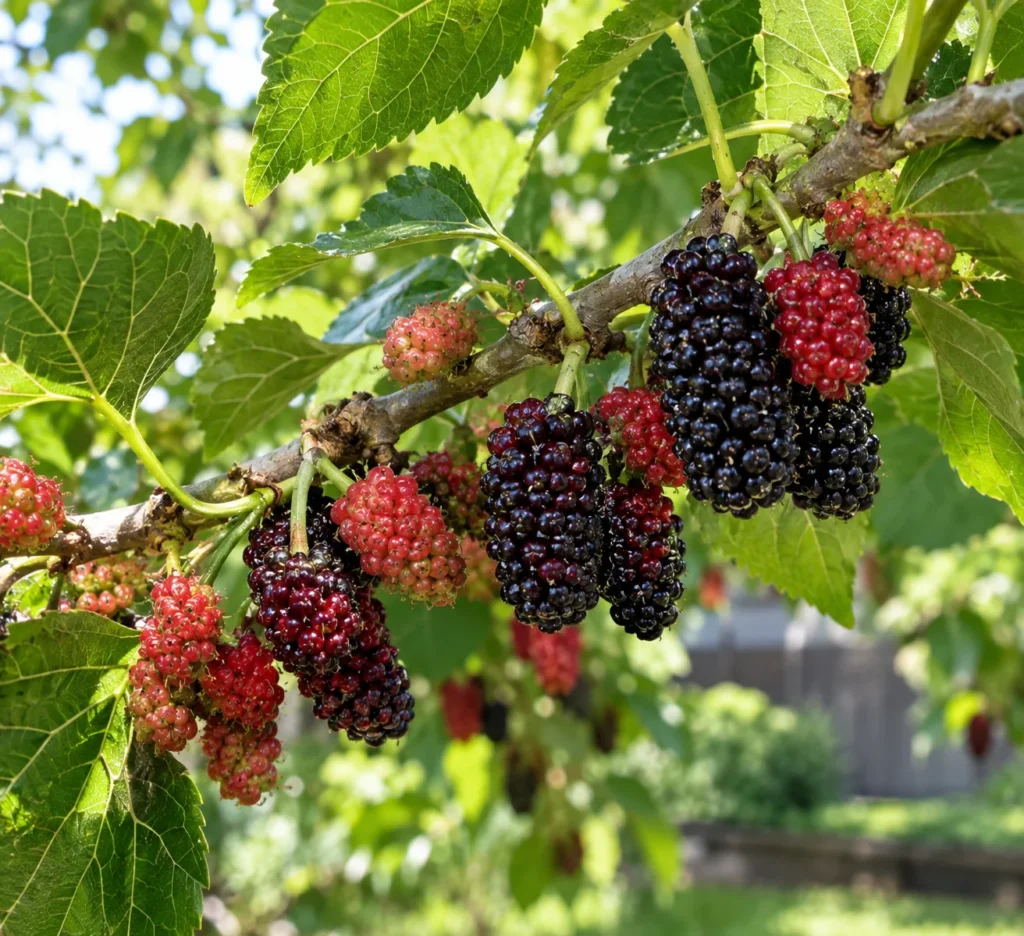
Fresh mulberries spoil fast, and they don’t ship or store well. That’s a big part of why you rarely see them in grocery stores. Growing your own, or buying from a local farmers market, is really the only reliable way to get them.
Growing in Containers
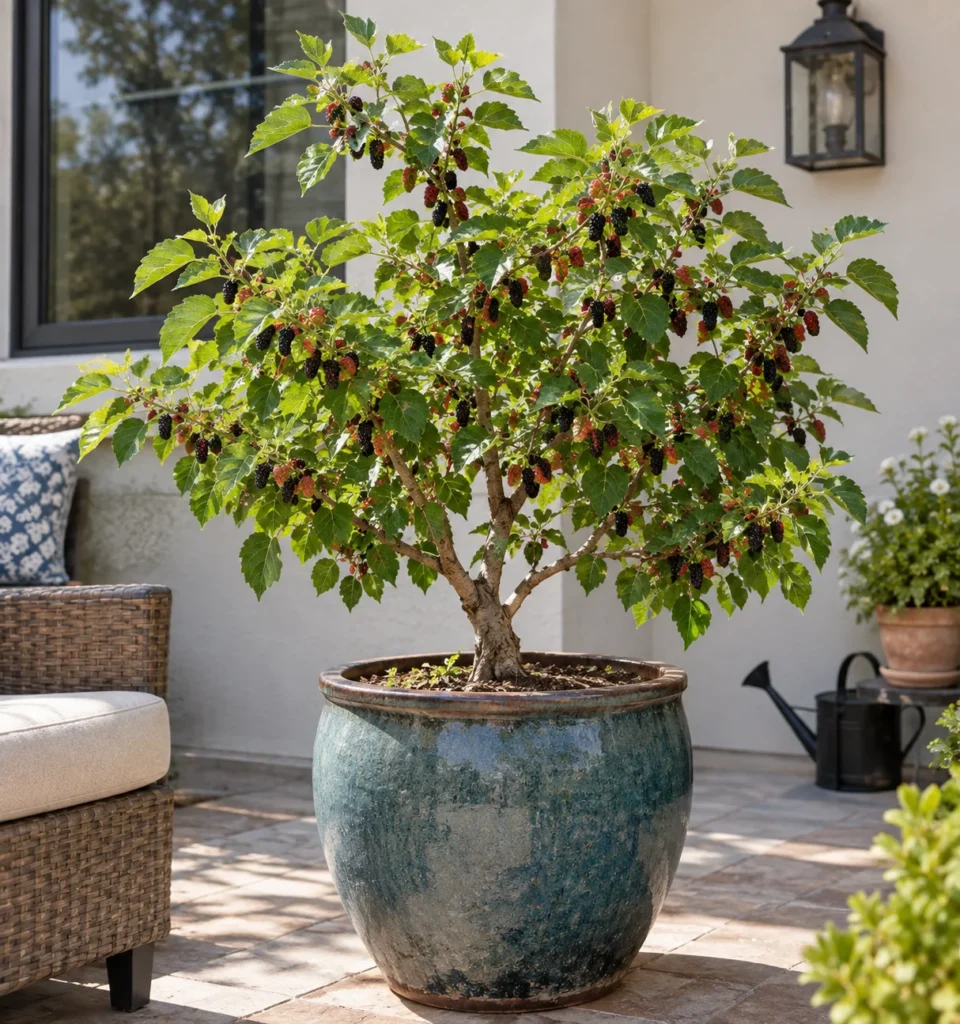
Dwarf cultivars like ‘Issai’ and ‘Dwarf Everbearing’ adapt reasonably well to container culture. This gives you a practical option if you live in a townhouse or a condo with a patio, or if you’re unsure about committing an in-ground spot to a tree that’s hard to remove later.
Use a container of at least 15–20 gallons with drainage holes, filled with a well-draining potting mix. Expect to water more often than you would an in-ground tree, since containers dry out faster. Repot container trees every 2–3 years, as roots fill the available space. They’re also more exposed to root-zone cold in winter, so move them to a sheltered spot or unheated garage during hard freezes if you live in a colder zone.
Are you planning a broader edible landscaping layout around your property, with mulberries alongside other fruiting trees, flowering shrubs, or a kitchen garden? Think through sun exposure and mature footprint for the whole space first, not just one tree at a time. If you’re mixing in ornamental shrubs as well, our azalea planting and care guide covers similar site-selection and spacing considerations for a shrub that shares mulberry’s preference for good drainage.
Frequently Asked Questions
Is a mulberry tree the same as a mulberry bush? No. Mulberries are botanically trees, not shrubs, and they can reach considerable height and spread. The “mulberry bush” from the nursery rhyme likely refers to a different plant, probably a blackthorn. Nurseries do sell dwarf or bush-form mulberry cultivars that stay compact, but these are pruned or naturally smaller selections, not a separate bush species.
How long does it take a mulberry tree to bear fruit? Grafted cultivars can start fruiting within 1–2 years of planting. Seedling trees often take longer, sometimes 4–5 years, and their fruit quality stays less predictable, since seedlings don’t grow true to the parent tree.
Do I need two mulberry trees to get fruit? Not usually. Most cultivated mulberries are self-fertile, so a single tree can produce fruit on its own. Some wild populations do have separate male and female trees. Growing from unknown seed? Fruiting isn’t guaranteed until the tree matures enough to reveal its sex.
Why are mulberry trees banned in some places? Restrictions generally trace back to two issues. First, white mulberry self-seeds aggressively and hybridizes with native red mulberry. Second, some Southwestern cities dealt with pollen allergy complaints after planting male, non-fruiting street trees heavily decades ago. These rules stay local, not federal, so requirements differ by state and even by city.
Are mulberries messy? Yes, if you plant one over a patio, driveway, or parking area. Ripe fruit stains, birds feeding on it drop more fruit and droppings, and fallen berries turn slippery underfoot. Plant away from hardscape, choose a male non-fruiting cultivar, or pick up fruit promptly, and you’ll cut the problem down significantly.
Can you grow mulberry in a container year-round? Yes, especially dwarf cultivars. Just expect more frequent watering, periodic repotting, and some winter protection in colder climates compared to trees planted in the ground.
What’s the difference between red, white, and black mulberry fruit? Black mulberry generally offers the richest, most balanced sweet-tart flavor. White mulberry fruit tastes milder and sweeter, with less acidity. Red mulberry falls in between, and it’s considered good quality, though flavor varies by individual tree since seedlings aren’t genetically identical.
Do mulberry trees have deep or invasive roots? Their root systems grow vigorously and spread wide. Some urban plantings show documented cases of roots lifting sidewalks and pavement. Keep mature trees well away from foundations, septic fields, sewer lines, and paved surfaces.
Sources & References
- USDA Plant Hardiness Zone Map
- UF/IFAS Gardening Solutions: Mulberry
- Purdue University Extension: Red and White Mulberry in Indiana (FNR-237)