

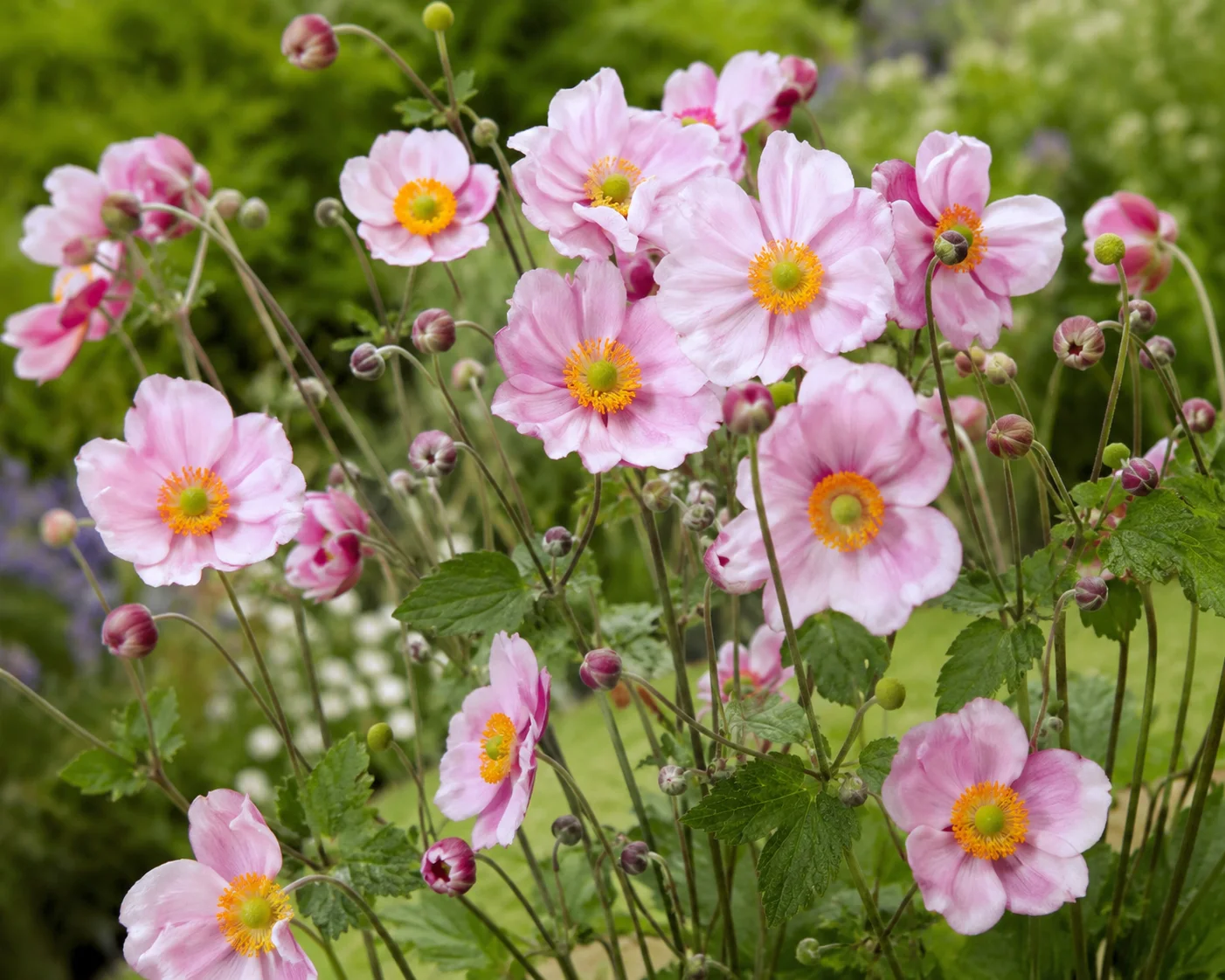
Most perennial gardens start losing steam by late August. That’s exactly when Japanese anemone hits its stride. This late-season bloomer sends up elegant, cup-shaped flowers on tall, swaying stems right when everything else in the border is winding down. It’s become a favorite for gardeners who want real color stretching into October and even November, long after peonies and daylilies have finished their show.
This guide covers everything you need to know about growing Japanese anemone successfully. We’ll walk through ideal growing conditions, bloom timing, USDA hardiness zones, and a full planting process. You’ll also get troubleshooting tips for common problems, so your anemones establish well and keep blooming reliably year after year.
What Is Japanese Anemone?
Japanese anemone refers primarily to Anemone hupehensis and its many hybrids, especially Anemone × hybrida. Despite the common name, this plant isn’t actually native to Japan. It originates from central China, particularly Hubei Province, where it grows naturally along forest margins and stream banks. The plant was introduced to Japan centuries ago, then made its way to Europe in the 1840s through British plant hunters, and the “Japanese anemone” name stuck from there.
Botanically, Japanese anemones are herbaceous perennials with fibrous, rhizomatous root systems, not true bulbs, tubers, or corms. They form dense, slowly spreading clumps that reach 3 to 4 feet tall and 2 to 3 feet wide at full maturity. Popular garden cultivars include ‘Honorine Jobert,’ a classic pure white variety, along with ‘September Charm,’ ‘Whirlwind,’ and ‘Queen Charlotte,’ each offering slightly different flower color, petal count, and stem height.
When Do Japanese Anemones Bloom?
Japanese anemones bloom reliably from late summer through mid-autumn, typically starting in early August and continuing until the first hard frost. In mild coastal or urban microclimates, blooming can stretch into October or even early November. Peak flowering happens over a 6 to 8 week window, and individual blooms last 7 to 10 days on the plant before fading.
Unlike spring-blooming anemone species, Japanese anemones aren’t triggered by winter chilling or vernalization. Instead, they respond to shortening daylight hours combined with consistent soil moisture during summer’s warm buildup. That bloom timing stays remarkably predictable year after year, provided mature clumps, generally three years or older, get the right combination of light, moisture, and protection from harsh afternoon sun.
USDA Hardiness Zones for Japanese Anemone
Japanese anemones are reliably hardy in USDA Zones 4 through 8, and they can survive winter lows around negative 30 degrees Fahrenheit with adequate mulch or snow cover. That range covers a huge portion of the country, from the Upper Midwest and New England down through much of the transitional South. According to Duke Gardens, Japanese anemones grow in thick clumps and send up dozens of blooms resembling pink and white buttercups on long stems from August through October, which lines up closely with the bloom window most home gardeners can expect.
Zone-specific care matters here, though. In Zone 4, survival often depends on snow cover or heavy mulch, but timing that mulch matters. Apply it only after the soil has fully frozen, since mulching too early can actually invite vole damage and crown rot instead of protecting the plant. In Zone 8, summer heat becomes the bigger challenge rather than winter cold. Choose a spot with afternoon shade, keep soil consistently moist, and avoid planting near south-facing brick walls or hardscaping that radiates extra heat back onto the plant.
Japanese anemones generally perform poorly in Zone 9 and warmer, since they need more winter chill than those regions provide, and they struggle with excessive summer humidity in hot, humid climates. If you garden at higher elevation, even within a technically suitable zone, watch for late-spring frosts that can damage emerging shoots, and consider protecting new growth with floating row cover until mid-May in those conditions.
Sunlight and Soil Requirements
Japanese anemones thrive in dappled shade or morning sun paired with afternoon protection from harsh, direct light. That preference makes them well-suited to woodland gardens, areas beneath high tree canopy, or borders that receive filtered light through the day rather than full, unbroken sun.
Soil should stay consistently moist but well-drained, since these plants dislike both prolonged drought and waterlogged conditions equally. Rich, organically amended soil supports the strongest growth, so working compost into the planting area before installing your anemones pays off in stronger establishment and better long-term blooming.
Growth Rate and What to Expect the First Year
Patience matters more with Japanese anemone than with many other perennials. Most anemones take at least one full growing season to establish before blooming profusely the following year. Don’t expect a dramatic flower show the same season you plant them, since the plant spends that first year building out its root system rather than prioritizing top growth.
Once established, though, Japanese anemones reward that patience with reliable, low-maintenance performance for years. They spread slowly via their rhizomatous root system, gradually forming the dense, attractive clumps that make them such an effective late-season border plant.
Step-by-Step Planting Guide
Getting the planting process right early on makes a real difference in how well your anemones establish and perform in later years.
- Choose your planting time. Spring or early summer planting generally gives roots the most time to establish before the plant’s first bloom cycle the following year. Avoid planting too late in fall, since new plants need time to root in before winter dormancy sets in.
- Select a partially shaded location. Look for a spot with morning sun and afternoon shade, ideally beneath high tree canopy or on the east side of a structure that blocks the harshest afternoon light.
- Prepare the soil. Work compost or other organic matter into the planting area to improve both drainage and moisture retention. Japanese anemones perform best in soil that holds moisture without staying waterlogged.
- Dig the planting hole. Make it roughly twice as wide as the root ball and just as deep, since these plants have fibrous, spreading roots rather than a single deep taproot.
- Plant at the correct depth. Position the crown of the plant level with the surrounding soil surface, avoiding both burying it too deep and leaving roots exposed above the soil line.
- Water deeply after planting. Give newly planted anemones a thorough soaking to help settle the soil around the roots and encourage strong initial root development.
- Mulch around the base. Apply 2 to 3 inches of mulch to help retain soil moisture and suppress competing weeds while the plant establishes, keeping mulch a few inches clear of the crown itself.
Why You Should Avoid Frequent Division
Unlike many perennials that benefit from regular dividing, Japanese anemones actually dislike root disturbance. Planting them once in the right spot and mulching well tends to produce far better long-term results than frequent digging and dividing. If you do need to divide an established clump, do it in early spring before new growth really takes off, and expect the divided sections to take a season or two to fully recover and bloom at their previous level.
Deer Resistance and Pest Tolerance
One of Japanese anemone’s most valued traits is its resilience against common garden pests. Deer typically avoid Japanese anemones, and most insect pests largely ignore them as well, which makes this plant a genuinely low-maintenance choice for gardens dealing with heavy deer pressure. Extreme conditions, like a particularly harsh drought or food-scarce winter, can occasionally push deer to eat plants they’d normally avoid, but under typical conditions, Japanese anemone stays reliably untouched.
Beyond deer resistance, the plant needs minimal ongoing intervention once established. Light deadheading keeps the display looking tidy through the bloom period, and taller cultivars occasionally benefit from staking if they start to flop under their own height, but beyond that, Japanese anemones largely take care of themselves.
Pairing Japanese Anemone With Other Plants
Japanese anemone’s late bloom time makes it a natural choice for extending color into a border that would otherwise start looking tired by late summer. It pairs particularly well with ornamental grasses, whose texture and movement complement the anemone’s tall, swaying stems. Asters and toad lilies also bloom around the same late-season window, creating a cohesive autumn display when planted together.
For a woodland garden setting, Japanese anemones mix naturally with hostas, ferns, and other shade-tolerant perennials, since they share similar light and moisture preferences. If you’re planning a broader perennial border built around extending your bloom season, our complete guide to planning a four-season perennial garden covers additional plant pairings and bloom-timing strategies worth considering alongside your anemones.
Common Problems and How to Fix Them
Plant fails to bloom in its first year: This is completely normal and expected. Japanese anemones typically need one full growing season to establish before blooming reliably, so don’t assume something is wrong if your newly planted anemone doesn’t flower right away.
Crown rot or plant dies over winter: This usually points to mulching too early, before the ground has fully frozen, or planting in soil that stays waterlogged rather than well-drained. Adjust your mulch timing and confirm your planting site has adequate drainage.
Weak or flopping stems: Taller cultivars sometimes need light staking, particularly in windy locations or partially shaded spots where stems stretch toward available light. Adding stakes early in the season, before stems fully develop, works better than trying to correct flopping after the fact.
Slow spread or smaller-than-expected clumps: Japanese anemones spread gradually, and a young plant may take several years to reach its full mature size. Avoid dividing too early or too often, since frequent root disturbance actually slows the plant’s ability to establish a strong, spreading clump.
Final Thoughts
Japanese anemone rewards a bit of patience with one of the most reliable, low-maintenance late-season blooms available to home gardeners. Choose a partially shaded spot with consistently moist, well-drained soil, plant it once rather than dividing frequently, and give it a full growing season to establish before expecting a big flower show. Once settled in, it delivers graceful, long-lasting color exactly when the rest of your garden needs it most.
Frequently Asked Questions
When do Japanese anemones bloom? Japanese anemones typically bloom from early August through the first hard frost, often continuing into October or even November in mild climates. Peak flowering happens over a 6 to 8 week window in late summer and fall.
What USDA zones are best for Japanese anemone? Japanese anemones are reliably hardy in USDA Zones 4 through 8. They generally perform poorly in Zone 9 and warmer, due to insufficient winter chill and excessive summer humidity.
Do Japanese anemones need sun or shade? They perform best in dappled shade or morning sun with protection from harsh afternoon light, making them well-suited to woodland gardens or borders with filtered light.
Why didn’t my Japanese anemone bloom in its first year? This is normal. Japanese anemones typically need one full growing season to establish their root system before blooming reliably the following year.
Are Japanese anemones deer resistant? Yes, deer typically avoid Japanese anemones, and most common garden pests largely ignore them too, making this plant a reliable choice for gardens with heavy deer pressure.
How often should I divide Japanese anemone? Rarely, if at all. Unlike many perennials, Japanese anemones dislike root disturbance and generally perform better when left undivided. If division is necessary, do it in early spring and expect a season or two of recovery time.
How tall do Japanese anemones grow? Mature clumps typically reach 3 to 4 feet tall and 2 to 3 feet wide, depending on the specific cultivar and growing conditions.
What plants pair well with Japanese anemone? Ornamental grasses, asters, and toad lilies all bloom around the same late-season window and pair naturally with Japanese anemone’s tall, swaying stems, creating a cohesive autumn garden display.