

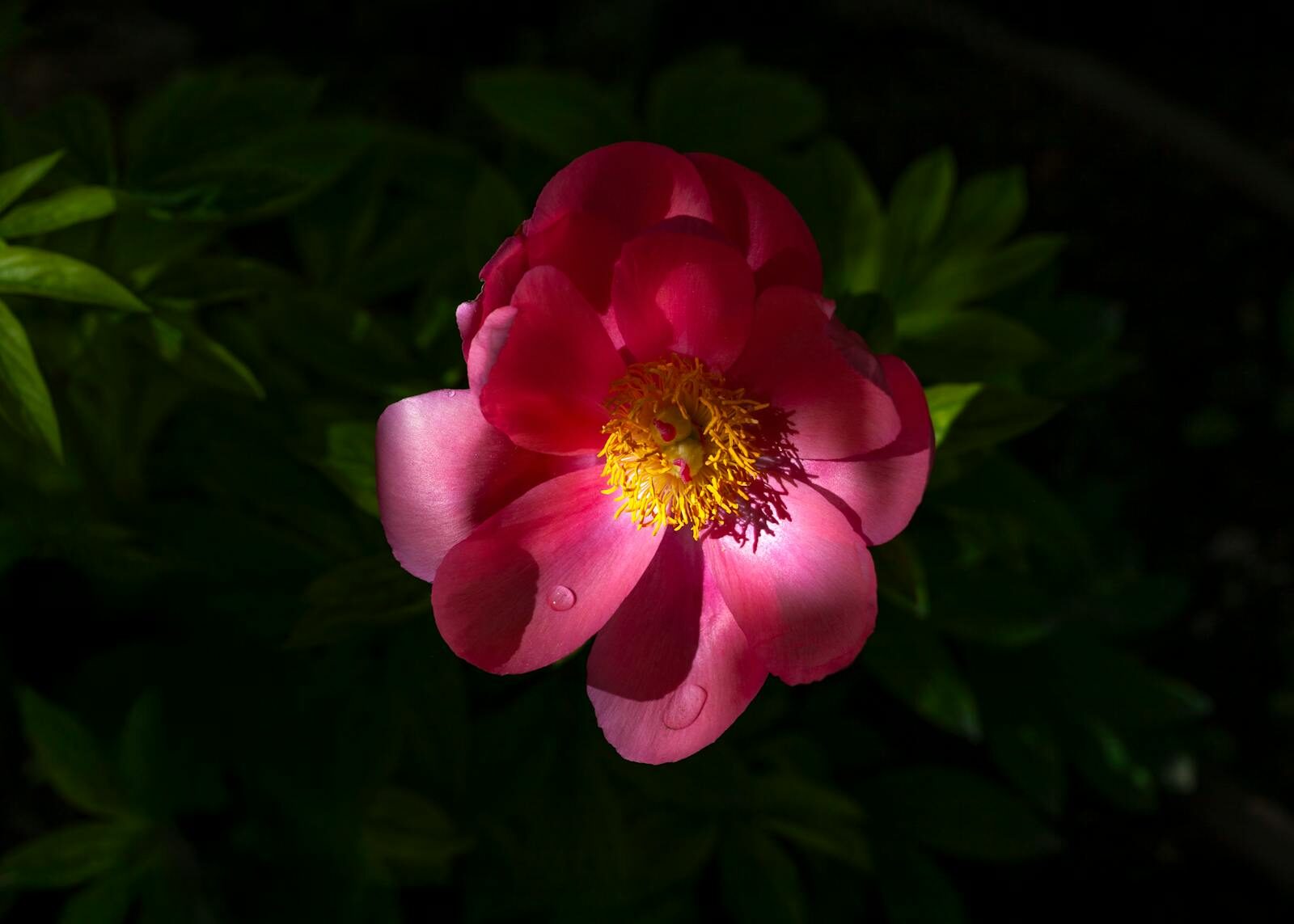
There’s something quietly magical about a plant that thrives where most others struggle. While the average peony demands full sun and center stage in the garden, the woodland peony does something different — it slips into the shadows beneath your trees, opens its delicate cup-shaped flowers in early spring before most of the garden has woken up, and then quietly transforms into a stunning display of indigo and scarlet seed pods by fall. I’ve grown these in a shaded Pennsylvania garden for several years, and I’ll tell you upfront: once you understand what woodland peonies actually need, they’re one of the most rewarding and low-fuss perennials you can grow in the United States.
This guide covers everything — botanical background, species and varieties, planting, watering, fertilizing, pruning, common problems, and how to propagate — so whether you’re a beginner gardener or a seasoned horticulturist expanding into shade gardening, you’ll leave here knowing exactly what to do.
What Is a Woodland Peony? Botanical Background
The woodland peony goes by the scientific name Paeonia obovata (sometimes listed alongside the closely related Paeonia japonica), and it belongs to the Paeoniaceae family. It’s a herbaceous perennial native to the forest understories of East Asia — China, Japan, Korea, and Siberia — where it grows naturally in the dappled light of temperate deciduous forests. The specific epithet obovata refers to the egg-shaped leaves that are broader at the tip than at the base.
Unlike the big, blowsy peonies most American gardeners picture — the Paeonia lactiflora varieties loaded with ruffled petals you see at farmers markets — woodland peonies are refined and subtle. Their flowers are single-form, cup-shaped, and typically 2 to 3 inches in diameter, in shades of white, soft pink, or rose-purple, centered with a striking cluster of yellow stamens. They bloom earlier than any other peony type, often as early as late April or early May across much of the US, before the tree canopy fully closes in.
What gardeners don’t always expect is the fall show. After flowering, the seed pods swell and eventually split open to reveal some of the most unusual and beautiful seeds in any garden — glossy blue-black seeds sitting against a vivid red interior. This dramatic combination makes woodland peonies genuinely three-season plants in a way few perennials manage.
Types and Varieties of Woodland Peony
Woodland peonies are a smaller group within the Paeonia genus, but there’s still meaningful variety to choose from. Here are the key species and selections worth knowing:
Paeonia obovata (Classic Woodland Peony)
The most widely referenced species. Grows 18 to 24 inches tall, producing white to rose-purple blooms in May. Hardy in USDA zones 4 through 8. This is the backbone species, widely available through specialty nurseries.
Paeonia obovata var. alba
A naturally occurring white-flowered variant that’s particularly prized by collectors and shade gardeners. The contrast of bright white petals against the yellow stamens is striking, and the seed pod display in fall is especially vivid. Often sold in commerce simply as P. obovata var. alba.
Paeonia japonica (Japanese Woodland Peony)
Very closely related to P. obovata and sometimes classified as a subspecies of it. Native to Japanese woodland settings, it’s equally shade-tolerant and produces beautiful white flowers. According to the Missouri Botanical Garden, P. japonica is native to Siberia and China as well, and the two species share enough characteristics that they’re often discussed interchangeably in the trade.
Paeonia obovata subsp. willmottiae
A Chinese subspecies with white flowers, named for the noted British garden writer Ellen Willmott. Slightly different in leaf form, this is a collector’s item that occasionally surfaces through specialty growers in the US.
Paeonia oreogeton
Another species within the obovata group, sometimes called the mountain peony. Less common in American commerce but worth seeking out for zone-appropriate collectors in the Pacific Northwest and upper Midwest.
A note on availability: Because woodland peonies self-seed and naturalize slowly, they’re more common in specialty nurseries and peony farms than at big-box garden centers. Peony’s Envy in New Jersey, Adelman Peony Gardens in Oregon, and Cricket Hill Garden in Connecticut are among the well-regarded US sources that carry true woodland species.
USDA Hardiness Zones for Woodland Peonies
Woodland peonies are hardy in USDA zones 3 through 8, making them viable across a remarkably wide swath of the continental United States — from Minnesota and Vermont down through the mid-Atlantic states, the Pacific Northwest, and into the upper South. That said, zone 3 gardeners should plan for some additional winter mulching, particularly in areas with minimal snow cover.
They are not well-suited to the Deep South, Florida, or other zone 9+ climates, because like all peonies they require a period of winter cold (chilling hours) to set buds and bloom reliably. Without that cold dormancy, they may leaf out but fail to flower.
You can check your exact USDA hardiness zone using the USDA Plant Hardiness Zone Map, which was updated in 2023 to reflect shifting climate data — a useful reference before purchasing or gifting plants.
Sunlight Requirements: Embracing the Shade
This is where woodland peonies depart most clearly from their garden-peony cousins. While standard herbaceous peonies want 6 to 8 hours of direct sun daily, woodland peonies are built for a different kind of light.
They thrive in partial shade, specifically the dappled, shifting light you find beneath a canopy of deciduous trees. The ideal setup is morning sun and afternoon shade — they get their energy in the cooler morning hours and are protected from the scorching afternoon sun that can bleach and stress their foliage.
Aim for a minimum of 4 to 6 hours of indirect or dappled sunlight per day. Too much deep shade and they’ll be reluctant to bloom. Too much harsh afternoon sun, especially in zones 6 through 8, and their foliage will scorch and the plant will struggle in summer heat.
The most elegant placement is at the edge of a deciduous woodland, where the canopy is open enough to let in filtered light — exactly the habitat they’ve evolved to thrive in over millennia across East Asia.
Soil Requirements: Getting the Foundation Right
Woodland peonies are not fussy about soil type, but they are particular about two things: drainage and organic richness. Get these right and you’re most of the way there.
Drainage is non-negotiable. Like all peonies, woodland species are highly susceptible to crown rot if their roots sit in waterlogged soil. Avoid low-lying areas, spots near downspouts, and areas with heavy clay that holds water after rain. If your garden has poor drainage, raised beds or amended mound planting are worth the effort.
Organic matter is your best tool. Before planting, work a generous amount of compost into the planting area to a depth of 12 to 14 inches. This accomplishes two things simultaneously — it improves drainage in clay soils and improves moisture retention in sandy soils, moving both toward the ideal “rich, fertile, medium-moisture” sweet spot that woodland peonies love.
Soil pH should be close to neutral — roughly 6.5 to 7.0. Woodland peonies don’t perform well in strongly acidic soils. If you’re planting under conifers or in an area that has been heavily composted with pine needles or bark, get a soil test first (your local county extension office typically offers these inexpensively) and amend with lime if needed.
How to Plant Woodland Peonies: Step-by-Step
When to Plant
Fall is the optimal planting season for woodland peonies. Planting in September or October gives the roots time to establish themselves before the ground freezes, and the plant will come roaring back with better vigor the following spring. Spring planting is possible — particularly with container-grown plants — but expect a slower establishment year.
Step-by-Step Planting Instructions
Step 1: Choose your location. Look for a spot with morning light and afternoon shade, beneath deciduous trees or on the north or east side of a structure. Avoid the dense root competition directly under large maples or beeches — the woodland peony wants tree shade, not tree root competition.
Step 2: Prepare the soil. Dig the planting area 12 to 14 inches deep. Incorporate 3 to 4 inches of compost throughout. If your soil has significant clay, add a portion of coarse sand or perlite to improve drainage structure.
Step 3: Plant at the right depth. This is the most important technical detail with any peony. The eyes (buds) on the crown should sit no more than 1 to 2 inches below the soil surface. Planting too deep is the single most common reason peonies fail to bloom. If you’re planting a bare-root division, set it carefully so the eyes face upward and are just barely covered with soil.
Step 4: Space correctly. Plant woodland peonies 3 to 5 feet apart. They naturalize over time through self-seeding, so give them room to spread and form a ground cover layer in your woodland garden. They’ll fill in beautifully over several seasons.
Step 5: Water in well. After planting, water deeply to settle the soil and eliminate air pockets. Apply a 2-inch layer of compost or shredded leaf mulch to protect the roots through winter.
Watering: How Much and How Often
Woodland peonies prefer consistent, even moisture but are surprisingly drought-tolerant once established — their deep, fleshy root systems store water effectively. During the first growing season, water deeply once or twice per week to support root establishment.
For established plants, water during prolonged dry spells (more than two weeks without meaningful rain), particularly in summer. Deep, infrequent watering is always preferable to shallow, frequent irrigation, which encourages surface rooting and fungal disease.
Avoid overhead watering when possible. Wet foliage in warm, humid conditions — common across much of the US East Coast, Midwest, and Pacific Northwest — creates favorable conditions for Botrytis blight (gray mold), which is the most common disease problem these plants face. Water at the soil level, early in the day if overhead is unavoidable.
Do not plant near automatic irrigation systems without careful monitoring. Consistent wet soil, especially around the crown, is a fast path to root rot.
Fertilizing Woodland Peonies
Woodland peonies are not heavy feeders. In richly organic soil, they may need very little supplemental fertilization at all. But for most garden situations, a modest, targeted feeding approach delivers good results.
In spring: As soon as the red-purple shoots emerge from the ground (one of the more dramatic spring garden moments), apply a light application of a balanced, low-nitrogen fertilizer or a fertilizer formulated for flowering perennials. High nitrogen encourages lush foliage at the expense of flowers — the opposite of what you want.
After blooming: A light top-dressing of compost around the base of the plant replenishes organic matter and gently feeds the roots as they prepare for next year’s bloom cycle.
What to avoid: Synthetic, high-nitrogen lawn fertilizers applied near peonies are a common mistake. They push vegetative growth and can actually suppress flowering. Keep lawn fertilizer applications well away from peony planting areas.
Bone meal is a traditional peony amendment that many experienced growers still swear by, worked lightly into the soil surface in early spring.
Pruning and Seasonal Care
After Flowering (Late Spring to Early Summer)
Deadhead spent blooms to keep the plant tidy and direct energy toward foliage and root development. However — and this is a meaningful decision — if you want the plant to self-seed and naturalize through your woodland garden, leave some seed pods in place. They’ll reward you with that spectacular blue-black and red seed display in September, and in subsequent years you’ll find small seedlings appearing nearby.
Remove no more than one-third of the plant’s growth at any pruning session. Avoid heavy cutback during the growing season.
Fall Cleanup
After the first hard frost kills the foliage back, cut the stems to the ground and remove all plant debris from the garden. This is important for disease prevention — leaving peony foliage in place through winter is a primary reservoir for Botrytis blight spores. Clean up and dispose of (or hot-compost) the old stems and leaves rather than leaving them to decompose in place.
Apply a 2-inch layer of shredded leaves or straw mulch after the ground has cooled in fall. Remove the mulch in early spring before growth begins.
Common Problems: Diagnosis and Solutions
Botrytis Blight (Gray Mold)
Symptoms: Grayish-brown spots on stems and buds; stems collapsing at the base; fuzzy gray fungal growth in humid conditions. Cause: A fungal disease (Botrytis paeoniae) that thrives in cool, wet spring conditions. Solution: Remove and dispose of affected plant material immediately. Improve air circulation around plants. Water at the soil level. Apply a copper-based fungicide preventively in early spring if your garden has a history of this problem.
Phytophthora Blight
Symptoms: Dark brown stem lesions at the soil line; rapid wilting and plant death. Cause: Soil-borne water mold that strikes in poorly drained areas. Solution: Improve soil drainage. Avoid overwatering. There is no chemical cure once Phytophthora is established — remove the plant and amend the soil before replanting.
Failure to Bloom
Most common causes: Planted too deep; insufficient light; plants are too young (peonies can take 2 to 3 years to bloom after transplanting); overly rich nitrogen feeding; severe late frost damage to buds. Solution: Check planting depth first (eyes should be within 1 to 2 inches of the surface). Assess light levels. Be patient — woodland peonies establish slowly but are exceptionally long-lived.
Ants on Buds
The truth: Ants on peony buds are completely harmless. They’re attracted to the sweet nectar on the bud scales and cause no damage whatsoever. You don’t need to treat for them. This is one of the most common gardening myths surrounding peonies, and the ants may actually assist in bud opening.
Propagation: Growing More Woodland Peonies
Division (Most Reliable Method)
Divide established woodland peony clumps in early fall, after the foliage has begun to die back but before the ground freezes. Dig the clump carefully, trying to minimize root damage. Wash or brush away soil so you can see the crown clearly. Divide with a sharp, clean knife so that each division has at least 3 to 5 healthy eyes (buds) and a portion of root.
Replant divisions immediately at the correct depth. Expect a reduced bloom the first year after division — the plant directs its energy into re-establishing its root system.
From Seed (Slow but Rewarding)
Woodland peonies produce viable seeds and will self-sow naturally in the garden, which is one of their distinctive traits compared to most cultivated garden peonies. For intentional seed propagation, collect seeds as soon as the pods split open in fall.
Peony seeds require a lengthy cold stratification period before they’ll germinate — typically sow seeds in a container of moist sand or seed-starting mix, refrigerate for 3 months, then move to warm conditions to initiate germination. Expect seedlings to reach blooming size in 3 to 5 years. It’s a slow investment, but woodland peonies grown from seed adapt exceptionally well to their specific garden environment.
Companion Plants for a Woodland Peony Garden
Because woodland peonies leaf out early and die back in fall, they work beautifully layered with other shade garden companions. Here are some of the most compatible US native and garden plants:
Hostas are a natural partner — they emerge slightly later and fill the space as the peony’s spring bloom finishes, masking any summer dieback with lush broad leaves.
Ferns (especially ostrich fern, cinnamon fern, and Japanese painted fern) complement the peony’s bold leaf texture and thrive in the same moist, shade conditions.
Bleeding heart (Dicentra spectabilis) blooms around the same time as the woodland peony, creating a soft spring display of similar scale in the woodland garden.
Trilliums and trout lily are native American wildflowers that share the woodland peony’s habitat preferences and bloom period, making them ecologically appropriate companions in naturalistic plantings.
Virginia bluebells provide early spring color that transitions beautifully into the peony’s bloom period.
Growing Woodland Peonies Across the US: Regional Tips
Northeast (zones 4–6): Ideal conditions. The cool, moist springs and cold winters align perfectly with woodland peony requirements. Plant under maples, oaks, or in north-facing borders. Mulch lightly for the first winter after planting.
Midwest (zones 4–6): Also excellent conditions, though wind exposure can be an issue. Plant in sheltered spots or use companion plantings to buffer spring winds that can damage early emerging growth.
Pacific Northwest (zones 7–8): The mild winters and wet springs are favorable, but watch for Botrytis in the consistently wet early season. Improve drainage and ensure good air circulation.
Mid-Atlantic (zones 6–7): Performs well across Maryland, Virginia, and North Carolina. Summer heat is the primary management challenge — ensure consistent moisture and reliable afternoon shade.
Upper South (zones 7–8): Challenging but possible in the cooler mountain regions of Tennessee, North Carolina, and northern Georgia. These locations get sufficient winter chill and have cooler summer nights than the coastal South.
Deep South and Florida: Not recommended for zones 9 and above. Insufficient winter chill prevents reliable flowering.
6 Expert Tips for Growing Woodland Peonies Successfully
1. Be patient the first two years. Woodland peonies establish slowly. Don’t judge the plant’s long-term potential by its first-season performance. Most experienced peony growers say year three is when these plants truly reveal themselves.
2. Never move an established plant unnecessarily. Peonies, including woodland species, deeply dislike being relocated. Choose your planting location thoughtfully, because the best results come from plants that have been undisturbed for years — even decades. Well-grown peonies can live for a century or more.
3. Let it naturalize. Unlike most garden peonies, woodland varieties self-seed freely. Resist the urge to deadhead every flower. Leave some pods to mature, enjoy the fall seed display, and watch your colony slowly grow into a beautiful ground cover beneath your trees.
4. Soil test before planting. If you’re planting under established trees, particularly conifers or heavily mulched areas, the pH may have drifted acidic. A simple soil test — available through most county extension offices across the US — saves you from a frustrating first year.
5. Match the habitat. Woodland peonies perform best when you work with their instincts, not against them. If your yard has a naturalistic woodland edge, a shaded slope, or space beneath old deciduous trees, that’s your planting zone. Fighting to grow them in a sunny perennial border is a losing proposition.
6. Source plants carefully. Woodland peony species are not always available at large nurseries. Specialty peony growers, botanical garden plant sales, and perennial plant swaps are your best resources. When possible, buy from nurseries that grow their own plants rather than resell wild-collected stock.
Why Woodland Peonies Deserve More Attention in American Gardens
In an era when shade gardening has become one of the fastest-growing areas of interest for American homeowners — particularly as established trees mature and formerly sunny yards become increasingly shaded — the woodland peony is precisely the kind of plant that deserves wider adoption. For a broader look at other perennials that pair well in a shade garden setting, check out our complete shade garden planting guide for companion plant ideas by US region.
It offers true three-season interest without demanding sun or constant intervention. It’s deer resistant — a genuine selling point in suburban and exurban gardens across the Northeast and Midwest. It’s drought-tolerant once established. It self-seeds gently and creates naturalistic ground cover without becoming invasive. And perhaps most meaningfully, it produces flowers and seed pods unlike anything else in the American garden palette.
The fact that it blooms first among all peonies — sometimes as early as late April in zones 6 and 7 — means it fills a moment in the garden calendar that’s often underserved. Most spring bulbs are fading and the herbaceous garden isn’t yet in full swing. The woodland peony steps quietly into that gap and does something spectacular.
Final Thoughts
Growing woodland peonies isn’t about mastering a difficult plant. It’s about understanding what the plant evolved to do and giving it the conditions to do it. Get the drainage right. Plant at the correct depth. Give it morning light and afternoon shade. Leave it alone once established. The rest — the flowers, the fall seed pods, the slowly spreading colony beneath your trees — takes care of itself.
For any American gardener who has a shady corner they haven’t known what to do with, the woodland peony might just be the answer you’ve been looking for.