

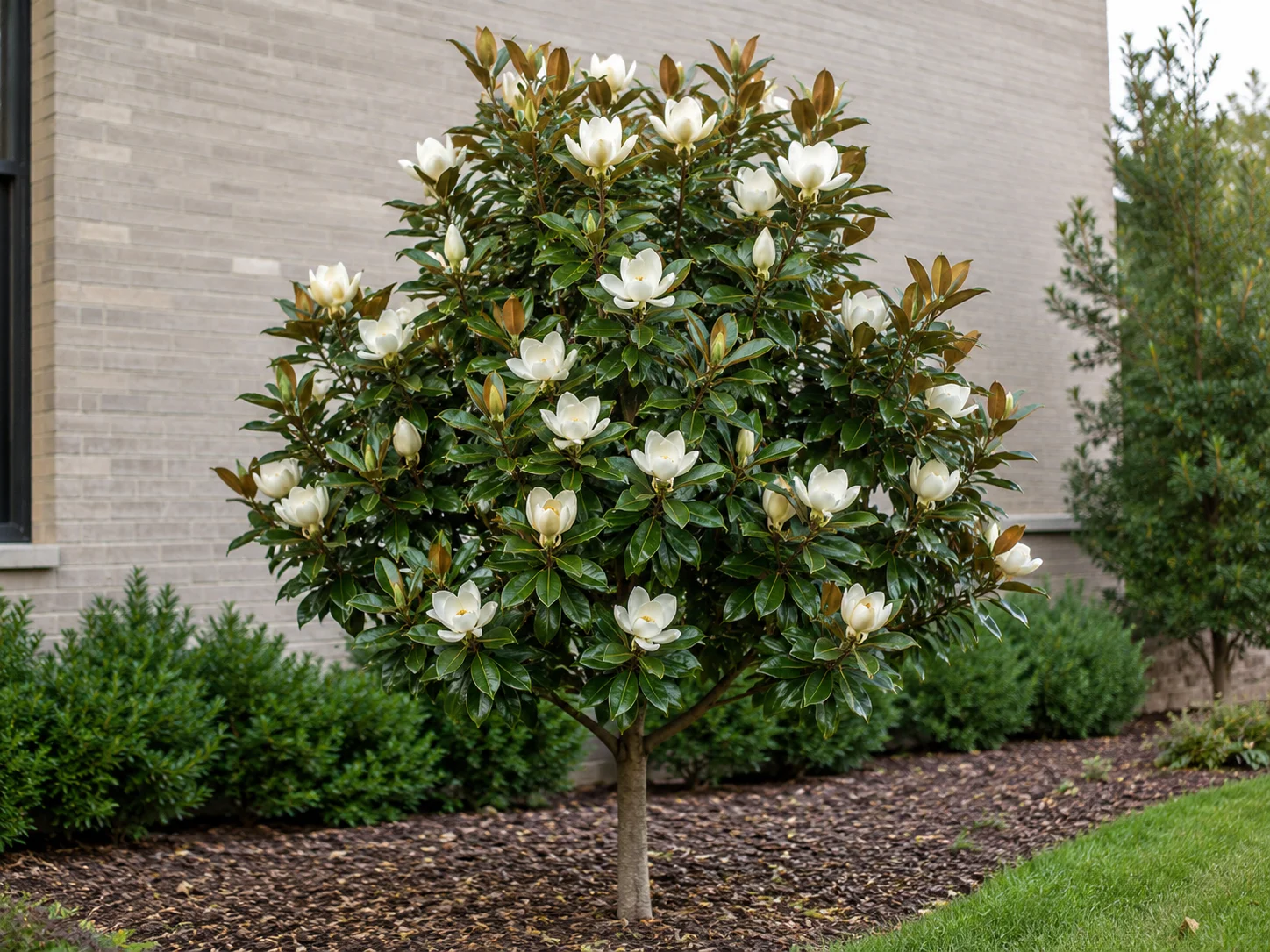
If you’ve ever driven through a Southern neighborhood and noticed a compact, glossy-leafed evergreen tree covered in creamy white blooms, chances are you were looking at a Little Gem Magnolia. This tree has become one of the most requested plants at nurseries across the United States, and for good reason. It gives homeowners the classic Southern magnolia look without the massive footprint of its parent species.
In this guide, we’ll walk through everything you need to know about the Little Gem Magnolia in 2026, including its size, ideal planting conditions, care requirements, and common problems. Whether you’re a first-time gardener or someone who’s planted dozens of trees over the years, this article will give you practical, real-world advice you can actually use.
What Is a Little Gem Magnolia?
The Little Gem Magnolia (Magnolia grandiflora ‘Little Gem’) is a dwarf cultivar of the Southern Magnolia. It was developed specifically for homeowners who love the traditional magnolia but don’t have the space for a 60 to 80-foot tree. Because of this, it has become a go-to choice for smaller residential lots, especially in the Southeastern United States.
This tree keeps the classic features people love: large, fragrant white flowers, thick dark green leaves with a rusty brown underside, and a naturally symmetrical shape. However, it grows in a much more manageable, columnar form. As a result, it fits nicely near patios, driveways, and property lines where a full-sized magnolia simply wouldn’t work.
In my experience working with landscaping projects across Zone 7 through Zone 9, Little Gem consistently ranks as one of the lowest-maintenance flowering evergreens available. That said, it still has specific needs that matter if you want it to thrive rather than just survive.
Little Gem Magnolia Size: How Big Does It Really Get?
This is probably the most searched question about this tree, and understandably so. Nobody wants to plant something that outgrows its space within a decade.
At full maturity, a Little Gem Magnolia typically reaches 20 to 25 feet in height, with some well-established specimens stretching closer to 30 feet under ideal conditions. Meanwhile, the spread usually stays between 7 and 10 feet, which gives it that narrow, columnar silhouette that makes it so popular for tighter spaces.
Growth rate is another important factor. On average, expect about one to two feet of growth per year once the tree is established. Because of this moderate pace, most homeowners see a mature, full-looking tree within 8 to 10 years.
A few things that influence final size include:
- Soil quality and drainage
- Amount of direct sunlight received
- Watering consistency during the first two to three years
- Regional climate and rainfall patterns
- Whether the tree is pruned or left to grow naturally
If you’re planting near a house, fence, or property line, most landscape professionals recommend spacing Little Gem Magnolias at least 6 to 8 feet apart if you’re creating a privacy screen or hedge.
Best Planting Time and Location for USA Climates
Little Gem Magnolias grow best in USDA Hardiness Zones 7 through 10, which covers a large portion of the Southeastern and Gulf Coast United States, including states like Alabama, Georgia, Florida, South Carolina, Louisiana, and parts of Texas. However, gardeners in warmer pockets of Zone 6 have had success as well, particularly with proper winter protection during the first couple of years.
For USA homeowners, fall planting is generally considered the best option. Cooler temperatures reduce stress on the root system, and the tree has several months to establish itself before summer heat arrives. That said, early spring planting works well too, especially in regions with mild winters.
When it comes to location, this tree wants:
- Full sun to partial shade, though full sun produces the best blooms
- Well-draining soil, since soggy roots are one of the leading causes of decline
- Protection from harsh winter winds if you’re on the colder edge of its hardiness range
- Enough space for both the canopy and root system to expand without competing with structures or other trees
Because Little Gem has a naturally narrow growth habit, it works well along fence lines, near driveways, or as a foundation planting near larger homes. Additionally, many homeowners use it as a living privacy screen since it holds its leaves year-round.
Step-by-Step Planting Tips
Planting a Little Gem Magnolia correctly makes a significant difference in how well it establishes. Here’s a straightforward process that works well for most USA climates.
1. Choose the right spot. Confirm the location gets at least six hours of sunlight and has soil that drains reasonably well. Avoid low spots where water tends to pool after rain.
2. Dig a wide hole. The hole should be about twice as wide as the root ball but no deeper than the root ball itself. Planting too deep is one of the most common mistakes people make.
3. Loosen the roots. If the tree is root-bound from its container, gently loosen the outer roots before placing it in the hole. This encourages outward growth instead of circling roots.
4. Backfill with native soil. In most cases, amending the soil isn’t necessary unless your soil is extremely poor. Overly rich planting holes can sometimes discourage roots from spreading outward.
5. Water deeply after planting. This helps settle the soil around the roots and removes air pockets.
6. Mulch around the base. A two to three-inch layer of mulch helps retain moisture and regulate soil temperature. Just be sure to keep mulch a few inches away from the trunk itself.
7. Stake if needed. Young trees in windy areas may benefit from staking for the first year, though this isn’t always necessary.
Little Gem Magnolia Care Guide
Once your tree is in the ground, ongoing care is fairly simple. Still, a few key habits will help it grow strong and healthy for decades.
Watering
During the first two growing seasons, consistent watering is critical. Aim for deep watering once or twice a week, adjusting based on rainfall. After the tree is established, it becomes fairly drought-tolerant, though it still appreciates supplemental water during extended dry spells, particularly in summer.
Sunlight
Full sun produces the fullest canopy and the most abundant blooms. However, the tree can tolerate partial shade, especially in hotter climates like inland Texas or Florida, where some afternoon shade can actually reduce stress.
Soil and Fertilizer
Little Gem prefers slightly acidic, well-draining soil. If your soil tends to be heavy clay, adding organic matter at planting time can improve drainage over time. As for fertilizer, a slow-release, balanced fertilizer applied in early spring is usually sufficient. Avoid heavy fertilization in late summer or fall, since this can encourage tender new growth right before colder weather arrives.
Pruning
One of the appealing things about this tree is that it rarely needs pruning to maintain its shape. That said, light pruning after the spring bloom cycle can help remove damaged branches or maintain a tidier appearance. Avoid heavy pruning in fall, as this can reduce next season’s flowering.
Mulching
Mulch helps regulate soil moisture and temperature, which is especially useful during hot Southern summers. Refresh mulch once or twice a year, keeping it away from direct contact with the trunk.
Common Problems and How to Fix Them
Even a low-maintenance tree like Little Gem Magnolia can run into occasional issues. Here are the most common ones and practical solutions.
Yellowing leaves: This often points to overwatering or poor drainage. Check the soil moisture before watering again, and consider improving drainage if the problem persists.
Leaf drop: Some leaf drop is completely normal, since the tree is evergreen but still sheds older leaves periodically. However, excessive dropping may indicate transplant shock or watering inconsistency.
Scale insects or aphids: These pests can occasionally appear on new growth. Insecticidal soap or horticultural oil typically resolves the issue without harming the tree.
Slow growth: If your tree seems to be growing much slower than expected, check soil compaction, sunlight levels, and whether it’s competing with nearby tree roots for nutrients.
Winter leaf burn: In colder parts of its hardiness range, winter winds can cause browning on leaf edges. A windbreak or burlap wrap during the first couple of winters can help young trees adjust.
Little Gem Magnolia vs. Other Magnolia Varieties
If you’re still deciding whether Little Gem is right for your yard, it helps to compare it with other popular options. Standard Southern Magnolias offer a grander, more dramatic presence, but they need significantly more space, often 60 feet or more at maturity. On the other hand, varieties like ‘Teddy Bear’ Magnolia offer a similar compact size to Little Gem but with a slightly denser, more rounded form.
For homeowners looking for additional landscaping inspiration, especially in coastal or waterfront communities, it’s worth checking out our related guide on choosing the right trees for coastal Southern landscapes, which covers salt tolerance, wind resistance, and other factors specific to properties near the Gulf Coast.
Landscaping Ideas for Little Gem Magnolia
Because of its narrow growth habit, Little Gem works well in more landscaping situations than the standard Southern Magnolia. A few popular uses include:
- Planting in a row to create a natural privacy screen along property lines
- Using it as a focal point near an entryway, where its blooms and fragrance can be fully appreciated
- Framing a patio or outdoor living space with two matching trees
- Softening the corner of a home as a foundation planting
Given its year-round green foliage, it also provides consistent structure to a landscape design, even during winter months when many other plants go dormant.
Frequently Asked Questions
How fast does a Little Gem Magnolia grow? On average, this tree grows about one to two feet per year once established. Under ideal conditions with consistent watering and full sun, growth can occasionally be slightly faster during the first few years.
How far should I plant a Little Gem Magnolia from my house? Most experts recommend planting at least 8 to 10 feet away from your home’s foundation. This gives the root system room to expand without interfering with pipes or the foundation itself.
Does Little Gem Magnolia lose its leaves in winter? No, it’s an evergreen tree, meaning it keeps its leaves year-round. That said, it naturally sheds some older leaves throughout the year, which is normal and not a sign of a problem.
What zones are best for Little Gem Magnolia? It performs best in USDA Zones 7 through 10, making it especially popular throughout the Southeastern United States and Gulf Coast region.
How often should I water a newly planted Little Gem Magnolia? During the first two growing seasons, water deeply once or twice a week, adjusting based on rainfall and soil moisture. Once established, it becomes fairly drought-tolerant.
Can Little Gem Magnolia be grown in containers? Yes, particularly while young. However, because it eventually reaches 20 feet or more, most gardeners eventually transplant it into the ground for long-term growth.
Why isn’t my Little Gem Magnolia blooming? Insufficient sunlight is the most common cause. Since this tree blooms best in full sun, moving it to a sunnier location, if possible, or improving nearby shade conditions can encourage more flowering.
Is Little Gem Magnolia toxic to pets? According to the ASPCA, magnolia trees are generally considered non-toxic to dogs and cats, though it’s always a good idea to monitor pets around any new plant in your yard.
Final Thoughts
The Little Gem Magnolia offers a practical way to bring the beauty of a classic Southern magnolia into yards that simply don’t have room for a full-sized tree. With its manageable size, glossy evergreen foliage, and fragrant summer blooms, it’s easy to see why it remains such a popular choice across the Southeastern United States in 2026.
As with most trees, success really comes down to proper planting and consistent early care. Once established, this tree rewards you with decades of low-maintenance beauty. If you’re considering adding one to your landscape this year, following the steps in this guide should set you up for a healthy, thriving tree for years to come.
For additional detailed growing information, the Clemson Cooperative Extension offers research-based guidance on magnolia varieties suited to Southern climates.