

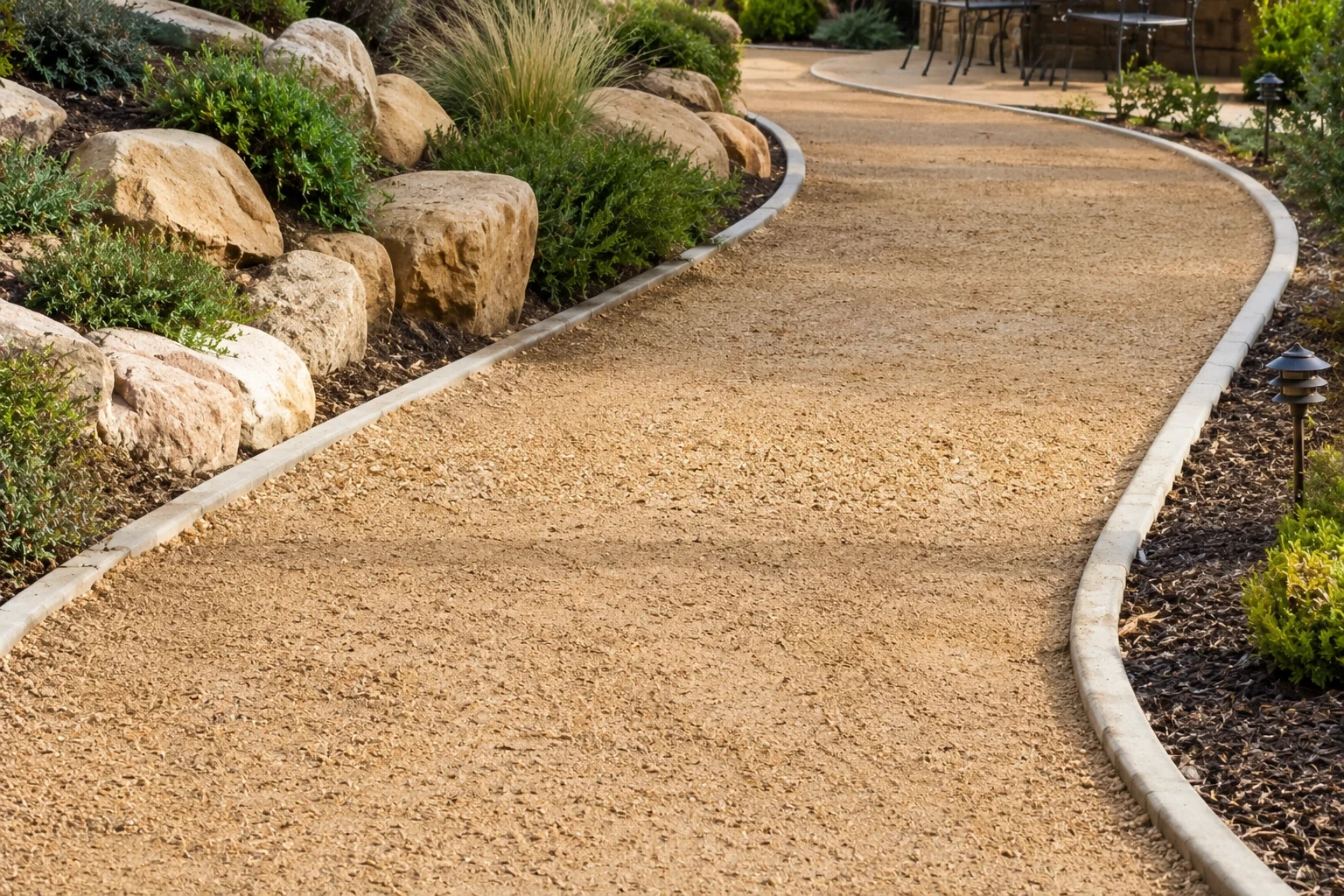
Walk through any drought-tolerant neighborhood in Phoenix, Austin, or Southern California, and you’ll spot it almost immediately. That soft, tan-colored path winding through a xeriscape yard is decomposed granite, and it has quietly become one of the most popular hardscape materials in the country. It’s affordable. It looks natural. It also drains water instead of pooling it, which matters more each year as cities tighten watering restrictions.
However, decomposed granite isn’t the right fit for every yard. Before you order a truckload, you need real numbers, honest trade-offs, and a clear picture of where it actually performs well. This guide covers all of it, based on current 2026 pricing and installation practices.
What Is Decomposed Granite?
Decomposed granite, often shortened to DG, forms when solid granite rock weathers and breaks down into small, sand-like fragments over time. Unlike gravel, which stays chunky and loose, DG compacts into a firmer surface. That’s exactly why it works so well for pathways, patios, and driveways.
You’ll typically find DG in three forms:
- Natural DG: Loose material with no binder. It’s the most affordable option, but it can shift or wash out in heavy rain.
- Stabilized DG: Mixed with a polymer or resin binder. It holds its shape far better under foot traffic and light vehicle use.
- Resin-coated DG: The most durable option. It creates an asphalt-like surface that still looks natural, making it a solid choice for driveways.
Decomposed Granite Cost in 2026
Pricing depends heavily on which type you choose, your location, and whether you hire a professional or handle installation yourself. Here’s what current data shows:
- Natural DG: $40 to $80 per ton, or roughly $40 to $100 per cubic yard.
- Stabilized DG: $100 to $185 per ton, since the binder adds both material cost and durability.
- Resin-coated DG: $150 to $225 per ton, reflecting its driveway-grade strength.
- Delivery: Add $50 to $150 per load, depending on distance from the supplier.
- Professional installation: Expect $4 to $8 per square foot total, which covers excavation, base rock, material, and compaction.
For context, a 400-square-foot patio or path typically runs somewhere between $1,600 and $3,200 installed, though your exact number will shift based on region and site conditions. Homeowners in California and Arizona often pay a bit less thanks to nearby quarries, while buyers farther from a supply source can expect an extra $20 to $40 per ton in shipping costs.
If you’re comparing DG against pavers or poured concrete, the price gap is significant. Concrete patios typically start around $8 to $12 per square foot installed, so DG remains one of the most budget-friendly hardscape options on the market.
Popular Uses for Decomposed Granite
DG shows up in far more places than you might expect once you start looking for it.
Pathways and garden trails. This remains the most common use, since DG’s soft texture and natural color blend easily into almost any landscape style.
Patios and seating areas. A DG patio under a pergola or fire pit creates a relaxed, informal feel that pairs beautifully with rustic or Mediterranean-style homes.
Driveways. Stabilized or resin-coated DG can handle regular vehicle traffic, making it a popular alternative to asphalt in rural and suburban properties alike.
Xeriscaping and drought-tolerant yards. Because DG is permeable, it lets rainwater soak into the soil instead of running off. That quality makes it a favorite in Southwest states like Arizona, Nevada, and Texas, where water conservation is a growing priority.
Dog runs and pet areas. DG compacts well, drains quickly, and doesn’t hold odor the way mulch sometimes does, so many pet owners choose it for side-yard runs.
Mulch alternative around plants. Spread thin around trees or garden beds, DG suppresses weeds while still allowing water and air to reach the soil below.
Pros of Decomposed Granite
It’s budget-friendly. Compared to pavers, concrete, or natural stone, DG delivers a polished look at a fraction of the cost, especially for larger areas.
It’s permeable. Rainwater filters through DG instead of pooling on the surface. This reduces runoff, helps prevent erosion, and supports healthier soil underneath.
It looks natural. Because DG comes directly from weathered granite, its warm, earthy tones fit almost any regional landscape style, from desert modern to cottage garden.
Installation doesn’t require heavy equipment. Motivated homeowners can install DG themselves on smaller, low-traffic areas, which cuts costs significantly.
It’s low maintenance once installed correctly. A properly compacted DG surface with good edging can last for years with only occasional top-dressing.
Cons of Decomposed Granite
Natural DG can migrate. Without a binder, loose DG shifts under heavy foot traffic and can wash out during intense rainstorms, so it needs occasional replenishing.
It tracks indoors. Fine granite particles cling to shoes easily, so installers generally recommend keeping DG paths a short distance from entryways.
Weeds can still creep through. Even with landscape fabric underneath, some weeds eventually find their way up through DG, requiring periodic pre-emergent treatment or hand-pulling.
It’s not ideal for steep slopes. On a strong grade, unstabilized DG tends to erode faster, so drainage planning becomes critical before installation.
DIY mistakes are common. Poor grading, weak edging, or inconsistent compaction cause most DG failures, not the material itself. Site prep genuinely matters more than people expect going in.
How to Install Decomposed Granite Correctly
Getting the base right determines whether your DG surface lasts five years or twenty. Follow this general process for a lasting result.
1. Clear the area completely. Remove grass, weeds, and organic debris, since leftover roots and plant matter will eventually decompose and create uneven low spots.
2. Grade the site for proper drainage. Water needs somewhere to go, so plan a slight slope away from structures before you add any material.
3. Install landscape fabric. This barrier helps suppress weeds while still allowing water to pass through into the soil below.
4. Add a compacted base layer. A few inches of crushed base rock beneath the DG creates stability, particularly for driveways or high-traffic paths.
5. Spread the DG in thin layers. Adding material in 1 to 2-inch lifts and compacting each layer produces a far more solid surface than dumping it all at once.
6. Compact thoroughly. A plate compactor, often available at rental stores, presses the granite particles together and helps lock the surface in place.
7. Install edging. Metal, stone, or paver edging keeps DG contained, which prevents it from spreading into lawns or garden beds over time.
If your project covers a large driveway or a sloped yard, hiring a professional installer is usually worth the added cost. According to the U.S. Environmental Protection Agency’s guidance on permeable pavement, properly installed permeable surfaces like DG can meaningfully reduce polluted runoff compared to traditional pavement, which is exactly why many municipalities now encourage these materials for residential projects.
Decomposed Granite by Region: What to Expect
Because DG performs differently depending on climate, it helps to know how it holds up where you actually live.
Southwest (Arizona, Nevada, New Mexico): DG thrives here. Low rainfall means less erosion risk, and its permeability supports xeriscape water restrictions common across the region.
California: Popularity remains high thanks to nearby granite quarries, which keep material costs lower than in other parts of the country. Wildfire-conscious homeowners also like DG as a low-fuel groundcover near structures.
Texas: Central and North Texas see heavy DG use in both residential paths and larger ranch driveways, where its drought tolerance and affordability both matter.
Pacific Northwest and colder climates: DG still works well, though installers typically recommend stabilized DG here, since freeze-thaw cycles can loosen unstabilized material over time.
Humid Southeast: DG is used less often in this region, mainly because heavier, more frequent rainfall increases the risk of erosion on unstabilized surfaces.
If you’re still deciding between DG and other ground cover options for a water-wise yard, our guide to xeriscaping ideas for drought-prone regions covers additional material comparisons worth considering before you commit.
Frequently Asked Questions
How much does decomposed granite cost per ton? Natural DG typically runs $40 to $80 per ton, while stabilized DG costs $100 to $185 per ton. Resin-coated DG, the most durable option, generally falls between $150 and $225 per ton.
Is decomposed granite good for driveways? Yes, particularly stabilized or resin-coated varieties. Natural DG can work for low-traffic driveways, but it shifts more easily under regular vehicle weight.
Does decomposed granite need a weed barrier? Most installers recommend landscape fabric beneath DG to reduce weed growth. It won’t eliminate weeds completely, but it significantly cuts down on maintenance over time.
How long does decomposed granite last? With proper installation and occasional top-dressing, a DG surface can last 10 years or longer. Stabilized and resin-coated versions tend to hold up even longer under heavy use.
Can I install decomposed granite myself? Yes, for smaller paths or patios with easy access and gentle grading. Larger driveways or sloped sites usually benefit from professional installation, since proper compaction and drainage planning make the biggest difference in longevity.
Does decomposed granite get muddy in the rain? Properly installed and compacted DG drains well and resists mud formation. Poor grading or inadequate compaction, on the other hand, can lead to soft, muddy spots after heavy rain.
What’s the difference between decomposed granite and gravel? Gravel consists of larger, rounded stones that stay loose. DG is finer and compacts into a firmer, more stable surface, which makes it better suited for walkways and patios.
Is decomposed granite eco-friendly? Yes. Its permeability allows rainwater to soak into the ground instead of running off, which reduces erosion and supports healthier local water systems compared to solid pavement.
Final Thoughts
Decomposed granite earns its popularity for good reason. It costs less than most hardscape alternatives, drains water naturally, and fits almost any landscape style you’re going for. That said, success really comes down to proper site prep and choosing the right type for your specific project. Get the base right, pick stabilized or resin-coated DG for high-traffic areas, and this material will likely reward you with years of low-maintenance curb appeal.