

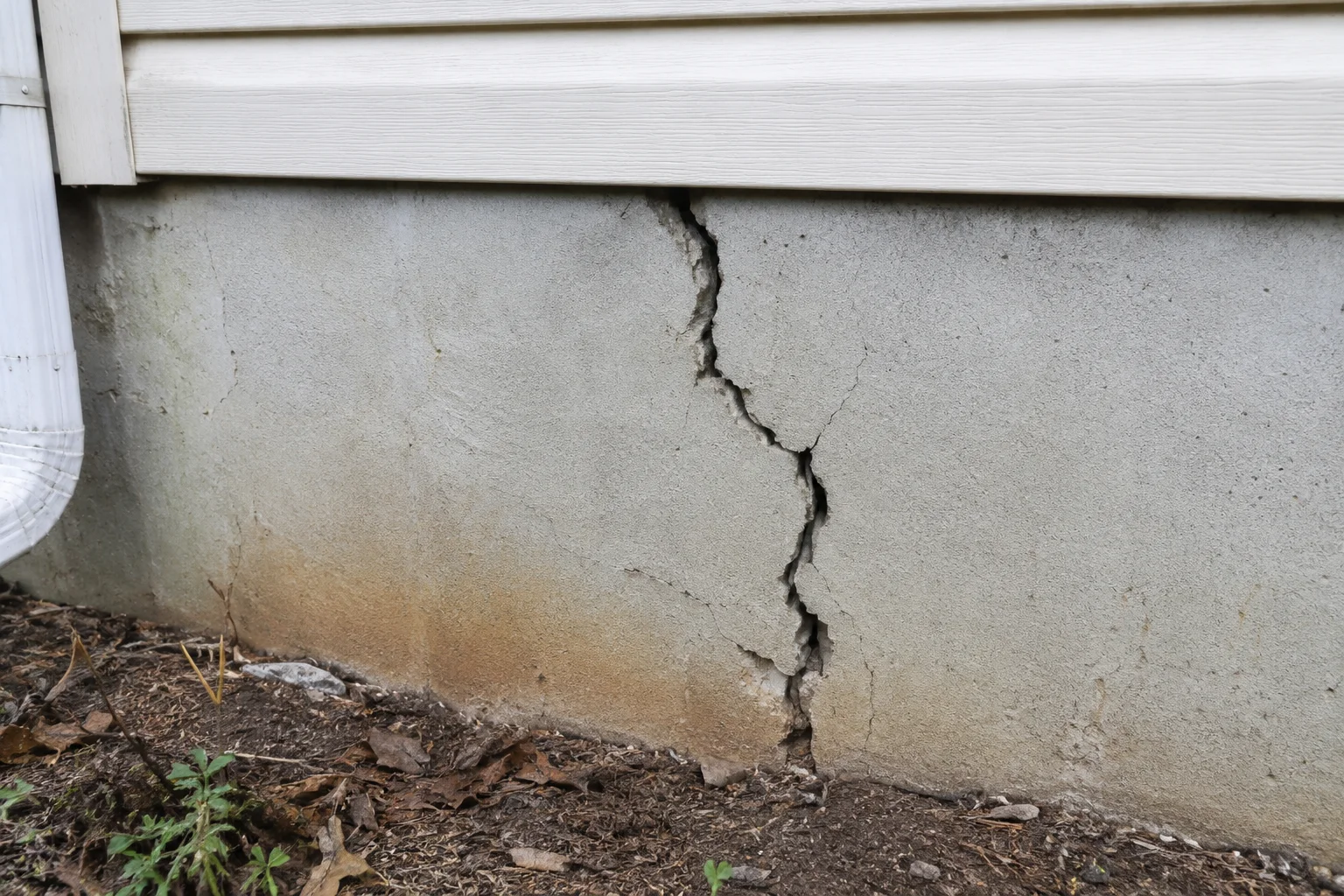
Have you noticed a crack running along your basement wall or across your garage floor? You are not alone. Foundation cracks show up in homes across the country every single year, from brand-new builds to century-old farmhouses. Most cracks look scarier than they actually are. Some, however, signal a real structural problem that only gets worse with time.
This guide walks through why foundation cracks happen, how to tell a harmless crack from a dangerous one, and what repairs actually cost in 2026. Along the way, we will also cover how your region of the country changes the picture, since soil type and climate play a bigger role than most homeowners realize.
What Causes Foundation Cracks in the First Place?
Foundations move. That is simply how concrete behaves over time. As a result, cracking is common, and it does not always mean disaster. Still, understanding the root cause helps you judge how urgent your situation really is.
Soil movement causes most foundation cracks. Clay-heavy soil expands when it gets wet and shrinks when it dries out. That constant swelling and shrinking pushes and pulls on your foundation. Over years, this cycle stresses the concrete until it cracks. Poor drainage makes the problem worse, since water pooling near your foundation accelerates that expansion and contraction cycle.
Concrete curing issues also play a role, especially in newer homes. Concrete shrinks slightly as it cures, and that shrinkage sometimes creates small, harmless cracks within the first year or two. Builders call these shrinkage cracks, and most inspectors consider them cosmetic.
Then there is settlement. Every home settles into the ground somewhat after construction. However, uneven settlement, where one part of the foundation sinks faster than another, creates real stress. This type of movement often produces diagonal cracks, and it deserves professional attention.
Finally, hydrostatic pressure deserves a mention. When groundwater builds up around a foundation wall, it pushes inward. Over time, that pressure can bow or crack basement walls, particularly during heavy rain seasons or spring thaw.
Types of Foundation Cracks: Cosmetic vs Structural
Not every crack tells the same story. Learning to read them saves you money and stress.
Hairline cracks, generally under 1/16 of an inch wide, usually come from normal concrete shrinkage. They run vertically or diagonally, and they rarely grow. Most inspectors consider these cosmetic, though sealing them still protects against moisture intrusion.
Vertical cracks wider than a hairline can still be manageable. They typically result from settling or shrinkage, and contractors fix them with a simple epoxy or polyurethane injection.
Horizontal cracks are the ones that should get your attention right away. These usually indicate serious pressure from soil or water pushing against a basement wall. Left alone, they can lead to bowing walls or even structural failure.
Stair-step cracks, which zigzag along mortar joints in a block or brick foundation, often point to uneven settlement. The wider they get, the more likely you are dealing with a genuine structural issue rather than a cosmetic one.
Warning Signs You Should Never Ignore
Cracks rarely show up alone. Pay attention to these accompanying signs, since they help you judge severity.
- Doors or windows that stick or will not close properly
- Sloping or uneven floors
- Gaps between walls and ceilings or between walls and the floor
- Cracks wider than 1/8 inch, or cracks that keep growing
- Water seeping through a crack after rain
- Cracks that appear on both the interior and exterior at the same spot
- A musty smell in the basement, which often signals moisture intrusion through hairline cracks
If you notice several of these signs together, do not wait. Call a structural engineer or a licensed foundation repair contractor for an inspection. Early diagnosis almost always costs less than a delayed one.
How Regional Soil and Climate Affect Foundation Cracks Across the U.S.
Where you live changes your risk profile significantly. Understanding your region helps you know what to watch for.
Texas, Oklahoma, and much of the Southeast sit on expansive clay soil. This soil type swells dramatically when wet and shrinks when dry, so foundation movement happens more often here than almost anywhere else in the country. Homeowners in these states should expect to budget for foundation maintenance as a normal part of homeownership.
Florida presents a different challenge. Sandy soil and, in some areas, sinkhole activity create their own set of risks. Heavy seasonal rain and hurricane-driven flooding add moisture-related stress that other regions rarely deal with.
The Northeast and Midwest face frost heave instead. When water in the soil freezes and expands during winter, it pushes against foundation walls. As the ground thaws in spring, the soil shifts again. That freeze-thaw cycle repeats every year, and it slowly stresses foundations built decades ago using older construction standards.
California and other seismic regions add a completely different factor: ground movement from earthquakes. Foundation repair here often costs more, partly because contractors must account for seismic building codes during any structural work.
No matter where you live, gutters, grading, and drainage matter enormously. Directing water away from your foundation remains one of the cheapest, most effective ways to prevent cracks in the first place, regardless of your region.
Foundation Crack Repair Costs in 2026
Pricing for foundation work varies a lot, and that variation confuses a lot of homeowners. Let’s break it down by scope, so you know roughly where your project might land.
Minor crack repairs, using epoxy or polyurethane injection, generally run $250 to $800 per crack. This is the most common and most affordable fix, and it works well for hairline or vertical cracks that are not actively growing.
Foundation leak repairs, which often involve interior or exterior waterproofing, typically cost between $2,000 and $7,000. Contractors sometimes combine this work with crack injection if moisture intrusion is part of the problem.
Major structural work tells a different story. Piering or underpinning, used when a foundation has shifted or settled significantly, usually costs $1,200 to $3,000 per pier, and most homes need six to ten piers. That puts a full piering project in the $9,000 to $25,000 range, with severe cases exceeding $30,000.
According to HomeAdvisor’s foundation repair cost guide, the national average for foundation repair in 2026 sits around $5,175, with most homeowners spending between $2,225 and $8,135 depending on severity and repair method. That range lines up closely with data from several other major industry sources, which makes it a solid benchmark for planning purposes.
Regional pricing shifts these numbers somewhat. Texas homeowners typically see project costs between $3,300 and $9,000, thanks partly to high demand meeting plenty of local competition. California projects often run higher, from $5,000 to $12,000, due to seismic code requirements. Florida sits in a middle range, generally $3,000 to $7,000, though sinkhole-related repairs can push costs much higher.
The clearest takeaway across every pricing source is this: early intervention saves money. A $500 crack repair today routinely prevents a $15,000 underpinning project a few years down the road.
Repair Methods: What Actually Fixes a Cracked Foundation
Contractors choose repair methods based on crack type, foundation type, and root cause. Here are the most common approaches.
Epoxy injection works well for structural cracks in poured concrete, since the epoxy bonds tightly and restores strength to the wall. Polyurethane injection, on the other hand, works better for cracks that are actively leaking, because the material expands and creates a flexible, waterproof seal.
Carbon fiber strips reinforce walls that show early signs of bowing. Contractors install these strips vertically across the crack, and they prevent further movement without requiring full wall replacement.
Steel or helical piers address settlement issues by transferring your foundation’s weight down to stable soil or bedrock. This method costs more, but it solves the underlying problem rather than just patching the symptom.
Exterior waterproofing, which involves excavating around the foundation and installing a drainage membrane, addresses hydrostatic pressure directly. It costs more than interior fixes, but it stops water from reaching the foundation in the first place.
DIY Crack Sealing vs Calling a Professional
Some crack repairs genuinely fit into DIY territory. Others absolutely do not, and knowing the difference protects both your wallet and your home’s structural integrity.
A hairline crack under 1/16 inch, with no signs of active leaking or growth, often works fine as a DIY project. Home improvement stores sell epoxy injection kits for around $20 to $50, and most homeowners can complete this fix in an afternoon.
Anything wider than 1/8 inch, however, calls for professional evaluation. So does any horizontal crack, any crack accompanied by bowing, or any crack paired with the warning signs listed earlier in this article. A structural engineer’s inspection typically costs $300 to $800, and that fee is money well spent before committing to a larger repair.
If you want to compare your situation against other structural concerns around your home, check out our guide to common home structural warning signs for a broader checklist beyond just foundation cracks.
Actionable Steps If You Just Found a Crack
Take these steps in order if you just discovered a new crack.
First, measure it. Use a coin or a crack gauge to record the width, and note the length and direction. Second, photograph it, and date the photo. Third, monitor it over the next 30 to 60 days, checking for growth or new moisture. Fourth, if the crack grows, leaks, or appears alongside doors sticking or floors sloping, schedule a structural engineer inspection right away. Finally, address drainage around your home immediately, since improving grading and gutters costs little and prevents future cracking regardless of what caused the current one.
How to Choose a Reliable Foundation Repair Contractor
Not every contractor who advertises “foundation repair” has the training to back it up. So vetting matters just as much as pricing.
Start by checking licensing. Most states require a specialty contractor license for structural work, and you can usually verify this through your state’s licensing board website in minutes. Next, ask about insurance. A reputable contractor carries both liability insurance and workers’ compensation coverage, since foundation work involves real risk.
Look for engineering-backed warranties, too. Established companies often back their piering or underpinning work with a written, transferable warranty, sometimes lasting decades. That transferability matters if you plan to sell your home down the road, since buyers appreciate seeing documented, guaranteed repairs.
Get at least three quotes before committing to any major project. Prices can vary significantly between contractors for the exact same scope of work, and a wide spread often signals that someone is either overcharging or cutting corners. Finally, ask for local references, and actually call them. A contractor with a strong local reputation will have no problem connecting you with past customers.
Watch for red flags, too. High-pressure sales tactics, requests for full payment upfront, and vague written estimates all deserve caution. A trustworthy contractor explains the diagnosis clearly, walks you through repair options, and puts everything in writing before work begins.
Financing Foundation Repairs: What Are Your Options?
A five-figure repair bill catches most homeowners off guard. Fortunately, several financing paths exist beyond paying entirely out of pocket.
Many foundation repair companies offer in-house financing plans, often with promotional zero-interest periods for a set number of months. This option works well if you can pay off the balance before interest kicks in. Home equity loans and home equity lines of credit offer another route, typically at lower interest rates than personal loans, since your home secures the debt.
Personal loans provide a faster, unsecured option, though interest rates run higher. Some homeowners also explore FHA Title I loans, which specifically cover home improvement and repair projects, including structural work. Additionally, a handful of state and local programs offer low-interest repair loans for qualifying homeowners, particularly in regions with widespread expansive clay soil issues.
Whichever route you choose, get your contractor’s quote and engineering report in writing first. Lenders generally want documentation before approving repair-specific financing, and having that paperwork ready speeds up the process considerably.
Frequently Asked Questions
How do I know if a foundation crack is serious?
Cracks wider than 1/8 inch, horizontal cracks, and cracks accompanied by sticking doors or sloping floors all signal a serious issue. Hairline vertical cracks under 1/16 inch, with no leaking or growth, are usually cosmetic.
How much does it cost to fix a small foundation crack?
Minor crack repairs using epoxy or polyurethane injection typically cost between $250 and $800 per crack. DIY epoxy kits run even less, around $20 to $50, though they only suit small, non-structural cracks.
Can I sell my house with foundation cracks?
Yes, you can sell a home with foundation cracks, though disclosure laws require you to tell buyers about known issues. Many sellers repair significant cracks before listing, since unresolved foundation problems tend to scare off buyers and reduce offers during negotiations.
Does homeowners insurance cover foundation crack repair?
Standard homeowners insurance usually does not cover foundation cracks caused by settling, soil movement, or normal wear. Coverage sometimes applies if the damage results from a covered peril, such as a burst pipe or specific storm damage, so check your policy details directly with your insurer.
How often should I inspect my foundation for cracks?
Walk your foundation’s interior and exterior twice a year, ideally in spring and fall. Homes on expansive clay soil, like those in Texas or Oklahoma, benefit from more frequent checks, especially after heavy rain or extended dry spells.
What is the difference between epoxy and polyurethane crack injection?
Epoxy injection creates a rigid, high-strength bond, which works well for structural cracks that are not actively leaking. Polyurethane injection expands and stays flexible, making it the better choice for cracks with active water intrusion.
Will foundation cracks get worse over time if I ignore them?
Many cracks stay stable and never worsen, especially small cosmetic ones from normal concrete shrinkage. However, cracks tied to ongoing settlement, drainage problems, or hydrostatic pressure typically do grow, and ignoring them usually leads to more expensive repairs later.
Do I need a structural engineer or a foundation repair contractor?
A structural engineer provides an independent diagnosis and does not sell repair work, so their assessment tends to be more objective. A foundation repair contractor performs the actual fix. For serious cracks, many homeowners get an engineer’s report first, then use it to get accurate contractor quotes.
Final Thoughts
Foundation cracks are common, and most of them are nothing to panic over. Still, learning the difference between a cosmetic crack and a structural warning sign protects both your home and your budget. Keep an eye on width, direction, and any accompanying signs like sticking doors or sloping floors. When in doubt, a modest inspection fee today beats a massive repair bill down the road.
Whatever region of the country you live in, good drainage and regular inspection remain your best defense. Address small problems early, and your foundation will likely serve your home well for decades to come.