

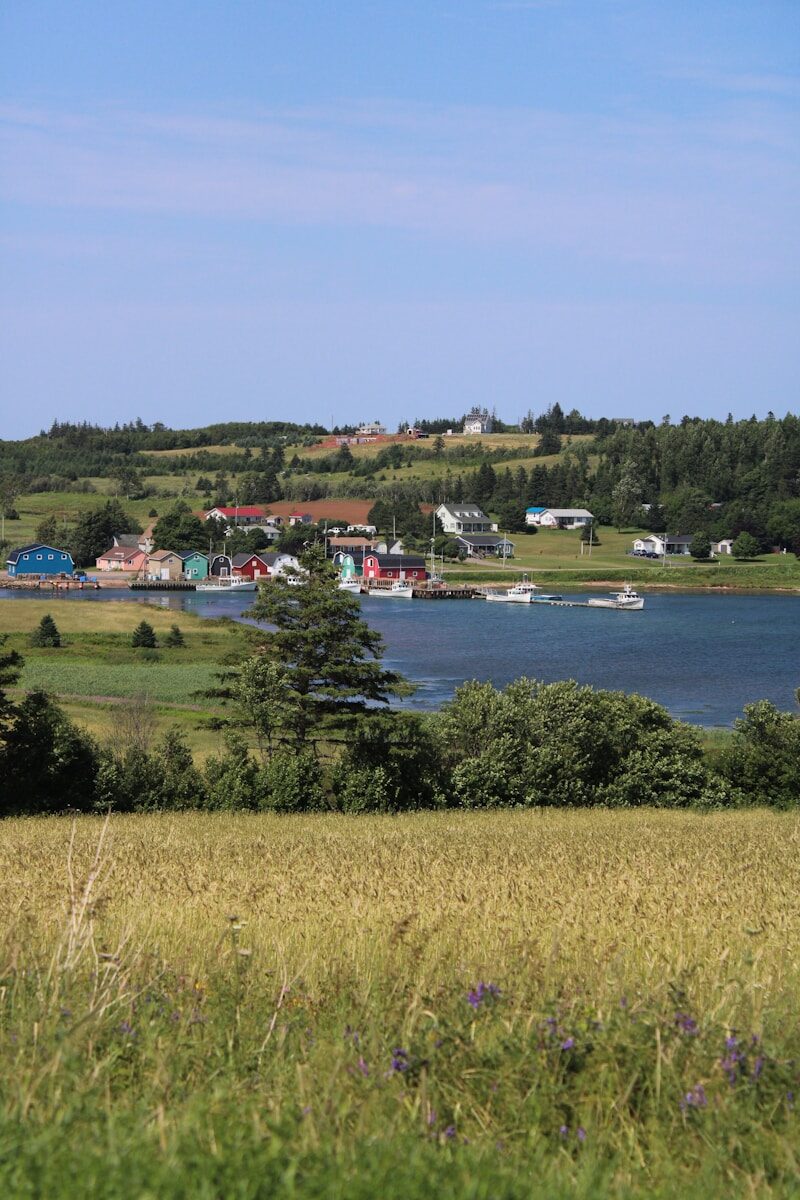
If you’ve been dreaming about owning a slice of red-soiled farmland, a private wooded lot by the ocean, or a development-ready parcel in one of Canada’s most charming provinces, Prince Edward Island should be at the very top of your list. In 2026, PEI’s land market is drawing serious attention from buyers across North America — including a growing wave of Americans looking to diversify assets, escape crowded coastal markets, or plant roots in a place that genuinely feels different.
I’ve spent time digging into the current market data, speaking with local contacts, and reviewing active listings across the island. What follows is a comprehensive, honest breakdown of what you can realistically expect when searching for land for sale in PEI in 2026.
Why PEI Land Is Attracting So Much Attention Right Now
Prince Edward Island has always had a quiet magnetism, but 2026 is a different kind of moment. A few converging factors are driving real demand.
First, PEI’s population has grown steadily over the past five years as remote work made relocating to smaller provinces far more practical. That growth has pushed housing demand upward, which in turn makes raw land — especially land with development potential — increasingly attractive to both individual buyers and small investors.
Second, and this is important for American buyers in particular: the Canadian dollar has remained relatively favorable compared to the US dollar throughout early 2026, meaning your purchasing power stretches meaningfully further than it would buying comparable acreage in, say, coastal Maine or coastal Washington state. A parcel that might cost $800,000 USD in a comparable New England setting could run closer to $300,000–$500,000 CAD in PEI — and the scenery, privacy, and lifestyle quality are genuinely comparable.
Third, PEI’s agricultural reputation continues to carry weight. The island’s red Charlottetown clay-loam soil is among the most productive in Canada. Farmland isn’t just a lifestyle purchase here — it can generate real income through leasing arrangements with potato and grain farmers.
Understanding PEI’s Land Ownership Rules for Non-Residents
Before you fall in love with a listing, understand one critical piece of context: Prince Edward Island has specific land ownership restrictions for non-residents and non-citizens under the Lands Protection Act.
Non-residents — which includes most American buyers and Canadian citizens who don’t live on PEI — can generally acquire up to 5 acres of land or 165 feet of shoreline without requiring special government approval. Any purchase beyond those thresholds requires an application to the Island Regulatory and Appeals Commission (IRAC).
This doesn’t mean larger purchases are impossible — many are approved, especially for farming or economic development purposes — but it does mean you need to factor in the application process and potential timeline. Working with a PEI-licensed real estate lawyer from day one is not optional; it’s essential.
What Types of Land Are Available in PEI in 2026?
The island is small — roughly 5,660 square kilometers — but the land market is surprisingly diverse. Here’s a breakdown of the main categories you’ll encounter.
Agricultural and Farmland
PEI is Canada’s potato capital, and its farmland is legitimate productive acreage, not just a marketing pitch. Active farms with existing infrastructure — barns, irrigation, and drainage tiles — command higher prices, often in the $4,000–$8,000 CAD per acre range depending on soil quality and location. Raw agricultural land without infrastructure typically runs $2,000–$4,500 CAD per acre as of spring 2026.
Many buyers in this category are looking for working farms they can lease back to established farming operations — a strategy that can generate modest passive income while the land appreciates. It’s worth noting that agricultural land is subject to additional restrictions for non-residents, so the IRAC process is especially relevant here.
Waterfront and Coastal Lots
This is the category that draws the most inquiries from Americans. PEI’s shoreline — particularly along the north shore near Cavendish and in the eastern Kings County region — is genuinely beautiful. Prices vary widely, but expect to pay $150,000–$500,000 CAD for a serviced coastal lot, with premium properties exceeding that range.
Red-sand beach frontage is rare and sells fast. Dune-adjacent lots face environmental restrictions, and some coastal areas have setback requirements that limit what you can build. If waterfront is your goal, be clear about those rules before you make an offer.
Wooded and Rural Acreage
This is often where buyers find the best value for size. Larger wooded lots — 20 to 100+ acres — are available in Queens, Kings, and Prince Counties, often in the $1,500–$3,500 CAD per acre range. These parcels are popular with buyers seeking privacy, hunting land, hobby farms, or long-term investment holds.
Some rural lots have existing road access and electricity; many don’t. Factor in the cost of a driveway, well, and septic system if you’re thinking about building.
Residential Development Land
Towns like Charlottetown, Summerside, Stratford, and Cornwall continue to grow. Development-ready lots near urban centers are priced accordingly — anywhere from $80,000 to $200,000+ CAD for a single residential lot in or near the capital region. Infill lots in established neighborhoods within Charlottetown can push higher.
For investors with a longer horizon, larger parcels on the fringe of growing communities represent an interesting play, though zoning and municipal planning approvals are a necessary step.
Current Land Prices in PEI: A Realistic 2026 Snapshot
One of the questions I get asked most often is: “What does land actually cost in PEI right now?” Here’s a practical price guide based on current market conditions as of spring 2026.
Raw agricultural acreage (no infrastructure): $2,000–$4,500 CAD per acre Productive farmland with infrastructure: $4,000–$8,000 CAD per acre Rural wooded lots (20–100 acres): $1,500–$3,500 CAD per acre Waterfront lots (serviced, with access): $150,000–$500,000 CAD total Residential lots near Charlottetown: $80,000–$200,000+ CAD Commercial or mixed-use development parcels: Highly variable, $200,000 CAD and up
These are general ranges. Micro-location matters enormously in PEI. A lot fifteen minutes from Charlottetown will price differently than a similar-sized lot in rural Prince County near Tignish.
Best Areas to Buy Land in PEI in 2026
Queens County — The Urban Core and Beyond
Queens County sits in the middle of the island and contains Charlottetown, PEI’s capital and largest city. Land here tends to be more expensive but also carries stronger liquidity and development upside. If you want land that’s more likely to appreciate in step with population growth, Queens County is the logical choice.
Rural areas within Queens — south of the Trans-Canada Highway, for instance — offer a compelling middle ground: close enough to the city for services and convenience, but with the quieter character of PEI’s countryside.
Kings County — The Hidden Gem of the East
Kings County in the island’s eastern third is where buyers who’ve done their homework tend to land (no pun intended). It’s less trafficked by tourists than the north shore, has genuine working farms, beautiful harbors like Montague and Georgetown, and land prices that remain more accessible than the capital region.
Coastal properties along the southeastern shore and in the Murray Harbour area are particularly appealing. American buyers from New England states often feel an immediate kinship with this landscape — it has a strong maritime resemblance to coastal Maine or Cape Cod, but at a fraction of the price.
Prince County — Value, Space, and Agricultural Tradition
Prince County occupies the western third of the island, centered on Summerside. Land prices are generally lower here than in Queens County, and you’ll find the largest parcels available. It’s the heart of PEI’s farming community, and the buy-and-lease model works especially well for agricultural land in this region.
For buyers simply seeking maximum acreage for the dollar, Prince County deserves serious consideration.
What American Buyers Need to Know Specifically
A significant portion of land inquiries in PEI come from the United States — particularly from buyers in New England, the Mid-Atlantic, and the Pacific Northwest. If that’s you, here are the practical realities.
Currency: All PEI real estate is priced in Canadian dollars. As of May 2026, the CAD/USD exchange rate remains favorable for American buyers. Run the actual numbers with your bank or a currency exchange service — the savings relative to comparable US coastal markets are real.
Financing: Most Canadian banks will not extend mortgages to non-resident foreign nationals for raw land purchases. This means many American buyers pay cash or arrange financing through US-based lenders using other assets as collateral. Some PEI credit unions may work with non-residents on a case-by-case basis — worth asking.
Tax implications: Purchasing land in Canada as an American citizen has cross-border tax implications. You’ll need to report the purchase and any rental income to both the CRA (Canada Revenue Agency) and the IRS. Work with a cross-border tax accountant — this is not the area to improvise.
The Lands Protection Act: As mentioned earlier, the 5-acre/165-foot shoreline threshold is the key number for non-residents. If your target parcel exceeds these limits, budget extra time for the IRAC approval process.
Visits and due diligence: Don’t buy land in PEI without visiting in person. The island is incredibly accessible — direct flights from Boston, New York, Philadelphia, and Toronto connect to Charlottetown Airport. A long weekend is genuinely enough to tour properties, meet a local lawyer, and get a feel for different regions of the island.
How to Search for Land Listings in PEI
The primary listing database for PEI real estate is the PEI MLS system, accessible through REALTOR.ca — Canada’s national listing portal run by the Canadian Real Estate Association. This is the authoritative, up-to-date source for active listings, and it’s freely accessible to the public.
For land-specific searches, filter by property type (“vacant land” or “farm”) and use the map view to identify areas of interest. You can also filter by lot size, price range, and proximity to water.
Complement your MLS search with local real estate brokerages that specialize in rural and agricultural properties. Several firms on the island have decades of experience with land transactions specifically and can surface off-market opportunities that never hit the public listings.
For additional context on PEI’s land ownership rules for non-residents, the Island Regulatory and Appeals Commission (IRAC) website is the authoritative external resource: https://www.irac.pe.ca. Their land section explains the application process clearly and includes the forms you’d need if your target purchase exceeds the non-resident thresholds.
What to Look for During Due Diligence
Once you’ve found a parcel you’re serious about, due diligence is where you protect yourself. Here’s what to investigate before you commit.
Survey and boundaries: Confirm property boundaries with a registered survey. Older rural lots especially can have inconsistencies between the listed description and the actual land on the ground.
Zoning: Contact the relevant municipality or the Province to confirm what the land is actually zoned for and what uses are permitted. Don’t assume a rural lot can be subdivided or developed just because it looks like it could be.
Environmental assessments: Waterfront and wetland-adjacent land may have environmental restrictions. Certain areas near dunes or marshlands on PEI are protected under provincial or federal regulations.
Access: Does the parcel have legal road access? Some rural lots are landlocked or accessed via informal agreements with neighboring landowners. Confirm legal access is in writing.
Well and septic suitability: If you’re planning to build, test the soil for septic suitability and have a well driller assess groundwater prospects. Not every parcel in PEI is equally suited for both.
Title search: Your real estate lawyer will conduct a title search as a matter of course. Make sure there are no liens, encumbrances, or easements that affect your intended use.
Is Now a Good Time to Buy Land in PEI?
Honest answer: for most buyer profiles, yes — but with eyes open.
PEI’s land market is not the speculative free-for-all you see in some Canadian urban markets. It moves more slowly, which is a feature, not a bug, for buyers thinking in five-to-ten-year horizons. The province’s population growth trajectory, infrastructure investment, and increasing profile as a destination for remote workers and retirees all point toward sustained, if gradual, appreciation.
For Americans specifically, the combination of favorable exchange rates, comparable landscape quality to pricier US coastal markets, and significantly lower entry prices makes 2026 a genuinely interesting window. That window won’t stay open forever — interest from non-resident buyers has been building, and while PEI’s Lands Protection Act limits the most aggressive speculation, sustained demand does move prices over time.
The buyers most likely to regret waiting are those looking at waterfront land. Serviced coastal lots with genuine beach access are a finite resource on a 5,660-square-kilometer island. The ones available in 2026 will not all be available in 2028.
Working with a Local Real Estate Professional
Whatever you read online — including this article — is no substitute for a local expert who knows the island’s micro-markets, has relationships with landowners, and understands the practical realities of rural PEI transactions.
When selecting a real estate agent, prioritize someone with documented experience in rural and agricultural land transactions rather than a generalist residential agent. Ask specifically about their experience with non-resident buyers and with IRAC applications. A good agent will be honest about which parcels have complications and which represent genuinely clean buying opportunities.
Pair your agent with a PEI-licensed real estate lawyer from the very beginning — not after you’ve made an offer. The Lands Protection Act, title issues, and zoning nuances are better addressed before you’re emotionally committed to a specific property.
Quick Reference: Land for Sale PEI 2026 — Key Takeaways
Here’s a concise summary of everything covered above, for buyers who want the fast version:
Non-resident limit without IRAC approval: 5 acres or 165 feet of shoreline Best value regions: Kings County (east), Prince County (west) Most competitive region: Queens County (Charlottetown area) Average farmland price: $2,000–$8,000 CAD per acre depending on quality Average waterfront lot: $150,000–$500,000 CAD Listing database: REALTOR.ca (PEI MLS) Key legal resource: IRAC (www.irac.pe.ca) Finance reality for Americans: Most will need cash or US-secured financing Best time to visit: June–September for full property access, but off-season visits often mean less competition
Final Thoughts
Prince Edward Island land isn’t for everyone. It requires patience, real due diligence, and an honest assessment of your goals and timeline. But for the buyer who’s done their homework, understood the rules, and found a parcel that genuinely fits their vision — whether that’s a working farm, a private retreat, or a long-term investment — PEI in 2026 offers something increasingly rare in North American real estate: real value, real landscape, and a community that takes land stewardship seriously.
If you’re considering making the jump, explore our guide to Canadian real estate for US buyers for a broader look at the cross-border process, legal steps, and financing options available to American purchasers across multiple provinces.
The red soil is waiting. Go see it for yourself.