

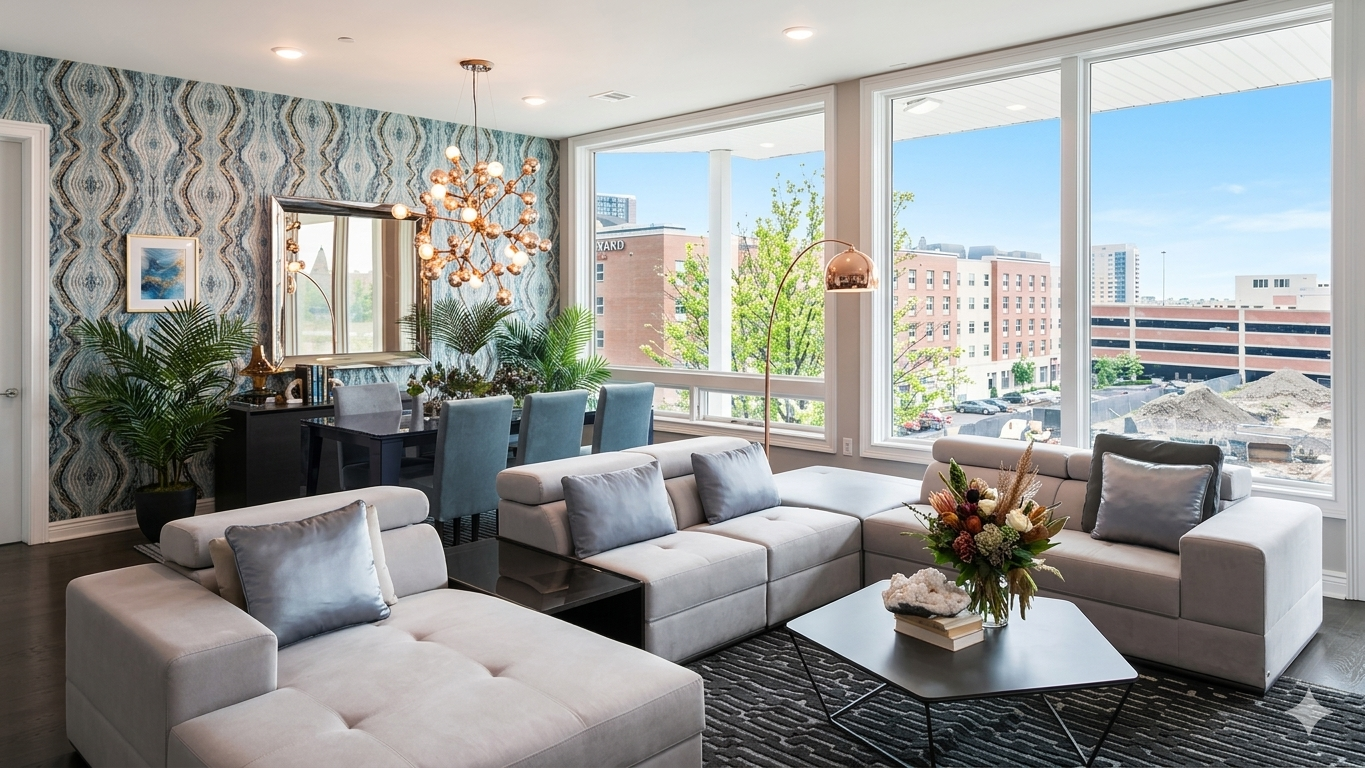
Walk into a well-designed apartment in Chicago’s West Loop. Or step inside a brownstone renovation in Brooklyn. You’ll notice something right away. The space feels intentional. It’s sleek but livable. Industrial in some details, warm in others. The city is woven into every room — not in a kitschy way, but in the bones of the design itself.
That’s metro interior design. In 2026, it’s one of the most searched design styles in American homes. And the best part? You don’t need to live in a city to pull it off.
This guide covers everything you need to know. What the style is. Where it came from. What makes it work. And how to bring it into your own home — at any budget.
What Is Metro Interior Design Style?
Metro interior design draws its identity from great American and European cities. It takes the raw character of urban spaces and refines it. Think exposed brick, concrete floors, and steel beams — then layered with contemporary, sophisticated finishes.
It’s not quite industrial design. That style can feel too cold. It’s not quite modern minimalism either. That can feel too sparse. Metro design sits comfortably between both worlds.
Think of it this way. If minimalism is a gallery and industrial is a loft, metro design is the apartment of someone who works in architecture and actually wants to live comfortably.
The result? Rooms that look designed without feeling staged. Spaces with personality, visual weight, and a clear point of view.
The Core Elements of Metro Interior Design
Understanding the building blocks makes this style much easier to apply. Metro design has specific characteristics. They work together as a system. Here’s what they are.
Neutral, Urban-Inspired Color Palettes
The color story starts with the city itself. Think concrete gray, matte black, warm white, and deep charcoal. These are the foundation tones. They’re understated, versatile, and endlessly livable.
What keeps the palette from feeling cold? Warm neutrals. Greige, warm taupe, and natural linen are woven in throughout. Accent colors are deliberate and restrained. A single deep olive, a hit of rust, or a navy blue in textiles can bring the whole palette to life.
Raw and Refined Material Mixing
This is where metro design earns its character. The style loves contrast. Raw, industrial-feeling materials sit alongside polished, refined finishes.
Common pairings include exposed brick with marble countertops. Concrete floors with Persian-style area rugs. Steel-framed windows with linen drapery. Reclaimed wood shelving with brushed nickel hardware. None of these elements are special on their own. Together, they create a layered interior that rewards a second look.
Clean-Lined, Functional Furniture
Metro design does not do fussy furniture. Silhouettes are clean. Proportions are considered. Every piece earns its place through form and function.
Sectional sofas in neutral upholstery. Platform beds with upholstered headboards. Streamlined dining tables in wood or stone. These are the workhorses of a metro interior. What you won’t see: ornate carved legs, floral upholstery, or decorative pieces that serve no purpose.
Architectural Details That Reference Urban Structures
The architecture matters as much as the furnishings. Open floor plans, high ceilings, and oversized windows reinforce the urban sensibility. Exposed ductwork and visible structural elements do the same.
In new builds or renovations, homeowners actively preserve these features. They add steel railings, concrete countertops, or shiplap walls to signal the aesthetic. In existing homes without those bones? Industrial-style fixtures, steel-framed glass partitions, and architectural window treatments suggest the same visual language.
Deliberate, Curated Lighting
Lighting in metro design is never an afterthought. The approach layers three types: ambient, task, and accent. Industrial-style pendants in matte black or aged brass are staples. So is track lighting on exposed ceiling rails.
The goal is simple. The space should look different at noon than it does at 10 p.m. That’s how great urban apartments actually function.
Metro Interior Design Room by Room
Living Room
The living room makes the strongest metro statement. Start with a large, low-profile sectional in a warm neutral. Charcoal, camel, or warm gray all work. Ground the space with a geometric or abstract area rug. Keep the coffee table simple — marble, concrete, or clean wood grain.
Walls often feature one statement element. Exposed brick. A full-height bookshelf in matte black. A large-format abstract painting. The idea is visual impact without visual noise.
Keep accessories restrained. A few oversized ceramics. A stack of architecture books. One sculptural plant. That’s enough.
Kitchen
Metro kitchens are clean, functional, and quietly impressive. Flat-front cabinetry in matte white, deep navy, or warm gray sets the foundation. Pair it with a waterfall-edge countertop in quartz or concrete. Add a large-format tile backsplash in a tone-on-tone palette.
Hardware matters here. Matte black, brushed brass, or gunmetal finishes elevate even budget cabinetry. Open shelving in metal or wood adds practicality and display space.
Pendant lighting over the island is one of the best single investments you can make. A pair of aged brass or matte black pendants instantly shifts the room’s character.
Bedroom
Metro bedrooms feel like a retreat. The bed anchors the space — a platform or low-profile frame in linen, velvet, or leather. Bedside tables are minimal. A floating shelf, a marble-topped nightstand, or a raw-edge wood piece all work.
Window treatments should be floor-to-ceiling linen panels in a soft neutral. They add height and softness. They balance the harder elements of the style. Layer the bedding in mixed textures. A chunky knit throw, crisp white linen, a velvet euro pillow — warmth without pattern overload.
Keep bedroom art personal and slightly unexpected. A large black-and-white photograph. A framed vintage city map. An abstract canvas in muted tones.
Bathroom
Metro bathrooms are elevated urban spas. Large-format concrete-look or marble-look tiles give the space visual weight. Matte black or brushed nickel fixtures are the default hardware choice. A floating vanity in walnut or matte white keeps the floor visible and the room feeling open.
Add a large frameless mirror over the vanity. If space allows, a freestanding soaking tub becomes the undisputed focal point.
Metro Design in American Homes: Regional Adaptations
Metro design is widely adaptable across American property types and climates. Here’s how it shifts by region.
Northeast (New York, Boston, Philadelphia) — Metro design leans harder into its industrial roots here. Exposed brick, cast-iron details, and darker palettes suit the region’s older building stock and urban character.
Midwest (Chicago, Minneapolis, Detroit) — A warmer, wood-forward version has become popular. Natural materials and softer color palettes make spaces livable through long winters. The clean lines stay intact.
Sun Belt (Austin, Atlanta, Phoenix, Miami) — Lighter palettes dominate. More white, warm concrete, and natural stone replace darker finishes. The restrained, modern sensibility remains constant.
Pacific Northwest (Seattle, Portland) — Regional love of natural materials shows up clearly. Douglas fir, muted blues, and abundant plants weave into an otherwise urban-modern framework.
Metro design is not a rigid prescription. It’s a sensibility. You can apply it in a Manhattan studio or a suburban Texas ranch house. The principles travel — as long as you understand what the style is actually communicating.
How to Transition Your Home to Metro Interior Design
Do you need to gut your entire home to make this work? Almost never. Metro design is built on principles, not products. Here’s a practical, budget-conscious approach.
Start with paint. Nothing transforms a room faster. Swapping warm beige for cool warm-gray or matte white immediately shifts a room toward a metropolitan feel. Try painting trim the same color as the walls. It creates a more architectural, cohesive look.
Swap out hardware and fixtures. Replace brass or chrome cabinet hardware with matte black or brushed nickel. Do the same for faucets and light switch plates. It’s inexpensive. It requires no contractor. And it immediately modernizes a kitchen or bathroom.
Edit your accessories. Metro design is about curation, not accumulation. Do a ruthless edit of decorative items. Keep only what is genuinely beautiful or meaningful. Less is consistently more in this aesthetic.
Invest in one anchor piece per room. If budget is tight, put money into a single quality piece per room. A great sofa. A statement light fixture. A large piece of art. Everything else can follow over time.
Add architectural interest with textiles. A well-chosen area rug defines a space and adds warmth. Linen curtains hung high and wide make ceilings feel taller and windows feel larger.
For more ideas on transforming your home with smart, budget-conscious upgrades, check out our home renovation and interior design resource guide with room-by-room inspiration for every style.
Metro Design and Sustainability: A Growing Priority in 2026
American homeowners — especially millennials and Gen Z buyers — make purchasing decisions through a sustainability lens. Metro design aligns well with that priority.
The style’s emphasis on quality over quantity discourages fast-furniture cycles. Buying one well-made sofa that lasts 20 years is better metro design. It’s also better environmental practice.
Reclaimed and repurposed materials are inherently sustainable choices. Salvaged wood for shelving. Repurposed industrial fixtures. Recycled-content tile. These choices keep material out of landfills. They also add authenticity to the design.
The American Institute of Architects’ sustainability resources offer useful guidance for homeowners and designers. Metro design’s material philosophy translates naturally to that framework.
Common Mistakes to Avoid in Metro Interior Design
Even a well-intentioned metro space can go sideways. Here are the most frequent pitfalls.
Going too dark, too fast. Dark walls and dark furniture together feel oppressive, not dramatic. Balance dark tones with lighter floors, lighter ceilings, or plenty of natural light.
Forgetting warmth. Bare concrete, exposed metal, and unfinished wood can feel cold without warm layers. Textiles, warm-toned wood, and ambient lighting prevent a metro space from feeling like a parking structure.
Overloading on accent pieces. Metro design uses accessories sparingly. One great object makes more of a statement than a shelf full of mediocre ones.
Ignoring scale. Furniture that’s too small for the space is a common error. It’s particularly obvious in metro design, where proportion is fundamental. When in doubt, size up.
Treating it as a trend. The best metro interiors are designed to evolve over time. Buy pieces you genuinely love. Not just pieces that photograph well.
Metro Interior Design on a Budget: What to Prioritize
You don’t need a six-figure renovation budget. Metro design is achievable at many price points. Here’s where to spend and where to save.
Spend on: Lighting fixtures, area rugs, paint, and one hero furniture piece per room. These have the highest visual impact per dollar. They set the tone for everything else.
Save on: Side tables, bookshelves, and secondary seating. Source these from thrift stores, estate sales, and Facebook Marketplace. In metro design, a piece with history often looks better than something brand new.
DIY where you can: Open metal-and-wood shelving, concrete-look paint finishes, gallery walls, and painted cabinetry are all achievable without a contractor. They can dramatically shift a space’s character.
Actionable Steps to Start Your Metro Design Transformation Today
Ready to move forward? Here’s a clear, practical path.
Step 1: Audit your current space. Walk through each room with fresh eyes. Identify what already aligns with metro design and what conflicts with it. You’ll likely find more to keep than you expected.
Step 2: Choose your palette. Commit to a specific neutral base color for walls and floors. Then identify one or two accent tones to use consistently across the home.
Step 3: Prioritize by room. You don’t need to do everything at once. Rank your rooms by how much time you spend in them. Start there.
Step 4: Shop with restraint. Before buying anything, ask three questions. Does it fit the palette? Does it fit the scale of the room? If the answer is no to any of them, pass.
Step 5: Layer in over time. Great interiors aren’t built in a weekend. Give yourself permission to add pieces gradually. The most satisfying metro spaces are assembled over months and years — not styled in a single afternoon.
Final Thoughts
Metro interior design endures because it solves a real problem. How do you create a home that feels contemporary, deeply personal, and completely livable — all at the same time?
The answer is honest materials, restrained color, clean lines, and an appreciation for the visual language of great cities. That formula translates across budgets, property types, and regions of the country. It’s a design philosophy as much as an aesthetic.
Once you understand its logic, it becomes surprisingly intuitive to apply. Whether you’re starting a full renovation or just trying to give your living room a more intentional feel, metro design gives you a framework that’s both inspiring and practical.
The city has always been one of humanity’s greatest design laboratories. Bringing a little of that energy into your home is never a bad idea.