

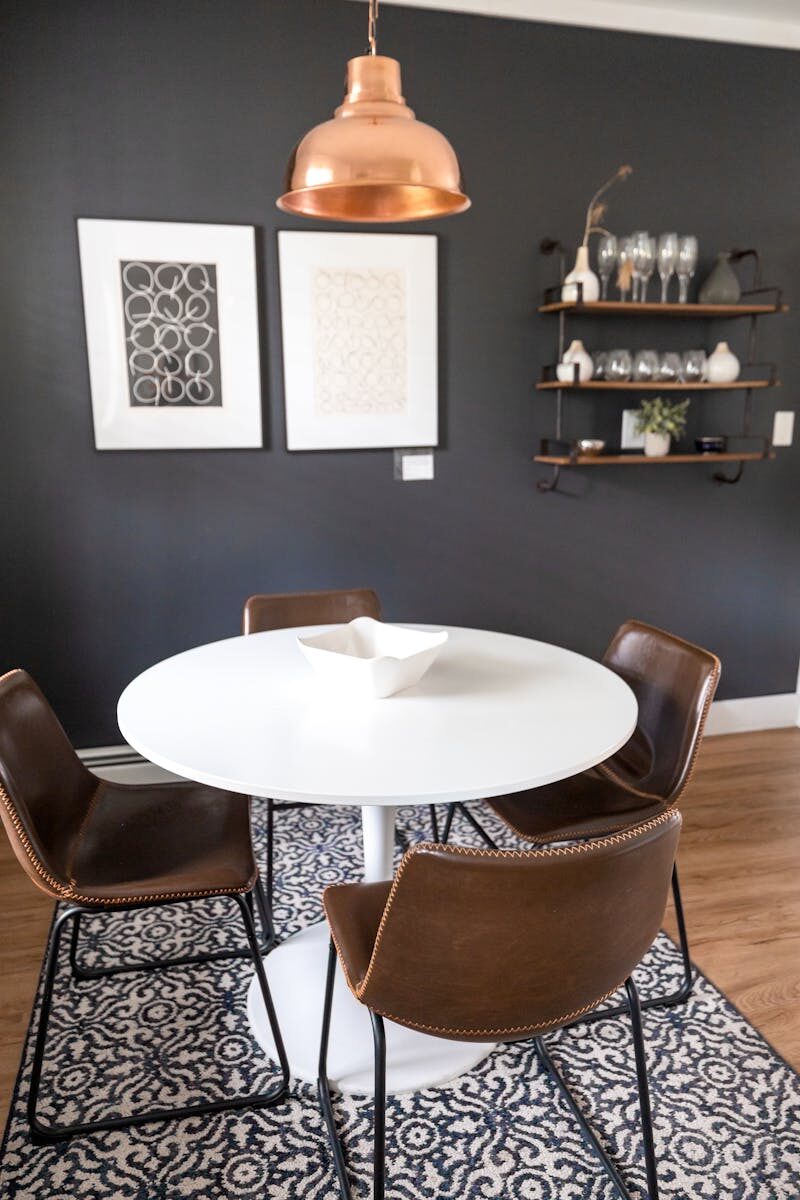
There is something about a leather saddle dining chair that just stops you in your tracks. The first time I sat in one — a low-back, cognac-colored seat with a gently curved saddle contour — I understood immediately why this style has quietly become one of the most sought-after pieces in American dining rooms. It felt like the chair had been shaped around you, not the other way around.
If you have been browsing furniture stores or scrolling endlessly through interior design feeds and keep landing on this style, you are not alone. The modern leather saddle dining chair has earned a serious following across the U.S., from minimalist lofts in Chicago to farmhouse kitchens in Tennessee. And for good reason — it blends ergonomic comfort, timeless design, and real-world durability in a way that few other dining chairs can match.
This guide will walk you through everything you need to know before you buy: what makes the saddle seat design special, how to evaluate leather quality, which styles work best in different home aesthetics, and how to care for your chairs so they look great a decade from now.
What Is a Leather Saddle Dining Chair?
The “saddle seat” refers to the distinctive contoured shape of the chair’s seat pan — wider at the front, narrower toward the back, with a slight center ridge or dip that echoes the shape of a traditional horse saddle. This is not just an aesthetic choice. The shape is rooted in ergonomics.
When you sit in a properly designed saddle chair, your hips naturally tilt forward just slightly, encouraging your spine to follow its natural S-curve. This reduces pressure on the lower back and distributes your body weight more evenly across the seat. For long dinner conversations or working-from-home setups where a dining chair doubles as a desk chair, that difference is felt.
Pair that thoughtful geometry with genuine or high-quality bonded leather upholstery, and you get a piece of furniture that scores high on both function and aesthetics.
Why the Modern Leather Saddle Chair Is Having a Moment in 2026
Interior design in the United States has shifted significantly over the past few years. Homeowners are moving away from the “all-or-nothing” approach — either fully minimalist or heavily maximalist — and gravitating toward what designers are calling warm modernism: spaces that feel curated, lived-in, and tactile without being cluttered.
The modern leather saddle dining chair fits that aesthetic perfectly. Its clean lines satisfy a modernist eye, while the warmth of leather and the sculptural saddle form add a sense of craft and personality that pure minimalism can lack.
There is also a very practical reason this style is trending in 2026: durability awareness. After years of fast furniture — cheap particle board, polyester fabric, chairs that wobble after two years — American consumers are actively seeking pieces built to last. Leather, when properly sourced and maintained, only gets better with age. The patina that develops on a genuine leather saddle chair over time is something no synthetic material can replicate.
Types of Leather Used in Saddle Dining Chairs
Not all leather is the same, and understanding the differences will save you from buyer’s remorse. Here is a straightforward breakdown of what you will encounter in the U.S. market.
Full-Grain Leather This is the highest quality you can get. Full-grain leather retains the entire grain of the hide, including natural markings and imperfections. It is the most breathable, the most durable, and the most beautiful over time. Chairs made with full-grain leather are an investment, but one that pays off over decades. Expect to pay a premium — quality sets in this category often run $300–$800+ per chair.
Top-Grain Leather The surface is lightly sanded and treated to remove blemishes and create a more uniform appearance. It is still genuine leather and quite durable, though slightly less breathable and long-lived than full-grain. This is the most common leather type in mid-range U.S. dining chairs ($150–$400 per chair).
Bonded Leather Made from leather scraps bonded together with polyurethane. Less expensive and initially looks good, but can crack and peel within a few years, especially in dry climates common in places like Arizona, Nevada, and Colorado. Fine for a temporary solution, but not ideal if you want lasting quality.
Vegan / PU Leather A synthetic alternative that has improved dramatically in quality. High-end PU leather can be remarkably convincing and is a smart choice for households with pets or young children. Look for products labeled “Nappa PU” or “Ultraleather” for best results.
Key Design Styles of the Modern Leather Saddle Dining Chair
One of the reasons this chair style has such broad appeal is that it comes in several design interpretations. You are not locked into a single look.
Mid-Century Modern Saddle Chair Think tapered wooden legs in walnut or teak, a slightly retro silhouette, and rich caramel or cognac leather. This version fits beautifully in spaces that mix vintage warmth with contemporary lines — popular in cities like Portland, Austin, and the broader Pacific Northwest.
Industrial Saddle Chair A metal frame — often powder-coated black or raw steel — paired with dark brown or black leather upholstery. The contrast is striking and works exceptionally well in urban lofts, open-plan kitchens, or spaces with exposed brick and concrete.
Scandinavian Minimalist Saddle Chair Light oak or beech legs, pale leather upholstery (off-white, sand, or light gray), and a stripped-back silhouette with no excess ornamentation. This version has been enormously popular in the American Midwest and Northeast, particularly in newer construction homes with open-concept layouts.
Farmhouse Modern Saddle Chair Slightly heavier proportions, turned or slightly distressed wood legs, and a warm tan or tobacco leather. This interpretation bridges the gap between traditional farmhouse charm and contemporary design — an excellent choice for homes in the South and Mountain West.
What to Look for When Buying a Modern Leather Saddle Dining Chair in the U.S.
Shopping for dining chairs feels simple until you are standing in a furniture showroom wondering why two chairs that look nearly identical have a $400 price difference. Here are the factors that genuinely matter.
Frame Construction A quality dining chair will have a solid wood or heavy steel frame. Look for chairs with corner-blocked joints — small triangular wood reinforcements inside the seat frame that prevent racking and wobbling. Kiln-dried hardwood (beech, ash, rubberwood) is far superior to engineered wood or MDF for longevity.
Seat Foam Density This is often overlooked. Cheap chairs use low-density foam (under 1.5 lb/ft³) that compresses and flattens within a year. Quality saddle dining chairs use high-resilience foam rated at 2.0 lb/ft³ or higher. Ask the retailer or check the product spec sheet — this detail is often listed in fine print.
Stitching and Finishing Details Leather saddle chairs that are built to last will have consistent, tight stitching — double-stitched seams at stress points, no loose threads, and neatly finished underside fabric. Turn the chair over before you buy and inspect the base.
Weight Capacity and Dimensions Standard dining chairs are typically designed for up to 250–300 lbs. If you need higher capacity, look specifically for reinforced frames rated at 350+ lbs. Chair height matters too — the standard seat height is 18 inches, which pairs well with most 30-inch dining tables, but counter-height and bar-height variants (24–30 inch seat height) are increasingly common as kitchen islands with seating become a standard feature in American homes.
Certifications Look for chairs with BIFMA certification (Business and Institutional Furniture Manufacturers Association) for structural durability testing, and GREENGUARD Gold certification if indoor air quality is a concern for your household, particularly relevant for families with children or anyone with respiratory sensitivities.
How to Style a Leather Saddle Dining Chair in Your Home
Buying the right chair is only half the equation. How you style it in your space determines whether it looks intentional or accidental.
Match Undertones, Not Just Colors Leather has warm, cool, or neutral undertones. Cognac and tobacco leather have warm golden or reddish undertones; black leather is neutral to cool; tan and sand shades can go either way depending on the treatment. Match these undertones to your flooring and table finish. A warm walnut table looks magnificent with cognac leather; a white oak table pairs better with a cooler, lighter leather tone.
Mix, Don’t Match One of the most effective design moves in 2026 is using the saddle dining chair at the heads of the table while using upholstered or wood chairs along the sides. This creates visual hierarchy and rhythm without requiring all six or eight chairs to be identical — a practical approach that also lets you manage budget more strategically.
Consider Your Rug A leather saddle chair against a bare floor can look cold. A woven jute, wool, or low-pile rug under the dining table softens the overall composition and adds a layer of texture that plays beautifully against the smoothness of leather.
Lighting Matters More Than You Think Leather picks up and reflects light in ways that fabric does not. Warm Edison-style bulbs or a brass pendant over a dining table will make a cognac or tobacco leather chair glow in a way that is genuinely beautiful. Cool blue-white light, on the other hand, can flatten the leather’s tone and make it look cheaper than it is.
Caring for Your Leather Saddle Dining Chair
One of the best things about genuine leather is that it rewards attention. A few simple habits will keep your chairs looking exceptional for years.
Wipe down leather seats weekly with a clean, slightly damp microfiber cloth. For a deeper clean, use a pH-balanced leather cleaner every three to four months — avoid anything with harsh chemicals, bleach, or ammonia. After cleaning, apply a quality leather conditioner to prevent the hide from drying out and cracking. This is especially important in dry climates like those found in Denver, Phoenix, and Las Vegas, where indoor heating can strip moisture from leather quickly.
Keep leather dining chairs out of direct sunlight where possible. UV exposure causes fading and dries out the material over time. If your dining room gets significant afternoon sun, consider light-filtering window treatments or rearranging the furniture placement seasonally.
For spills — and with a dining chair, spills are inevitable — blot immediately with a dry cloth. Do not rub. Most quality full-grain and top-grain leather is naturally somewhat water-resistant, but prolonged contact will leave marks. A leather protectant spray applied twice yearly adds a meaningful barrier against moisture and staining.
Top Considerations for USA Buyers in 2026
The American furniture market has changed considerably, and a few trends are worth knowing before you shop.
Domestic vs. Import A growing number of U.S. consumers in 2026 are actively seeking domestically manufactured or ethically sourced furniture, partly due to ongoing supply chain awareness and partly due to genuine interest in supporting American craftsmanship. Several companies — including makers in North Carolina, Vermont, and California — produce leather dining chairs domestically. Expect to pay more, but the quality, lead times, and accountability are generally superior.
Lead Times Custom and semi-custom leather dining chairs typically have 6–14 week lead times in the current market. If you are furnishing a new home or renovating before a holiday gathering, plan well ahead.
Sustainability Look for leather sourced as a byproduct of the meat industry (rather than raised solely for hides) and tanned using vegetable or water-based processes rather than heavy chromium methods. The Leather Working Group (LWG) certification is a reliable third-party indicator of responsible leather sourcing and processing.
According to the American Home Furnishings Alliance, sustainability credentials have become one of the top five purchasing decision factors for U.S. furniture buyers under 45 — a significant shift from just five years ago.
Frequently Asked Questions
Are leather saddle dining chairs comfortable for long meals? Yes — the saddle contour is specifically designed to promote a more natural seating posture compared to flat seats. Most users find them more comfortable for extended sitting than standard dining chairs. If you have lumbar concerns, look for saddle chairs with a low back support or consider adding a small lumbar cushion.
Can leather saddle chairs work in small dining spaces? Absolutely. Many saddle dining chairs have a relatively compact footprint despite their visual presence. Look for armless versions for small dining rooms — they tuck under the table more cleanly and allow you to seat more people comfortably.
How many chairs do I need? The standard rule of thumb is to allow 24 inches of table width per seated person. A 72-inch (6-foot) dining table comfortably seats six; an 84-inch table seats eight. If your table is extendable, buy chairs for the maximum extended size.
What is the best color for a leather saddle dining chair? Cognac and caramel tones are the most versatile and have the broadest appeal across different interior styles. Black leather reads more formal and works well in contemporary and industrial spaces. Lighter tones like sand and cream are stunning but show wear and staining more readily — best for households without young children or pets.
Final Thoughts
A modern leather saddle dining chair is not just a seat — it is a considered investment in the way your home feels and functions every day. The blend of ergonomic design, natural material quality, and enduring style makes it one of the few furniture purchases that genuinely gets better with time rather than worse.
Whether you are outfitting a new home in the suburbs of Dallas, refreshing a brownstone dining room in Brooklyn, or finally replacing those mismatched chairs in your Columbus kitchen, the leather saddle chair earns its place at the table in every sense of the phrase.
Take your time, invest in quality where you can, and choose a style that reflects how you actually live — not just how a showroom looks. The right chair will reward you for years.
For more guidance on choosing the right seating for your home, explore our complete dining room furniture buying guide for in-depth comparisons and expert recommendations tailored to every budget and style.