

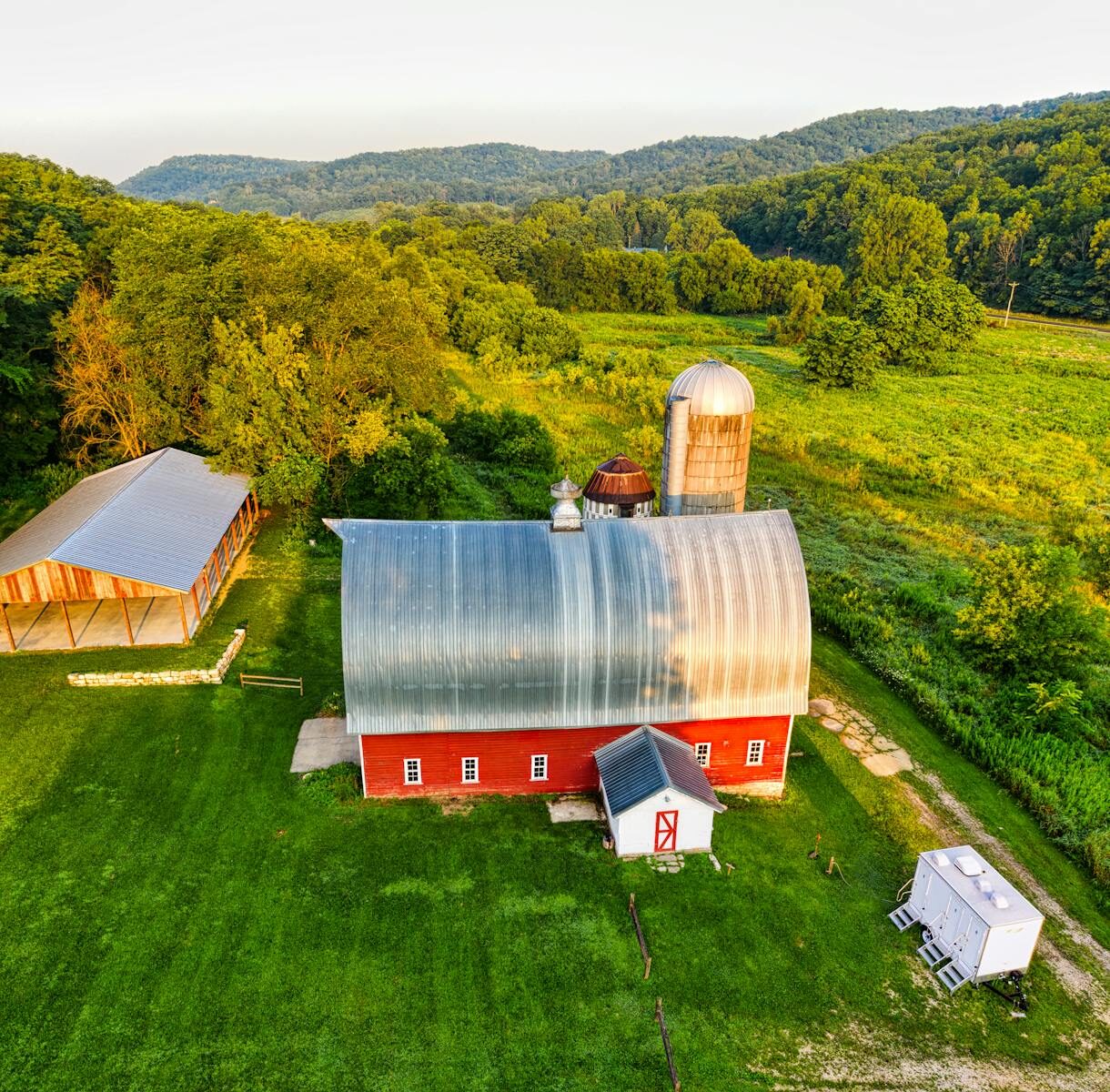
If you’re serious about buying a dairy farm in Wisconsin, you already know something most people don’t: you’re not just buying land and buildings. You’re buying into the most storied dairy state in the country, a place where agriculture isn’t a lifestyle choice — it’s a generational identity.
Wisconsin has been called “America’s Dairyland” since before it was printed on license plates. And despite decades of farm consolidation, the state remains the clear national leader in dairy farming, home to approximately 5,000 dairy farms as of 2026 — more than any other state. It produces roughly 32 billion pounds of milk annually and accounts for 25% of the nation’s cheese.
For buyers looking to enter, expand, or invest in that legacy, 2026 is a market worth understanding very carefully. Land values are at historic highs and climbing. Inventory is tight. Competition is real. And the difference between a smart purchase and an expensive mistake often comes down to knowing which counties to target, what to ask for in due diligence, and how to structure your financing before you ever walk a property line.
This guide covers all of it.
The State of Wisconsin’s Dairy Farm Market in 2026
Before you look at a single listing, it helps to understand the market you’re stepping into.
Wisconsin’s dairy farm landscape has consolidated dramatically over the past two decades. In 2006, the state had nearly 15,000 dairy herds and the average farm milked 142 cows. As of January 2026, there are 5,115 dairy farms in Wisconsin — a drop of 233 herds from the prior year, and nearly 10,000 fewer farms than two decades ago. In 2023 alone, the state lost 455 herds. The pace of consolidation has slowed somewhat, but it hasn’t stopped.
That contraction might sound like a buyer’s market. It isn’t — at least not in the traditional sense. Here’s why.
Most farmers who exit dairying don’t sell their land. Wisconsin DATCP data confirms that the majority of landowners who exit the dairy industry simply transition to cash crop farming or lease the land rather than selling it. This keeps inventory extremely tight, which is exactly why Wisconsin farmland values have continued climbing even as farm numbers decline.
The farms that do come to market are often high-quality operations. Sellers today are increasingly well-capitalized farmers transitioning out of ownership — not distressed operators liquidating under pressure. That dynamic tends to push transaction prices upward.
Dairy farm land is a competitive asset class. According to Compeer Financial, benchmark farmland values across Wisconsin increased an average of 10.8% from December 2024 to December 2025, with some markets recording gains of up to 25.9%. Wisconsin stood out among Midwest states for double-digit appreciation driven by strong competition for land near dairy and specialty crop operations.
For buyers, this means acting on well-priced listings quickly, doing thorough pre-purchase homework, and having financing pre-arranged before you negotiate.
Current Wisconsin Dairy Farm Listings: What’s Available in 2026
The active dairy farm listing market in Wisconsin in 2026 is selective by nature. Dedicated dairy farm listing platforms are showing a relatively small number of active Wisconsin dairy farm properties at any given time, reflecting the tight supply conditions described above.
Here’s a snapshot of what the current market looks like across different listing tiers and sources:
Dedicated dairy farm platforms — Sites like DairyRealty.com, DairyFarms4Sale.com, and FarmFlip.com carry the most targeted Wisconsin dairy farm inventory. These platforms are specifically built for operational dairy purchases (active milking operations, freestall barns, milking parlors, feed systems) and are where serious buyers should spend their first search hours.
As a specific example of what’s currently available: One listed property at Augusta, Wisconsin (Eau Claire County) is offered at $3,200,000 for 160 acres with 625 total stalls and a modern 526-stall tunnel-ventilated freestall barn — with an additional 300 acres available for separate sale or rent. This represents the kind of mid-size, ready-to-operate listing that moves relatively quickly in the current market.
General farm listing platforms — LandSearch, Land.com, LandBin, and Lands of America aggregate Wisconsin farm listings more broadly. As of late May 2026, LandBin shows 585 active Wisconsin farm listings at an average listing price of $557,214. These sources include dairy-suitable properties that aren’t always categorized strictly as “dairy farms” — properties with existing barns, well-developed pasture, and rural infrastructure that could be converted or reactivated for dairy use.
Auction markets — A significant portion of Wisconsin farmland transactions — particularly parcels under $2 million — move through live and online auction. Firms like Ranchandfarmauctions.com, Hertz Farm Management, and Peoples Company regularly run Wisconsin farmland auctions. Competitive bidding at auction has been a primary driver of record per-acre prices in recent years.
Off-market and broker-to-broker transactions — In tight-inventory markets like Wisconsin’s, a meaningful share of high-quality dairy farm transactions never appear on public listing platforms. Building a relationship with a Wisconsin-based agricultural real estate broker — particularly firms like Advantage Realty that specialize specifically in dairy farms — can give you access to opportunities before they’re publicly marketed.
Wisconsin Dairy Farm Land Prices: What You’ll Pay in 2026
Land prices vary significantly across Wisconsin’s regions, farm types, and proximity to processing infrastructure. Here’s a data-grounded breakdown of what to expect.
Statewide average: Average farm real estate in Wisconsin was approximately $6,420 per acre in 2025, with cropland averaging $7,250 per acre — up roughly 7 to 8% from the prior year according to USDA data. Over five years, Wisconsin agricultural land values have risen approximately 34.9%, reflecting consistent upward pressure even through periods of compressed farm margins.
Regional variation is dramatic. Per Compeer Financial’s market data from early 2026, cropland values in some areas now range from $6,000 per acre to well over $15,000 per acre, depending on location and soil quality. The most productive silt loam soils — particularly in the Mackford Prairie region — command premium prices relative to sandy soils in the central sands region.
Southeast Wisconsin premium: Farmland values in southeast Wisconsin have surged sharply, with some properties now trading between $13,000 and $16,000 per acre. A primary driver behind this premium is proximity to large dairy operations and the operational necessity of nearby acreage for nutrient management — large dairy farms increasingly need adjacent land to meet Wisconsin’s nutrient management regulations, reduce manure hauling distances, and control labor and fuel costs.
What this means for dairy farm buyers: A working dairy farm is not just raw land — you’re also paying for barns, milking parlors, feed storage, waste management systems, wells, and housing. Full operating dairy properties in Wisconsin are typically priced in ranges from approximately $1.5 million for a smaller operation to well over $10 million for large-scale facilities. The average listing price for specifically marketed dairy farms on LandSearch as of 2026 is approximately $12.7 million — though this figure is skewed by the presence of large-scale operations and shouldn’t be taken as a typical transaction price for mid-size farms.
Agricultural land sold for development versus continued farming: According to Wisconsin DATCP and USDA NASS sales data, agricultural land diverted to non-agricultural uses commanded approximately $19,083 per acre in 2024, compared with $8,937 per acre for land continuing in farming. If you’re purchasing a farm near a growing municipality — Madison, Green Bay, Appleton, or Eau Claire exurbs — this development premium is a real factor in your purchase price.
Best Counties and Regions to Search in Wisconsin
Wisconsin’s dairy belt covers much of the state, but some counties consistently produce the most dairy farm transaction activity and offer the best combination of productive land, processing access, and established agricultural infrastructure.
Green County (Southwest Wisconsin): Often called the “Swiss Cheese Capital of the U.S.,” Green County is one of the most historically dairy-intensive counties in America. New Glarus, Monroe, and surrounding communities have deep roots in cheese manufacturing and dairy farming. Land here is productive, competition is high, and farms rarely stay on the market long. Excellent choice for buyers seeking a working operation within a tight-knit agricultural community.
Fond du Lac County (East-Central Wisconsin): Home to some of the strongest cropland markets in the state. Compeer Financial tracks a monthly Fond du Lac County benchmark that has seen dramatic per-acre appreciation in recent years. Well-positioned for dairy operations given proximity to processing plants and the agricultural services corridor along I-41.
Vernon County (Western Wisconsin / Coulee Region): Rolling hills along the Mississippi River corridor make Vernon County a natural fit for grass-based and organic dairy operations. Vernon County has consistently been one of Wisconsin’s leading organic dairy counties, with a strong network of organic milk cooperative infrastructure. If you’re pursuing a transition to organic production, this is one of the first places to look.
Marathon County (Central Wisconsin): Wausau anchors Marathon County, which has a robust agricultural services sector, strong dairy infrastructure, and competitive farmland values relative to southeast Wisconsin markets. Good availability of both full operating farms and parcels suitable for expansion.
Wood and Portage Counties (Central Sands Region): Sandy soils limit certain row crop applications, but the Central Sands region has strong irrigated vegetable farming and supports dairy operations with reliable forage production. Land values here are generally lower than the dairy belt, which can work in buyers’ favor — particularly for newer entrants with tighter capital.
Eau Claire and Clark Counties (Northwest Wisconsin): Eau Claire County has a growing dairy presence and sits within a reasonable distance from processing infrastructure. Clark County is one of Wisconsin’s most productive dairy counties on a per-cow basis and offers some of the most accessible entry points for buyers looking at mid-size family operations.
Kewaunee and Manitowoc Counties (Lake Michigan Shoreline): The lakeshore counties have seen significant large-scale dairy farm development over the past 20 years. Nutrient management is a closely watched regulatory area in this region due to water quality concerns — buyers should conduct thorough environmental due diligence on any property here.
Complete Buying Guide: Step-by-Step
Whether you’re a first-generation farmer, a multi-generational family operation looking to expand, or an investor evaluating agricultural real estate, the process of buying a Wisconsin dairy farm has specific steps that differ from buying residential real estate. Here’s how to approach it correctly.
Step 1: Define Your Operation Type and Scale
Before you look at a single listing, be clear about what you’re actually buying. Wisconsin dairy farms fall into several distinct operational categories, each with different infrastructure requirements, regulatory obligations, and capital demands:
Smaller family operations (under 200 cows): Often feature older tie-stall or stanchion barn setups, farmsteads with residence included, and smaller acreage bases. These are more accessible entry-level operations but may require significant modernization investment to compete on per-cow productivity benchmarks.
Mid-size freestall operations (200–600 cows): This is the most active segment of Wisconsin’s current dairy farm transaction market. Modern freestall barns, rotary or parallel milking parlors, and computerized feed management systems are standard. Operations in this range can support a professional full-time operation with strong per-cow milk output.
Large-scale and mega-dairies (600+ cows): Capital requirements are substantial. Environmental compliance, nutrient management planning, and water use permitting are more complex. These operations are increasingly institutional-grade investments as well as farming businesses.
Former dairy operations (reactivation opportunity): A meaningful share of what’s listed as “farm” rather than “dairy farm” in Wisconsin is former dairy infrastructure that has been transitioned to cash crop use. Buying a former dairy operation at cash-crop land prices and reactivating the milking infrastructure can represent significant value — but requires careful assessment of barn condition, equipment state, and permit status.
Step 2: Assemble Your Professional Team Early
Buying a Wisconsin dairy farm without qualified professionals in each key role is one of the most expensive mistakes a buyer can make. Assemble your team before you start making offers, not after.
Agricultural real estate attorney: Wisconsin has specific laws governing farmland purchases, CAFO permits, nutrient management plans, easements, drainage tile systems, and agricultural preservation programs. A general real estate attorney isn’t enough — you need one with demonstrated agricultural transaction experience in Wisconsin.
Agricultural lender or farm credit officer: Pre-qualification from an ag-specific lender (Compeer Financial, AgCountry Farm Credit Services, a regional bank with an agricultural lending department) is essential before you negotiate. Standard mortgage lenders typically don’t understand the appraisal methodology for operational dairy farms.
Wisconsin-licensed agricultural appraiser: Dairy farm appraisal is a specialized discipline. You need an appraiser familiar with income capitalization approaches for dairy operations, not just comparable sales methodology.
Farm business consultant or agricultural CPA: Understanding the income history, expenses, and debt structure of an operating farm you’re purchasing is essential. An agricultural CPA can assess financial statements and milk check history in ways a general accountant cannot.
Veterinarian (if purchasing a herd): If the sale includes cattle, a licensed veterinarian should conduct a herd health assessment as part of due diligence. Herd replacement values have climbed from below $1,400 per head in early 2022 to over $3,000 per head by mid-2025 — which means a herd is one of the most significant value components of any dairy farm acquisition.
Step 3: Conduct Thorough Due Diligence
The due diligence phase is where dairy farm purchases succeed or fail. Here’s what to investigate on every property:
Soil testing: Request current soil test data for all crop acres. In Wisconsin, soil productivity is the primary driver of land value — and what you’re told and what the tests show can diverge significantly. Pay particular attention to pH, organic matter, drainage tile condition, and any history of nutrient loading from manure application.
Water quality and supply: Wisconsin dairy farms depend heavily on well water for milking operations. Test all wells for nitrates, coliform bacteria, and other contaminants — particularly on farms near large-scale neighboring operations or with known historical manure management issues. The Lake Michigan shoreline region deserves particular scrutiny.
Environmental permits and compliance: Any operation over 700 animal units in Wisconsin is subject to Wisconsin Pollutant Discharge Elimination System (WPDES) permitting as a CAFO (Concentrated Animal Feeding Operation). Verify current permit status, any outstanding compliance issues, and the nutrient management plan. Inheriting an operation with open enforcement actions can be financially serious.
Milk market access: Confirm which cooperative or proprietary processor the farm sells to, the terms of the marketing agreement, and the base milk price history. Not all milk markets are equal — and some producer agreements have transfer restrictions that affect who can acquire the farm.
Milk production records: Request at minimum three years of monthly milk check stubs and DHIA production records if the herd is DHIA-enrolled. Per-cow production, somatic cell count trends, and butterfat/protein components tell you far more about the true operational performance of the farm than asking price alone.
Building and equipment condition assessment: Freestall barns, milking parlors, manure storage systems, feed bunkers, and grain storage are all capital assets that depreciate, fail, and require replacement. A structural and mechanical assessment by a qualified farm building inspector is money very well spent — and a common negotiating point for price reductions or seller-provided credits.
Agricultural preservation and PACE easements: Many Wisconsin farms are enrolled in agricultural preservation programs that restrict non-agricultural development. Some carry Purchase of Agricultural Conservation Easements (PACE). These restrictions survive ownership transfer — verify what encumbrances run with the land before you close.
Step 4: Understand Wisconsin’s Agricultural Tax Programs
Wisconsin offers several programs that meaningfully reduce the carrying cost of agricultural land ownership. Every dairy farm buyer should understand these before calculating their projected expenses.
Use-Value Assessment (Managed Forest Law / Agricultural Use): Wisconsin assesses agricultural land based on its productivity value for farming purposes rather than its full market value. This can reduce property tax bills significantly on farmland that qualifies. Buyers should confirm current enrollment status and verify that the property will continue to qualify under their intended operation.
Agricultural Preservation Credit (APC): Wisconsin’s farmland preservation tax credit program provides income tax credits to farmers who agree to keep their land in agricultural use. Eligibility requires the farm to be part of an agricultural preservation plan in the county’s land use plan.
Beginning Farmer and Farmland Access programs: The Wisconsin Farm Center operates programs specifically designed to connect beginning farmers with land, financing support, and mediation services. The Wisconsin Beginning Farmer Loan Program provides additional incentives for entry-level buyers.
Step 5: Financing Your Wisconsin Dairy Farm Purchase
Financing a dairy farm is fundamentally different from residential mortgage financing. Here are the primary pathways available to Wisconsin dairy farm buyers in 2026.
USDA Farm Service Agency (FSA) Farm Ownership Loans: The FSA offers Direct Farm Ownership Loans of up to $600,000 for eligible borrowers. Guaranteed Farm Ownership Loans — issued by commercial lenders but backed by FSA — can reach up to $2,343,000. For beginning farmers, the Down Payment Program requires only a 5% cash down payment, with FSA financing up to 45% of the purchase price (maximum $300,150 for this program). These programs are administered through local FSA offices throughout Wisconsin.
Farm Credit System Lenders (Compeer Financial / AgCountry): These cooperative lenders specialize in agricultural real estate and operating lending. Compeer Financial is one of the most active agricultural lenders in Wisconsin and has deep familiarity with dairy farm valuation and financing structures. Loan-to-value ratios, amortization periods, and repayment structures are all calibrated for agricultural income cycles rather than salaried payment capacity.
Commercial bank agricultural lending: Regional banks with dedicated agricultural divisions — like Peoples Independent Bank, First Business Bank, and others with Wisconsin agricultural portfolios — can be excellent financing partners, particularly for buyers with strong existing banking relationships.
Seller financing: In Wisconsin’s dairy farm market, a share of transactions involve some component of seller financing — particularly where a retiring farm family wants installment income rather than a full cash-out. This structure can benefit buyers who face constraints on conventional financing amounts and can benefit sellers through capital gains spreading.
USDA Rural Development Business Programs: Beyond FSA farm loans, USDA Rural Development programs — including the Business & Industry (B&I) Guaranteed Loan program — can support dairy farm acquisitions structured as business entities rather than individual farm purchases.
What to Look for in a Dairy Farm Listing: Red Flags and Green Flags
After years of working with agricultural properties, certain signals consistently separate the strong opportunities from the expensive problems.
Green flags:
- Milk production records showing consistent or improving per-cow output and stable somatic cell counts
- Current and complete WPDES/nutrient management permits in good standing
- Strong lease history on rented acres (multiple years, written agreements, cooperative neighbors)
- Modern freestall facilities built within the last 15 years
- Proximity to a strong cooperative or proprietary milk market with a positive basis history
- Well-maintained manure storage sized appropriately for the herd
- Fiber-optic or reliable broadband connectivity — increasingly important for precision dairy technology, herd management software, and farm business management
Red flags:
- Missing or incomplete milk production records for the past 24+ months
- Open or recently closed WPDES compliance issues
- Manure storage that is undersized, structurally compromised, or without a current management plan
- Well water test results showing elevated nitrates (above 10 ppm)
- Verbal-only cropland lease arrangements with neighbors
- A milking herd priced at full current replacement value without disclosure of health records
- Buildings described as “functional but dated” without a specific maintenance history
Where to Find Wisconsin Dairy Farm Listings: Best Resources
DairyFarms4Sale.com: Run by Advantage Realty, which specializes exclusively in Wisconsin dairy farms, heifer facilities, and farmland. One of the most targeted resources for operational dairy farm listings in the state.
DairyRealty.com: A national dairy farm listing service with a dedicated Wisconsin section. Professional listings with operational detail.
Land.com / LandSearch.com / LandBin.com: Broader farm and land listing aggregators with Wisconsin inventory. Useful for identifying dairy-suitable properties not marketed specifically as dairy farms.
FarmFlip.com: Agricultural land and farm listing platform with Wisconsin dairy inventory and auction notifications.
Wisconsin Farm Center (DATCP): The Wisconsin Department of Agriculture, Trade and Consumer Protection operates the Farm Center, which provides farm mediation, transition resources, and connections between buyers and sellers — particularly for beginning farmer placements. Visit datcp.wi.gov to access these services directly.
Compeer Financial and AgCountry Farm Credit: Both lending cooperatives often have knowledge of upcoming property transactions before they hit public platforms. Their loan officers serve as informal deal-flow connectors in many Wisconsin communities.
For more guidance on evaluating Wisconsin agricultural land from a financing and investment perspective, the University of Wisconsin-Extension’s farmland pricing resource provides annual data analysis updated by UW agricultural economists — one of the most reliable non-commercial sources for price benchmarking in the state.
Why Wisconsin Is Still the Right Place to Invest in Dairy
The consolidation numbers are real, and no honest guide would minimize them. But understanding why Wisconsin’s dairy farm market remains compelling for 2026 buyers requires looking past the herd count.
Wisconsin produced a record 32.35 billion pounds of milk in 2024. Despite having fewer farms and fewer cows than decades past, the remaining operations are producing more milk per cow than ever — an average of 25,294 pounds per cow annually as of 2024, nearly double the productivity of 40 years ago. That’s the result of genetics, nutrition science, herd management technology, and infrastructure that makes Wisconsin’s dairy operations among the most efficient in the world.
The state’s dairy industry contributes $52.8 billion to Wisconsin’s economy each year and supports 121,000 dairy-related jobs. Wisconsin is home to nearly 1,200 licensed cheesemakers producing over 600 types, styles, and varieties of cheese — nearly double the number of any other state. Roughly 99% of Wisconsin’s dairy farms are family owned.
That’s not a declining industry. It’s a consolidating one — and there’s an important difference. The farms that remain are bigger, better-equipped, and more productive than at any point in history. For the right buyer, purchasing into that infrastructure at the right price and the right location is a genuinely compelling long-term investment.
Frequently Asked Questions
How much does a dairy farm cost in Wisconsin in 2026? Prices vary enormously by size, location, and operational status. Entry-level smaller operations with older tie-stall infrastructure can start in the $500,000 to $1.5 million range. Mid-size freestall operations (200–500 cows with full equipment) typically run $3 million to $8 million. Large-scale operations (500+ cows, modern facilities) can exceed $10 million to $15 million or more. Raw land averages approximately $6,420 per acre statewide, with southeast Wisconsin trading as high as $13,000 to $16,000 per acre.
What counties have the most dairy farms for sale in Wisconsin? Green, Fond du Lac, Marathon, Clark, Eau Claire, and Vernon counties consistently produce the most dairy farm transaction activity. However, listings appear across most of Wisconsin’s agricultural counties — working with a specialized dairy farm real estate agent gives you the broadest access.
Can a first-generation buyer afford a Wisconsin dairy farm? Yes, with the right financing structure. USDA FSA Beginning Farmer programs require as little as 5% down on qualifying properties and offer below-market interest rates. Compeer Financial and AgCountry also have specific beginning farmer programs. A realistic entry point for a first-generation buyer is a smaller operation in the $500,000 to $1.5 million range using FSA financing combined with seller financing or a state beginning farmer loan.
Do I need to already be a licensed dairy farmer to buy a Wisconsin dairy farm? No. You do not need a specific license to purchase a Wisconsin dairy farm. However, operating a Grade A dairy (selling fluid milk) requires a Grade A Milk Permit from the Wisconsin Department of Agriculture, Trade and Consumer Protection (DATCP). You’ll need to pass a premises inspection and meet facility standards before the permit is issued. If you’re purchasing a farm with an existing permit in good standing, the permit transfer process is relatively straightforward.
What is the milk price in Wisconsin right now? Milk prices fluctuate with the Federal Milk Marketing Order system and cooperatives’ pay prices. As of early 2025, the Wisconsin Class III milk price was approximately $23.70 per hundredweight (cwt). Prices have been volatile in recent years — always review at least three years of milk price history and factor in your break-even production cost before committing to a purchase.
Are Wisconsin farmland values expected to keep rising in 2026? According to Compeer Financial’s January 2026 analysis, farmland values are predicted to remain stable throughout the first half of 2026 with modest movement up or down. The economic setup for 2026 creates a cautiously optimistic outlook — constrained supply and steady demand from owner-operators continue to support values even with tighter farm margins. Farmers accounted for nearly 85% of all farmland buyers in 2025, confirming that producers — not outside investors — continue to drive the market.
What environmental permits does a Wisconsin dairy farm need? Operations with 700 or more animal units are required to obtain a WPDES permit as a Concentrated Animal Feeding Operation (CAFO). All farms are subject to Wisconsin’s Nutrient Management rules (ATCP 50), which regulate manure application rates and record-keeping. Smaller operations may be subject to local shoreland and floodplain regulations as well. Your agricultural attorney should review all existing permits and compliance history before you close on any purchase.
Final Thoughts
Buying a dairy farm in Wisconsin in 2026 is a serious undertaking — one that deserves serious preparation. The market is active, prices are at historic highs, and the properties that represent genuine long-term value move quickly. But for buyers who approach the process with a clear operational vision, a qualified professional team, and the financial groundwork already laid, Wisconsin remains one of the best places in the world to build or expand a dairy farming operation.
Do your homework on the county, the soil, the milk market, and the permit history. Know your financing before you negotiate. And don’t mistake the consolidation story for a decline story — the farms that remain in Wisconsin’s dairy landscape are producing more milk than ever before, backed by infrastructure, expertise, and market relationships that took generations to build.
If you’re just beginning your search, start with the Wisconsin DATCP Farm Center and the resources linked in this guide. And if you’re ready to look at active listings, connect with a dedicated Wisconsin dairy farm real estate broker before you go anywhere else.
For additional reading on Wisconsin farmland price trends and forecasts directly from agricultural economists at the University of Wisconsin-Madison, the UW-Extension Wisconsin Agricultural Land Prices resource is updated annually and is one of the most authoritative public data sources available.
You can also find more in-depth guidance on farm financing structures in our guide to Agricultural Loans and Farm Financing Options for USA Buyers in 2026.