

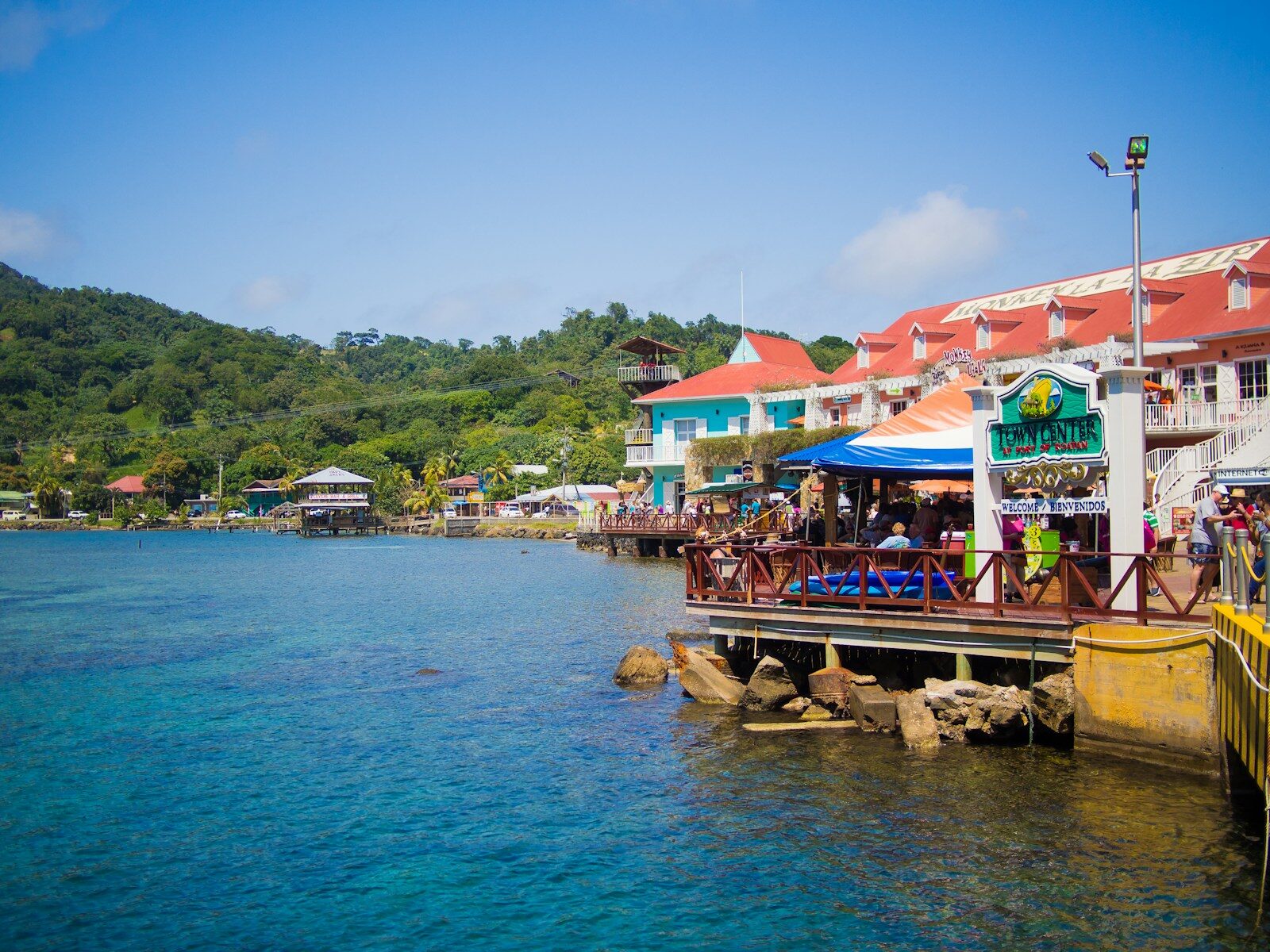
If you’ve ever dreamed of waking up to turquoise water, a gentle island breeze, and zero morning commute, you’re not alone. Thousands of Americans are making that dream a reality right now — and Roatan, Honduras is where many of them are landing. Whether you’re looking for a beachfront house, a luxury villa, or a vacation property that pays for itself, the Roatan real estate market in 2026 has something worth your serious attention.
Let’s walk through everything you need to know before you start browsing listings.
Why Roatan Is on Every Smart Buyer’s Radar in 2026
Roatan is a small island off the northern coast of Honduras in the Caribbean Sea, part of the Bay Islands. It’s about 37 miles long and sits on the second-largest barrier reef in the world. The diving is world-class, the beaches are postcard-perfect, and the cost of living is a fraction of what you’d spend in comparable Caribbean destinations like the Cayman Islands, Turks and Caicos, or the U.S. Virgin Islands.
But what really makes 2026 a compelling time to buy is the combination of steady market growth and values that haven’t yet gone through the roof. Tourism is booming — approximately 1.8 million cruise passengers arrived on Roatan alone in 2024 — and that sustained visitor traffic translates directly into rental demand for property owners.
For American buyers in particular, Roatan hits a sweet spot: English is widely spoken across the island, direct flights connect from several U.S. cities, and a well-established expat community means you won’t be navigating an unfamiliar culture alone.
Roatan Real Estate Market at a Glance (2026 Data)
Before you fall in love with a listing, it helps to understand the numbers. Here’s what the market looks like right now:
Average home price: approximately $500,000 for a standard non-beachfront house.
Beachfront properties: starting at $750,000, with luxury estates frequently crossing the $1 million mark.
Condos: one-bedroom units average around $228,000; two-bedroom units run about $323,000.
Land: prime coastal land averages $3,800 per square meter, while inland and East End lots can start as low as $35,000 — making them an accessible entry point for patient investors.
Price growth: property values have increased 3–7% overall in the past year, with West Bay and West End leading the way at 6–10% appreciation. Beachfront properties specifically have seen around 8% growth.
Rental yields: well-located vacation properties generate 5–8% annually. Beachfront villas can pull in $40,000–$75,000 in gross rental income per year, and top Airbnb performers on the island have exceeded $74,000 annually.
One more thing worth noting: the typical Roatan property sells for about 6% below asking price. Cash buyers dominate the market, which means there’s real room to negotiate — especially if you come prepared.
Types of Homes for Sale in Roatan Honduras
The Roatan market isn’t one-size-fits-all. Here’s a breakdown of what you’ll actually find when you start searching.
Beachfront Houses
These are the crown jewels of the Roatan market. Beachfront homes in West Bay and West End command premium prices — starting around $750,000 and climbing well past $1 million for larger, fully appointed properties. You get direct beach access, stunning views, and the strongest appreciation rates on the island. The tradeoff is higher maintenance costs, including robust insurance for coastal exposure.
If you’re buying a beachfront home as a vacation rental, the income potential is real. Properties in prime beach locations are the most sought-after on short-term rental platforms, and during peak season (December through April), occupancy rates can be exceptionally strong.
Luxury Villas
Roatan’s luxury villa market is centered around developments like Pristine Bay, a gated resort community on the eastern end of the island. These properties offer resort-style amenities — infinity pools, concierge services, golf, and direct ocean views — at prices that are still well below what comparable properties would cost in, say, the Bahamas or St. Barts.
Luxury villa prices in established communities typically range from $800,000 to well over $2 million for the most premium offerings.
Single-Family Homes in Established Communities
If you’re looking for something more livable than a vacation villa — a proper home for a family, a retiree, or a longer-term relocation — Sandy Bay and French Harbour are your go-to neighborhoods. These areas are popular with the expat community and offer steady appreciation along with a genuine sense of neighborhood.
Standard homes in these areas run $330,000–$500,000 and offer more square footage than a comparably priced condo.
Condos and Apartments
Condos are the most accessible entry point into the Roatan market, particularly for buyers who want exposure to the island without the full commitment of a house purchase. West End condos start around $150,000; West Bay units tend to start closer to $250,000.
For a furnished two-bedroom condo in a well-managed complex, you’re typically looking at $280,000–$350,000. Furnished units command 15–25% higher rents than unfurnished ones, so if income is part of your strategy, furnishing your condo makes financial sense from day one.
Land and Lots
For buyers with a longer time horizon, land in Roatan — particularly on the East End and inland areas — offers some of the best price-to-potential ratios on the island. Entry-level lots start at $35,000 and go up to $150,000 for more desirable positions. If you can hold for 5–10 years, patient land investors have historically done well here.
Best Neighborhoods to Buy in Roatan
Location determines almost everything in Roatan real estate — your appreciation potential, rental occupancy, day-to-day lifestyle, and resale liquidity. Here’s an honest breakdown of the major areas.
West Bay: The most famous beach on the island and the top neighborhood for short-term rental income. This is where cruise passengers head and where vacation rental demand is highest. Prices reflect the premium, but so do the returns.
West End: A lively, walkable village with restaurants, dive shops, and strong backpacker/tourist foot traffic. It’s slightly more affordable than West Bay and popular with both vacationers and longer-stay expats. Studio condos here post some of the highest gross rental yields on the island — over 10% on a gross basis, though net yields settle closer to 6–7% after HOA fees, insurance, and maintenance.
Sandy Bay: Sits between West End and West Bay geographically and in price. It’s quieter, more residential, and draws longer-stay tenants — teachers, resident expats, and professionals. Occupancy stability is higher here than in purely tourist-oriented areas.
French Harbour: A functioning port town with practical infrastructure and a strong local community. More affordable than the west end of the island, and popular with buyers focused on permanent relocation rather than vacation rental income.
Pristine Bay / East End: Home to Roatan’s most exclusive resort-style development. If you want gated luxury with golf and a marina, this is the address. Premium prices, premium lifestyle.
What Americans Need to Know Before Buying
This is the part most listing-focused articles gloss over, and it’s arguably the most important section in this entire piece.
Honduras allows foreigners — including Americans — to legally purchase residential property in Roatan. However, the legal framework has specific rules you must understand before signing anything.
The Restricted Zone Rule: Under Article 107 of the Honduran Constitution, foreigners cannot freely purchase property within 40 kilometers of coastlines and on islands — which, technically, covers all of Roatan. However, a special law called Decree 90-90 carves out an exception for urban residential properties in designated zones.
What this means for buyers: You can legally purchase condos, houses, and urban lots in Roatan as a foreign individual, but you are limited to a single property with a maximum land area of 3,000 square meters (about 0.74 acres). For larger purchases, buyers typically set up a Honduran corporation, which removes this cap entirely.
Title clarity is everything: The single most costly mistake foreign buyers make in Roatan is purchasing “derechos posesorios” — possessory rights — instead of a properly registered title (folio real). A property without a clean registered title cannot be financed or easily resold. Always verify title through a qualified Honduran attorney before proceeding.
Closing costs: Budget 4.5–7% of the purchase price for closing costs. Restricted zone transactions tend to land at the higher end of that range.
Property taxes: One of the most pleasant surprises for American buyers — property taxes in Roatan run just 0.35% of assessed value for urban properties, significantly lower than most U.S. markets.
Residency: Purchasing property in Honduras does not automatically grant residency. If relocation is part of your plan, explore the Pensionado visa (requiring $1,500/month in pension income) or the Rentista visa (requiring $2,500/month in passive income) as separate processes.
For a comprehensive look at the legal and financial landscape, the U.S. State Department’s Investment Climate Statement for Honduras is a solid and reliable resource to review before you commit.
Is Now Actually a Good Time to Buy?
Fair question, and it deserves a direct answer.
As of mid-2026, the evidence leans toward yes — particularly for buyers who are thoughtful about location and property type.
The fundamentals are sound. Tourism demand is real and growing. The rental market is active, with rents on the island increasing approximately 7% year-over-year in 2026, outpacing Honduras’s national inflation rate. Property prices are rising but haven’t yet reached the levels that would make the math difficult for investors. And cash buyers — who dominate the Roatan market — can negotiate meaningfully below asking price.
That said, this isn’t a speculative flip market. The most successful buyers are those purchasing for lifestyle, with income as a bonus — or those with a genuine 5-year-plus investment horizon. Buyers looking for quick appreciation or trying to time the market precisely are likely to be disappointed.
The other honest caveat: infrastructure on the island is still a work in progress. Power outages can affect some neighborhoods, electricity costs run higher than the mainland, and the legal process — while manageable — is different enough from a U.S. transaction that professional guidance isn’t optional, it’s essential.
Tips for a Successful Purchase
These are the practical steps that separate buyers who close smoothly from those who run into expensive problems.
1. Hire a local attorney before you do anything else. Not after you’ve found a property — before. A qualified Honduran real estate attorney will review title, verify that the property qualifies under Decree 90-90, and protect your interests throughout the process.
2. Work with a licensed local agent who knows the Roatan MLS. The island has a functioning MLS system, and experienced agents have access to the full inventory — not just their own listings. This matters more than you might think in a market where good properties move quickly.
3. Decide your purpose before selecting a neighborhood. Are you buying for vacation rental income? Personal use? Retirement? Permanent relocation? The right neighborhood and property type are entirely different depending on your answer.
4. Run a realistic budget including all costs. Purchase price plus 4.5–7% closing costs, home insurance (typically around 0.25% of insured value annually), HOA fees if applicable, and ongoing maintenance. Coastal properties especially require robust maintenance budgets.
5. Never skip a title search. This point cannot be overstated. A clean folio real is non-negotiable.
6. Visit before you buy. Roatan is a small island, and the difference between neighborhoods is dramatic. What looks similar on a map can feel completely different in person. If at all possible, spend at least two weeks on the island, visit properties in person, and get a feel for the community before committing.
Roatan vs. Other Caribbean Markets: The Value Proposition
American buyers often compare Roatan to other Caribbean investment destinations. Here’s how it stacks up:
In the Cayman Islands, a comparable beachfront property might cost three to five times more. In Turks and Caicos, luxury villas that are similar in quality to what you’d find in Pristine Bay routinely list above $3 million. Even Belize, which is often mentioned in the same breath as Roatan, has seen significant price appreciation in the Hopkins and Placencia areas that has compressed yields.
Roatan still offers genuine value — not the wild bargain it was ten years ago, but meaningfully more accessible than most of its Caribbean peers, with a functional legal framework for foreign buyers and a growing infrastructure base.
If you’re a U.S.-based buyer looking for a Caribbean property that produces income while you’re not there and appreciates steadily over time, Roatan checks more boxes than most alternatives at comparable budget levels.
For more context on how Roatan compares to other international real estate opportunities for Americans, check out our guide to buying property abroad as a U.S. citizen — including key tax considerations and FBAR reporting requirements.
Final Thoughts
Roatan in 2026 is at an interesting inflection point. It’s well past the wild-west era of unclear titles and undeveloped infrastructure, but it hasn’t yet priced out the buyers who do their homework. The beachfront and luxury villa segments are performing strongly, the rental market is active, and the legal framework — while different from what Americans are used to — is navigable with the right team.
If you’re serious about exploring homes for sale in Roatan, Honduras, the first step isn’t browsing Zillow. It’s doing exactly what you’re doing now — understanding the market before you fall in love with a specific property. The buyers who succeed here are the ones who walk in with clear goals, verified legal guidance, and realistic expectations.
The Caribbean dream is real in Roatan. With the right preparation, so is the investment.
Frequently Asked Questions
Can Americans buy property in Roatan, Honduras? Yes. Foreigners, including U.S. citizens, can legally purchase residential property in Roatan under Honduras’s Decree 90-90, which creates an exception to the general restricted-coastal-zone rule. The details vary by property and zone, so confirm eligibility with a Honduran attorney before signing a deposit.
How much does a house cost in Roatan in 2026? The median home price islandwide is roughly $395,000–$420,000. Beachfront houses typically start around $750,000, while non-beachfront homes in areas like Sandy Bay or French Harbour run $330,000–$590,000.
What is the best neighborhood in Roatan for rental income? West Bay generally produces the strongest short-term rental performance due to cruise and tourist foot traffic, while West End condos often post the highest gross yields. Net returns after fees tend to land in the 6–8% range across both areas.
Do I need a Honduran lawyer to buy property in Roatan? Yes, in practice it’s essential rather than optional. A licensed Honduran real estate attorney conducts the title search, confirms the property qualifies for foreign purchase, and registers the deed — none of which a buyer should attempt without local legal representation.
Does buying a home in Roatan grant Honduran residency? No. Property ownership and residency are separate processes. Buyers planning to relocate typically apply for the Pensionado visa ($1,500/month minimum pension income) or the Rentista visa ($2,500/month minimum passive income).
What are the closing costs when buying property in Roatan? Budget 4.5–8% of the purchase price for closing costs, with transactions in restricted coastal zones typically landing toward the higher end of that range.
Is now a good time to invest in Roatan real estate? The fundamentals — steady price growth, active rental demand, and growing tourism — are favorable as of 2026, particularly for buyers with a 5-year-plus horizon. It’s not a speculative flip market, so buyers chasing fast appreciation are likely to be disappointed.
Can I get a mortgage to buy a home in Roatan? Local financing is limited and interest rates in Honduras run higher than U.S. rates, which is why the vast majority of buyers — foreign and local — purchase in cash. Some U.S. buyers use home equity or other domestic financing on their existing property instead of borrowing locally.