

Most people who end up buying property in Curaçao will tell you the same story.
They came for a vacation. They fell in love with the island. And somewhere between the second snorkel and the third sunset cocktail, they started quietly Googling real estate listings before their flight home.
If that’s you right now — or if you’ve been watching this market for a while and want a clear, honest picture of what 2026 actually looks like — this guide covers everything you need to know before making a move.
Why Curaçao Stands Out in the Caribbean
Curaçao isn’t just another pretty Caribbean island. What makes it genuinely different is the combination of things that matter most to serious buyers.
The legal system is rooted in Dutch civil law — transparent, codified, and notary-secured. There are zero restrictions on foreign ownership. The capital gains tax for individuals is zero. And the island sits outside the main hurricane belt, meaning you’re not buying into annual anxiety about storm season the way you would in many other Caribbean markets.
Add in a booming tourism sector, a fixed US dollar exchange rate, and a real estate market that has grown steadily rather than speculating itself into instability — and you start to understand why Curaçao keeps attracting buyers who’ve done their homework across the region.
The 2026 Market at a Glance
The Curaçao real estate market in 2026 is active, well-inventoried, and trending upward at a measured pace.
CaribbeanHouseHunt.com, an independent platform that scans more than 45 realtor websites across the island every day, currently tracks over 800 active listings for homes and apartments for sale. That’s a healthy, liquid market — enough inventory to give buyers real choices without being flooded with distressed supply.
Century 21’s February 2026 market report noted that 2025 saw meaningful price increases in popular areas like Jan Thiel, Blue Bay, Santa Rosa, and Mahaai. That trend is expected to continue through 2026, driven by limited new supply and sustained demand from both local and international buyers.
Tourism is fueling the investment case as well. Curaçao welcomed more than 1.1 million visitors in just the first eight months of 2025 — a 14% jump year-over-year. For buyers considering vacation rentals, that kind of visitor traffic directly supports income potential.
What Homes Actually Cost in Curaçao Right Now
Prices on the island vary significantly depending on location, property type, and proximity to water. Here’s a realistic breakdown based on current listing data.
Typical island-wide home: Around XCG 1.16 million, which converts to approximately $651,000 USD at the fixed rate of 1 USD to 1.78 XCG.
Price per square foot: Houses are running at a median of $321 per square foot. Apartments and condos sit a bit higher at $390 per square foot.
Entry-level properties: In family-friendly inland neighborhoods like Emmastad, Julianadorp, and St. Catharina, you can find solid three-bedroom homes in the $150,000 to $300,000 USD range.
Mid-range homes: Well-maintained three and four-bedroom homes in Jan Thiel, Brakkeput, and Piscadera typically list between $350,000 and $700,000 USD — often with a private or shared pool included.
Luxury and premium: Oceanfront villas and gated estate properties at the top of the market start around $1 million USD and can reach $4 million or more. Santa Barbara Plantation, the island’s most exclusive enclave, carries a median close to XCG 6 million.
One thing that surprises buyers: pools are remarkably common in Curaçao. About 60% of properties under XCG 1 million include a pool of some kind. It’s not a luxury upgrade here — it’s often just part of the package.
Where to Buy: A Neighborhood-by-Neighborhood Guide
Understanding the island’s neighborhoods is the most important research step before you start browsing listings. Each area has a very different personality, price point, and buyer type.
Jan Thiel — The Beach Lifestyle Hub
Jan Thiel is the most consistently popular destination for lifestyle buyers, and the listing numbers confirm it — 98 active properties on the market at any given time.
Situated on the southeastern coast around the Spanish Water lagoon, Jan Thiel blends beach access, marina life, and a well-rounded community of restaurants, bars, and water sports operators. It’s where you’ll find the highest concentration of North American and European expats who’ve made a permanent or semi-permanent move to the island.
Entry points start around $250,000 for a condo. Oceanfront villa buyers are looking at $1 million and above. International schools and medical facilities are close by, making Jan Thiel genuinely practical for relocating families — not just retirees.
Blue Bay — Resort Living With Rental Income Potential
Blue Bay is a gated, resort-style community on the western coast with one of the island’s best beaches and 83 active listings. It’s priced at a premium — around XCG 8,500 per square meter — but many buyers here are thinking as much about rental yield as personal use.
The resort infrastructure makes short-term vacation rentals straightforward to set up and manage. With Curaçao’s vacation rental occupancy running between 65% and 83% in desirable spots, annual yields approaching 14% are achievable for well-positioned Blue Bay properties. For buyers who want their property to pay for itself, this is one of the strongest combinations on the island.
Coral Estate — Space, Privacy, and Room to Grow
Coral Estate leads all neighborhoods in active inventory with 105 listings, and there’s one number that buyers find particularly compelling: only 30% of this 900-acre gated community has been developed.
That underdevelopment isn’t a red flag — it’s a growth story. Buyers entering Coral Estate now are getting established infrastructure, gated security, and world-class diving right from the community’s shore, all while getting in ahead of full buildout. It’s quieter and more nature-oriented than Jan Thiel, with a lower price per bedroom than Blue Bay despite its premium positioning.
Willemstad — History, Culture, and a Neighborhood on the Rise
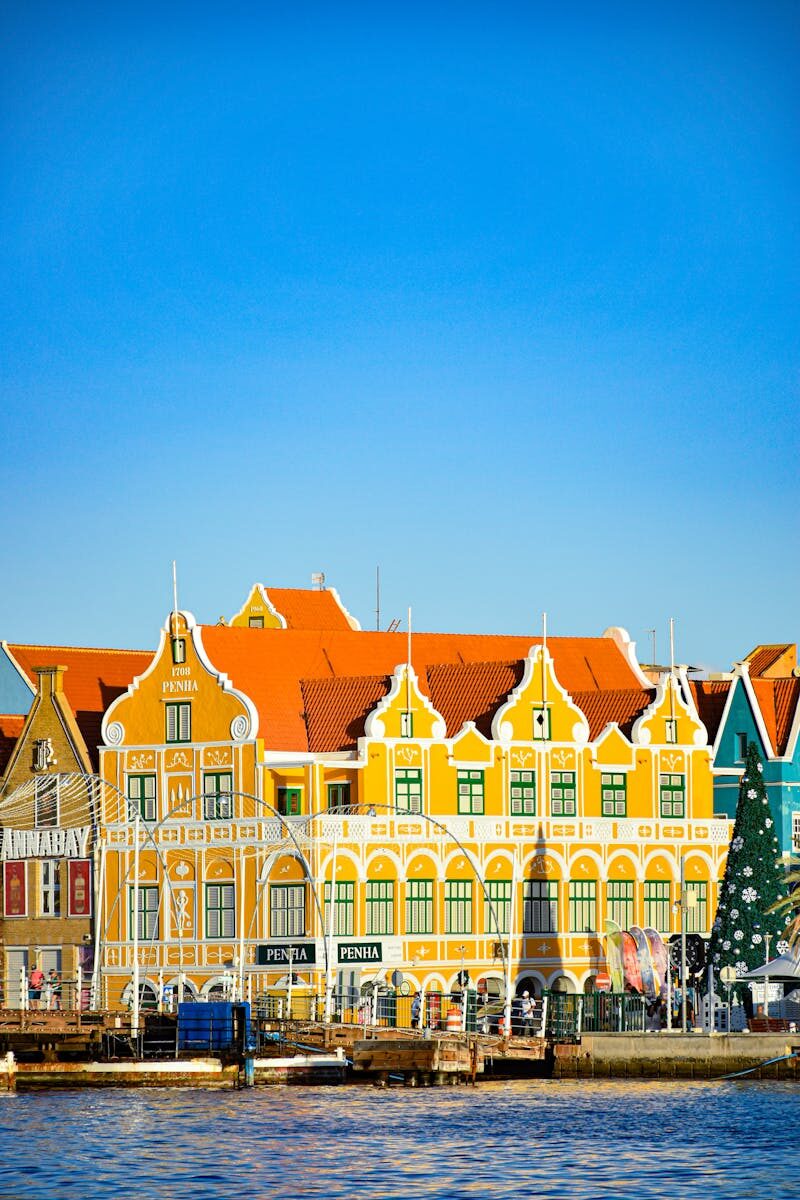
Willemstad’s historic waterfront is UNESCO World Heritage listed, and the neighborhoods clustered around it are attracting a new wave of buyers who want urban energy rather than resort calm.
Pietermaai, in particular, has completely transformed. Once underutilized, it’s now being called the “SoHo of Curaçao” — boutique hotels, gallery spaces, craft cocktail bars, and beautifully restored Dutch colonial townhouses. For buyers interested in short-term rentals targeting culturally-oriented visitors, Pietermaai is one of the island’s most interesting investment plays right now.
Santa Barbara Plantation — The Prestige Address
Santa Barbara is Curaçao’s most exclusive residential address, full stop. It sits on the pristine eastern coast along the Spanish Water, with a median home value near XCG 6 million. Properties here are architectural showpieces — infinity pools, direct water access, and finishes that justify the price tag.
This is not a value-driven buy. It is simply the finest residential real estate on the island for buyers for whom absolute quality comes first.
Spanish Water Area (Jan Sofat, Vista Royal, Brakkeput)
Taken together, the Spanish Water cluster accounts for nearly 200 active listings, making it the most inventoried zone on the island. Jan Sofat offers private waterfront and marina access. Vista Royal sits elevated with panoramic views. Brakkeput offers a relative value entry point at around XCG 4,950 per square meter for buyers who want to be near the Spanish Water lifestyle without paying Santa Barbara prices.
Emmastad, Julianadorp & Family-Friendly Inland Areas
Not every buyer is looking for a beachfront lifestyle. For those prioritizing school access, commute times, and straightforward value, these neighborhoods deliver. Emmastad in particular offers central location convenience at approximately XCG 3,048 per square meter — among the island’s best value-per-meter figures. St. Catharina runs around XCG 196,000 per bedroom, making it the most accessible entry point on the island.
New Construction Coming to Market in 2026
The development pipeline is more active right now than it’s been in several years.
Sorsaka Residences broke ground in June 2025 with delivery expected in Q4 2026. Located in Willemstad, it brings modern, purpose-built residential inventory to a market that has been primarily resale-driven.
Blue Bay Resort continues phased expansion, with new condo and villa units available for pre-construction purchase — a way for buyers to lock in current pricing before completion.
The clear message from the market is that buyers want turn-key quality. Well-maintained properties with modern kitchens, updated bathrooms, and energy-efficient systems are selling faster and at better prices than renovation projects. If you’re comparing two otherwise similar listings, the one with updated finishes will win on both speed and price.
What American Buyers Need to Know
Curaçao has been attracting growing interest from US buyers, and 2026 has accelerated that trend. Here’s why — and what you need to plan for.
The Advantages Are Real
No foreign ownership restrictions. Americans can buy any property on the island outright in their own name, with the same rights as a local citizen.
Zero capital gains tax. Sell your private residence at a profit and you pay nothing in local capital gains tax. This is a significant structural advantage over the US market where federal capital gains apply even with the primary residence exclusion.
Low annual property taxes. Curaçao’s annual property tax (OZB) runs 0.4% to 0.6% of property value. On a $500,000 property, that’s roughly $2,000 to $3,000 per year — a fraction of what you’d pay in New York, New Jersey, or California.
Fixed exchange rate, zero currency risk. The Caribbean Guilder maintains a fixed peg of 1 USD to 1.78 XCG. You’re not exposed to currency fluctuations the way you would be buying in euro or peso-denominated markets.
The US Tax Reality
This is where American buyers need to be clear-eyed.
You remain subject to US tax law regardless of where you own property. Rental income from a Curaçao property is reported on your US return — typically Schedule E. Sale gains are subject to US federal capital gains rules even though Curaçao imposes none locally. Direct real estate ownership doesn’t trigger FBAR or Form 8938 unless you hold the property through a foreign entity.
For a solid baseline understanding of the US tax framework for foreign property ownership, Investopedia’s guide to investing in international real estate is a well-regarded starting point. But always follow it up with a qualified US international tax professional before you sign anything.
How the Buying Process Works
The legal framework in Curaçao is Dutch civil law — professional, codified, and notary-secured. American buyers consistently describe the process as more structured and transparent than they expected from a Caribbean market.
Here’s how it works in practice:
Find a licensed local agent. Choose someone with proven experience working with international buyers specifically. The process has nuances that a general residential agent may not handle well.
Make a formal offer. Your agent drafts a preliminary purchase agreement (voorlopig koopcontract) outlining the agreed price, conditions, and timeline.
Hire a local attorney. Even with the notary system providing strong legal protection, a dedicated attorney representing your interests is essential for foreign buyers. They’ll verify title, check the Kadaster (Land Registry) for encumbrances, and confirm the transaction is clean.
Complete the notary transfer. Ownership transfers through a licensed notary. The transfer tax is 4% of the purchase price, paid by the buyer at closing. Add notary fees (1 to 2%) and attorney fees to arrive at your total closing cost — budget approximately 6 to 7% on top of the purchase price.
Register with the Kadaster. The notary files the registration, giving you a clear, legally documented title.
Financing as a non-resident: Local Curaçao banks do lend to foreign buyers, but expect to put down 35 to 40%. Many US buyers purchase in cash or leverage home equity from US properties. Plan your financing structure well before your search begins.
Property Types Available
The market covers more ground than first-time buyers often expect:
Villas and single-family homes dominate the island’s transaction volume. Most include private pools, covered terraces, and well-landscaped outdoor space — these are livable, well-proportioned homes, not just vacation boxes.
Apartments and condos range from compact two-bedroom units in Willemstad starting around $200,000 to full resort condominiums in Blue Bay above $600,000.
Townhouses and attached villas in gated communities offer a lower-maintenance middle ground — private outdoor space without the full upkeep burden of a detached villa.
Land and lots are available across the island for buyers who want to build custom. Coral Estate has significant undeveloped lot supply within its established gated infrastructure.
Commercial and boutique properties in Pietermaai and historic Willemstad are attracting buyers interested in hotel and guesthouse conversions — a growing niche as tourism expands.
Practical Life in Curaçao: What to Expect
Language: Dutch and Papiamentu are the official languages, but English is widely spoken in business and professional settings. Communication is generally easy for American buyers.
Healthcare: The Curaçao Medical Center, which opened in 2019, handles most medical needs competently. For complex specialty care, Miami is accessible by direct flight — an important consideration for retirees.
Schools: The International School of Curaçao follows a US-aligned curriculum, making it a practical choice for American families relocating with children.
Connectivity: Internet infrastructure is sufficient for remote work — better than most of the Caribbean region. This has made the island meaningfully more attractive to location-independent American professionals since 2020.
Hurricane risk: This one genuinely matters for property owners. Curaçao lies outside the main Caribbean hurricane belt. The last significant hurricane impact on the island was decades ago. This keeps insurance costs lower than comparable markets in the northern Caribbean and removes one of the biggest ongoing concerns for island property owners.
Residency: Buying property does not automatically grant residency rights. Long-term stays require a permit. The Investor Permit Program provides a pathway for qualifying buyers. Consult an immigration attorney if residency is part of your plan — this is a separate process from the real estate purchase itself.
6 Practical Tips Before You Buy
1. Visit more than once, in different areas. Western Curaçao (Coral Estate, Westpunt) is remote and nature-focused. The southeastern coast (Jan Thiel, Spanish Water) is more developed and social. These are genuinely different lifestyle choices and you need to experience both before committing.
2. Use independent listing aggregators alongside agent searches. Platforms that pull from 45+ realtors give you a much more complete market picture than any single agent’s portfolio.
3. Sort out your US tax situation before you start searching. Rental income, capital gains at sale, and entity structure all have US tax implications. Get clarity on these before you fall in love with a property.
4. Budget 6 to 7% for closing costs. The 4% transfer tax plus notary and attorney fees adds up. Factor this into your buying budget from the start, not after you’ve agreed to a price.
5. Get an independent property inspection. Salt air and tropical humidity accelerate wear on roofs, plumbing, and air conditioning systems. An independent inspection — not just a seller’s disclosure — is non-negotiable.
6. Have a property manager lined up before you close. If you’re not on the island full-time, you need trusted local management in place from day one. A well-run rental offsets your costs. A poorly managed one creates expensive problems from 2,500 miles away.
Is 2026 a Good Time to Buy?
The honest answer: yes — with the right expectations.
This is not a buyer’s market with soft prices and desperate sellers. It’s also not a frothy, overheated market where you’re overpaying at the top of a cycle. It’s a healthy, steady growth environment where well-priced properties are selling and values are moving upward at a measured pace.
For the lifestyle buyer — the American who wants a Caribbean home they’ll actually use, that can also generate rental income when they’re not there — 2026 is a genuinely good window. The zero capital gains tax, the fixed exchange rate, the tourism growth trajectory, and the stable legal framework all point in the right direction.
For the speculative investor looking for a quick flip, Curaçao is the wrong island. This market rewards patience and long-term thinking.
If you’ve been on the fence, the most productive next step is the simplest one: get on the island. Spend a week in different neighborhoods, talk to residents, sit on the beach at Jan Thiel and at Westpunt, and see what actually fits your life. No spreadsheet replaces that.