

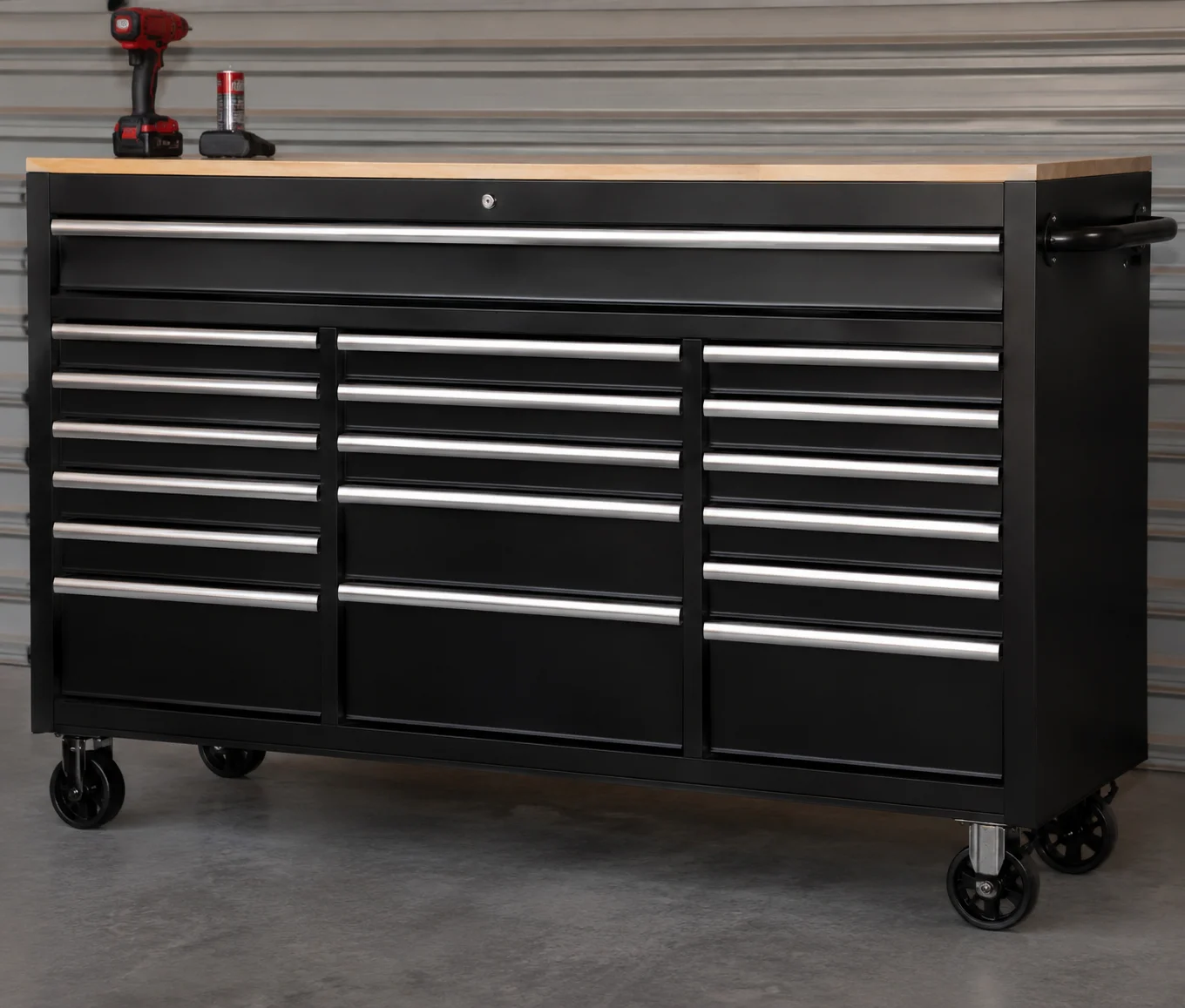
Anyone who has worked out of a cluttered garage knows the frustration. You need a 10mm socket. It’s buried somewhere in a pile of loose tools on the bench. A 17-drawer rolling tool cabinet solves that problem in a way smaller organizers just can’t match. It gives every wrench, socket, and specialty tool its own dedicated spot. And it rolls exactly where you need it.
This guide covers what makes a 17-drawer industrial gray rolling cabinet worth the investment. You’ll learn how to judge build quality before you buy, and how to organize it once it arrives. Whether you’re outfitting a home garage or a small professional shop, the same fundamentals apply. Getting them right up front saves you from buying a second cabinet a year later.
What Makes a 17-Drawer Configuration Different
Most entry-level tool chests top out around five to ten drawers. A 17-drawer cabinet sits in a different category entirely. That drawer count typically spans a full rolling base cabinet, sometimes paired with a smaller top chest. It gives you a genuine mix of shallow drawers for small parts and deeper drawers for power tools and bulkier equipment.
The variety in drawer depth matters more than the total count alone. Shallow top drawers work well for sockets, wrenches, and small hand tools, since a single layer keeps everything visible at a glance. Deeper lower drawers handle power tools, larger wrench sets, and bulk hardware instead. That kind of gear would otherwise waste space in a shallow drawer. A well-designed 17-drawer layout mixes both depths intentionally. It doesn’t just repeat the same drawer size 17 times over.
Build Quality: What to Look For
Not all steel tool cabinets are built the same, even when the drawer count looks identical on paper. A few construction details separate a cabinet that lasts decades from one that starts sagging within a year or two.
Steel gauge matters more than most buyers realize. Heavier gauge steel resists dents and drawer sag under load. This matters most in the bottom drawers, where power tools and heavy hardware tend to accumulate. Reinforced frames add real structural strength over time, and so do welded corner joints instead of bolted ones.
Drawer slides make or break the daily experience of using the cabinet. Look for ball-bearing slides rather than basic roller slides. Ball-bearing slides handle heavier loads more smoothly, and they resist binding as the cabinet ages. Many higher-end cabinets now include soft-close, no-slam slides. These gently pull the drawer shut instead of letting it bang closed. That feature protects both the slides and the tools sitting inside from repeated impact.
Weight capacity varies significantly between models. Check the per-drawer rating, not just the total cabinet capacity. A cabinet with a high overall rating can still underperform if any single drawer’s individual limit runs too low. That matters if you own heavier gear, like a full set of impact wrenches or a portable air compressor.
Locking systems protect your investment, especially in a shared shop or a garage accessible from outside the home. A central locking bar secures every drawer at once. That beats individual locks per drawer on both security and daily convenience.
Mobility and Casters
The “rolling” part of a rolling tool cabinet depends entirely on the caster quality underneath it. Cheap plastic casters wear out fast under the combined weight of a fully loaded 17-drawer cabinet. That’s especially true on uneven garage flooring or over expansion joints in a concrete slab.
Look for cabinets with heavy-duty casters, ideally a mix of locking and non-locking wheels. Locking casters keep the cabinet stationary while you work. That matters a lot once the drawers are loaded, since you don’t want the whole unit rolling away mid-task. Larger wheel diameters also roll more smoothly over garage floor imperfections than smaller, harder wheels do.
Why Gray Finish Has Become the Industrial Standard
Gray has become one of the most popular finishes for industrial and garage storage. It’s not purely an aesthetic choice, either. A gunmetal or industrial gray powder coat tends to hide fingerprints, minor scuffs, and everyday wear better than glossy black or bright red finishes do. Powder coating itself also resists chipping and corrosion better than standard paint. That matters in a garage environment, where humidity and temperature swings are common.
Beyond durability, gray simply fits more spaces without clashing. Whether your garage leans toward a clean, modern look or a more traditional workshop feel, a gray cabinet blends in. You won’t need to design around it like you would with a bold color statement.
How to Organize a 17-Drawer Tool Cabinet
Buying the cabinet is only half the job. Organizing it well is what actually saves you time every time you reach for a tool.
Start by grouping tools by category rather than by size alone. Dedicate specific drawers to sockets and ratchets. Assign another set to wrenches, and another to screwdrivers and pliers. Once you’ve grouped by category, assign the shallowest drawers to your most frequently used tools. Save deeper drawers for bulkier or less frequently used items.
Drawer liners and foam organizers make a real difference here, too. Foam cutouts shaped to specific tools keep everything in place while you roll the cabinet around. They also make it immediately obvious when a tool is missing, since an empty foam cutout stands out at a glance. That single feature alone can save significant time on a busy job site, where tools get borrowed and don’t always make it back to the right spot.
Label drawers if multiple people share the cabinet. It sounds like a small step. But in a shared shop or a garage where more than one person works, labeled drawers cut down on wasted time and misplaced tools far more than most people expect.
Placement and Safety Considerations
A fully loaded 17-drawer cabinet gets heavy fast, often several hundred pounds once every drawer is filled. Place it on a flat, level surface. Avoid positioning it on an incline, where the locking casters have to work harder to keep it stationary.
Never open more than one heavy drawer at a time, particularly on cabinets without a tip-resistant interlock system. Opening multiple loaded drawers at once shifts the cabinet’s center of gravity forward. That’s one of the most common ways rolling tool cabinets tip over in a workshop setting. According to OSHA’s general workplace safety guidance, proper storage and handling of tools reduces both injury risk and equipment damage. That principle applies just as directly to a home garage as it does to a commercial shop floor.
If you’re setting up a full garage workshop rather than just adding one storage piece, check out our complete garage workshop organization guide. It covers layout planning, workbench pairing, and wall storage options that work alongside a rolling cabinet like this one.
Comparing Rolling Cabinets to Other Storage Options
A 17-drawer rolling cabinet isn’t the right fit for every situation, so it helps to know how it stacks up against alternatives.
Wall-mounted cabinets and pegboards work well for frequently grabbed hand tools you want visible and instantly accessible. They don’t offer the same enclosed, lockable storage that a rolling cabinet provides, though. Stationary tool chests, without wheels, cost less and can offer similar drawer capacity. But they lose the flexibility of rolling the whole unit to wherever the job happens to be that day.
For most home garages and small shops, a rolling cabinet like this one strikes the best balance. You get serious drawer capacity, real mobility, and lockable security, all in a single footprint. No separate wall installation required.
Price Expectations
Pricing on 17-drawer industrial rolling cabinets varies widely based on steel gauge, slide quality, and brand reputation. Budget models start in the $400 to $600 range. These often use lighter gauge steel and basic roller slides rather than ball bearings, though. Mid-range options usually fall between $700 and $1,200. These typically feature heavier steel and ball-bearing slides. Premium professional-grade cabinets can run $1,500 or more, often backed by a limited lifetime warranty.
Spending more upfront on better slides and heavier steel usually pays off over time. A cabinet built to lower standards tends to develop sagging drawers, sticking slides, or caster failure well before a premium model shows similar wear.
Final Thoughts
A 17-drawer industrial gray rolling tool cabinet earns its price tag by solving a problem smaller organizers simply can’t handle. It gives every tool a dedicated, protected spot while staying mobile enough to follow you around the shop. Focus on steel gauge, drawer slide quality, and caster durability before you compare finish or price alone. Those three factors determine whether the cabinet holds up for years or starts failing within months. Organize it thoughtfully from day one, and it becomes one of the most genuinely useful pieces in any garage or workshop.
Frequently Asked Questions
How much weight can a 17-drawer rolling tool cabinet hold? Total weight capacity varies by model. Most mid-range and premium cabinets support several hundred pounds across all drawers combined, with individual drawer capacity typically ranging from 50 to 100-plus pounds depending on slide quality and steel gauge.
What’s the difference between roller slides and ball-bearing slides? Ball-bearing slides handle heavier loads more smoothly and resist binding over time. Basic roller slides are more prone to sticking or sagging under sustained heavy use. Ball-bearing slides are generally worth the added cost for a cabinet you plan to use daily.
Is a gray finish more durable than other colors? Gray itself isn’t inherently more durable, but the powder-coat finishes commonly used on industrial gray cabinets resist chipping and corrosion well. The color also tends to hide everyday scuffs and fingerprints better than glossy finishes.
Can I move a fully loaded 17-drawer cabinet by myself? Yes, if the cabinet has quality casters and you keep it on a flat, level surface. Avoid pushing a fully loaded cabinet up or down an incline. Use locking casters to keep it stationary once it’s positioned where you want it.
How do I keep a rolling tool cabinet from tipping over? Avoid opening multiple heavy drawers at the same time, since that shifts the cabinet’s center of gravity forward. Keep heavier items in lower drawers. Choose a cabinet with a tip-resistant interlock system if you’re storing particularly heavy tools.
Do I need a locking cabinet for a home garage? It depends on your situation, but a locking cabinet adds real value if your garage is accessible from outside the home, if kids can reach it, or if you simply want to protect an investment in expensive tools.
How many drawers do I actually need for a home garage? It depends on your tool collection. A 17-drawer cabinet suits most serious DIYers and hobbyist mechanics well. It offers enough separation to organize by category without the excess capacity that a full 20-plus drawer professional setup provides.
What’s a reasonable price range for a quality 17-drawer cabinet? Expect to pay roughly $700 to $1,200 for a solidly built mid-range option with ball-bearing slides and heavier gauge steel. Budget models start lower, around $400 to $600, but often sacrifice slide quality and steel thickness to hit that price point.