

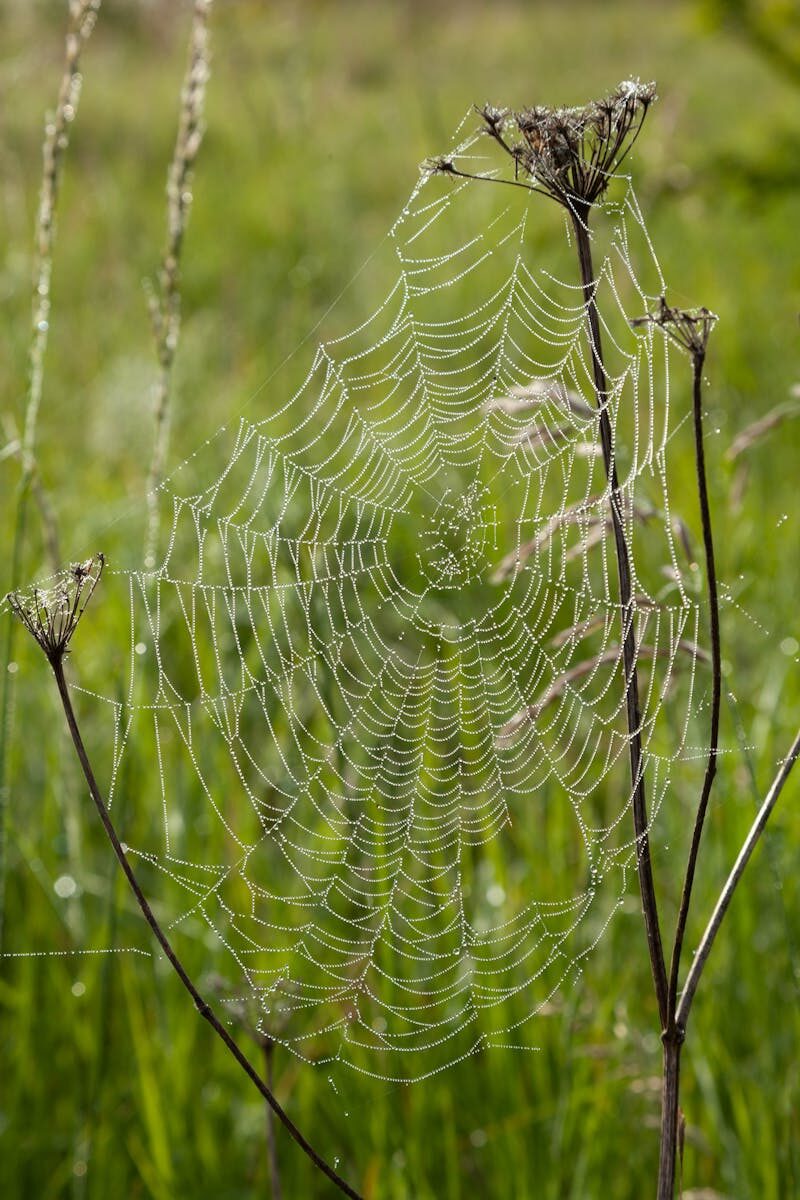
You walk outside on a cool October morning, coffee in hand, and there it is — your entire front lawn covered in what looks like a thin, silvery sheet of silk. It’s everywhere. Draped across the grass blades, pooling in the low spots, catching the early dew like hundreds of tiny hammocks. Your first instinct might be to reach for a can of pesticide. Before you do, take a breath. What you’re looking at is almost certainly grass spider webs — and understanding what’s actually going on in your lawn will save you from making a mistake that could do more harm than good.
This guide covers everything homeowners across the United States need to know about grass spider webs on lawns: what causes them, how to identify them, whether they’re actually a problem, and the most effective ways to deal with them if you decide you need to.
What Are Grass Spider Webs on Lawns?
The webs you’re seeing are built by funnel weaver spiders, most commonly from the genus Agelenopsis — the species widely known as the American grass spider. These are among the most common spiders found in residential lawns across the continental United States, from the humid Southeast to the drier climates of the Mountain West.
Grass spiders are ground-dwelling hunters. Unlike orb weavers that spin circular webs in the air to catch flying insects, grass spiders build their distinctive flat, sheet-like webs directly on — or just above — the surface of the turf. They sit at the back of a small funnel-shaped retreat hidden within the grass and wait for unsuspecting insects to stumble across the web surface and fall into their trap.
Here’s what’s important to understand from the start: grass spiders are not damaging your lawn. They’re not feeding on your grass, killing your soil biology, or causing any structural harm to your turf. What they’re doing, in fact, is hunting the insects that very often are damaging your lawn — grubs, lawn moths, chinch bugs, and other turf pests. They are predators operating in your favor.
That said, a heavy webbing event across a large lawn can look alarming, affect grass health indirectly in certain conditions, and simply be an eyesore that homeowners understandably want addressed. Both of those things can be true at the same time.
What Causes Grass Spider Webs to Appear?
If your lawn has suddenly developed a notable web problem, one or more of the following conditions are almost certainly responsible.
Cool, Moist Morning Conditions
Grass spider webs are always present in healthy lawns — you just can’t usually see them. What makes them suddenly visible is morning dew. Water droplets condense on the silk strands overnight, and in the morning light, what was previously invisible becomes dramatically obvious. This is why lawn webs seem to “appear overnight” and disappear by midday — they haven’t gone anywhere, the dew has simply evaporated.
This phenomenon is especially pronounced in fall and early spring across most U.S. climate zones, when nights are cool and mornings are damp. If you live in the Southeast, the Pacific Northwest, or anywhere that experiences significant morning fog — expect to see this regularly.
Insect Population Spikes
Grass spiders go where the food is. A significant uptick in web activity often signals an underlying insect population surge in your turf — more moths, beetles, gnats, or flies moving through the lawn. This is actually useful diagnostic information. A lawn suddenly thick with spider webs is a lawn that’s telling you something about its insect ecosystem. Before reaching for a pesticide, consider having your soil and lawn inspected for turf-damaging insect pests.
Overwatered or Thatch-Heavy Lawns
Conditions that favor grass spiders — moisture retention, dense vegetation at ground level, and reduced air circulation — are the same conditions created by overwatering and excessive thatch buildup. A lawn with more than half an inch of thatch provides exactly the kind of sheltered, humid microhabitat that grass spiders thrive in. If your webbing is particularly dense and persistent, this is a likely contributing factor worth examining.
Late Summer Through Fall
Grass spider activity peaks between late August and mid-October across most of the United States. This is mating season. Male spiders are moving actively across lawns to find females, which increases overall spider activity and web density. By the time the first hard frost arrives, populations drop significantly as adult spiders die off and eggs overwinter in the soil.
How to Identify Grass Spider Webs (vs. Other Lawn Issues)
Not everything you see in your lawn grass is a spider web. Here’s how to tell grass spider webs apart from other common lawn conditions that can look similar.
Identifying True Grass Spider Webs
Grass spider webs have a very specific appearance once you know what to look for:
- Flat, horizontal sheet structure — not the round, geometric orb webs you see on fences and bushes
- A funnel-shaped tube at one end where the spider retreats
- Finest in low depressions where dew settles and airflow is reduced
- No sticky surface — unlike fly-paper style webs, grass spider silk doesn’t grab your hand when you pass through it
- Most visible in the early morning when dew is present, fading as the day warms
Not a Spider Web: Lawn Fungal Disease
Dollar spot and gray leaf spot — two common turf diseases — can produce a whitish, cottony or web-like growth on grass blades in humid conditions. Unlike spider webs, fungal growth:
- Appears as patches of blighted, discolored grass
- Has a fuzzy or powdery texture rather than the clean silk of a web
- Remains visible throughout the day, not just in the morning dew window
- Is often accompanied by yellowing or browning of grass blades beneath it
If you’re seeing white growth that persists into the afternoon and your grass is discolored underneath, you may be dealing with a fungal issue rather than spiders. In that case, a lawn fungicide and improved air circulation are your next steps — not spider control.
Not a Spider Web: Sod Webworm Damage
Sod webworms — the larvae of lawn moths — also produce silk in the turf, but it looks and behaves very differently. Webworm silk is usually found closer to the soil surface, tangled around grass stems, and is accompanied by irregular brown patches of dying turf. Grass spider webs, by contrast, are elevated slightly above the turf surface, sheet-like, and the grass underneath is perfectly healthy.
Are Grass Spider Webs Harmful to Your Lawn?
In most circumstances: no. Grass spiders themselves cause zero direct damage to turf. However, there are a couple of indirect scenarios worth knowing about.
Matting and light reduction: In extreme cases of heavy webbing — usually only seen in lawns with very significant thatch or persistent overwatering — the silk sheets can mat down grass blades and reduce light penetration. This is rarely a primary problem but can compound other turf stresses during high-humidity stretches in summer.
Indication of underlying issues: As mentioned above, a sudden sharp increase in web density is often your lawn communicating something about its ecosystem. Spider webs themselves aren’t the problem — but the insect outbreak or cultural condition driving the spike might be.
The bottom line for most American homeowners: grass spider webs are an ecological sign of a functioning, living lawn, not a warning sign of something going wrong.
Easy and Effective Grass Spider Web Removal Tips
If you’ve decided the webs need to go — whether for aesthetic reasons, an upcoming event, or because you’re seeing the indirect matting issues mentioned above — here are the most practical removal approaches, ranked from simplest to more involved.
1. Do Nothing and Wait
Honestly, this is the right call more often than homeowners expect. Once morning dew evaporates and the day warms up, webs become invisible to the naked eye. The spiders are still there, doing their work, but you won’t see the evidence until the next cool, dewy morning. If the webs are only visible a few times a week and not causing any turf stress, leaving them alone is a completely valid strategy.
2. Run Your Irrigation System in the Morning
One of the simplest disruption methods: run your sprinkler system in the early morning before you want the lawn to look clear. The water pressure from a standard sprinkler system is more than enough to knock down grass spider webs and scatter the dewy silk. The spiders will rebuild — they always do — but if you have guests coming over, or you’re hosting a backyard event, this is a fast, chemical-free reset.
3. Mow Regularly and at the Right Height
Grass spiders thrive in tall, dense turf that gives them cover and hunting territory. Maintaining your lawn at the recommended mowing height for your grass type — typically 2.5 to 3.5 inches for most cool-season grasses like Kentucky bluegrass and tall fescue; slightly higher for warm-season varieties like Bermuda — reduces the habitat quality for funnel weavers without harming the lawn. A consistently mowed lawn will see noticeably less persistent web activity.
4. Dethatch to Reduce Habitat
If your lawn has significant thatch buildup — more than half an inch — dethatching in early fall or spring removes the dense organic layer that grass spiders use for shelter. This single lawn care step can dramatically reduce web density because it eliminates the microhabitat the spiders depend on. Dethatching also improves drainage and air circulation, which makes your turf healthier overall. It’s a win in both directions.
5. Adjust Your Watering Schedule
If you’re currently watering in the evening, shifting to early morning irrigation reduces overnight moisture retention at the turf surface. This makes the lawn less hospitable to the humid, sheltered conditions that funnel weavers prefer. Evening watering also tends to promote fungal disease — so changing your schedule is good practice regardless of the spider situation.
6. Improve Lawn Drainage
Low-lying areas of your lawn that collect moisture are prime real estate for grass spiders. If your property has drainage issues — areas that stay wet long after rain — addressing them through core aeration, top dressing with sand, or improving grading will reduce persistent web activity in those spots. This is particularly relevant for homeowners in the wetter regions of the U.S., including the Gulf Coast, Pacific Northwest, and Upper Midwest.
7. Use a Diluted Dish Soap Spray (Natural Option)
If you want a direct, non-toxic treatment, a solution of two tablespoons of plain liquid dish soap per gallon of water sprayed across affected areas disrupts spider webs and makes the surface temporarily inhospitable. This is a mild, residue-free option that won’t harm your grass, pets, or beneficial insects. It needs to be reapplied after rain, and it won’t prevent spiders from returning — but for a quick, clean result ahead of an outdoor event, it works well.
8. Avoid Broad-Spectrum Pesticides
This one deserves its own emphasis: broad-spectrum insecticides are the wrong tool for grass spider management in almost every situation. They will kill the spiders, yes — but they’ll also eliminate the beneficial insects and soil organisms your lawn depends on, disrupt the local predator-prey balance, and likely result in a worse insect pest problem within one to two seasons as natural controls are removed. Chemical intervention for cosmetic spider web removal is the classic case of creating a bigger problem to solve a smaller one.
According to the University of California Integrated Pest Management Program — one of the country’s leading resources on lawn and garden pest management — grass spiders and funnel weavers are considered beneficial arthropods and chemical control is generally unnecessary and counterproductive for residential lawns. You can explore their full guidance at UC IPM: Spiders in the Home and Landscape.
Regional Notes for U.S. Homeowners
Grass spider activity varies significantly by region, and knowing what to expect in your climate helps you plan accordingly.
Southeast (Florida, Georgia, Alabama, Louisiana): The combination of year-round warmth and high humidity means grass spider activity can persist well beyond October. Homeowners here may see webbing events as early as August and as late as December. Dethatching and drainage management are especially important in this region.
Pacific Northwest (Oregon, Washington): Morning fog and cool temperatures create near-perfect conditions for highly visible dew-covered webs. The Pacific Northwest lawn season in fall frequently delivers the most dramatic webbing displays homeowners see all year. Adjust irrigation schedules and expect peak activity from September through November.
Midwest (Illinois, Ohio, Michigan, Minnesota): Heavy dew events in late August and September are the primary driver of visible webs here. A sharp first frost typically ends the season quickly. Dethatching in early fall is especially effective in this region.
Northeast (New York, Pennsylvania, Massachusetts, New Jersey): Similar to the Midwest, but with longer coastal fog windows near the coast. Urban and suburban lawns in the Northeast often see webs concentrated in shaded areas where moisture lingers.
Southwest (Arizona, Nevada, New Mexico): Drier climates produce far less visible webbing because morning dew is limited. Grass spider activity is still present but rarely dramatic enough to raise concerns. Webbing events here tend to follow rain or irrigation cycles rather than natural dew.
When Should You Actually Be Concerned?
Most of the time, grass spider webs are a non-issue that resolves on its own. But here’s when it’s worth investigating further:
- Webs are accompanied by dead or dying turf patches — likely a fungal or insect pest issue, not the spiders themselves
- Web density has increased dramatically over a single season — investigate for an underlying insect population spike
- The webbing is underground or at soil level with matted grass — this may be sod webworm activity, not grass spiders
- You’re seeing large, three-dimensional webs on bushes and structures — these are a different spider species entirely and may warrant a separate assessment
For any lawn issue that goes beyond cosmetic web appearance, consulting a local certified lawn care professional or your state’s cooperative extension service is always worth the call. Most extension services in the U.S. offer free or low-cost lawn diagnostics.
For more helpful guidance on maintaining a healthier, pest-resilient lawn from the ground up, take a look at our complete guide on lawn aeration and dethatching: when, why, and how to do it right.
Final Thoughts
Grass spider webs on your lawn are, at their core, a sign of life — a living, functioning ecosystem doing exactly what it should. The spiders building those delicate morning webs are part of the same biological network that keeps your turf healthy by keeping pest populations in check.
That doesn’t mean you have to love the look of a dew-covered lawn draped in silk. It just means the solution is rarely as aggressive as homeowners initially assume. Adjust your mowing and watering habits, dethatch if needed, and let the season run its course. The webs will fade as temperatures drop, and your lawn will be better off for the presence of these quiet, effective hunters.
The next time you step outside on a cool October morning and see your yard sparkling with spider silk — take a second look before reaching for a spray can. What you’re looking at is your lawn working exactly the way it’s supposed to.