

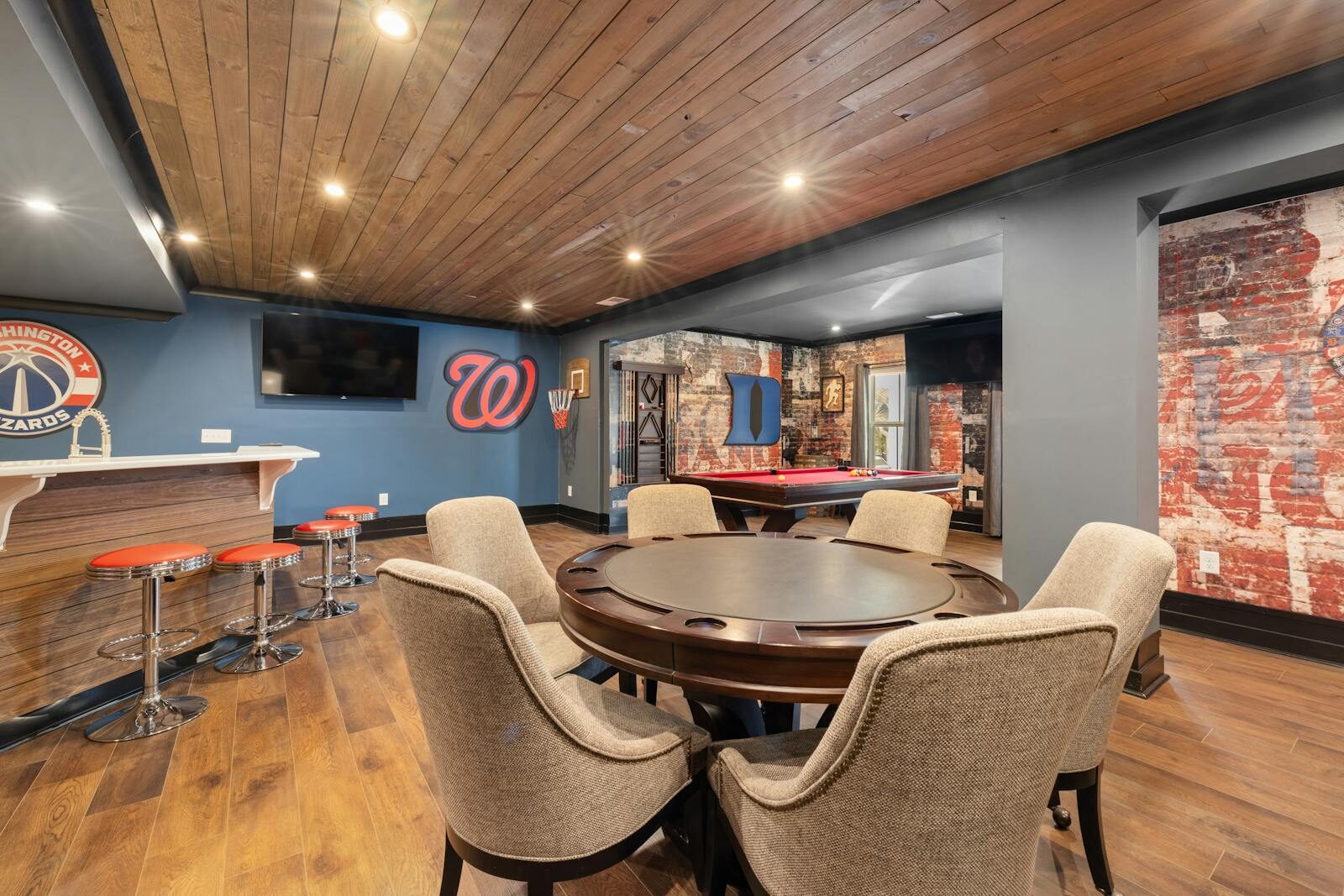
Most homeowners with a small basement do one of two things: they use it as a dumping ground for boxes they’ll never open, or they stare at it for years thinking “I really should do something with that space.” If you’re in the second camp, this guide is your starting point.
A small basement doesn’t have to feel like a limitation. In fact, some of the most impressive home transformations happen in basements under 600 square feet, where smart planning and intentional design turn an afterthought into one of the most-used rooms in the house. Whether you’re in a ranch home in the Midwest, a townhouse in the Mid-Atlantic, or a colonial in New England, the principles are the same — and the payoff is real.
Finished basements consistently rank among the top remodeling projects for return on investment. According to the 2026 Cost vs. Value Report from Remodeling Magazine, a midrange basement finishing project returns approximately 70–75 cents on every dollar spent at resale — making it one of the highest-value improvements you can make to your home.
Let’s get into the ideas that actually work.
Before You Remodel: The Non-Negotiables
Before picking paint colors or planning a home theater, there are foundational issues you absolutely must resolve first. Skipping this step is the most common — and most costly — mistake homeowners make in basement renovations.
Moisture and Water Intrusion
Water is the enemy of every basement finish. Even a small amount of seasonal moisture can destroy drywall, buckle flooring, and create dangerous mold conditions inside your walls. Before anything else, inspect your basement thoroughly during and after a rainstorm. Look for efflorescence (white mineral deposits on concrete walls), musty odors, visible staining, or wet spots on the floor.
If you find any water issues, address them before a single nail goes in. Depending on severity, solutions range from exterior grading correction and improved guttering (often under $1,000) to interior waterproofing systems with sump pumps ($3,000–$10,000) or full exterior waterproofing excavation ($10,000–$25,000+).
Ceiling Height
Most building codes across the United States require a minimum finished ceiling height of 7 feet for habitable basement space, though this varies by jurisdiction. Measure your actual ceiling height from the concrete floor to the underside of the floor joists above, then subtract for your subfloor and finished ceiling materials. If you’re working with 6’8″ or less, your design options become more limited — but not impossible, as we’ll cover below.
Permits and Code Compliance
Nearly every jurisdiction in the U.S. requires permits for finished basement work that includes electrical, framing, plumbing, or HVAC. Don’t skip them. Unpermitted basement work can complicate home sales, void homeowner’s insurance claims, and leave you on the hook for code violations. Contact your local building department early — many now offer online permit applications that speed up the process significantly.
Small Basement Remodeling Ideas That Make a Big Difference
1. Create a Dedicated Home Office
Remote and hybrid work has fundamentally changed how Americans use their homes — and the basement has emerged as the quiet, distraction-free workspace millions of people didn’t know they needed. Separating your work life from your main living area is good for productivity and for your sanity.
For a small basement office, the key is controlling light and sound. Basements naturally have limited natural light, so lean into it rather than fighting it. Warm LED lighting at multiple levels — ambient overhead, task lighting on the desk, and accent lighting behind monitors — creates a comfortable environment that doesn’t feel like a cave.
Use built-in shelving along one or two walls to maximize vertical space without eating into your floor plan. A floating desk mounted to the wall frees up floor space, looks clean, and can fold away if you occasionally need the room for something else.
Estimated Cost: $4,000–$15,000 depending on scope, built-ins, and electrical work.
2. Build a Cozy Guest Suite
A small basement can absolutely accommodate a functional guest bedroom — and in many U.S. housing markets, a conforming basement bedroom adds measurable value at resale. For a bedroom to be considered legally habitable in most states, it typically needs a minimum ceiling height of 7 feet, adequate egress (a window or door large enough to escape through in an emergency), and proper heat and ventilation.
The egress requirement is particularly important and often misunderstood. Most local codes require a basement egress window with a minimum opening area of 5.7 square feet, a minimum width of 20 inches, and a sill height no more than 44 inches from the floor. If your basement doesn’t already have compliant windows, egress window installation runs $1,000–$3,500 per window including excavation and well cover — well worth it for the livability and legal peace of mind.
Design-wise, keep guest suite finishes light and simple. Pale walls, recessed lighting, and built-in closet systems work remarkably well in compact spaces. A Murphy bed is an excellent option if the room doubles as a home office during non-guest periods.
Estimated Cost: $8,000–$25,000 including egress window if needed.
3. Design a Family Entertainment Room
The basement entertainment room never goes out of style — and in a small basement, smart layout planning can make the space feel larger than it is. The goal is to create one well-defined zone rather than trying to do everything at once.
Start with acoustics. Basements naturally absorb sound due to their concrete construction, but adding a layer of fiberglass batt insulation inside framed walls and using acoustic drywall (like QuietRock) significantly reduces sound bleed to the floors above. This matters whether you’re setting up a movie space or you just don’t want the kids’ game nights rattling the ceiling.
For small footprints, a projector and motorized screen almost always works better than a large flat-screen TV — it takes up zero floor space and allows you to scale the image to your room dimensions. A 100-inch projected image in a 14×18 foot room feels completely immersive.
Built-in bench seating along a side wall with storage underneath is a high-value detail in small entertainment rooms: it provides seating, adds storage, and visually defines the space without using freestanding furniture that crowds a compact layout.
Estimated Cost: $6,000–$20,000 depending on AV equipment, seating, and finish level.
4. Add a Basement Wet Bar or Beverage Station
You don’t need a large footprint to add a functional wet bar — one of the most popular and return-positive features in a finished basement. Even a 6-foot-wide bar tucked into a corner can include a bar sink, under-counter refrigerator, wine rack, glassware storage, and a prep area.
From a plumbing standpoint, proximity to existing supply and drain lines dramatically affects cost. If your basement already has a bathroom or laundry rough-in nearby, running new plumbing for a wet bar is relatively affordable. Starting from scratch in a remote corner of the basement can add $2,000–$5,000 to the plumbing costs alone.
Stylistically, a basement bar is one of the few spaces where bold design choices — dark cabinetry, matte black fixtures, pendant lighting, a tile backsplash — look intentional and elevated rather than overwhelming. Don’t be afraid of character here.
Estimated Cost: $3,500–$12,000 depending on plumbing complexity and finishes.
5. Build a Kids’ Playroom or Teen Hangout
Basements are made for kids. Giving children their own dedicated space in the basement is one of the most practical remodeling decisions a family can make — it contains the noise, the mess, and the clutter in a way that genuinely improves the quality of life upstairs.
For younger children, focus on durable, cleanable surfaces. Luxury vinyl plank flooring is the gold standard for basement playrooms: it’s waterproof, warm underfoot, comfortable to play on, and available in every imaginable finish. Avoid carpet in basements used by young children — spills and moisture create long-term problems.
For teenagers, a dedicated hangout space with a gaming setup, comfortable seating, a small snack bar, and good Wi-Fi is the kind of investment that keeps teens at home and keeps you connected to their social lives. A separate exterior entrance — if your lot and code allow it — adds significant flexibility.
Add built-in cubbies, open shelving, and a chalkboard or whiteboard wall to bring out the fun while maintaining some organizational sanity.
Estimated Cost: $5,000–$14,000.
6. Convert It Into a Home Gym
Home gym construction accelerated dramatically during the early 2020s and hasn’t slowed down. A basement is genuinely one of the best places in a home for a gym: the concrete slab handles heavy equipment without structural concern, the lower level reduces impact noise transmission to living areas, and the cooler temperature is actually desirable during workouts.
For small basements, the key is choosing equipment intentionally. You don’t need a rack of dumbbells, three treadmills, and a cable machine. A power rack with a pull-up bar, a set of adjustable dumbbells, a flat bench, and a quality mat covers the majority of fitness needs in roughly 150–200 square feet.
Rubber flooring tiles (3/4-inch thickness minimum) protect your concrete slab, reduce noise, and make the space feel purposeful. Install a wall-mounted mirror along one wall — it makes a small gym feel significantly larger while serving its functional purpose. If ceiling height allows, a wall-mounted TV with a streaming stick keeps motivation high without requiring a dedicated surface.
Estimated Cost: $3,000–$10,000 (not including equipment).
7. Low-Ceiling Basements: Design Strategies That Work
If your basement ceiling clears 6’6″ to 7′, don’t give up on it. With the right design approach, low-ceiling basements can be finished beautifully.
The single most effective technique is painting the ceiling black or a very dark color and leaving the mechanicals (pipes, joists, ductwork) exposed. This is called an “industrial open ceiling” approach, and it’s enormously popular in contemporary basement design. Rather than fighting the low ceiling with a dropped ceiling that makes it feel even more cramped, you visually recede it — the eye reads darkness as depth, and the space feels deliberately designed rather than constrained.
Keep walls and floors light to balance the dark ceiling. Use recessed lighting flush with the joists to maintain maximum headroom. Avoid tall furniture — keep shelving, sofas, and cabinetry lower-profile.
This approach is also cost-effective: you’re not drywalling and painting a ceiling, which saves $2,000–$5,000 on a typical small basement.
How to Budget Your Small Basement Remodel
One of the most common questions homeowners ask is how much a small basement remodel actually costs. The honest answer depends on scope, finishes, and whether you have moisture or structural issues to address. Here is a realistic breakdown by project level:
Basic Finish (drywall, flooring, paint, lighting): $15,000–$30,000
Mid-Range Remodel (one defined use, added electrical, modest finishes): $30,000–$55,000
Premium Renovation (multiple zones, wet bar, bathroom, high-end finishes): $55,000–$100,000+
Labor costs vary significantly by region. In major metropolitan areas like New York, Boston, Chicago, and Los Angeles, expect labor rates 25–40% above the national average. In the South, Midwest, and Mountain West, costs are generally more moderate.
One practical tip: get at least three bids from licensed contractors, and make sure each bid covers the same scope of work in writing. Apples-to-apples comparisons are only possible when everyone is quoting the same job.
Choosing the Right Contractor for Your Basement
Not all general contractors have deep basement finishing experience, and the basement environment — moisture management, egress compliance, structural beam work, low-ceiling framing — is specific enough that experience genuinely matters.
When vetting contractors, ask directly how many basement finishing projects they’ve completed in the last two years, and ask to see photos. Check their license status with your state contractor licensing board, verify they carry general liability and workers’ compensation insurance, and read reviews on both Google and the Better Business Bureau. A reputable contractor will have no hesitation providing references from past basement clients.
For a deeper look at what to expect during a full basement renovation project — from demo day through final inspection — read our complete guide to hiring a basement contractor, which covers red flags, contract essentials, and how to manage your project timeline from start to finish.
Regional Considerations for U.S. Homeowners
Basement construction and finishing in the United States isn’t one-size-fits-all. Your region matters.
Northern States (Minnesota, Michigan, Illinois, New York, etc.): Frost lines run deep, which typically means deeper foundations and taller basement walls — often 8 to 9 feet. These basements offer the best ceiling height for finishing and are extremely common in older housing stock. Insulation against exterior walls is critical to manage cold and condensation.
Mid-Atlantic and Southeast: Basements are common but often built on slabs or crawl spaces. Where basements exist (particularly in hillside or older construction), humidity management is the top concern. A whole-house dehumidifier integrated into the HVAC system is not a luxury here — it’s a requirement.
Midwest (Ohio, Indiana, Kansas, Missouri): Large basement footprints are common in ranch-style homes, often covering the entire first-floor footprint. These spaces are well-suited to multi-use layouts and offer excellent value-per-square-foot for finishing.
West Coast (California, Oregon, Washington): Basements are relatively rare due to mild climates and construction traditions, but where they exist, seismic considerations affect framing and attachment details. Always verify local code requirements with your building department.
Final Thoughts: Stop Wasting That Square Footage
A small basement isn’t a problem — it’s a project. Every square foot below grade that sits unfinished represents living space you’ve already paid for and aren’t using. With a clear plan, the right contractor, and realistic expectations about cost and timeline, even the most modest basement can become one of the most valuable and enjoyable rooms in your home.
The U.S. Department of Housing and Urban Development recognizes finished basement space as contributing to a home’s livable square footage when it meets applicable code standards — a fact worth understanding both for appraisal purposes and for your own long-term home equity strategy. You can review the current HUD guidelines for habitable space at hud.gov.
Start small if you need to. Waterproof first. Permit everything. And build the space your family actually needs — not the one you think you should have.
[…] most of that investment — is worth your time. If the renovation extends beyond the kitchen, our basement remodeling guide covers a similarly scoped project worth planning alongside […]