

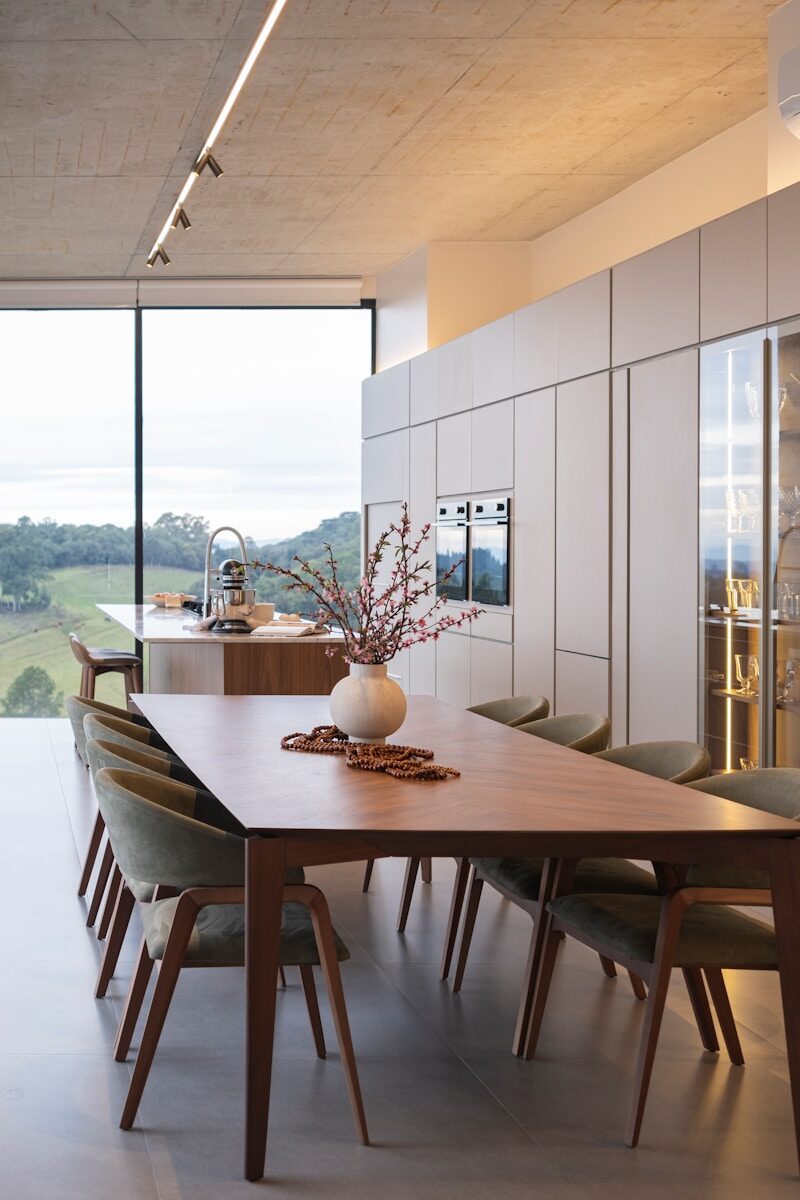
Introduction: The Dining Room Deserves More Attention Than It Gets
Walk into almost any home in the United States — whether it’s a brownstone in Brooklyn, a craftsman in Seattle, or a Mediterranean-style villa in Scottsdale — and you’ll likely find that the dining room has been treated as an afterthought. A table, some chairs, a chandelier that came with the house. Done.
But for homeowners who want their spaces to reflect the life they’ve built, the dining room represents one of the most powerful rooms in the house. It’s where family gathers on Thanksgiving, where deals are sealed over dinner, where anniversaries are celebrated, and where late-night conversations stretch into the early hours.
Creating a luxury modern dining room doesn’t require a seven-figure renovation budget. What it does require is a thoughtful approach to design principles — the same ones that top interior designers use on projects from the Upper East Side to Beverly Hills. This guide walks you through every layer of that process, from the floor beneath your feet to the ceiling above your head.
What “Luxury Modern” Actually Means in 2026
Before diving into specific recommendations, it’s worth clarifying what “luxury modern” means today, because the definition has evolved significantly.
In the mid-2010s, luxury modern interiors were defined by stark minimalism — all-white walls, statement furniture, and carefully curated emptiness. By 2026, the definition has shifted. Homeowners and designers across the country have embraced what many are calling “warm luxury” or “lived-in elegance.” It’s the marriage of high-end materials and craftsmanship with spaces that feel genuinely comfortable and personal, not sterile.
Luxury modern today means rich textures, architectural restraint, considered material contrasts, and lighting that transforms a room from day to evening. It means quality over quantity, and intentionality over impulse. If you keep those principles in mind throughout this guide, every decision will be easier to make.
1. Start With the Architecture: Get the Bones Right
The most elegant dining rooms in America have one thing in common before a single piece of furniture is selected: they have strong architectural bones. This is where the construction and remodeling conversation begins.
Ceiling Height and Proportion
If you’re building new or renovating, prioritize ceiling height. A dining room with ceilings under nine feet will always feel compressed, regardless of how beautiful the furniture is. The sweet spot for a luxury modern dining room is between ten and twelve feet. Coffered ceilings, tray ceilings, or exposed structural beams add depth and visual interest without requiring excessive square footage.
In many older American homes — think 1970s and 1980s ranch-style construction — low ceilings are a common constraint. If a full ceiling raise isn’t structurally feasible, a single deep recessed coffer centered over the dining table can create the illusion of greater height while housing your primary light fixture beautifully.
Wall Architecture
Bare drywall is the enemy of elegance. Consider adding architectural detail to at least one wall — ideally the wall your dining table faces when you’re seated. Options include:
Wainscoting or board-and-batten paneling painted in a deep, rich tone adds immediate gravitas. A full-height built-in sideboard or buffet integrated into the wall structure serves both aesthetic and functional purposes. An arched niche centered on a wall, backlit with a warm LED strip, creates a stunning focal point.
These aren’t expensive interventions when done during new construction or a renovation. They’re expensive to add retroactively, which is why planning upfront matters so much.
Flooring as the Foundation
Nothing communicates luxury faster than exceptional flooring. For a modern dining room, wide-plank hardwood floors in a natural or lightly stained finish are the gold standard. Look for planks at least five inches wide — preferably seven to ten inches — in species like white oak, American walnut, or hickory. Engineered hardwood is a practical choice in climates with significant humidity variation, which applies to most of the South and Midwest.
If you’re open to stone, large-format porcelain tiles — 24×24 or 32×32 — in a polished or honed finish can be stunning and are increasingly popular in high-end renovations across the Southwest and Florida.
2. Choose a Color Palette That Commands Respect
Color is arguably the most powerful tool in your design arsenal, and it’s also the most frequently misused.
A luxury modern dining room typically anchors itself in a deep, sophisticated primary color or a warm neutral, rather than the safe greige-and-white palette that became ubiquitous in the 2010s. In 2026, the most sought-after palettes include deep forest greens, charcoal blues, warm terracottas, and complex off-whites with strong undertones.
The Power of Dark Walls
Don’t be afraid to go dark. A dining room painted in a deep navy, hunter green, or even near-black like Farrow & Ball’s “Railings” or Benjamin Moore’s “Black Ink” creates an intimate, jewel-box atmosphere that photographs beautifully and feels extraordinary in person. Dark walls also have the effect of making your lighting — both natural and artificial — appear far more dramatic.
This approach has become particularly popular in older homes across New England and the Pacific Northwest, where architectural character pairs beautifully with moody, saturated interiors.
Contrast Is Your Friend
Whatever your primary wall color, introduce contrast thoughtfully. White or cream trim against a dark wall is classic. Brass or unlacquered bronze hardware on dark cabinetry is timeless. A light stone table against dark upholstered chairs creates visual tension that keeps the room interesting.
Avoid the trap of too much contrast — the goal is a composed palette of three to four tones that relate to one another, not a room that feels busy or indecisive.
3. Invest in the Table: It Is the Room
The dining table isn’t just furniture — in a dining room, it is the room. Every other design decision radiates outward from it. This is the one piece you should be willing to invest in seriously.
Scale and Proportion
Scale your table to the room, not to your guest list. A common mistake is purchasing a table that seats eight in a room that only comfortably holds a table for six. The result is a cramped, awkward space where chairs can’t pull out properly. As a rule, you should have at least 36 inches of clearance between the edge of the table and the wall or any adjacent furniture.
For a room that’s roughly 14 by 16 feet — a common dining room size in American single-family homes — a 78 to 84-inch rectangular table or a 60-inch round table is typically the right scale.
Materials That Signal Quality
In a luxury modern dining room, your table material choices communicate quality immediately. The options worth considering include:
Solid American walnut with a simple waterfall or live-edge detail is warm, durable, and deeply personal. Marble-top tables — particularly in Calacatta, Statuario, or Pietra Gray — have returned strongly and pair beautifully with metal bases. White oak with a brushed or cerused finish has become a signature look of contemporary American luxury interiors. Poured concrete with an integral color can be extraordinary when the rest of the room is sophisticated enough to support it.
Whatever material you choose, prioritize craftsmanship. A beautifully made table in a modest material always looks more expensive than a poorly made table in a premium one.
4. Select Chairs That Balance Comfort and Style
Dining chairs are a test of discipline. It’s tempting to choose chairs based on appearance alone, but in a dining room you actually use, comfort cannot be sacrificed.
Upholstered vs. Hardwood Seating
For a luxury modern dining room, fully upholstered dining chairs or chairs with upholstered seats and backs are the standard. They soften the room acoustically, add textural richness, and are simply more comfortable for long dinners.
Choose performance fabrics for practicality — velvets, bouclés, and textured weaves in performance grades are widely available in 2026 and handle spills and daily use far better than their appearance suggests.
Consider mixing your chair styles: fully upholstered side chairs paired with two host chairs in a contrasting finish or silhouette is a classic move that adds visual interest without introducing chaos.
Don’t Neglect the Chair Height
Always verify chair height against your table before purchasing. A standard dining table sits at 30 inches, and you need a chair with a seat height between 17 and 19 inches for comfortable legroom. This seems basic, but it’s a surprisingly common oversight, especially when ordering chairs online.
5. Lighting Is Non-Negotiable
If there is one element that separates a genuinely luxury dining room from a merely nice one, it is almost always lighting. Good lighting is transformative. Poor lighting is unfixable with even the finest furniture.
The Central Chandelier
Your chandelier should be sized correctly relative to the table. A general rule: the diameter of your chandelier in inches should be roughly equal to the length plus width of your room in feet. So a 12 by 14-foot room calls for approximately a 26-inch chandelier. The bottom of the fixture should hang 30 to 36 inches above the tabletop.
In 2026, the most compelling chandelier styles for luxury modern interiors include sculptural plaster fixtures, geometric metal forms in blackened steel or unlacquered brass, and organic blown-glass designs. Avoid fixtures that look too ornate or busy — simplicity at scale always reads as more expensive.
Layer Your Lighting
A chandelier alone is not sufficient. A fully considered luxury dining room uses at least three layers of light:
The chandelier or pendant provides ambient light and sets the visual tone. Recessed fixtures on a separate dimmer circuit provide supplemental ambient light when the chandelier alone isn’t enough. Wall sconces flanking a focal point — a built-in buffet, a piece of art, an arched niche — add depth and architectural warmth.
All circuits should be on dimmers. The ability to modulate your lighting from bright and energetic to intimate and warm is one of the hallmarks of a truly sophisticated space.
For more guidance on layering lighting in a construction context, visit our Interior Architecture Guide for New Builds, which covers pre-wire planning, junction box placement, and fixture specification.
6. Window Treatments and Natural Light
Natural light is a luxury in itself, and how you frame it matters enormously.
For a modern dining room, avoid heavy draperies that compete with your architecture. Instead, consider floor-to-ceiling linen or silk draperies in a tone-on-tone color that softens without obscuring. Mounting curtain rods at or near the ceiling line — regardless of where the actual window frame sits — makes ceilings appear taller and the room feel larger.
If privacy is less of a concern, woven wood shades offer texture and warmth while maintaining a contemporary sensibility. In homes with southern or western exposure, solar shades that filter UV without blocking the view are practical and attractive.
7. Art, Mirrors, and Focal Points
Every luxury dining room needs at least one piece that stops people in their tracks. This doesn’t mean spending a fortune on fine art — though original work absolutely elevates a space. It means being intentional about your focal point.
A large-scale original oil painting or framed print above a sideboard or credenza is the most traditional approach, and it works because it works. Size matters here: a piece that’s too small will look lost. Aim for artwork that’s roughly two-thirds the width of the furniture beneath it.
A large, frameless mirror or an antiqued mirror in a simple frame can double the perceived size of a dining room. This technique is used widely by designers in urban apartments and smaller dining spaces across cities like Chicago, Washington D.C., and San Francisco.
8. Finishing Touches That Separate Good from Extraordinary
The final layer of a luxury modern dining room is where your personality enters the space. These finishing touches are where the room becomes yours.
Textiles on the Table
A well-set table, even when not in active use, contributes enormously to the atmosphere of a dining room. Consider a table runner in a natural linen or textured cotton. A low centerpiece — a cluster of candles in varying heights, a simple bowl of dried botanicals, a sculptural ceramic piece — adds life without creating visual noise.
Hardware and Fixtures
Consistent metal finishes throughout the room signal sophistication. Mixing too many metal tones — gold, silver, chrome, and brass all in one room — creates a visually chaotic effect. Choose one or two metals that complement each other and commit to them across your lighting, hardware, and accessories.
Plants and Organic Elements
Nothing softens the hard edges of a modern dining room like organic elements. A single large-leaf plant in a sculptural planter — a fiddle-leaf fig, a monstera, or a majestic palm in a warm climate — introduces scale, texture, and life. Avoid cluttering the room with multiple small plants, which read as busy rather than luxurious.
What American Homeowners Are Prioritizing in 2026
Across high-end construction and renovation projects in the United States, several consistent trends are emerging in luxury dining room design this year. According to the American Society of Interior Designers (ASID), clients are increasingly prioritizing rooms that are deeply personal and functional, moving away from spaces designed primarily for visual impact and toward rooms that reflect genuine daily living.
The emphasis on materiality — real stone, solid wood, hand-applied finishes — continues to accelerate as homeowners react against the era of fast furniture and disposable interiors. There’s also a growing focus on acoustic comfort: the introduction of upholstered surfaces, area rugs, and ceiling treatments that reduce echo and create a warm, intimate dining experience.
Sustainability is another driving factor. Many American homeowners are specifying domestic hardwoods, locally sourced stone, and non-toxic finishes as standard requirements rather than premium upgrades.
A Note on Budget and Priorities
True luxury doesn’t require spending at every tier. If you’re working within a realistic renovation or construction budget, allocate your investment in this priority order:
The flooring and architectural details come first — these are the hardest to change later and have the most lasting impact. Lighting comes second, because it affects everything else. The dining table comes third. Everything else — chairs, art, textiles, accessories — can be built up over time.
It’s far more effective to have three exceptional things in a room than twelve mediocre ones.
Final Thoughts
Creating a luxury modern dining room that genuinely feels elegant is ultimately an act of patience and intention. It’s about understanding that every decision — from the plank width of your flooring to the hang height of your chandelier — either contributes to or detracts from the experience of the room as a whole.
The homes across America that have dining rooms people remember are almost never the ones with the largest budgets. They’re the ones where someone cared enough to get the details right, to invest where it mattered, and to create a space that invites people to sit down, slow down, and stay a little longer.