

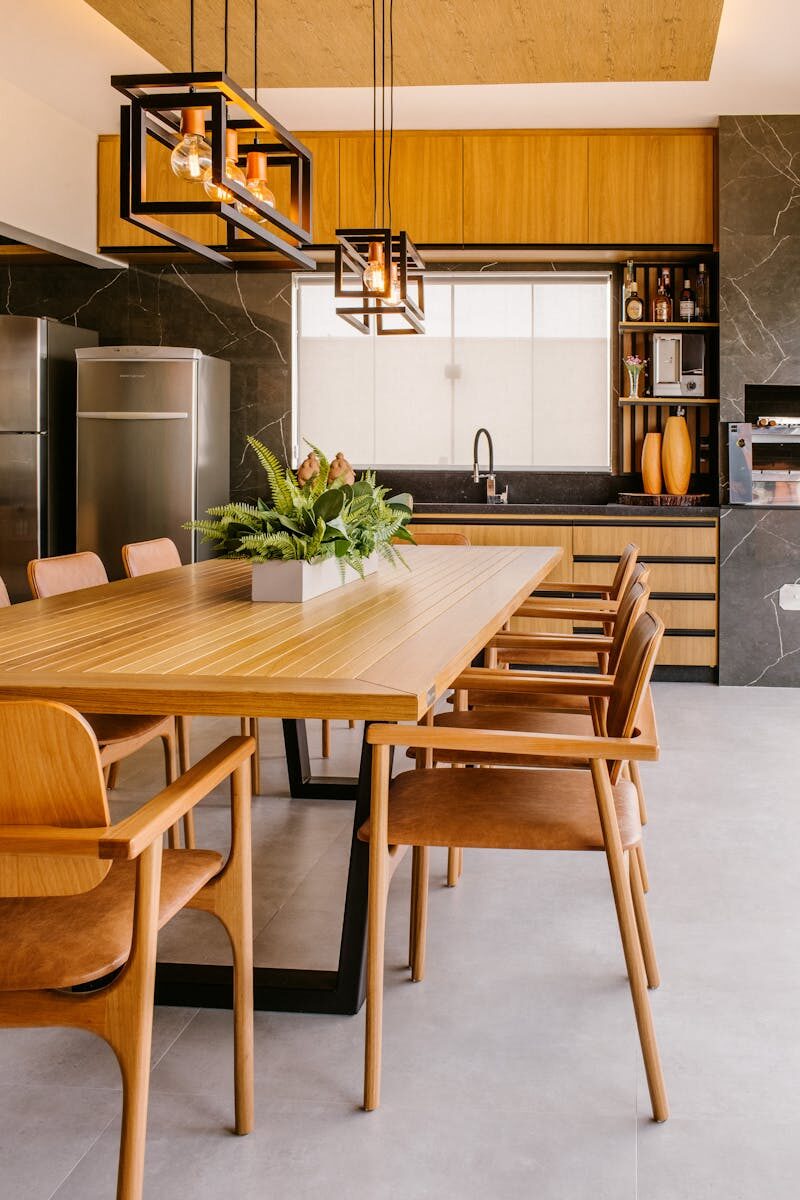
The kitchen table is where it all happens. Homework. Holidays. Saturday morning pancakes. Arguments that resolve themselves by dinner. In an American family home, the dining room isn’t a formal showpiece — it’s the most-used room in the house, and the chairs around that table take more daily punishment than almost any other piece of furniture you own.
That’s exactly why solid wood kitchen chairs remain the gold standard for family dining rooms. Not veneer. Not engineered wood. Genuine, solid wood — the kind that gets stronger with age, survives the chaos of real family life, and looks better with a few honest scars than it did on the showroom floor.
This guide will walk you through everything you need to know to make a smart buying decision in 2026: which wood species hold up best, what joinery tells you about a chair’s real quality, which styles work in today’s family homes, and how to avoid the common mistakes that leave buyers disappointed six months after delivery.
Why Solid Wood Still Outperforms Everything Else
Walk into any furniture store in America right now and you’ll be surrounded by alternatives — upholstered dining chairs with plywood frames, metal-and-wood hybrids, injection-molded polymer seats dressed up to look like wood. Many of them are attractive. And most of them will be wobbling, cracking, or headed to the curb within five to eight years under real family use.
Solid wood chairs, when properly constructed, are engineered by nature for longevity. Here’s why they consistently outperform alternatives in family dining environments:
Structural Integrity Over Time. A well-jointed solid wood chair flexes slightly under load and returns to its original position — a behavior called “elastic deformation.” Engineered wood products and MDF, by contrast, are rigid until they fail, at which point they crack or delaminate without warning.
Repairability. Solid wood can be re-glued, re-doweled, re-finished, and even structurally rebuilt. A loose joint in a solid wood chair is a ten-minute repair. The same failure in a veneer or MDF chair usually means the piece is done.
Refinishing and Longevity. Solid wood chairs can be sanded and refinished multiple times over their life. A scratched or faded solid wood chair can look completely new again; a scratched veneer chair cannot.
Resale and Heirloom Value. Quality solid wood furniture holds resale value and, in many cases, appreciates.
According to the American Home Furnishings Alliance, solid wood furniture accounts for only about 23% of total dining furniture sold in the U.S. — but it represents over 60% of dining furniture still in use after 15 years. The numbers tell the story.
The Best Wood Species for Kitchen Chairs
Not all solid wood is equal. The species matters enormously for durability, especially in chairs — which are subjected to constant movement, torquing force, and impact in a way that tables and case goods simply aren’t.
Oak — The American Standard
Red oak and white oak are the most widely used woods in American dining furniture, and for good reason. Both species rank between 1,200 and 1,360 on the Janka hardness scale (the industry standard for measuring wood’s resistance to denting and wear), making them harder than walnut, cherry, and most pine species. White oak has slightly tighter grain and higher resistance to moisture, which gives it a modest edge in kitchen environments where humidity fluctuates.
Oak takes stain beautifully across a wide range of tones — from natural blonde to deep espresso — and its prominent grain pattern adds visual warmth that works in both traditional and transitional dining room styles. For families who want proven durability at a reasonable price point, oak is the practical choice.
Best for: Traditional, farmhouse, transitional, and craftsman dining rooms. Budget-conscious buyers who don’t want to compromise on durability.
Hard Maple — Exceptional Durability, Clean Look
Hard maple (sugar maple) is one of the toughest domestic hardwoods available, ranking around 1,450 on the Janka scale.
Maple has a fine, even grain that gives it a clean, contemporary appearance. It doesn’t absorb stain as readily as oak, so it’s most often finished in lighter natural tones or painted finishes. If you’re designing a white or off-white kitchen with a fresh, modern farmhouse aesthetic, painted maple chairs offer both the look you want and the structural performance to back it up.
Best for: Contemporary, Scandinavian, and modern farmhouse dining rooms. Painted chair applications.
Walnut — Premium Choice with Understated Elegance
American black walnut is the prestige pick in solid wood dining furniture. Its Janka hardness rating of approximately 1,010 places it slightly softer than oak, but walnut’s density, stability, and tight interlocked grain make it highly resistant to racking and structural failure in chair construction.
What walnut offers above all is beauty. Its deep chocolate tones with purple-grey undertones are unlike any other domestic wood species, and it ages to a rich patina that other species simply can’t replicate. Walnut chairs command a premium — expect to pay 30–60% more than comparable oak pieces — but the aesthetic payoff is significant in the right dining room.
Best for: Mid-century modern, contemporary, and transitional dining rooms. Design-forward buyers willing to invest in a premium material.
Cherry — Warmth That Improves With Age
American cherry is a medium-density hardwood (Janka rating around 950) with one of the most remarkable aging processes of any domestic wood species. Fresh cherry has a light pinkish-tan tone that deepens dramatically with light exposure, shifting to a rich reddish-brown over years of use. A set of cherry chairs that looks good when it arrives will look extraordinary a decade later.
Cherry is somewhat softer than oak and maple, which means it will accumulate small dents and scratches more readily in a high-traffic family environment. The trade-off is beauty, workability, and a finish quality that’s hard to match.
Best for: Traditional, colonial revival, and formal-casual dining rooms. Buyers with older children who want a more refined aesthetic.
Hickory — The Toughest Domestic Option
If you have a particularly active household — young children, large family gatherings, heavy daily use — hickory is worth serious consideration. At 1,820 on the Janka scale, hickory is the hardest commonly available domestic hardwood, significantly tougher than oak, maple, or walnut. Its distinctive grain pattern, which combines light sapwood and darker heartwood in dramatic contrast, is equally distinctive.
Hickory’s toughness does make it harder to work with, which is reflected in a somewhat limited selection compared to oak or walnut. But for buyers who prioritize structural resilience above everything else, it’s an outstanding choice.
Best for: Rustic, lodge, and casual country dining rooms. Families with young children or high-traffic dining environments.
What Chair Joinery Reveals About Real Quality
Wood species is only half the equation. The other half is how the chair is put together — and this is where most consumers get misled, because joinery is largely invisible once a chair is finished.
Here’s what separates a chair built to last 30 years from one that will wobble in three:
Mortise-and-Tenon Joints
The mortise-and-tenon is the gold standard of chair joinery. A precisely cut rectangular tenon (tongue) fits into a corresponding mortise (pocket), creating a mechanical connection with significant surface area for gluing. Chairs with properly fitted mortise-and-tenon joints at the leg-to-rail and back-to-seat connections can withstand thousands of pounds of racking force over their lifetime. Look for this joinery in any chair described as “hand-crafted,” “artisan-built,” or made by American or European furniture workshops.
Dowel Joinery
Round wood dowels driven into aligned holes in both joining pieces are a step down from mortise-and-tenon but still structurally sound when executed with precision. Modern CNC-machined dowel joints in quality furniture are accurate enough to provide reliable long-term performance.
Corner Blocks
Look on the underside of any dining chair you’re considering buying. Quality chairs will have triangular wooden corner blocks glued and screwed into the interior corners where the seat rails meet the legs. These blocks prevent racking — the side-to-side flex that eventually loosens every joint in a chair under normal use. Their absence is a reliable indicator of production shortcuts.
What to Avoid: Staples and Cam Locks
Flat-pack dining chairs assembled with cam locks and wooden dowels secured by metal staples are engineered for low cost, not longevity. They may look identical to solidly built chairs on the showroom floor and feel stable when new. Under family use, they typically show looseness within 18 months.
Styles That Work in American Family Dining Rooms
Shaker
Clean lines, tapered legs, and a ladder back with horizontal slats — the Shaker style is the most versatile and enduring design in American furniture history. It works in farmhouse kitchens, colonial dining rooms, contemporary open-plan spaces, and everything in between. Shaker chairs in white oak or painted maple are a near-universal choice for American families who want timeless over trendy.
The angled, splayed leg geometry distributes weight more efficiently than vertical legs, and the continuous grain of a carved solid seat (as opposed to a flat plank) creates a structural integrity that’s genuinely hard to beat. American-made Windsor chairs from workshop producers in New England and the Mid-Atlantic represent some of the best value in solid wood dining seating.
Windsor
Farmhouse / Turned Leg
Thick turned legs, a plank seat, and a simple cross-back or vertical slat back — the farmhouse dining chair is the style most American families associate with “the kitchen table.” It’s unpretentious, durable, and pairs naturally with both rustic and transitional dining room aesthetics. Widely available in oak, pine, and poplar at a range of price points.
Mid-Century Modern
Tapered legs angled slightly outward, a lower back, and clean geometric forms define the mid-century modern dining chair. In solid walnut or teak, these chairs occupy a design space that’s simultaneously retro and completely contemporary. They tend to sit slightly lower than traditional dining chairs, which works well with modern tables in the 29–30 inch height range.
Upholstered Seat, Wood Frame
Many families choose a compromise: a solid wood frame with an upholstered slip seat. This gives you the structural permanence of solid wood construction with the comfort of a padded seat. Performance fabric (Crypton, Sunbrella, or similar) on the seat cushion makes this configuration genuinely practical for family use — most performance fabrics clean with soap and water and resist staining far better than traditional upholstery.
Weight Capacity: A Detail Most Buyers Overlook
Standard dining chairs are typically rated for 250–275 lbs. For modern American families, this is often insufficient. A significant share of the adult population exceeds this limit, and chairs at or near their rated capacity fail faster and less predictably than chairs used well within their design load.
When shopping for family dining chairs, look specifically for chairs with a stated weight capacity of 300–350 lbs or higher. Solid wood chairs from American manufacturers and mid-to-upper tier furniture brands typically meet or exceed this threshold. Budget import chairs, even those labeled “solid wood,” frequently do not.
What to Expect to Pay in 2026
Solid wood dining chair pricing in the U.S. spans a wide range, and understanding what you’re getting at each tier helps set realistic expectations.
Entry-Level ($80–$150 per chair): Typically solid pine or rubberwood (a sustainable plantation hardwood commonly used in budget furniture). Finish quality is adequate. These chairs perform reasonably well for lighter use and smaller households but show wear faster under heavy daily use.
Mid-Range ($150–$350 per chair): Oak, maple, or cherry chairs from established American or North American furniture brands. Joinery quality improves significantly at this tier, and corner blocks and mortise-and-tenon construction become more common. This is the sweet spot for most American families.
Premium ($350–$800+ per chair): Walnut, hickory, or other premium species from American furniture workshops or designer brands. Handcrafted or semi-handcrafted construction with mortise-and-tenon joinery as standard. Finishes are typically more complex and durable.
For a family dining room requiring six chairs, a realistic mid-range investment runs $900 to $2,100 — a number worth keeping in mind as you budget your dining room refresh.
Care and Maintenance That Protects Your Investment
Even the most durable solid wood chairs benefit from basic care that extends their life and preserves their appearance.
Tighten joints annually. Once a year, flip your chairs over and check every joint. If any feel slightly loose, re-glue with yellow wood glue and clamp until cured.
Use felt pads on all feet. Protect both your floor and the chair legs by keeping furniture felt pads on all four feet. Replace them when they compress or wear through — roughly every 12–18 months under normal use.
Clean with a slightly damp cloth. Avoid harsh all-purpose sprays, which can break down the finish over time. A slightly damp microfiber cloth handles most food residue without damaging the wood surface. Dry immediately after cleaning.
Condition and protect the finish. Apply a quality furniture polish or wood conditioner (Howard Feed-N-Wax and Minwax Wood Conditioner are widely available at U.S. home improvement retailers) twice a year to nourish the wood and protect the finish from drying and cracking.
Address scratches early. Minor scratches can be touched up with a matching furniture marker or crayon. Deeper gouges can be filled with wood filler, sanded, and finished to blend with the surrounding surface. Don’t wait until the damage is extensive.
The Forest Stewardship Council (FSC) maintains a useful resource for identifying sustainably sourced solid wood furniture — an important consideration for environmentally conscious buyers. You can verify FSC-certified wood products and find responsible purchasing guidance at fsc.org.
Questions to Ask Before You Buy
Walk into any furniture showroom or open any furniture website with these questions ready:
- Is this chair made from 100% solid wood, or does it include any MDF, plywood, or engineered wood components?
- What is the stated weight capacity?
- What is the warranty, and does it cover structural defects?
A seller who hesitates or can’t answer these questions confidently is telling you something important about the product they’re selling.
For a complete comparison of the top-rated solid wood dining chair brands available in the U.S. market this year, read our guide to the best dining room furniture brands for American families — it covers domestic makers, imported options, and what the price tags actually tell you about construction quality.
Final Thoughts: Buy Once, Buy Right
The dining room chair is one of the most abused pieces of furniture in a family home — and one of the most underestimated buying decisions homeowners make. Too many families cycle through cheap chairs every few years, spending more in total than they would have spent on a quality set once.
Solid wood kitchen chairs — chosen for the right species, built with proper joinery, and maintained with basic care — will outlast every other piece of furniture in your home. They’ll be at that table when your kids bring home their first partners, when your grandkids make their first mess, and when you host your next holiday gathering without giving the chairs a single thought.
That’s the point. The best furniture is furniture you forget about because it simply keeps doing its job, year after year.