

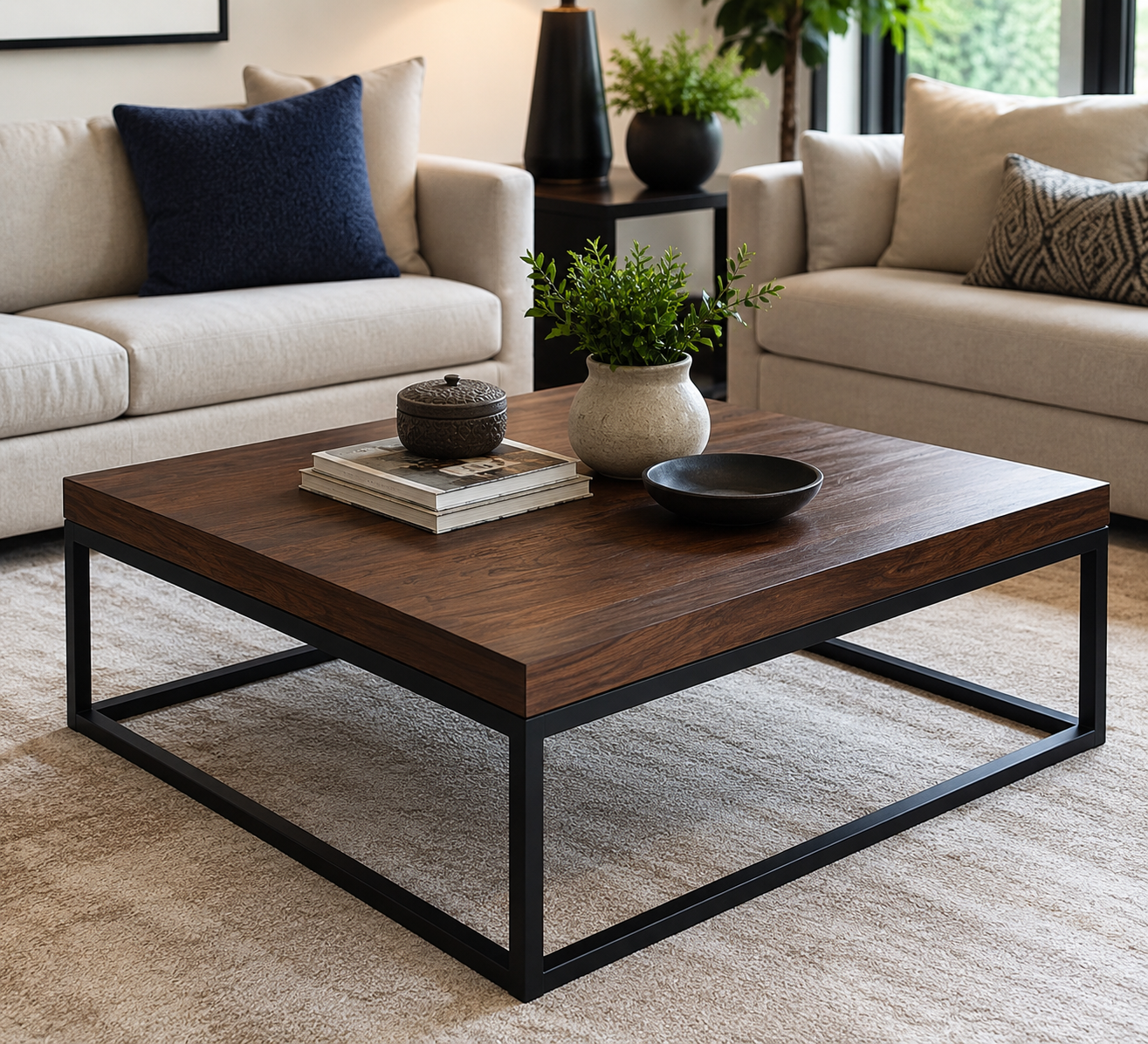
When I helped my sister furnish her first apartment last spring, the coffee table took longer to choose than the sofa. She kept gravitating toward round tables. That’s what every design blog recommended for small spaces. However, once we measured her L-shaped sectional, things changed. A square table fit the corner far better than anything curved. That experience stuck with me. It’s a reminder that trends don’t always match real rooms. This guide walks through everything worth knowing before buying a square coffee table in 2026. We’ll cover sizing formulas, current materials, and a few buying mistakes to avoid.
Why Choose a Square Coffee Table?
Square coffee tables solve a specific layout problem. Round and rectangular tables simply don’t handle it as well. Specifically, square shapes nest into L-shaped and U-shaped sectionals with far less wasted space. The corner of the table tucks neatly into the corner of the seating arrangement. Designers frequently point to this as a top reason square tables remain popular in larger, sectional-heavy living rooms.
Beyond fit, square tables create a sense of visual balance in symmetrical rooms. If your space already leans geometric, with a rectangular rug or a grid-style gallery wall, a square table reinforces that structure. On the other hand, some rooms already have plenty of straight lines. In that case, pairing them with an organic or curved table can soften the overall look instead.
Square tables also offer more usable surface area per square foot than round tables of a similar footprint. Corners provide extra space for books, trays, or a laptop. That matters if your coffee table doubles as a workspace or a spot for game nights.
How to Size a Square Coffee Table Correctly
Sizing matters more than style. This is where most buyers go wrong. A widely used rule of thumb says your coffee table should measure roughly one-half to two-thirds the length of your sofa. For a standard three-seat sofa around 80 inches long, that translates to a square table somewhere between 36 and 50 inches per side. The exact number depends on how much open floor space you want to preserve.
Height matters just as much as width. Ideally, the tabletop should sit level with your sofa’s seat cushions, or up to two inches lower. That makes it easy to reach drinks or set down a plate without straining. Additionally, leave 14 to 18 inches of clearance between the table and the front edge of your sofa. That gap lets people walk through comfortably without bumping their shins.
If you’re furnishing a smaller apartment, don’t assume you need to size down dramatically. A table that’s too small can look lost in the room. It also forces guests to lean forward awkwardly to reach it. Instead, consider a slightly smaller square table paired with a nesting side table. This combination gives you flexibility without cluttering the main surface.
Materials Leading Square Coffee Table Design in 2026
Material choice has shifted noticeably over the past year. Natural materials such as wood, marble, and travertine now dominate current design conversations. They’re replacing the pale, gray-toned finishes that were everywhere just a few seasons ago. Warmer, darker wood tones are making a comeback after years of light oak and whitewashed finishes leading the market.
Solid wood remains the most versatile option for square coffee tables. It works across farmhouse, mid-century, and transitional styles alike. Walnut and richly stained oak are especially popular right now. Both offer durability and a sense of warmth that lighter finishes sometimes lack.
Stone and sintered stone, including travertine and marble, bring a high-end look. They also resist heat and scratches better than most other materials. A stone-topped square table works particularly well as a statement piece in an otherwise minimal room. The natural veining does most of the visual work on its own.
Glass tops still have their place, especially in smaller footprints. An airy, see-through surface helps a room feel less crowded. That said, glass shows fingerprints quickly. It also requires more frequent cleaning than wood or stone.
Mixed-material designs, such as a wood top paired with a metal base, are increasingly common. They balance warmth with a more contemporary edge. This approach also tends to hold up well in busy households, since the metal base resists wear better than an all-wood frame.
Styles to Match Your Living Room
Square coffee tables come in enough variety that almost any decorating style can work. For farmhouse or transitional homes, a chunky wood table with turned or trestle legs adds character without looking dated. In more contemporary spaces, a low-profile square table with a matte black or brass frame tends to read as sleek rather than heavy.
Minimalist and Japandi-inspired rooms often benefit from a square table with clean lines and visible joinery. The construction itself becomes part of the design. Meanwhile, homes with a more eclectic or maximalist sensibility can lean into lacquered finishes or bold colors. Square tables provide a large, flat surface that shows off a statement color well.
One trend worth noting for 2026 is the rise of multi-purpose square tables. These are built slightly taller than traditional designs, meant to double as game tables for cards or mahjong nights. If you frequently host, this style solves two furniture needs with a single purchase.
Storage and Functionality Features
Today’s buyers expect more from a coffee table than a flat surface. Built-in storage has become one of the most requested features for square coffee tables. That might mean drawers, open shelving, or a lift-top design. This is especially useful in smaller apartments, where every piece of furniture needs to work harder.
A lift-top square table can convert into a makeshift desk for working from the couch. That setup has become common as more people split time between home and office. If you have kids, look for a table with rounded corners and a lower shelf for toys or blankets. This keeps the main surface clear while still offering storage within reach.
Before buying, walk through how your household actually uses the space. A family that snacks in front of the television benefits from a durable, easy-clean top. A household that entertains often may prioritize surface area over storage instead.
Safety Considerations for Glass and Sharp-Edged Tables
Glass-topped square tables raise a few safety questions worth understanding before you buy, particularly in homes with young children or pets. According to the Consumer Product Safety Commission’s furniture safety guidance, tempered safety glass is designed to reduce injury risk if it breaks. It shatters into small, rounded pieces rather than sharp shards. Always confirm that any glass tabletop is labeled as tempered before purchasing. This matters especially for lower-priced imported pieces, where labeling standards can vary.
Square tables also introduce more defined corners than round alternatives. That matters in households with toddlers or anyone prone to bumping into furniture. Corner guards are an easy, inexpensive fix. They let you keep a square silhouette while reducing that risk.
Regional Buying Considerations Across the US
Where you live can genuinely affect which coffee table material makes the most sense. In humid regions like the Gulf Coast, Florida, or the Southeast more broadly, solid wood tables can expand and contract with seasonal moisture changes. Look for pieces with kiln-dried wood and quality joinery that can handle those shifts without warping.
In drier climates such as Arizona, Nevada, or parts of Colorado, wood furniture faces a different risk. It’s more prone to cracking if indoor humidity drops too low during winter heating season. Using a humidifier in the room helps. Choosing engineered wood over solid wood can also extend the table’s lifespan in these areas.
Shipping timelines vary regionally too, particularly for larger stone or marble tables sourced internationally. If you live somewhere rural or far from major distribution hubs, factor in a few extra weeks of lead time. White-glove delivery services for heavy furniture pieces are less common outside major metro areas.
Buying Tips: Where and How to Shop
Big-box retailers, specialty furniture stores, and direct-to-consumer brands all sell square coffee tables. Still, the shopping experience differs quite a bit between them. Large retailers often offer faster shipping and easier returns. That matters if you’re not entirely sure a piece will fit your space. Specialty and artisan-made options typically offer better construction quality and more distinctive design. However, they usually come with a higher price point and a longer wait time.
Before purchasing anything, measure your space with painter’s tape on the floor to visualize the table’s footprint. This simple step catches sizing mistakes that photos alone can’t reveal, and it only takes a few minutes. For more detail on getting the proportions right across different sofa configurations, our guide to coffee table sizing for every sofa type walks through the math in more depth.
Budget-wise, expect to pay anywhere from $150 for a basic square table to well over $2,000 for a solid stone or designer wood piece. Mid-range options between $400 and $800 typically offer the best balance of construction quality and design detail for most households.
Maintenance by Material
Wood tables benefit from regular dusting and an occasional coat of furniture oil or wax. This matters most in drier climates, where wood can dry out faster. Avoid placing hot mugs directly on the surface without a coaster. Heat rings are notoriously difficult to remove from finished wood.
Stone and marble tops should be sealed periodically to prevent staining, especially from acidic spills like coffee or wine. Glass tops need frequent wiping with a streak-free cleaner. Fingerprints and dust show up far more visibly on glass than on other materials.
Final Thoughts
A square coffee table isn’t just a trend-driven choice. It’s often the most practical option for sectional sofas, symmetrical layouts, and households that need extra surface area. Take the time to measure your space, consider your climate, and think honestly about how your family actually uses the room before committing. That’s the same advice I gave my sister. Two years later, that square wood table is still holding up exactly as well as we hoped.
Frequently Asked Questions
What size square coffee table should I get for a sectional? Aim for a table that’s roughly one-half to two-thirds the length of the longest side of your sectional. For most standard sectionals, that lands somewhere between 36 and 48 inches per side. Larger rooms can comfortably handle bigger tables.
Are square coffee tables safe for homes with kids? Square tables have more defined corners than round ones. As a result, families with young children often add corner guards or choose rounded-edge square designs. Otherwise, safety mainly comes down to material choice, since tempered glass tops are safer than untempered options if breakage occurs.
What’s the most popular material for square coffee tables in 2026? Solid wood remains the most versatile and widely chosen material. Warmer, darker tones like walnut are trending upward. Stone and travertine are also gaining popularity among buyers wanting a higher-end, statement look.
How much clearance should I leave around a square coffee table? Leave at least 14 to 18 inches between the table and the front of your sofa or sectional. This allows comfortable legroom while keeping the table within easy reach.
Can a square coffee table work in a small living room? Yes, as long as you size it appropriately. Don’t assume you automatically need a tiny table. A slightly smaller square table paired with a nesting side table often works better than one undersized piece alone.
Is glass or wood better for a square coffee table? It depends on your priorities. Glass makes small rooms feel more open but shows fingerprints easily. Wood offers more warmth and durability but requires occasional maintenance like oiling or waxing.
Do square coffee tables cost more than round ones? Not inherently. Price depends far more on material and craftsmanship than shape. You’ll find square tables across every price range, from budget-friendly big-box options to high-end artisan pieces.
How do I stop my wood coffee table from warping in a humid climate? Choose kiln-dried solid wood or engineered wood construction. Keep indoor humidity as stable as possible, using a dehumidifier if you live somewhere especially damp, such as the Gulf Coast or the Southeast.