

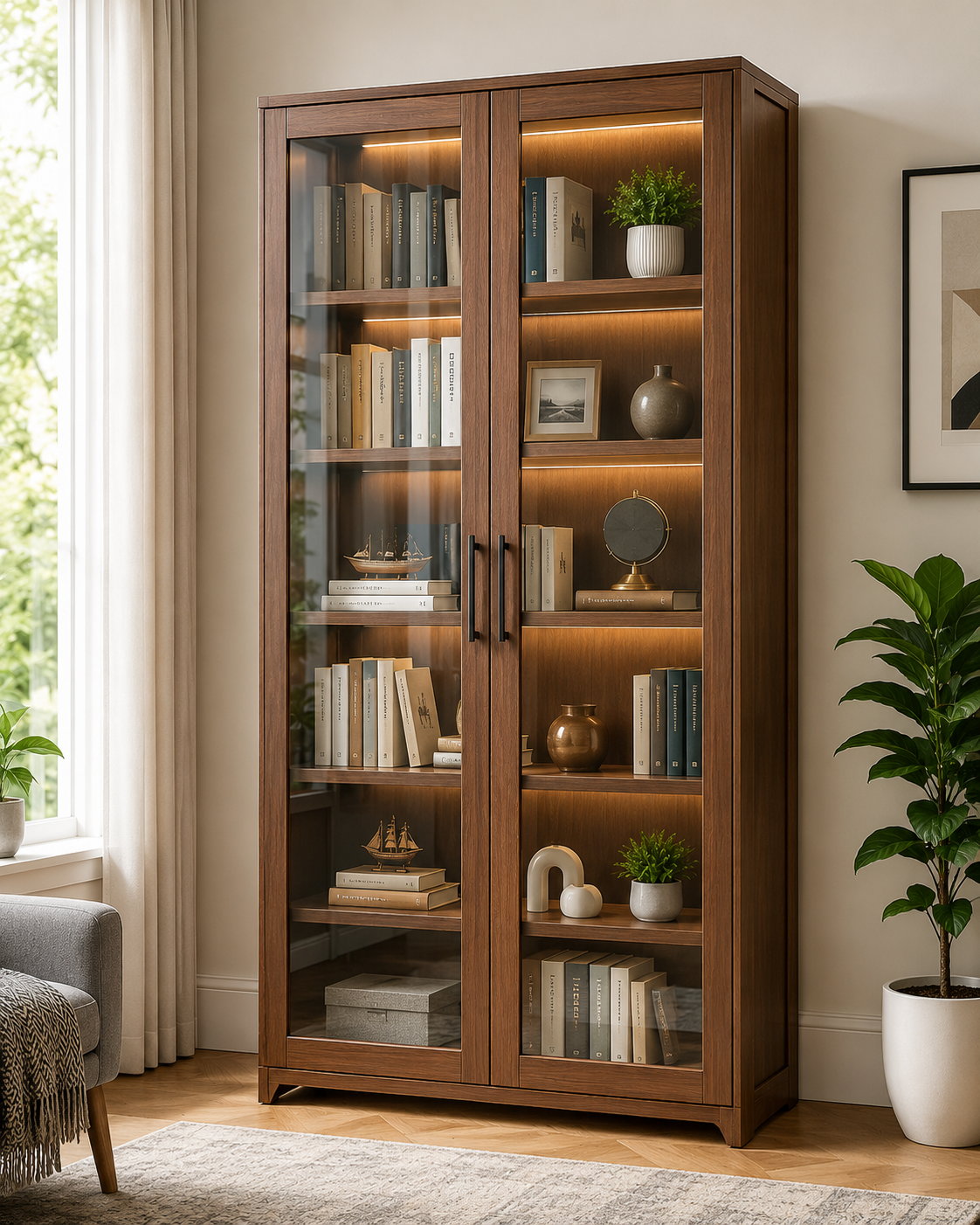
A bookcase with doors solves a problem that open shelving never quite fixes. It lets you display your favorite books and decor, while hiding the clutter you’d rather not show off. Think chargers, board games, old files, or that pile of mail you keep meaning to sort. In 2026, this style of furniture has become one of the most popular storage choices for American homes. That’s true whether you’re furnishing a small apartment in Chicago or a home office in a Texas suburb.
I’ve spent years testing and researching furniture for small spaces, and bookcases with doors consistently come up as a favorite. They offer the best of both worlds. You get open display shelves on top, and closed storage down below. This guide breaks down the best styles available right now, along with practical buying advice you can actually use before you spend your money.
Why Choose a Bookcase with Doors Over Open Shelving?
Open bookcases look great in photos. In real life, though, they collect dust, clutter, and mismatched items fast. A bookcase with doors solves that instantly. It gives you a place to hide the stuff you don’t want on display, while still leaving room to show off books, framed photos, or plants.
There are a few other practical reasons this style has grown in popularity:
- Dust protection. Enclosed cabinets keep books and valuables cleaner over time, especially in older homes with less efficient HVAC systems.
- Child and pet safety. Doors, especially lockable ones, keep curious toddlers and pets away from breakable items or important documents.
- Better resale value. Furniture-style pieces with doors tend to photograph better for real estate listings and Airbnb setups, since they read as more polished than bare shelving.
- Flexible use. Many buyers use these bookcases as pantry storage, craft supply cabinets, or media consoles, not just for books.
If you’re torn between an open bookcase and one with doors, ask yourself one simple question. Do you actually enjoy dusting shelves every week? If not, doors are worth the extra cost.
Best Bookcase with Doors Styles for 2026
1. Modern Farmhouse
Farmhouse-style bookcases remain hugely popular across the U.S. in 2026, especially in suburban homes and rental properties aiming for a cozy, approachable look. These typically feature shiplap paneling, X-cross detailing, or black metal hardware against a warm wood tone. Many models combine open display shelves on top with a closed cabinet or drawer below, which makes them ideal for living rooms and home offices alike.
2. Industrial
Industrial bookcases pair dark metal frames with MDF or engineered wood shelving. This style tends to run taller, often between 70 and 73 inches. Which makes it a strong choice if you’re trying to maximize vertical storage in a smaller footprint. Industrial pieces work especially well in loft apartments, converted basements, and home offices with exposed brick or concrete accents.
3. Glass-Door Display Cabinets
If you want to show off collectibles, fine china, or a curated book collection while still keeping dust out, glass-door bookcases are the answer. Many 2026 models use tempered glass for safety and durability, and some even include built-in LED lighting to highlight your display. These tend to cost more than solid-door options, but they’re worth it if visibility matters to you.
4. Traditional and Vintage-Inspired
Traditional bookcases lean into classic detailing: arched openings, fluted panels, crown molding, and warm oak or walnut finishes. These pieces work particularly well in formal living rooms, studies, or reading nooks where you want furniture that feels more like a heirloom piece than a mass-market storage unit. Many traditional designs also include adjustable interior shelving behind the doors.
5. Corner Bookcases
For smaller apartments or oddly shaped rooms, a corner bookcase with doors can be a smart space-saving solution. These units tuck into a 90-degree corner, using space that would otherwise sit empty. Corner models usually combine a few open shelves on top with an enclosed cabinet section below, giving you display space without eating into your walkway.
6. Modular and Built-In Style Systems
Modular bookcase systems have become especially popular in 2026 for homeowners who want a custom, built-in look without the cost of custom carpentry. These systems let you combine multiple units, mixing glass doors, open shelves, and closed cabinets, to create a wall-spanning storage wall. They’re a great option if you’re planning a home library or a media wall in a living room.
What to Look for Before You Buy
Measure Your Space Carefully
This sounds obvious, but it’s the most common mistake buyers make. Before shopping, measure the width, height, and depth of your intended spot. Don’t forget to account for door swing clearance, especially with corner units or narrow hallways. If you’re working with a small apartment, a slimmer 24 to 30-inch wide unit will usually fit better than a wide double-door model.
Consider Material and Durability
Bookcases with doors are typically built from one of three materials. Solid wood offers the most durability and the best resale value, but it also costs more. Engineered wood and MDF are more affordable and lighter, which makes assembly easier, though they can show wear sooner under heavy use. Metal-framed industrial styles tend to be the sturdiest option for tall, heavy-load units.
Check Weight Capacity Per Shelf
Weight limits vary a lot between models. Some budget options only support around 20 to 35 pounds per shelf, which sounds like plenty until you load it with hardcover books. If you’re storing a serious book collection, look for a shelf rating closer to 40 to 50 pounds. This detail is often buried in the product specs, so it’s worth checking before you add anything to your cart.
Prioritize Anti-Tip Safety Features
This one matters more than most buyers realize. Tall, top-heavy furniture like bookcases poses a real tip-over risk, especially in homes with young children. The U.S. Consumer Product Safety Commission has repeatedly warned that furniture tip-overs cause serious injuries and deaths in American households every year, and it recommends anchoring tall furniture to the wall using the anti-tip hardware included with most modern units. Nearly every reputable bookcase sold in 2026 ships with an anti-tip kit, so make sure you actually install it once your piece is assembled.
Decide Between Glass, Solid, or Sliding Doors
Each door type comes with tradeoffs. Glass doors look elegant and let you display items without dusting them, but they require more careful cleaning and can be a safety concern in homes with small children. Solid doors offer the most privacy and are the easiest to maintain. Sliding doors save space in tight rooms, though some budget models can stick or misalign over time, according to several verified buyer reviews.
Where to Use a Bookcase with Doors in Your Home
A bookcase with doors isn’t just for the living room anymore. In 2026, homeowners are using them across nearly every room:
- Home offices. Many remote workers across the U.S. now use closed-cabinet bookcases to hide cables, printers, and paperwork while keeping reference books visible.
- Kitchens and pantries. Slimmer units with doors work well as pantry extensions in smaller American kitchens, especially in older homes without built-in pantry space.
- Kids’ rooms and nurseries. Enclosed storage keeps toys and supplies out of sight, which parents often prefer for both safety and tidiness.
- Entryways and hallways. Narrow bookcases with doors can double as a landing zone for shoes, mail, or bags in apartments without a dedicated mudroom.
Price Ranges to Expect in 2026
Budget matters, so here’s a realistic breakdown based on current market pricing. Entry-level MDF or engineered wood bookcases with doors typically run from $100 to $250. Mid-range options with better materials, adjustable shelving, and more refined finishes usually land between $250 and $500. Premium solid wood or furniture-grade pieces, especially those with glass doors, built-in lighting, or custom modular systems, can range from $500 well into the $1,500 or higher territory.
If you’re renting or expect to move within a few years, it often makes more sense to invest in a mid-range option rather than a premium one. Moving heavy solid wood furniture across state lines gets expensive fast, and many renters end up selling or donating large pieces before a move anyway.
Assembly and Maintenance Tips
Most bookcases with doors ship flat-packed and require home assembly. Plan for one to two hours if you’re working alone, though having a second person helps significantly with larger units. A few practical tips can save you frustration:
- Lay out all hardware and pieces before starting, and check them against the included parts list.
- Use a power screwdriver if you have one, since manual assembly can take considerably longer.
- Always install the anti-tip bracket, even if the bookcase feels sturdy without it.
- Wipe down glass doors with a microfiber cloth to avoid streaks, and dust wood surfaces regularly to prevent buildup that’s harder to remove later.
For more general furniture-buying advice, including how to choose pieces that hold up over time, check out our guide on choosing durable furniture for small spaces.
Frequently Asked Questions
What is the best type of bookcase with doors for small apartments? A slim corner bookcase or a narrow farmhouse-style unit, generally 24 to 30 inches wide, tends to work best in small apartments. These styles maximize vertical storage without taking up much floor space, which matters most in compact city living situations.
Are glass-door bookcases safe for homes with kids? Many 2026 models use tempered glass, which is more shatter-resistant than standard glass. Still, if you have young children, a solid-door or sliding-door bookcase is generally the safer choice, since it removes the risk of broken glass entirely.
How much weight can a typical bookcase shelf hold? Most shelves support somewhere between 20 and 50 pounds, depending on the material and brand. Solid wood and metal-framed units usually hold more weight than budget MDF options, so check the manufacturer’s specs if you plan to store a large book collection.
Do bookcases with doors need to be anchored to the wall? Yes, and this matters more than most people expect. Tall, top-heavy furniture carries a real tip-over risk, especially in homes with children or pets. Nearly all bookcases sold today include anti-tip hardware, and it should always be installed after assembly.
What’s the difference between MDF and solid wood bookcases? Solid wood is more durable, holds up better over decades, and typically has higher resale value. MDF and engineered wood are more affordable and lighter, making them easier to assemble and move, though they may show wear sooner with heavy daily use.
How long does it take to assemble a bookcase with doors? Most units take one to two hours to assemble, depending on size and complexity. Larger modular systems or units with multiple cabinets and drawers can take longer, especially if you’re assembling alone rather than with a second set of hands.
Can a bookcase with doors double as a pantry or storage cabinet? Yes, many buyers use these bookcases for purposes well beyond books, including kitchen pantry storage, craft supplies, and office files. Slimmer, taller models tend to work best for this kind of multi-purpose use, since they maximize storage without taking up too much floor space.
Is it worth paying more for a solid wood bookcase versus MDF? If you plan to keep the piece long-term or move it between homes, solid wood is usually worth the investment, since it holds up better and retains more resale value. For renters or short-term living situations, a quality MDF option is often the more practical choice.
Final Thoughts
A bookcase with doors is one of those furniture pieces that quietly makes a home feel more organized. It offers the display space you want, along with the hidden storage you actually need. Whether you’re drawn to a farmhouse look, an industrial statement piece, or a sleek glass-front cabinet, the right choice comes down to your space, your storage needs, and how much you value keeping clutter out of sight. Take the time to measure your space, check the weight ratings, and always install the anti-tip hardware. Once that’s done, you’ll have a piece that works hard for you, without ever looking like it’s working hard at all.