

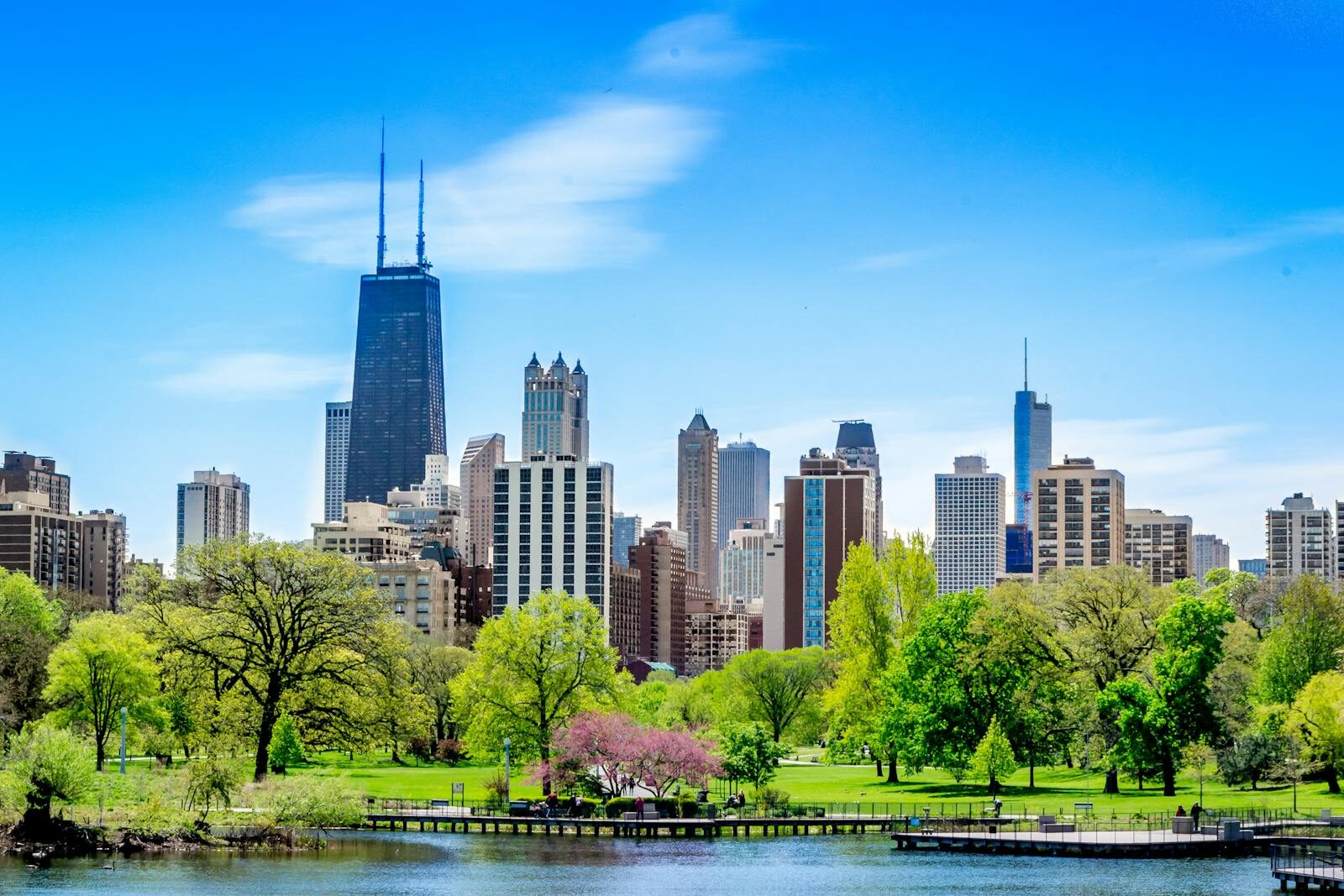
If you’ve ever driven along Sheridan Road on a clear spring morning, watching the sunlight break across Lake Michigan while passing one stately brick colonial after another, you already understand the pull of Chicago’s North Shore. There’s something quietly extraordinary about this stretch of communities that runs north from Evanston all the way up to Lake Bluff — and in 2026, the real estate market here is as compelling as the scenery.
Whether you’re relocating from another major metro, upgrading from the city, or simply ready to plant roots in one of the most consistently desirable suburban corridors in the entire country, this guide is written to give you an honest, grounded look at what the North Shore real estate market looks like right now — not six months ago, not in theory, but today.
What Exactly Is “The North Shore” of Chicago?
This is a question worth answering clearly, because real estate agents and local residents don’t always draw the same lines.
The North Shore generally refers to a string of lakefront and near-lakefront communities along the western shore of Lake Michigan, located in Cook and Lake Counties just north of Chicago. The core communities most buyers are asking about include:
- Evanston — the southernmost and most urban of the group, home to Northwestern University
- Wilmette — known for its acclaimed school district and the iconic Bahá’í Temple
- Kenilworth — one of the smallest and wealthiest incorporated villages in Illinois
- Winnetka — arguably the crown jewel of the North Shore, with top-rated schools and stunning lakefront estates
- Glencoe — a quieter, artsy enclave with strong community character
- Highland Park — larger, more diverse in price points, with excellent dining and the Ravinia Festival
- Deerfield & Northbrook — slightly inland, more affordable, popular with families prioritizing square footage
- Lake Forest — the northernmost anchor of the “classic” North Shore, with a historic downtown and some of the largest estates in Illinois
- Lake Bluff — smaller, charming, and less talked about but increasingly popular with buyers priced out of Lake Forest
Each community has its own personality, price range, and lifestyle trade-offs. Getting clear on which town fits your life — not just your budget — is the single most important first step in a North Shore home search.
North Shore Chicago Real Estate Market: Where Things Stand in 2026
Let’s talk real numbers and real conditions, because the market has shifted meaningfully over the past 18 months.
After the rate-driven slowdown of 2023 and the slow-burn recovery of 2024, the North Shore market entered 2025 with renewed energy. Inventory remained historically tight throughout the year, and by early 2026, buyer competition in the $1M–$2.5M range has intensified again. Here’s what’s defining the current landscape:
Inventory Is Still Lean — But Slightly Better Than Last Year
The chronic inventory shortage that plagued luxury suburban markets nationally is still present on the North Shore, but sellers have gradually come back to market. As of spring 2026, active listings across Winnetka, Wilmette, and Glencoe are running roughly 15–20% higher than the same period in 2025, offering buyers modestly more options than they’ve had in years.
That said, well-priced, move-in-ready homes — especially in Winnetka and Lake Forest — are still moving fast. Days on market for homes priced accurately between $1.2M and $2M sits at roughly 18–30 days in most North Shore towns.
Mortgage Rates Have Eased, Reactivating Buyers
The Federal Reserve’s rate trajectory through late 2025 brought 30-year fixed mortgage rates down into the mid-6% range by early 2026, compared to the 7%–8% peak of 2023. That shift matters enormously for move-up buyers coming from the city or from starter homes elsewhere on the North Shore. Many buyers who were sitting on the sidelines waiting for rates to drop have now re-entered the market, adding competitive pressure back into the sub-$3M segment.
Luxury Pricing Has Held Firm
The $3M+ segment on the North Shore has been remarkably price-stable. Landmark estates in Lake Forest and Winnetka lakefront properties are holding — and in some cases, appreciating — values. Buyers in this bracket tend to be less rate-sensitive, and the supply of truly distinctive, architecturally significant homes remains constrained.
Median home prices by community (approximate, as of Q1 2026):
- Kenilworth: $2.1M–$3.4M
- Winnetka: $1.4M–$2.8M
- Lake Forest: $1.1M–$4M+
- Glencoe: $950K–$2.2M
- Wilmette: $800K–$1.8M
- Highland Park: $650K–$1.6M
- Evanston: $500K–$1.4M
These are ranges, not guarantees. A teardown lot in Winnetka and a fully renovated lakefront home on Sheridan Road both technically sit in “Winnetka” — their prices will be worlds apart.
The Most In-Demand Communities Right Now (And Why)
Winnetka: The Perennial Favorite
Ask ten North Shore real estate agents to name the community where buyer demand is most consistently strong, and at least eight will say Winnetka. The school district — New Trier High School, consistently ranked among the best public high schools in the nation — is the single biggest driver. Families relocating from New York, San Francisco, and other major metros specifically seek out New Trier’s boundaries.
The housing stock ranges from modest 1950s ranches priced around $800K to jaw-dropping lakefront mansions at $8M and above. The sweet spot for most buyers is the $1.5M–$3M range, where you’ll find beautifully updated colonials, Tudors, and Prairie-style homes within walking distance of Metra stations.
One practical note: Winnetka is a village of roughly 12,000 people. Inventory turns over slowly, and when a well-positioned home comes to market, it doesn’t sit. If Winnetka is your target, you need to be pre-approved and ready to move.
Lake Forest: Old Money, Enduring Appeal
Lake Forest operates on a different cadence than the rest of the North Shore. It’s more spread out, more private, and home to some of the most architecturally significant estates in the Midwest. The historic Market Square — one of the first planned shopping centers in the United States — anchors a downtown that feels genuinely charming rather than manufactured.
In 2026, Lake Forest is seeing renewed interest from buyers who want more land, more privacy, and more interior square footage than tighter Winnetka lots can offer. Homes on half-acre to two-acre lots in the $1.5M–$2.5M range represent strong value compared to similarly sized properties in Winnetka.
Wilmette: Value, Walkability, and the Metra Sweet Spot
For buyers who want North Shore character without North Shore sticker shock, Wilmette consistently delivers. The town’s eastern sections near the lakefront and the Metra Union Pacific North line attract buyers who want a manageable commute into the Loop while still living in a community with excellent schools and genuine neighborhood feel.
Median home prices in Wilmette have climbed but remain more accessible than Winnetka or Kenilworth, making it a realistic entry point for dual-income professional households looking to spend $900K–$1.4M.
Evanston: Urban Energy in a Suburban Package
Evanston defies easy categorization. It’s technically a suburb but feels more like a self-contained city, complete with a diverse restaurant scene, a walkable downtown, and the Northwestern University campus. For buyers who want proximity to Chicago (the Metra Purple Line gets you to Millennium Station in about 25 minutes), cultural amenities, and more architectural variety in their home search, Evanston is worth serious consideration.
Price ranges are broader here than anywhere else on the North Shore, from sub-$400K condos to $2M+ single-family homes in the lakefront Lakeshore Historic District.
Types of Luxury Homes Available on the North Shore
The North Shore’s housing stock is one of its most underrated selling points. This is not a corridor of cookie-cutter subdivisions. The architectural variety is genuinely remarkable:
Historic Estates: Many communities — particularly Lake Forest and Kenilworth — have estates dating to the late 19th and early 20th centuries, designed by architects like Howard Van Doren Shaw and David Adler. These properties require buyers who appreciate craftsmanship and aren’t afraid of ongoing maintenance, but they offer a sense of permanence that no new construction can replicate.
New Construction and Teardown Rebuilds: Winnetka and Wilmette see a steady pipeline of teardown activity, where older ranch or cape cod homes are purchased, demolished, and replaced with high-spec custom construction. Buyers in the $2.5M–$5M range often pursue this route to get exactly the floor plan, finishes, and energy efficiency they want.
Lakefront Properties: Direct lakefront or lake-view homes represent the pinnacle of North Shore real estate. These are genuinely rare — there are a finite number of properties with actual Lake Michigan frontage — and they command premium pricing accordingly. When they come to market, they attract significant attention from buyers across the country.
Condos and Townhomes: Evanston and Highland Park have the most developed condo markets on the North Shore. For buyers who want the lifestyle without the maintenance of a large single-family home, or for empty nesters downsizing within the corridor, these options offer real quality at lower price points.
What You Need to Know Before Buying: Practical Guidance for 2026
Get Pre-Approved Before You Look — Seriously
In a market where desirable homes in the $1M–$2M range can receive multiple offers within days of listing, showing up without pre-approval is not a strategy — it’s a way to lose homes you love. Work with a lender who has experience with jumbo loan products, since most North Shore purchases will exceed the conforming loan limit.
Understand Property Taxes
Illinois has some of the highest property tax rates in the nation, and Cook County and Lake County are no exceptions. On a $2M North Shore home, annual property taxes can range from $25,000 to $50,000 or more depending on the community and specific assessment. This isn’t a reason to avoid buying, but it’s a carrying cost that deserves serious attention in your budget planning.
For current property tax rate information by municipality, the Illinois Department of Revenue publishes updated data and is a reliable starting point for your research.
Factor In School District Boundaries Carefully
North Shore communities are served by multiple school districts, and boundary lines don’t always follow what you’d expect from a street map. A home that appears to be in Winnetka on Zillow may actually be in a different school district than the one you’re targeting. Always verify district assignment directly with the district before making an offer — not after.
Think About Commute Honestly
The Metra Union Pacific North line is a genuine asset for North Shore buyers who work in the Loop. Travel times range from about 25 minutes from Evanston to roughly 55–65 minutes from Lake Forest. Frequency drops significantly on evenings and weekends. If you’re a remote or hybrid worker, this matters less — but if you’re in-office three to five days a week, the specific town you choose, and its proximity to a Metra station, will have a real impact on your quality of life.
Work With a Local Specialist
The North Shore market is hyper-local. A buyer’s agent who specializes in the broader Chicago metro will not have the same depth of knowledge about Winnetka’s pocket listings or Glencoe’s off-market opportunities as an agent who has worked specifically in these communities for years. Ask potential agents how many transactions they’ve closed in your target towns in the past 12 months. The answer matters.
Lifestyle: What Living on the North Shore Actually Looks Like
It’s easy to get caught up in market data and forget that you’re not just buying square footage — you’re buying into a way of life. And the North Shore delivers a particular one.
Summer on the North Shore means beach badges, Ravinia Festival picnics, sailing clubs, and long evenings on back porches. Fall brings packed high school football games at New Trier or Lake Forest High School — the kind of small-city touchstones that parents who grew up in major metros sometimes didn’t know they were missing until they found them. Winter means holiday markets in downtown Lake Forest and Glencoe, sledding in Crow Island Woods, and the particular coziness of a century-old Tudor with a working fireplace when it’s 15 degrees and snowing.
The North Shore also has a restaurant and retail scene that punches well above its weight. From independent boutiques in downtown Winnetka to James Beard-recognized dining in Evanston, the corridor has evolved meaningfully beyond the “drive to the city for everything good” mindset that once defined suburban Chicago.
Common Mistakes North Shore Buyers Make (And How to Avoid Them)
Falling in love with the town before understanding the home options. Winnetka is wonderful, but if your budget is $900K, your options there are limited and likely to include homes that need significant work. Going in clear-eyed about what’s realistic in each community saves a lot of heartbreak.
Underestimating total cost of ownership. Property taxes, homeowners insurance on a lakefront or large historic property, utilities for a 5,000-square-foot home, and maintenance costs on older construction add up. Model the full monthly picture before you commit to a price point.
Waiting for prices to fall significantly. The North Shore has not experienced the dramatic price corrections that some speculative markets have seen. Supply here is genuinely constrained by geography — you can’t build more Lake Michigan — and demand from high-income families consistently supports values. Buyers waiting for a 20% correction are generally still waiting.
Skipping the home inspection. Even on new construction or a recently renovated home, an independent inspection is non-negotiable. Older North Shore homes in particular can carry expensive surprises: aging knob-and-tube wiring, foundation issues, or outdated HVAC systems that the listing photos won’t reveal.
Investment Outlook: Is the North Shore a Smart Buy in 2026?
Speaking plainly: the North Shore has historically been one of the most stable luxury residential real estate markets in the Midwest. It doesn’t spike the way downtown condo markets sometimes do, and it doesn’t crater the way more speculative suburban corridors can. It appreciates slowly and holds value reliably — particularly in Winnetka, Lake Forest, and Kenilworth.
For buyers who plan to live in the home for at least five to seven years, the North Shore represents a sound investment alongside its lifestyle value. For investors looking for rapid appreciation or rental income, it’s generally not the right market — rental demand is relatively limited compared to the ownership-driven culture of these communities.
If you want to dig deeper into broader Chicagoland market comparisons and neighborhood investment analysis, our Chicago Suburbs Real Estate Guide covers the wider metro picture across Cook, Lake, and DuPage counties.
How to Start Your North Shore Home Search in 2026
Here’s a practical action plan:
- Define your non-negotiables. School district? Metra access? Minimum square footage? Lakefront? Decide what you genuinely can’t compromise on before anything else.
- Set a realistic budget — with a buffer. Factor in property taxes, closing costs (typically 2–3% of purchase price in Illinois), and any immediate renovation needs.
- Get pre-approved with a jumbo lender. Most North Shore purchases require non-conforming financing. Start this process early.
- Identify two or three target communities, not just one. Market timing and inventory fluctuate. Having flexibility across Winnetka and Glencoe, for example, dramatically improves your odds of finding the right home in a reasonable timeframe.
- Connect with a North Shore specialist. Ask for references, check their recent transaction history in your target towns, and make sure their communication style matches your expectations.
- Set up automated alerts. The best homes move quickly. Automated MLS notifications for your criteria mean you’re not relying on a weekly manual check.
- Visit in person before you decide. Data and photos tell part of the story. The street, the neighbors, the commute to the Metra station at 7:15 AM on a Tuesday — those things matter and you can only evaluate them in person.
Final Thoughts
The North Shore of Chicago isn’t just a real estate market. It’s a collection of communities with deep roots, distinct personalities, and a quality of life that attracts buyers from across the country year after year. In 2026, despite a more complex rate environment than buyers enjoyed a decade ago, the fundamentals that make the North Shore desirable haven’t changed: great schools, stunning natural setting, architectural character, and proximity to one of the world’s great cities.
If you’re serious about buying here, the best time to start learning the market is now — not when the perfect listing hits Zillow. Know the communities, understand the costs, build your team, and be ready to move when the right home appears. On the North Shore, the prepared buyer wins.