

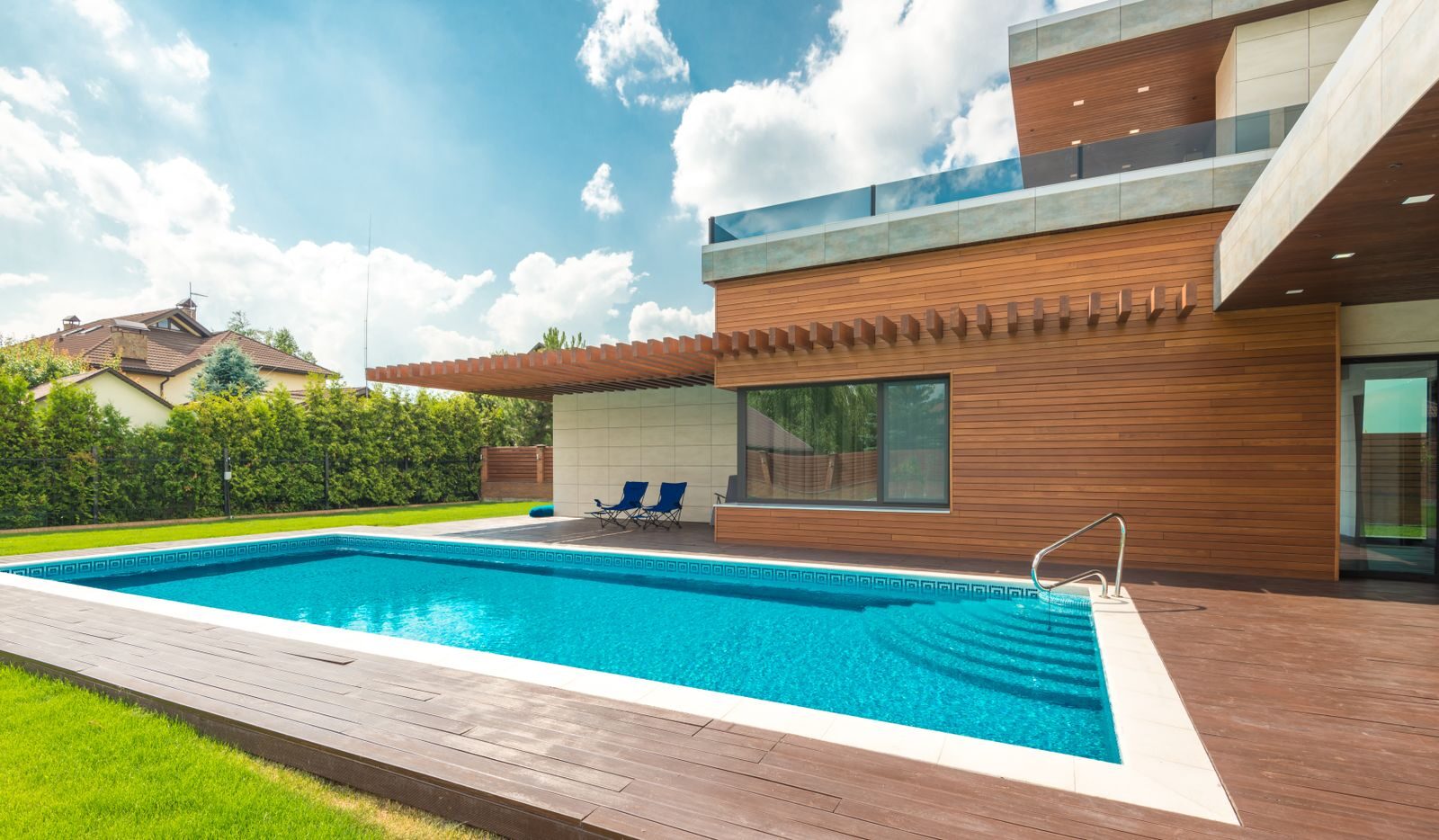
Choosing a pool sounds simple until you realize there are more than a dozen distinct types — each with different costs, installation timelines, maintenance demands, and lifestyle fits.
Get it right and you have a backyard you’ll love for 20 years. Get it wrong and you’re stuck with something that costs more than expected, fits worse than hoped, or simply doesn’t match how you actually live.
This guide covers all 12 major types of swimming pools — what they cost in 2026, who they’re best for, what they look like in real life, and what nobody tells you before you buy.
Let’s start at the beginning.
Inground vs. Above Ground: Understanding the Core Choice
Before you get into specific pool types, there’s one foundational decision you’re making: inground or above ground.
The gap between the two is massive — financially, aesthetically, and in terms of permanence.
According to 2026 data, the average cost to install an inground pool is $65,000 to $66,000, with most homeowners spending between $44,000 and $87,000. High-end projects with luxury features can exceed $135,000.
Above ground pools, by contrast, average around $4,000 for materials, with a complete installed setup running $8,000 to $18,000 for a quality unit with decking, filtration, and accessories.
That’s not a small difference. But price isn’t the only factor. Inground pools increase home value by an average of $36,700, according to data compiled by Angi. Above ground pools add roughly $250 in home value on average.
With that foundation in place, here are all 12 types — starting with inground options, then above ground, then the specialty pools that don’t fit neatly into either category.
Inground Pool Types
1. Concrete (Gunite) Pools
Concrete pools — often called gunite or shotcrete pools depending on the construction method — are the most customizable type of inground pool you can build. There is essentially no limit on shape, size, or depth. Every freeform lagoon, infinity edge, and sculptural resort-style pool you’ve seen in magazines is almost certainly concrete.
Cost in 2026: $50,000 to $120,000 installed. Some complex custom builds run significantly higher.
Lifespan: 50+ years with proper care, making them the longest-lasting pool type available.
Maintenance reality: This is where concrete pools ask the most of you. The surface is porous, which means algae can take hold more easily than in fiberglass. You’ll need to acid wash the surface every 3 to 5 years ($300 to $1,000 per treatment) and completely resurface every 10 to 15 years ($8,000 to $10,000). Weekly chemical balancing is also more demanding than with other materials.
Best for: Homeowners who want a truly custom design and are willing to invest in long-term maintenance. If you’re building a pool around a specific landscape, architectural feature, or hillside, concrete is often the only material that can do what you need.
What nobody tells you: Construction takes 3 to 6 months. Plan accordingly.
2. Fiberglass Pools
Fiberglass pools are pre-manufactured shells — built in a factory, delivered by truck, and craned into an excavated hole in your backyard. The process sounds less glamorous than a full custom build, but the results are excellent, and the advantages in daily living are significant.
Cost in 2026: Installation costs vary by size. Small fiberglass pools (under 26 feet) average around $74,000 installed. Medium pools (27 to 34 feet) run approximately $109,000. Vinyl liner pools are a comparable alternative at $35,000 to $80,000.
Lifespan: 25 to 30+ years for the shell, though the gel coat may need refinishing after 15 to 20 years.
Maintenance reality: The non-porous surface is fiberglass’s biggest practical advantage. Algae can’t get a foothold the way it can in concrete, which dramatically reduces chemical use and cleaning time. Many fiberglass pool owners report spending significantly less on chemicals than their concrete pool neighbors.
Best for: Families who want a low-maintenance pool and are comfortable choosing from existing shapes and sizes. Fiberglass pools come in a wide range of designs — rectangular, freeform, kidney-shaped — but you’re working within manufacturer templates rather than fully custom.
Installation time: 1 to 3 weeks from excavation to first swim. The fastest inground option by a wide margin.
3. Vinyl Liner Pools
Vinyl liner pools use a steel, aluminum, or polymer wall structure with a vinyl liner as the interior surface. They’re the most affordable inground pool type, and they’re extremely common in the Midwest and Northeast where they’ve been a backyard staple for decades.
Cost in 2026: $35,000 to $80,000 installed, making them the entry-level inground option.
Lifespan: The liner itself typically lasts 7 to 12 years before replacement, which costs $1,500 to $4,500 depending on the pool size. The structural walls can last 20+ years.
Maintenance reality: Vinyl is smooth and non-porous like fiberglass, so algae growth is less of an issue than in concrete. The liner is the weak point — it can tear, puncture, or fade over time. Sharp objects (including some pool toys and pets’ claws) can damage it.
Best for: Budget-conscious buyers who want an inground pool look without concrete or fiberglass price tags. Vinyl pools can be built in a wider range of shapes than fiberglass, since the liner conforms to the structure.
4. Infinity Pools (Vanishing Edge Pools)
Infinity pools — also called vanishing edge or negative edge pools — create the visual illusion that the water extends to the horizon with no visible boundary. One or more edges overflow into a catch basin below, then the water is recirculated back into the main pool.
They’re one of the most searched pool styles in 2026, driven by years of travel and hospitality imagery from Bali, Santorini, and Caribbean resorts.
Cost in 2026: Infinity pools start around $80,000 and routinely climb to $200,000 or more depending on size, elevation work, and materials. The overflow system, catch basin, and additional pumping add substantial cost over a standard pool.
Best visual impact: Hillside properties, elevated lots, and locations with a natural view — water, mountains, or open landscape. An infinity edge facing a neighbor’s fence is a different experience than one facing a lake.
2026 trend update: Designers are pairing infinity edges with swim-up bars, darker interior surfaces (deep sapphire, charcoal, and even black), and smart automation systems that control the overflow and water feature from a smartphone app.
Best for: Luxury builds where aesthetics are a primary priority and the budget and lot support the design. This is not a budget pool type — but when executed well, it’s genuinely breathtaking.
5. Lap Pools
Lap pools are long, narrow, and purpose-built for exercise. They prioritize function over aesthetics, though modern designs have made them look far more attractive than the utilitarian rectangles of previous decades.
Standard dimensions: 45 to 75 feet long and 8 to 10 feet wide. Minimum practical length for lap swimming is generally 30 to 40 feet, though serious swimmers prefer longer.
Cost in 2026: $50,000 to $100,000+, depending on length, material, and any added features like underwater jets or automated lane markers.
Best for: Swimmers, triathletes, and fitness-focused homeowners. They’re also an excellent option for narrow properties where a standard pool would be impractical — a 10-foot-wide pool can fit in a side yard or tight suburban lot where nothing else would work.
What to know: Without added features like jets or a spa at one end, lap pools can feel utilitarian for family use. Many homeowners who want both fitness and leisure add a small spa section or wading shelf at one end.
6. Plunge Pools
Plunge pools are compact — typically 7 to 15 feet long and around 5 feet deep. They’re designed for cooling off, relaxing, and light hydrotherapy rather than full swimming.
Cost in 2026: $20,000 to $50,000 installed, significantly less than a full inground pool.
What’s driving their popularity: Smaller backyards in urban and suburban USA, growing interest in cold plunge therapy and recovery, and a general trend toward smaller, smarter outdoor spaces that work harder per square foot.
Best for: City homeowners with limited yard space, buyers who want the lifestyle of a pool without the footprint, and anyone specifically interested in the wellness and recovery benefits of cold-water immersion. They’re also popular as an add-on to an existing spa or hot tub setup.
7. Saltwater Pools
Technically, a saltwater pool is not a separate structure — it’s any pool (concrete, fiberglass, or vinyl) with a salt chlorination system installed instead of traditional chlorine dosing.
A salt cell converts dissolved salt in the water into just enough chlorine to keep it clean, producing water that feels noticeably softer, is gentler on eyes and skin, and doesn’t carry the sharp chemical smell of a heavily chlorinated pool.
Cost premium: Adding a saltwater system runs $1,500 to $4,000 above a standard chlorine setup.
2026 status: Saltwater pools have become the dominant preference for new inground pool builds in most of the USA. Many homeowners who switch from chlorine to salt report it’s the best upgrade they ever made to their existing pool. Alternative sanitization systems using UV light, ozone, or nanobubble technology are also gaining ground as complementary or standalone options.
Best for: Anyone who swims regularly, has sensitive skin or eyes, or simply finds the smell and feel of traditional chlorine water unpleasant. The slightly higher upfront cost typically pays for itself in reduced chemical purchasing within 2 to 3 years.
Above Ground Pool Types
8. Steel Frame Above Ground Pools
Steel frame pools are the traditional above ground option — a steel wall structure with a vinyl liner, often circular or oval in shape, installed on a level surface in your backyard.
Cost in 2026: $1,000 to $6,000 for materials, with a complete installed setup (including basic decking) running $8,000 to $18,000.
Lifespan: 10 to 20 years with proper maintenance, depending on the quality of the steel and how well the pool is cared for during winter.
Practical advantages: These are the pools that have provided American families with summer swimming for generations. They can be assembled in a weekend, taken down if you move, and maintained with readily available supplies from any home improvement store.
Best for: Families looking for an affordable backyard swimming option without a multi-year commitment to a single property. They’re also a common first step for families who want to gauge how much they’ll actually use a pool before committing to an inground build.
9. Resin and Hybrid Above Ground Pools
Resin pools use a polymer or resin material for the uprights and top rails instead of steel. Hybrid pools combine steel walls with resin framing. Both are designed to address the main weakness of pure steel pools: rust.
Cost in 2026: $2,000 to $8,000 for the pool kit. Slightly more expensive than steel, but the material holds up better in humid climates and coastal areas.
Lifespan: 15 to 25 years, significantly longer than basic steel pools in high-humidity environments.
Best for: Humid climates (the Southeast, Gulf Coast, Pacific Northwest) where steel degrades faster, and homeowners who want a premium above ground pool with better durability and aesthetics. Resin pools often look more polished and have a wider range of design options than standard steel.
10. Inflatable and Soft-Sided Pools
Inflatable pools — from small kiddie pools to larger multi-ring above ground pools — occupy the budget end of the market. Soft-sided pools use inflatable rings or frames combined with a fabric or vinyl liner.
Cost: $100 to $1,500 depending on size.
Lifespan: 1 to 3 seasons for most inflatable models.
Honest assessment: These aren’t serious long-term swimming solutions, but they serve a real purpose. For families with young children, renters who can’t install permanent pools, or anyone who simply wants water fun for a summer without spending thousands, they’re a legitimate option. Just don’t expect them to add home value or last a decade.
Best for: Renters, temporary setups, young children, and anyone on a tight budget who wants some form of backyard water fun this summer.
Specialty Pool Types
11. Natural Pools (Swimming Ponds)
Natural pools are one of the most interesting trends in 2026 residential pool design. They use plants, biological filters, and natural processes — rather than chemicals — to maintain clean, clear water. The pool is divided into a swimming zone and a regeneration zone where aquatic plants do the filtration work.
Cost in 2026: $50,000 to $150,000 depending on size and complexity. They’re not cheap, but they eliminate ongoing chemical costs entirely.
What they look like: At their best, natural pools look like a beautiful piece of nature dropped into a backyard — a clear, chemical-free pond surrounded by plants, with a swimming area that feels more like a mountain lake than a traditional pool.
2026 status: Still a niche choice, but growing steadily as homeowners look for eco-friendly alternatives. Several pool builders in the Pacific Northwest, Northeast, and mountain states now specialize in natural pool construction. Experts predict this category will continue expanding as sustainability becomes more central to homeowner priorities.
Best for: Eco-conscious homeowners, people with chemical sensitivities, and buyers who want a pool that looks like a natural landscape feature rather than a traditional pool.
12. Shipping Container Pools (Modular Pools)
Container pools — built from repurposed or purpose-built steel shipping containers — are one of the most talked-about pool innovations of the past several years, and they’ve moved well beyond novelty in 2026.
They can be installed above ground, semi-recessed, or fully inground. They’re faster to install than traditional inground pools, more affordable than custom concrete builds, and have an industrial-chic aesthetic that photographs extremely well.
Cost in 2026: $15,000 to $50,000 depending on size, finish, and installation depth. Significantly less than a custom inground concrete pool, and installation takes days rather than months.
The real appeal: They’re modular and relocatable. If you move, you can take the pool with you — something no traditional inground pool can offer. Smart home integration is also a strong point; many container pool manufacturers build in automated filtration, LED lighting, and temperature control systems from the factory.
2026 trend note: Glass panel walls, bold color options, and raised deck configurations are driving strong design interest in this category. They’re particularly popular in urban areas and on properties where traditional excavation isn’t practical.
Best for: Design-forward homeowners who want an inground aesthetic at a lower cost, anyone who may relocate and wants to bring their pool along, and buyers with challenging excavation conditions.
Quick Comparison: All 12 Pool Types at a Glance
| Pool Type | Avg. 2026 Cost | Lifespan | Best For |
|---|---|---|---|
| Concrete / Gunite | $50K–$120K | 50+ years | Full custom design |
| Fiberglass | $74K–$109K | 25–30 years | Low maintenance |
| Vinyl Liner | $35K–$80K | 20+ years (re-liner every 10 yrs) | Budget inground |
| Infinity / Vanishing Edge | $80K–$200K+ | 30+ years | Luxury & views |
| Lap Pool | $50K–$100K+ | 25–30 years | Fitness swimmers |
| Plunge Pool | $20K–$50K | 20+ years | Small yards, wellness |
| Saltwater Pool | +$1.5K–$4K add-on | Ongoing | Chemical-sensitive swimmers |
| Steel Frame Above Ground | $8K–$18K installed | 10–20 years | Budget family swimming |
| Resin / Hybrid | $10K–$20K installed | 15–25 years | Humid climate durability |
| Inflatable / Soft-Sided | $100–$1,500 | 1–3 seasons | Renters, young kids |
| Natural Pool | $50K–$150K | 30+ years | Eco-conscious buyers |
| Container / Modular | $15K–$50K | 20+ years | Fast install, relocation |
What to Consider Before You Choose
The pool type is only one part of the decision. Here’s what else shapes the right choice for your specific situation.
Your yard’s size and slope. Concrete and vinyl liner pools can be built into sloped terrain with the right engineering. Fiberglass shells need a relatively flat excavation. Above ground pools require level ground. Container pools are among the most adaptable to challenging lots.
How you’ll actually use it. A lap pool is perfect for the triathlete in your household and frustrating for toddlers who want to splash. A plunge pool works beautifully for relaxation and recovery but doesn’t work for a cannonball competition. Be specific about your primary use case.
Your climate. In states like Florida, Texas, California, and Arizona — which together account for the majority of US residential pools — you can swim 8 to 10 months of the year. In the Midwest or Northeast, a pool that costs the same to install gets used 3 to 4 months annually. Factor that into your cost-per-use math.
HOA restrictions. Many homeowners associations in the USA have specific rules about above ground pools, pool fencing requirements, and sometimes even pool types. Check before you plan.
Long-term maintenance budget. The purchase price is never the full cost. Budget for chemicals ($600 to $1,200 per year for a standard inground pool), professional maintenance, equipment repair, and eventual resurfacing or liner replacement.
For in-depth guidance on financing a pool — including home equity loans, pool-specific financing, and what affects your interest rate — the Consumer Financial Protection Bureau’s home equity resource center is an excellent and unbiased starting point.
You can also explore our complete guide to pool installation costs and financing options for a state-by-state breakdown and tips on finding qualified local contractors.
The Bottom Line
There is no universally “best” pool type. There’s only the best pool for your property, your budget, your family, and how you plan to live in your backyard.
If budget is the primary constraint, a steel frame or hybrid above ground pool gives you real summer swimming at a fraction of inground cost. If low maintenance is the priority, fiberglass wins on almost every metric and if you want something genuinely different, natural pools and container pools both deliver exceptional results in 2026.
The swimming pool industry in the USA is now 31% above pre-pandemic levels — and the design options available to homeowners have never been better. Whatever your backyard looks like today, there’s a pool type that can transform it.