

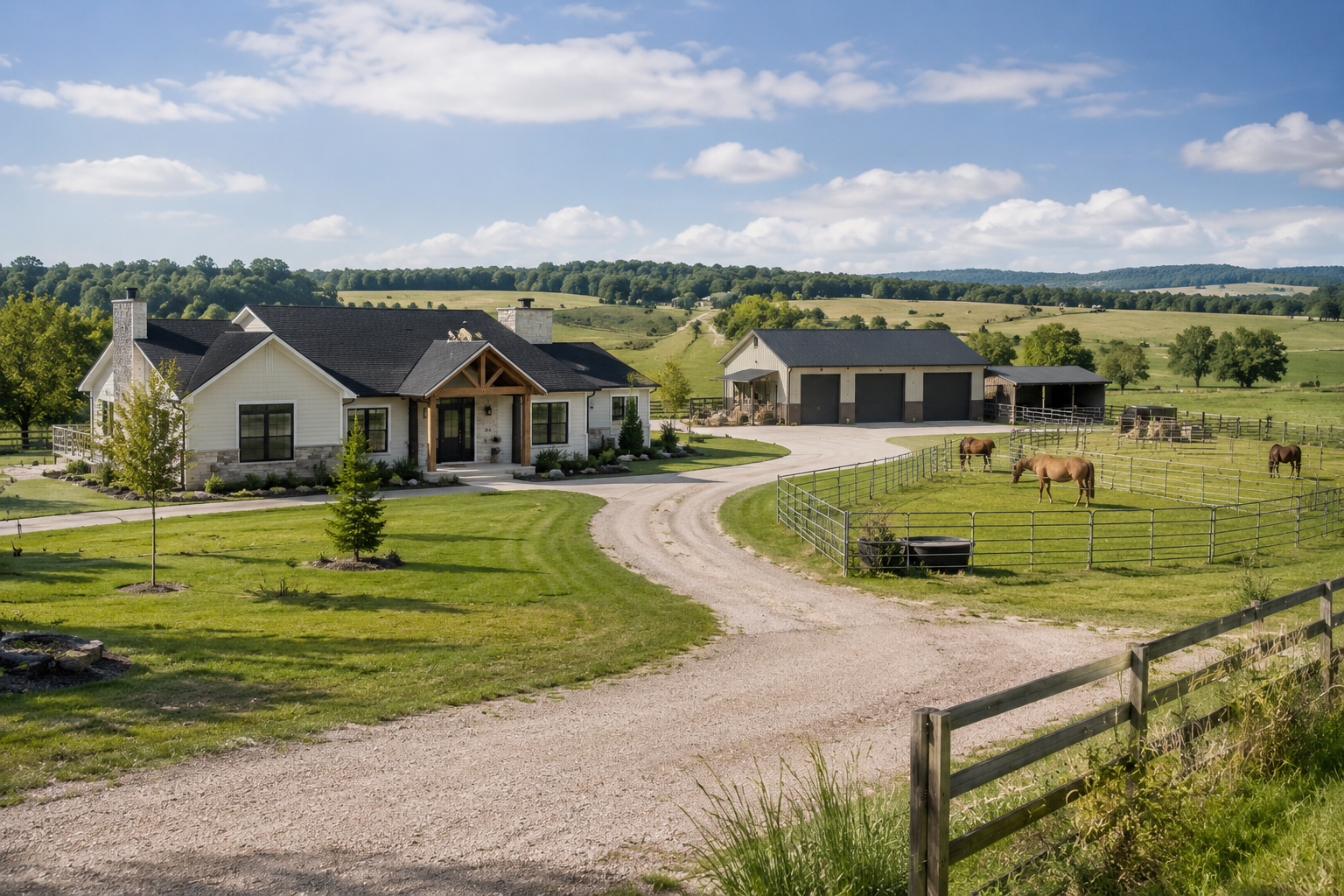
Have you been scrolling through listings at night, dreaming about chickens in the yard and a garden that actually feeds your family? You are not alone. Farmlets have become one of the hottest corners of the American real estate market in 2026. Buyers are trading crowded subdivisions for a few quiet acres. And they are doing it for reasons that go far beyond nostalgia.
This guide walks you through what a farmlet actually is. You will learn where the best deals are right now, how financing works today, and what to check before you sign anything. Whether you want a weekend retreat with a few goats or a hobby farm that pays for itself, this article will help you buy smart.
What Exactly Is a Farmlet?
A farmlet is a small piece of rural land. It usually runs between one and twenty acres. That gives you enough space for a home, a garden, and a handful of animals, but without the workload of a commercial farm. Think of it as the middle ground between a suburban backyard and a full-blown ranch.
A farmlet is not meant to be your main source of income, unlike a working farm. Instead, it supports a lifestyle. You might raise chickens for eggs, keep a couple of dairy goats, or grow vegetables. Many owners simply enjoy the privacy and quiet that comes with open land. Because the scale is smaller, farmlets are also far more affordable for first-time landowners.
People often use the term “hobby farm” interchangeably with farmlet, and for good reason. Both describe properties buyers choose for lifestyle rather than commercial output. However, some owners do eventually turn a farmlet into a small income-generating operation. They sell eggs, honey, or produce at local markets.
Why Americans Are Buying Farmlets in 2026
Interest in small acreage properties has grown steadily since the pandemic. But 2026 is shaping up to be a particularly active year. A few forces are driving this trend.
Remote and hybrid work remain common, so many professionals no longer need to live near an office. As a result, they are choosing counties where land costs less and life moves slower. Meanwhile, food security concerns and rising grocery prices are pushing more households to grow their own produce and raise their own eggs.
On top of that, younger buyers increasingly want sustainable living and self-sufficiency. Retirees, meanwhile, are downsizing from large estates into manageable farmlets that still offer space and privacy. In short, the appeal spans generations and motivations. That is part of why demand has stayed strong even as the broader housing market cools in some regions.
Current Market Snapshot: What Farmlets Cost in 2026
Pricing for small acreage varies dramatically by location. This year’s data confirms that gap is widening, not closing. According to industry land-price research, Texas acre prices are averaging around 7,500 dollars in 2026. Remote West Texas rangeland runs closer to 2,000 dollars an acre. East Texas timberland with road frontage, however, can top 25,000 dollars. That range alone shows how much access, soil quality, and location move the number.
Sunbelt states continue to command a premium. Recent reporting shows Florida land now averages roughly 22,500 dollars per acre statewide. North Carolina and Tennessee are also trending “warm” for the rest of 2026. Meanwhile, more rural and agricultural states remain far friendlier to first-time buyers.
Farm real estate analysts also note that the market is not moving uniformly. One mid-2026 industry report found strong gains in Wyoming and South Dakota, up 8.7 percent and 7.9 percent year over year. Iowa, on the other hand, slipped 1.8 percent as cropland demand softened. That divergence matters for farmlet buyers. It shows lifestyle demand, water access, and acreage scarcity now drive prices more than traditional farming economics.
Financing conditions are also shaping who can compete for these properties. Rural lenders still charge higher farm mortgage rates than they did a few years ago, which has kept some buyers on the sidelines. However, this has also cooled competition for smaller, less glamorous parcels. That creates real openings for patient buyers. In practice, 2026 rewards buyers who get pre-approved early and move fast once they find the right property.
For budget-focused buyers, remote and less-developed states still offer the best entry points. New Mexico and Wyoming have historically ranked among the cheapest per-acre markets in the country. Both remain solid choices if you prioritize space over convenience.
Best US Regions for Small Acreage Hobby Farms Right Now
Every region offers a different trade-off between affordability, climate, and lifestyle. Here is how the landscape looks heading into the back half of 2026.
The Ozarks (Missouri and Arkansas). This region continues to attract hobby farmers thanks to low land costs, mild winters, and a strong homesteading community. You can often find workable farmlets here for a fraction of coastal prices.
East Texas. Timber, water access, and reasonable commutes to cities like Tyler and Longview make this a popular choice. However, road frontage and utility access can raise costs quickly, so budget carefully.
Western North Carolina and East Tennessee. These areas offer a four-season climate and a strong local food culture. They also sit close to growing metro areas, though prices keep climbing as demand rises.
The Pacific Northwest (Oregon and Washington foothills). Buyers here pay more upfront. But rainfall and rich soil make small-scale farming genuinely productive without heavy irrigation investment.
New Mexico and Wyoming. These states remain among the cheapest in the country for buyers who prioritize affordability above all else. Just budget time for water rights and remoteness checks.
Ultimately, the “best” region depends on your goals. If you want to grow food and raise a few animals affordably, look at the Ozarks or the Southeast. If you want recreational land with long-term appreciation potential, check out the Mountain West instead.
Financing Your Farmlet: Loans, USDA Programs, and Owner Financing
Financing a small acreage property works differently than financing a typical suburban home. It helps to understand your options before you start shopping.
Conventional and rural mortgages. Many local and regional banks offer land loans built for rural and agricultural properties. These usually require a bigger down payment than a standard mortgage, often between 20 and 35 percent.
USDA Farm Service Agency loans. The federal government offers meaningful support if you plan to farm even part-time. The USDA’s Farm Service Agency runs direct and guaranteed loan programs for small and beginning farmers. Eligible borrowers can access Farm Ownership Loans up to 600,000 dollars. The agency also offers a microloan option for smaller operations, and it cuts down on paperwork. That can make it a great fit for a first-time farmlet buyer. You can review current eligibility and rates directly through the Farm Service Agency’s official loan resources.
Beginning Farmer programs. FSA also reserves a meaningful share of its loan funds specifically for beginning farmers and ranchers if you are new to land ownership. That can improve your odds of approval and your terms.
Owner financing. Many sellers, particularly for smaller rural parcels, are open to carrying the loan themselves. This arrangement can simplify the buying process considerably. It typically comes at or near full market price, though, since the seller takes on the lending risk.
Compare at least two or three lenders before you commit to any financing path. Rates and terms on rural land loans vary more widely than they do for standard residential mortgages, so shopping around genuinely pays off.
What to Check Before You Buy a Farmlet
Buying small acreage is exciting. But it also comes with a longer due diligence checklist than a typical home purchase. Skipping these steps is one of the most common regrets among first-time buyers.
Zoning and land use restrictions. Confirm the property carries agricultural or residential-agricultural zoning. Check whether local rules allow livestock, structures, or home businesses.
Water rights and well access. Water rights sit separate from land ownership in many western states. That can dramatically affect what you can do on the property. Always confirm water access in writing before closing.
Soil quality. A simple soil test can save you years of frustration if gardening or pasture is part of your plan. You can improve poor soil, but it takes time and money to fix.
Septic and utility access. Rural properties often rely on septic systems and wells instead of municipal services. Get both inspected, since replacement costs can run into the tens of thousands of dollars.
Easements and access roads. Confirm you have a legal, maintained right of way to the property. Some remote parcels look like a bargain, until you discover the only access road crosses someone else’s land without a formal easement.
Flood zones and natural hazards. Flood mapping and wildfire risk deserve extra attention, since farmlets often sit in rural, undeveloped areas. This matters most in the Southeast and parts of the West.
Turning Your Farmlet into a Working Hobby Farm
Once you close on your property, the fun part begins. Most successful hobby farmers start small. They expand gradually, rather than trying to do everything in the first year.
Chickens are usually the easiest entry point. They need minimal space, they provide fresh eggs quickly, and they teach new landowners the basics of animal care. Many owners then add a small vegetable garden. From there, they often add dairy goats or a few sheep once fencing and shelter are ready.
If you are unsure where to start, check out our beginner’s guide to planning a small homestead. It walks through a practical first-year timeline, including which animals and crops make sense before you invest in bigger infrastructure.
As you grow, consider whether you want to sell surplus produce or eggs locally. Farmers markets, roadside stands, and community-supported agriculture programs all help farmlet owners offset costs. That holds true even if farming was never meant to be a full-time income source.
Common Mistakes First-Time Farmlet Buyers Make
Many buyers fall in love with a property’s views or charm. As a result, they skip the unglamorous parts of due diligence, and they end up facing expensive surprises after closing.
One frequent mistake is underestimating fencing costs. Fencing several acres properly for livestock can cost thousands of dollars, and buyers often forget to budget for it. Another common issue is buying land without confirmed water rights. Some buyers only discover afterward that drilling a well is either prohibited or prohibitively expensive.
Some buyers also underestimate the time commitment. Even a modest hobby farm demands daily care, especially with animals involved. Try to visit the property across different seasons if you can. A farmlet that looks idyllic in spring can feel very different during a muddy winter or a dry summer.
Finally, many first-time buyers skip a professional land survey. They assume the listed boundaries are accurate. A survey costs little upfront, and it can prevent major boundary disputes down the road.
Final Thoughts on Buying a Farmlet in 2026
Farmlets offer something increasingly rare in modern life: space, quiet, and a genuine connection to where your food comes from. The market in 2026 remains active, with strong regional variation that rewards buyers who do their homework. You might be drawn to the affordability of the Ozarks, the productivity of the Pacific Northwest, or the wide-open value of Wyoming and New Mexico. Either way, a farmlet out there likely fits both your budget and your lifestyle goals.
Take your time. Verify water rights and zoning before you fall in love with a property, and explore USDA financing options if farming fits your long-term plan. With the right preparation, a small acreage property can become one of the most rewarding purchases you ever make.
Frequently Asked Questions
What is the difference between a farmlet and a full-size farm? A farmlet is a small piece of land, generally between one and twenty acres, meant mainly for lifestyle use rather than commercial farming. A full-size farm typically spans dozens or hundreds of acres. Owners run it as a business, with crop or livestock production as the main source of income.
How many acres do I need for a hobby farm? Most hobby farms work well on anywhere from two to ten acres. This range usually gives you enough room for a garden, a small orchard, and a few animals like chickens, goats, or sheep, without becoming overwhelming to manage part-time.
Can I get a USDA loan for a hobby farm? Yes, in many cases. The USDA’s Farm Service Agency offers direct and guaranteed loans, including microloans for small and beginning farmers. Eligibility depends on factors like your farming experience and how you plan to use the land. It is worth calling a local FSA office to confirm your specific situation.
Are farmlets a good investment in 2026? Farmlets can hold or grow in value, particularly in states where lifestyle demand and acreage scarcity are pushing prices upward, such as Wyoming and South Dakota. However, appreciation depends heavily on location, access, and long-term regional demand, like with any real estate purchase. Properties with strong water access, road frontage, and proximity to a growing town tend to hold their value best, even when the broader land market cools.
What should I check before buying rural land for a farmlet? At minimum, confirm zoning, water rights, septic and well condition, legal road access, and flood or wildfire risk. We also strongly recommend a professional survey and a soil test before closing.
Do I need farming experience to buy a farmlet? No, many farmlet owners start with no prior experience. Starting small, such as with a garden and a few chickens, gives you a common and manageable way to learn before expanding into larger livestock or crops.
Is owner financing a good option for buying small acreage? Owner financing can simplify the buying process, especially for smaller rural parcels where traditional lenders may hesitate. It typically comes at or near full market price, though. This option works best for buyers who value convenience and flexible terms over the lowest possible purchase price.
What is the cheapest state to buy a farmlet in 2026? New Mexico and Wyoming remain among the most affordable states for small acreage, thanks to historically low per-acre pricing. That said, carefully evaluate remoteness and water access before you buy in these regions.