

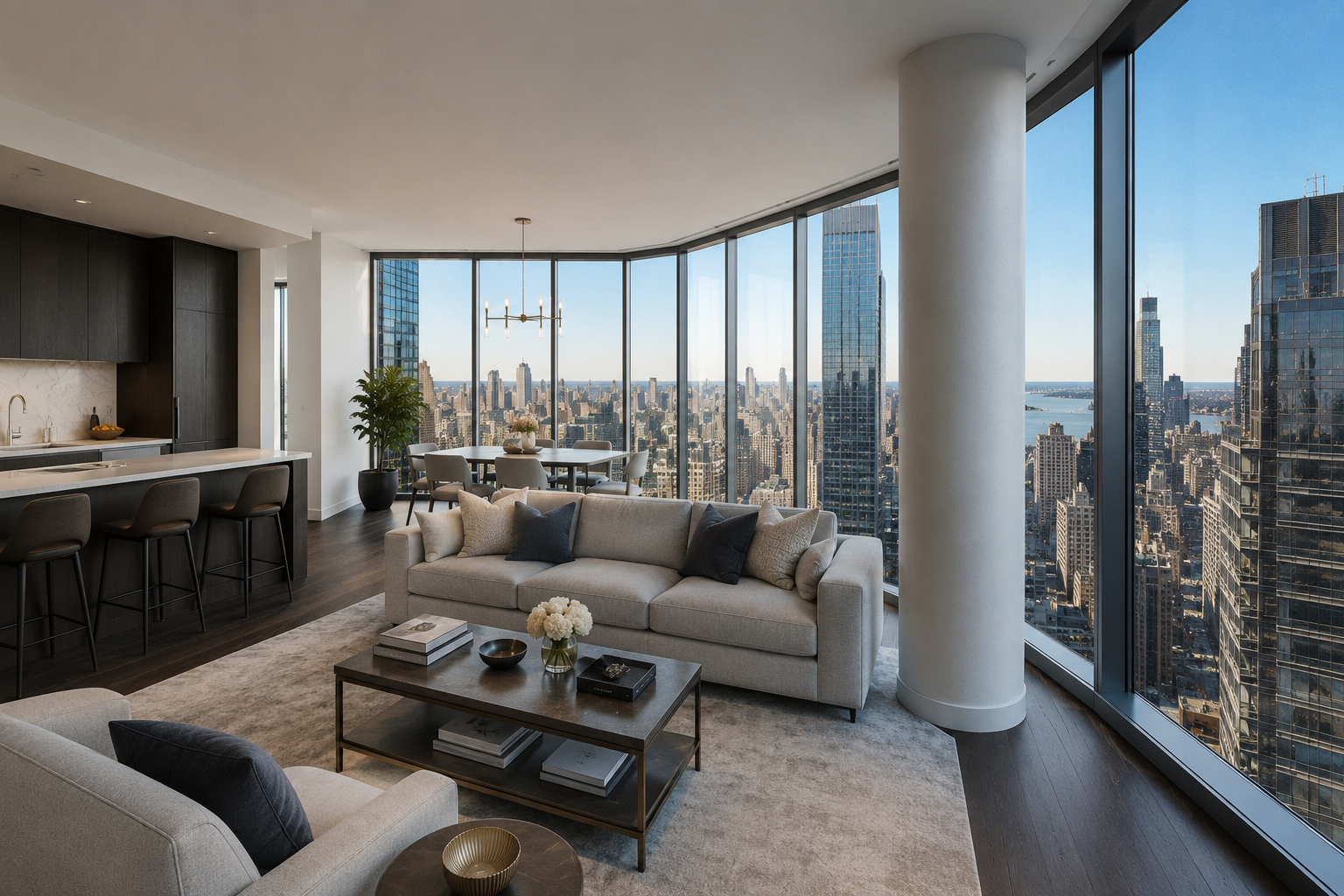
If you’ve spent time searching for Manhattan real estate, you know the market can feel crowded. Every building claims to be the best. Every listing photo looks the same. It’s hard to know which addresses actually deliver long-term value.
That’s why The Sheffield 57 keeps coming up in serious buyer conversations. It’s located at 322 West 57th Street. This 597-unit tower has quietly become one of the smarter plays in Midtown Manhattan. It offers a prestigious address without full Billionaires’ Row prices.
In this guide, we’ll cover what buyers need to know in 2026. That includes the building’s history, current pricing, amenities, and how it compares to nearby developments. Whether you’re relocating from out of state, investing from abroad, or simply upgrading within the city, this article should give you a clear picture.
Where Is The Sheffield 57 Located?
The Sheffield sits at 322 West 57th Street. It’s between Eighth and Ninth Avenues in Midtown West. Some brokers also call this area Lincoln Square.
Geographically, the location is hard to beat. Central Park is roughly three blocks east. The Hudson River waterfront sits about the same distance west. Because of this, many upper-floor units offer views in both directions. That’s unusual for a building at this price point.
Columbus Circle, Lincoln Center, and the Theater District are all within walking distance. Commuters have easy access to several subway lines nearby. So getting to Midtown offices, the Upper West Side, or Downtown is simple. In short, the location supports a genuinely central Manhattan lifestyle. That’s a major reason buyers keep coming back.
A Brief History of The Sheffield 57
A building’s backstory matters more than most buyers realize. It affects everything from construction quality to long-term value. The Sheffield was originally built in 1978 as a rental property. The well-known firm Emery Roth & Sons designed it. For nearly three decades, it simply operated as a large apartment building.
Everything changed in the mid-2000s. Developer Kent Swig led one of the most ambitious condo conversions in Manhattan’s history. The transformation was intensive. Crews reclad the building’s base in granite and glass. Cetra/Ruddy Architects handled a complete interior overhaul. As a result, nearly 600 rental units became modern condominiums with updated layouts and better finishes.
That said, the conversion wasn’t entirely smooth. Longtime New Yorkers may recall some financial and legal turbulence along the way. However, The Sheffield has since matured into a genuine success story. Today, brokers often point to it as proof that a strong renovation can outlast a rocky start.
Inside the Residences: Floor Plans and Finishes
One of the biggest draws here is variety. The building holds nearly 600 units. So buyers can choose from efficient studios all the way up to four-bedroom residences. Some larger units exceed 3,000 square feet. This range appeals to many types of buyers. That includes first-time Manhattan purchasers, growing families, and downsizing empty nesters.
In terms of finishes, most residences feature Nordic ash wood flooring throughout. This gives the interiors a light, airy feel. It’s different from the darker tones common in older prewar buildings. Kitchens generally include white glass and taupe cabinetry. Countertops are Italian marble. Bathrooms feature travertine and granite tiling. Many units also include oversized or floor-to-ceiling windows. These maximize natural light and frame park or river views.
For buyers who want Central Park views, floor level matters a lot. Units above the 29th floor with northern exposure tend to offer the clearest sightlines. Meanwhile, west-facing units on similar floors capture strong Hudson River views. Consequently, exposure matters just as much as square footage when comparing listings.
Amenities That Set The Sheffield Apart
Luxury buyers in 2026 expect more than nice countertops. The Sheffield generally delivers on that front. The building’s signature amenity is its Sky Club. This space spans roughly 24,000 square feet across the top floors. It typically includes a rooftop pool, sun decks, and skyline views. There’s also a full fitness center with a yoga and Pilates studio, plus a spa area with a sauna.
Beyond the Sky Club, residents get more. There’s a 24-hour doorman and concierge team. Attended parking is available, along with a private driveway connecting 56th and 57th Streets. A pet spa serves dog owners, which is an increasingly common request among NYC buyers. There’s also a residents-only lounge with billiards and game tables. It’s a nice option for socializing without leaving the building.
Altogether, this amenity package holds up well against newer luxury developments. That’s true even though the building dates back to the late 1970s. This mix of classic bones and modern amenities is exactly what makes The Sheffield stand out.
Current Market Snapshot (July 2026)
As of mid-2026, the resale market here stays modestly active. Roughly a dozen units are typically listed for sale at any given time. Average pricing hovers between $1,700 and $1,750 per square foot. That’s meaningfully lower than buildings directly on Billionaires’ Row. There, per-square-foot pricing often runs two to three times higher for similar finishes and views.
This gap matters because it reflects real value, not a compromise in quality. In other words, buyers usually aren’t settling for less. They’re often getting comparable interiors and amenities for a fraction of the cost. That’s simply because the building carries a different pedigree than its ultra-luxury neighbors. Naturally, this has made The Sheffield popular among buyers who want a 57th Street address without paying $5,000 per square foot.
It also helps to understand the broader context. According to the National Association of Realtors, national home sales have remained sensitive to mortgage rates through 2025 and into 2026. New York City’s luxury condo segment tends to move somewhat independently of national trends. Many buyers here purchase in cash. Still, understanding financing conditions nationally can help buyers plan before making an offer.
Why Buyers Choose The Sheffield Over Billionaires’ Row
Billionaires’ Row has dominated headlines for over a decade. It’s the nickname for the ultra-tall towers along 57th Street. However, not every buyer wants that level of exclusivity. That’s exactly where The Sheffield fills a gap.
First, the price difference is substantial. Buyers can often secure two or three times the square footage for the same budget. Second, the building has been established for years, not newly built. So buyers can review a longer sales history and proven management. That’s more reassuring than relying purely on developer projections. Third, the condominium structure gives owners real voting rights and financial transparency through the building’s board.
That said, some buyers still want ultra-high ceilings or record-setting views. Newer supertall towers nearby may suit them better. Ultimately, it comes down to priorities. Do you want raw prestige and height, or practical luxury with strong value and a proven track record?
If you’re weighing both options, tour units in each building before you decide. And if you’re new to condo ownership, our guide to the differences between a condo and an apartment explains how ownership, fees, and board rules work.
The Neighborhood: Midtown West and Lincoln Square Living
Beyond the building itself, the neighborhood shapes daily life. Midtown West is sometimes called Lincoln Square by locals and brokers. It has genuinely evolved over the past several years. New restaurants and retail have opened along the corridor. Hudson Yards continues to grow, adding more dining and shopping options nearby.
For culture lovers, Lincoln Center sits just a few blocks away. It offers opera, ballet, and orchestral performances year-round. Meanwhile, Central Park provides immediate access to outdoor space. That means morning runs, weekend picnics, or a quiet escape from city noise. For families, this mix of culture, green space, and convenience often becomes a deciding factor.
The neighborhood also benefits from strong transit access. That matters for anyone commuting to Midtown or Downtown offices. Because of all this, Lincoln Square consistently ranks among the more livable Manhattan neighborhoods. It strikes a balance between energy and everyday comfort that flashier areas sometimes lack.
Is The Sheffield 57 a Good Investment in 2026?
This is the question most buyers really care about. Honestly, it depends on your goals. For buyers who prioritize long-term value, The Sheffield has held up well. It never reached the speculative highs seen in some newer luxury towers. As a result, there’s arguably less downside risk if the broader luxury market softens.
On the other hand, some buyers hope for rapid appreciation. Established buildings like this one tend to move steadily. They rarely see the sharp price swings that trophy new developments sometimes experience. Therefore, if you want a stable, livable asset in a prime location, The Sheffield fits that profile well.
Rental potential is also worth considering. Some buyers purchase with an eye toward leasing the unit out later. The building’s history and management generally support this strategy. Still, always confirm current subletting policies before assuming this works for a specific unit.
Actionable Insights for Prospective Buyers
Before making an offer, take a few practical steps:
- Request recent comparable sales within the building itself, not just the neighborhood. Pricing per square foot can vary a lot by floor and exposure.
- Ask your broker about the building’s financial health. Check reserve funds and any upcoming assessments, since older buildings occasionally need capital improvements.
- Prioritize units above the 29th floor if park or river views matter to you. Lower floors may face neighboring buildings instead of open sightlines.
- Factor in monthly common charges and taxes early in your budget. These can meaningfully affect your total cost of ownership.
- Work with a broker who has closed deals specifically in this building. General Midtown experience isn’t quite the same. Building-specific knowledge often reveals negotiation leverage or unit-level quirks a generalist wouldn’t catch.
Frequently Asked Questions
Is The Sheffield 57 the same as Billionaires’ Row?
No. It’s a separate building on West 57th Street. It shares the same street as several Billionaires’ Row towers. But The Sheffield is a converted 1978 building. It’s priced significantly lower per square foot.
When was The Sheffield built and converted to condos?
The building was originally constructed in 1978 as a rental property. It was later converted into condominiums in the mid-2000s. Developer Kent Swig led the renovation. Cetra/Ruddy Architects designed the interiors.
How many units are in The Sheffield 57?
The building contains approximately 597 residential units. Layouts range from studios to four-bedroom homes. That makes it one of the larger condo buildings in Midtown Manhattan.
What amenities does The Sheffield offer?
Residents get access to a Sky Club spanning roughly 24,000 square feet. It includes a rooftop pool, fitness center, sun decks, and spa facilities. There’s also a 24-hour doorman, private driveway, attended parking, and a pet spa.
Is The Sheffield 57 a good investment?
Many buyers view it favorably for value retention. It historically avoided the sharp price swings seen in newer luxury towers. However, buyers seeking rapid appreciation may prefer newer supertall developments instead.
What is the average price per square foot at The Sheffield in 2026?
As of mid-2026, average resale pricing generally falls between $1,700 and $1,750 per square foot. Individual pricing varies based on floor, exposure, and unit condition.
Is The Sheffield 57 close to Central Park?
Yes. Central Park sits approximately three blocks east of the building. Many upper-floor units with northern exposure offer clear park views.
Do I need to be a U.S. citizen to buy a condo at The Sheffield?
No. International buyers regularly purchase condos in New York City, including here. That said, foreign buyers should work with a real estate attorney familiar with cross-border transactions. Financing and tax rules can differ from domestic purchases.