

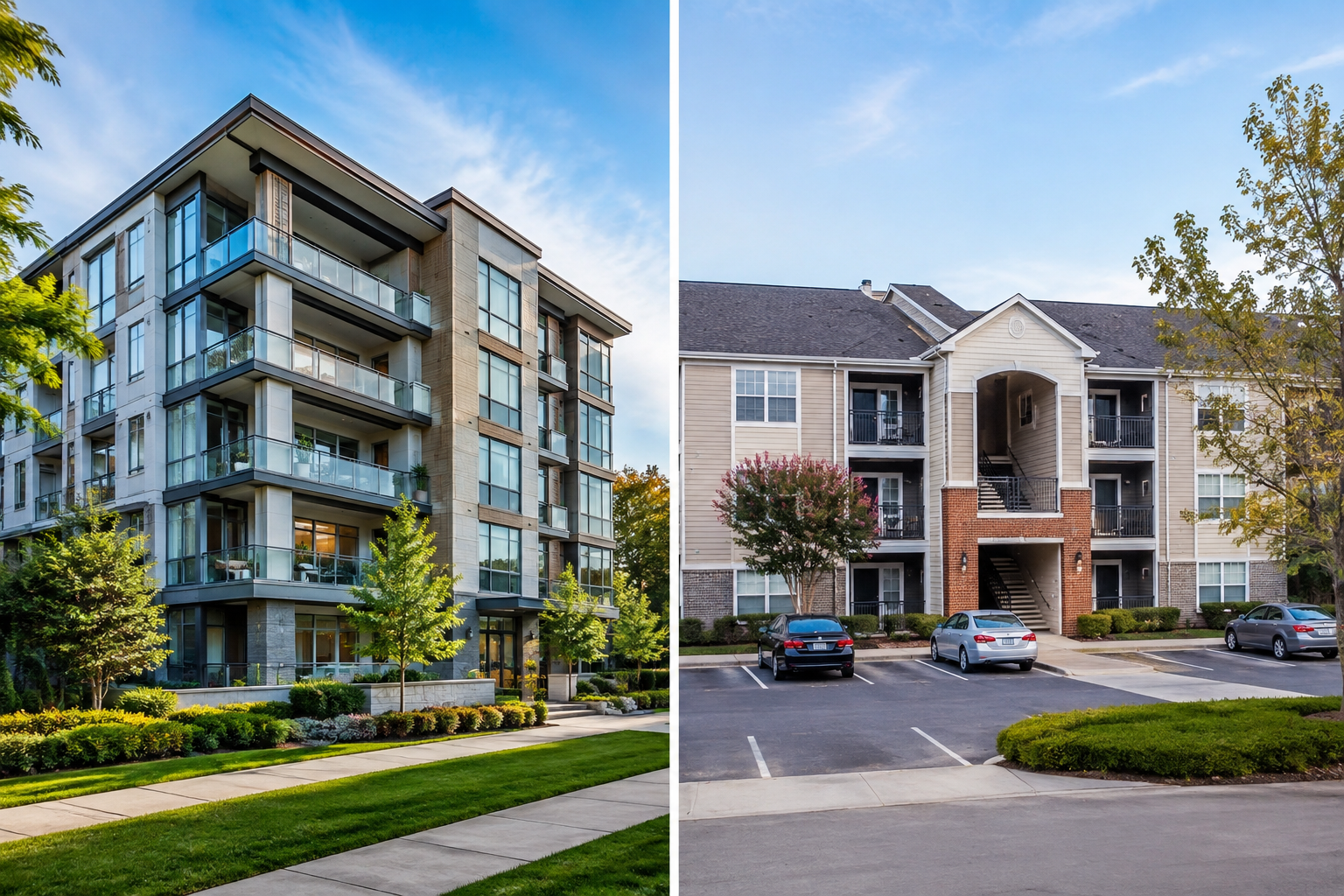
Have you been scrolling through listings and wondering why some places say “condo for sale” while others say “apartment for rent”? You’re not alone. These two words get mixed up all the time, and honestly, that confusion makes sense. Condos and apartments often look identical from the outside. They share the same buildings, the same floor plans, and sometimes even the same amenities, like a gym or a rooftop deck. So what actually separates them?
In short, it comes down to ownership. You buy and own a condo outright. You rent an apartment from a landlord or a property management company. That single distinction, however, sets off a chain reaction. It shapes your costs, your responsibilities, your ability to customize your space, and your long-term finances. This guide breaks down everything you need to know in 2026. We’ll cover how today’s mortgage rates, HOA fees, and insurance trends are reshaping this decision for buyers and renters across the United States.
Quick Answer
A condo is real estate you own. It typically sits inside a shared building governed by a homeowners association, or HOA. An apartment is different. You rent it from a landlord or a company, and you pay monthly rent without building any equity. Condos come with mortgage payments, property taxes, and HOA dues. In exchange, you build ownership over time. Apartments offer more flexibility and fewer long-term obligations. However, you won’t gain equity from your monthly payments.
What Is a Condo?
A condominium, or condo, is an individually owned unit inside a larger building or community. When you buy a condo, you own the interior space. That includes everything from the paint on your walls to your appliances and flooring. Things are different outside your unit, though. The building’s exterior, hallways, elevators, parking areas, and shared amenities count as common property. All residents jointly own these spaces, and the homeowners association manages them.
That HOA plays a big role in condo living. It collects monthly dues from owners. It maintains shared spaces, enforces community rules, and sets aside reserve funds for major repairs, like roof replacements or elevator upgrades. Because you technically own your unit, you can get a mortgage to buy it. You’ll build equity as you pay it down, and you can eventually sell it for a profit if the market cooperates. You can also renovate the interior, subject to any HOA restrictions, in ways a renter simply cannot.
Condos are especially popular in dense urban areas and vacation destinations across the U.S. Cities like Miami, Chicago, Austin, and Phoenix all have thriving condo markets. Land runs scarce in these places, so buyers want ownership without the upkeep of a detached single-family home.
What Is an Apartment?
An apartment is a rental unit within a building. A landlord, an investment company, or a large property management firm owns it. You sign a lease, usually for six to twelve months, and you pay rent each month for the right to live there. Unlike a condo, you don’t own any part of the property. None of your monthly payments build equity or ownership.
The upside is flexibility. Renting an apartment generally requires less upfront cash than buying. You take on no long-term financial commitment and no responsibility for major repairs. If the water heater breaks or the roof leaks, that’s the landlord’s problem, not yours. This setup makes apartments a natural fit if you move frequently, if you’re new to a city, or if you simply aren’t ready to commit to homeownership yet.
Apartment complexes also tend to bundle amenities into your rent. Think fitness centers, pools, package lockers, and sometimes even coworking spaces. A single company or owner typically manages the entire building. As a result, maintenance requests, policy changes, and upgrades tend to move faster than they do in condo communities, where owners must vote on major changes.
Ownership vs. Renting: The Core Difference
At its heart, the condo versus apartment debate is really an ownership versus renting debate wearing different clothes. When you buy a condo, you’re entering the real estate market. You’ll need a down payment, a mortgage, and enough credit and income to qualify for financing. In exchange, you gain an appreciating asset. You also unlock tax benefits, like mortgage interest deductions, and you gain the freedom to sell or rent out the unit later.
Renting keeps your finances more liquid. You’re not tied to a 15 or 30-year loan. If your job relocates you or your lifestyle changes, you can simply let your lease expire and move on. That said, you miss out on any equity growth. Your rent can also increase at each renewal, sometimes significantly, depending on local market conditions.
Cost Comparison: Condos vs. Apartments in 2026
Money is usually the deciding factor, so let’s talk numbers as they stand in mid-2026. Mortgage rates have remained stubbornly in the mid-6% range for much of the year. As of early August 2026, the average 30-year fixed mortgage rate hovered around 6.7% to 6.8% nationally, according to Freddie Mac’s weekly Primary Mortgage Market Survey. That’s noticeably higher than the ultra-low rates of the early 2020s, and it directly affects your monthly payment as a condo buyer. If you’re still getting familiar with how financing works, our first-time homebuyer guide breaks down the mortgage process step by step.
Here’s some context. Borrowing $300,000 at today’s rates costs meaningfully more per month than it would have just a few years ago. As a result, many first-time buyers find condos more attainable than single-family homes, simply because the purchase price tends to be lower. Still, run the full math before assuming a condo automatically beats renting. Include your HOA dues in that math, too.
Speaking of dues, HOA fees have climbed steadily. Nationally, the median HOA fee reached $135 per month in 2025, up from $108 in 2019. That trend has continued into 2026. Condos and townhomes carry these fees more than other property types. In fact, roughly 85% of condo and townhome listings include a monthly HOA charge. Fees have surged even faster in some regions, particularly Florida, due to stricter post-2021 building safety requirements and rising insurance premiums.
Apartments sidestep HOA fees entirely. However, rent itself has kept rising in most metro areas, especially in fast-growing Sun Belt cities. So the real comparison isn’t simply rent versus mortgage payment. It’s rent versus mortgage plus property taxes plus HOA dues plus insurance, weighed against the long-term benefit of building equity.
HOA Fees, Maintenance, and Insurance Realities
This is where condo ownership gets more complicated than it first appears. Insurance costs for HOAs and condo associations have risen sharply in recent years. Industry forecasts point to continued increases through 2026. Higher reinsurance costs, more frequent severe weather events, and stricter state-mandated reserve requirements are all pushing premiums upward. Those costs get passed directly to unit owners. Sometimes they show up as higher monthly dues; other times, they trigger a special assessment.
If you’re considering a condo purchase, ask the HOA for its most recent reserve study. Also request its insurance renewal history before you sign anything. A building with a healthy reserve fund and a stable insurance history is a much safer bet. Buildings that underfund maintenance for years often trigger sudden, expensive special assessments, and those assessments land on owners with little warning.
Apartment renters avoid this risk entirely. Your landlord carries the building insurance, handles the reserve planning, and absorbs the surprises. You only need renters insurance, which is inexpensive and covers your personal belongings rather than the structure itself.
Pros and Cons at a Glance
Condo ownership has real advantages. You build equity, you may qualify for tax deductions, you can renovate your interior freely, and you gain long-term appreciation potential. But condos also carry downsides. You’ll need a down payment, you’ll pay ongoing HOA dues, you face exposure to special assessments, and you have less flexibility if you need to move quickly.
Apartments have their own advantages, too. Upfront costs run lower, you carry no maintenance responsibility, mobility comes easily, and your monthly expenses stay predictable within your lease term. The tradeoffs matter, though. You build no equity, your rent can increase at renewal, and you have less control over renovations or long-term stability, since a landlord can choose not to renew your lease.
Which Is Right for You?
The right choice depends on your timeline, your finances, and your lifestyle goals. Do you plan to stay in one place for at least five years? Do you have stable income? If you want to start building equity, a condo often makes more financial sense despite higher upfront costs. Buying generally pays off the longer you stay, since you spread transaction costs over more years of ownership.
Do you value flexibility? Are you unsure where you’ll be in a year or two? If you simply don’t want the responsibility of homeownership right now, renting an apartment is usually the smarter move. There’s no shame in renting while you save for a down payment or wait for mortgage rates to ease. Many financial advisors actually recommend this path. Rent until your monthly housing costs, including a realistic HOA estimate, comfortably fit your budget without stretching your finances thin.
It also helps to think honestly about your relationship with maintenance and shared decision-making. Condo living means participating in HOA meetings, voting on budgets, and sometimes disagreeing with neighbors about community rules. Does that sound exhausting? An apartment’s hands-off structure might suit you better.
Local Context: How the Condo vs. Apartment Decision Plays Out Across the U.S.
Location changes this equation significantly. Condo construction has expanded rapidly across Sun Belt metros like Dallas-Fort Worth, Phoenix, and Austin over the past decade. That growth gives buyers more inventory and, in many cases, more competitive pricing compared to single-family homes in the same neighborhoods. Texas has seen especially strong demand for condos near urban job centers. The state’s lack of income tax and relatively lower cost of living continue to draw new residents.
Florida tells a different story. Post-2021 building safety reforms followed the Surfside condo collapse. These reforms brought mandatory structural inspections and stricter reserve funding rules. That’s driven insurance and HOA costs sharply higher in many Florida buildings. Some associations now report fee increases well above the national average. If you’re eyeing a Florida condo, scrutinize the building’s inspection history and reserve fund status even more carefully than you would elsewhere.
Cities like Los Angeles and San Francisco continue to see high apartment demand on the West Coast. Home prices there stay persistently high, which keeps renting the more accessible option for many residents. Meanwhile, both condos and apartments remain relatively more affordable across the Midwest and parts of the Northeast. Buyers and renters in those regions get more breathing room to weigh their options, without the intense price pressure seen on the coasts.
Are you relocating for work or comparing markets? Research local housing costs before committing either way. The condo-versus-apartment math can shift dramatically from one metro area to another.
2026 Market Outlook
Looking at the rest of 2026, most economists expect mortgage rates to stay in the mid-6% range. That could change if the Federal Reserve resumes rate cuts later in the year. Meanwhile, many would-be buyers have stayed on the sidelines. That’s cooled price growth in several condo markets and modestly improved inventory. HOA and insurance costs show no signs of slowing down, though, particularly in coastal and hurricane-prone regions.
Apartment demand remains strong for renters in growing metros. Rent growth has moderated, though, compared to the sharp increases seen earlier in the decade. Overall, 2026 is shaping up to be a market where careful budgeting matters more than ever, whether you’re signing a lease or closing on a condo.
Actionable Tips Before You Decide
Run a full cost comparison before you commit to either path. Include taxes, insurance, and HOA dues, not just the sticker price or rent amount. Ask any condo HOA for its financial statements, its reserve study, and its history of special assessments. These documents reveal far more than a walkthrough ever will. If you’re buying, get pre-approved for a mortgage first. That way, you’ll know your realistic budget before you fall in love with a listing.
Frequently Asked Questions
Is a condo cheaper than an apartment?
Not necessarily. A condo’s mortgage payment might match or even beat rent in some markets. But once you add property taxes, HOA dues, and insurance, total monthly costs can end up higher than renting a similar apartment. It really depends on the specific building, location, and current mortgage rates.
Can you rent out a condo like an apartment?
Yes, in most cases. Condo owners can often lease their units to tenants, essentially turning them into rental apartments. Many HOAs place restrictions on rentals, though, such as minimum lease lengths or caps on the percentage of units that owners can rent out at one time. Always check the HOA bylaws before buying if you’re planning to rent the unit out.
What happens if I don’t pay my HOA fees?
The HOA can place a lien on your property. In serious cases, it can pursue foreclosure over unpaid dues. This is one of the more serious risks of condo ownership. Falling behind on fees can jeopardize your equity, even if you stay current on your mortgage.
Do apartments ever convert into condos?
Yes, this happens through a process called condo conversion. A landlord or developer sells off individual units in a former apartment building to owner-occupants. It’s fairly common in cities with rising property values. Converting units to condos often lets owners sell at a premium, compared to keeping the building as a rental.
Which is better for building wealth, a condo or an apartment?
Owning a condo generally builds equity over time. Apartments simply can’t offer that, since rent payments don’t contribute to any asset you own. That said, buying only makes financial sense if you plan to stay long enough to offset closing costs and HOA expenses, typically at least four to five years.
Are condo HOA fees negotiable?
No, the association’s board sets HOA fees based on the community’s budget, and individual owners can’t negotiate their own rate. You do have some influence, though. You can attend HOA meetings, review the budget, and vote on major decisions, since owners collectively shape how dues get set and spent.
Is it harder to get a mortgage for a condo than a house?
Sometimes, yes. Lenders often scrutinize the condo association’s finances first. They’ll look at reserve funds and insurance coverage before approving a loan, since a financially unstable HOA increases their risk. This scrutiny applies especially to older buildings or associations with a history of insurance claims.
What’s the difference between a condo and a townhouse?
A condo typically includes only the interior unit. Owners share ownership of the building structure and common areas. A townhouse usually includes both the interior and the land it sits on, along with the exterior walls and roof. Townhouses often come with fewer shared amenities but also fewer HOA restrictions, depending on the community.
Final Thoughts
Choosing between a condo and an apartment ultimately comes down to fit. How much ownership, flexibility, and financial commitment matches your current life stage? Condos offer a path to building equity and long-term wealth. They also come with real responsibilities, from HOA governance to rising insurance costs that show no sign of slowing in 2026. Apartments offer simplicity and freedom instead, without the upside of ownership.
There’s no universally right answer here. What matters is matching your choice to your timeline, your budget, and how much responsibility you actually want to take on. Whichever direction you lean, take the time to run real numbers and ask the right questions. Make sure your decision fits your life, not just today’s market conditions.
[…] you’re comparing condo living against other housing options in Saskatoon before you commit, our guide to choosing between condos and apartments on PlazmaHomes breaks down the lifestyle and cost trade-offs in more […]
[…] deciding what kind of home suits you? Our condo vs. apartment guide breaks down the differences, and if you’re also looking elsewhere in Tennessee, take a look […]
[…] you’re comparing rental options, our guides to lease agreement terms and red flags and to the differences between a condo and an apartment are worth reading before you commit to a […]
[…] in each building before you decide. And if you’re new to condo ownership, our guide to the differences between a condo and an apartment explains how ownership, fees, and board rules […]