

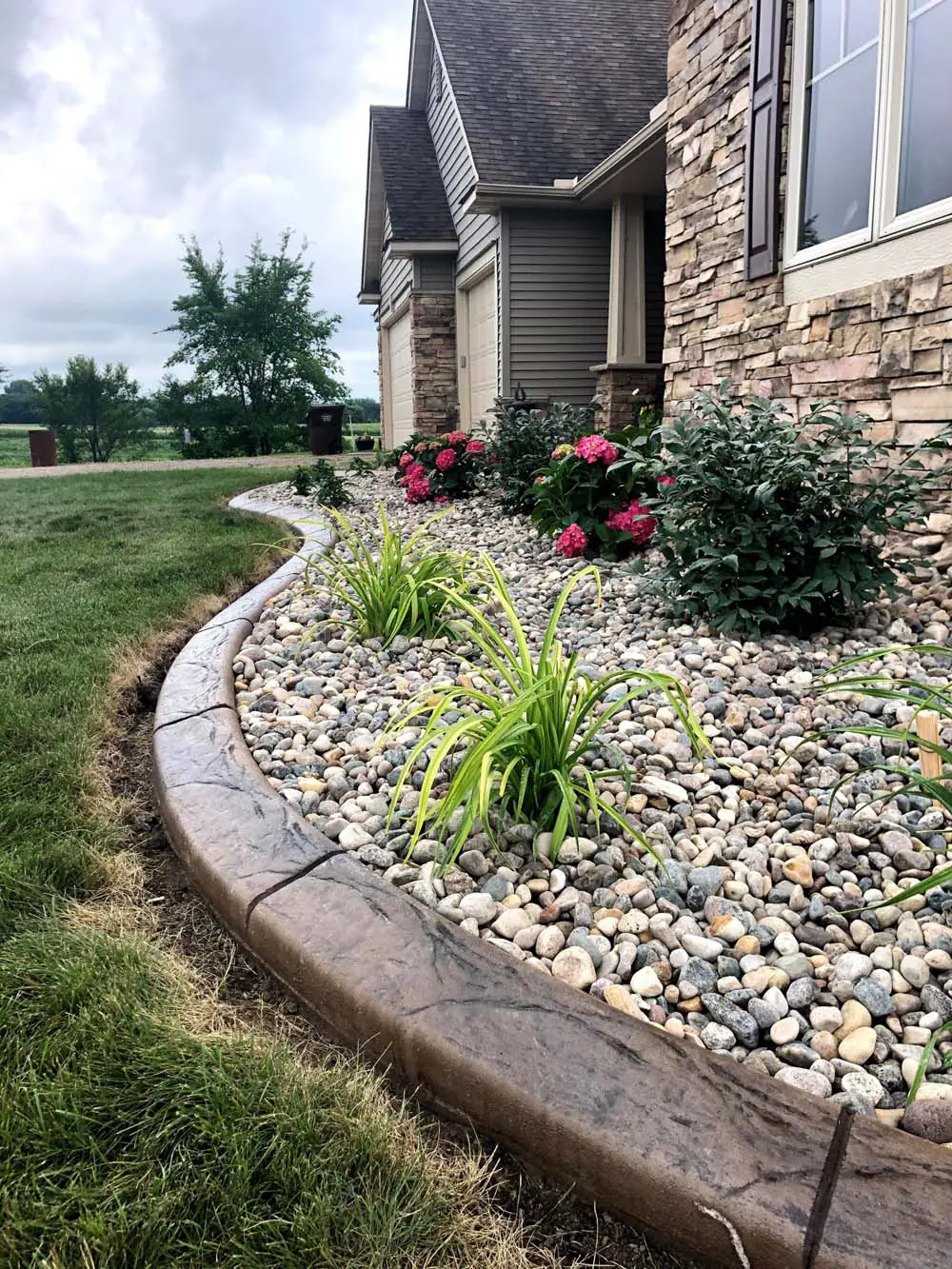
Lowe’s, Ace Hardware, Tractor Supply, and independent garden centers across the U.S. all carry KolorScape river rock, a bagged, ready-to-use landscaping stone. Each bag holds 0.5 cubic feet and weighs roughly 47–50 pounds, and the rocks inside generally run from about 3/4 inch up to 3 inches depending on the specific product line. Most homeowners use it for flower beds, drainage areas, walkways, and dry creek beds. One bag typically covers 3 to 6 square feet at a 2 to 3 inch depth, and as of mid-2026, prices generally fall between $6.99 and $8.99 per bag, though that range shifts depending on retailer and region.
That covers the short version. Below, we’ll get into the details that actually matter before you buy: which size to pick for which project, how many bags you really need, where the product runs inconsistent, and when a different material would serve you better.
Jump to a section:
What Exactly Is KolorScape River Rock?
KolorScape works as a landscaping rock brand that big-box retailers and hardware chains distribute, rather than a single quarry or manufacturer producing it under one roof. That distinction matters more than it sounds like it should, because it explains a lot of the inconsistency you’ll find in customer reviews. Water naturally rounds and tumbles the stone itself — this is genuine river rock, not crushed or manufactured stone — but because suppliers source it regionally and then bag it for national distribution, the exact mix of colors, shapes, and sizes inside a bag can vary depending on where and when a facility packaged it.
The KolorScape name covers several finishes: multicolor river rock, gray river rock, drainage rock, pea gravel, egg rock, and marble chips. This guide zeroes in on the river rock varieties specifically, since that’s what most people search for and buy.
KolorScape River Rock Sizes
A lot of confusion starts here, because different retailers list the same general product with slightly different size ranges.
- Lowe’s typically describes its multicolor and gray river rock as a 0.5 to 3 inch mixed size range.
- Tractor Supply and Ace Hardware, meanwhile, list similar bags with a narrower stated range, closer to 3/4 inch to 1 3/4 inch, or sometimes just “1-inch particle.”
- Independent garden centers carrying the same brand sometimes describe it as 1 to 2 inch stone.
In practice, this means you should expect a genuine mix inside each bag rather than a uniform, sorted product — some pebbles closer to marble-sized, others closer to golf-ball or small egg-sized. If size uniformity matters for your project — say, a modern minimalist entry path where every stone should look similar — this is worth knowing before you buy. Otherwise, if you’re filling a flower bed or drainage swale where variation actually looks more natural, it’s not a real concern.
Practical takeaway: open a bag or two before committing to a large order, especially if consistency matters visually. That way you know exactly what you’re working with instead of guessing from a stock photo.
Colors Available
The most common finishes include:
- Multicolor – a blend of tan, brown, gray, and white tones, often described as “earth tone.” Retailers stock this option most widely.
- Gray – a more uniform gray and white blend. That said, multiple reviewers across retailers report receiving mixed or lighter-colored rock than the product photo showed for this specific SKU.
- Tan/warm brown blend – Ace Hardware sells a similar product line described as light tan with white, brown, and black tones.
Here’s a detail most buying guides skip: the rock often ships covered in a layer of quarry dust or dried clay residue, which makes it look duller, more uniform in color, or even a different shade than the bag photo suggests. Reviewers across Lowe’s and Tractor Supply frequently describe the rocks looking “muddy” or “wrong” straight out of the bag, only to reveal their true color once rinsed with a hose. So if the color disappoints you on delivery day, rinse a sample first before assuming you got the wrong product.
Coverage: How Many Bags Do You Actually Need
This is where most people miscalculate, because coverage depends heavily on depth, and the right depth depends on what you’re using the rock for.
General coverage per 0.5 cu ft bag:
- At 2 inches deep: roughly 3 square feet per bag
- At 3 inches deep: roughly 2 square feet per bag
Recommended depth by use:
- Decorative ground cover or flower beds: 2 to 3 inches
- Drainage areas and dry creek beds: 3 to 4 inches, sometimes deeper depending on grade
- Walkway or path base: 3 inches minimum, more if you’re not using pavers underneath
Using the 2-inch depth figure as a baseline, here’s roughly what a mid-sized project needs:
| Area (sq ft) | Bags at 2″ depth | Bags at 3″ depth |
|---|---|---|
| 45 | ~15 | ~22 |
| 100 | ~32 | ~49 |
| 150 | ~48 | ~73 |
| 250 | ~80 | ~123 |
As a quick shortcut, plan on about 1/3 of a bag per square foot at 2 inches, or half a bag per square foot at 3 inches. Either way, round up and add a small buffer — 5 to 10 percent — to cover uneven ground, edging losses, and settling over the first few months.
For anything beyond a couple hundred square feet, though, bagged rock stops making financial sense. Most landscape supply yards sell river rock in bulk by the ton or cubic yard and deliver it straight to your driveway, so the per-square-foot cost drops substantially once you’re buying in volume. In short, bagged product works well for small beds, borders, and touch-up jobs, but it’s not the economical choice for a large-scale installation.
KolorScape River Rock Price (2026)
Based on current retailer listings, bagged 0.5 cubic foot KolorScape river rock runs approximately:
- $6.99 at some Tractor Supply locations
- $7.79 at some independent hardware retailers
- $8.99 at some Ace Hardware locations
Lowe’s pricing varies by market, and the company doesn’t publish it consistently online. For that reason, it’s worth calling ahead or checking in-app pricing for your specific ZIP code before making a bulk trip, since Lowe’s explicitly notes that local stores don’t always honor online prices.
For a 100 square foot bed at 2 inches deep — around 32 bags — you’re looking at somewhere in the neighborhood of $220 to $290, before tax or delivery. That’s a reasonable estimate range rather than a guaranteed price, so always confirm current per-bag cost at your local store first.
Common Mistakes People Make With This Product
Skipping landscape fabric. Without a fabric or weed barrier underneath, river rock will eventually let weeds root directly into the soil beneath it, and once that happens, pulling weeds out from a bed of rock becomes far more tedious than pulling them from mulch. Nearly every retailer selling this product recommends fabric underneath for good reason — rock itself has no weed-suppressing quality beyond acting as a physical barrier.
Assuming the bag color is exactly what you’ll get. As the color section above explains, dust and residue can dramatically change the apparent color until you rinse it.
Using river rock right up against heat-sensitive plants. Rock absorbs and radiates more heat than organic mulch does, which can stress moisture-loving or shade-preferring plants during summer. Multiple university extension programs document this concern, so it’s not just marketing copy for competing mulch products. Rock mulch works well around drought-tolerant and xeric plantings; however, it’s a poor match for plants that prefer consistently cool, moist root zones.
Underestimating bag weight. At roughly 47 to 50 pounds per half-cubic-foot bag, a modest 30-bag order means handling over 1,400 pounds of material. Consequently, it’s worth factoring delivery or truck rental into your planning for anything beyond a small bed.
Buying based on the bag photo alone. Given how much color and size can vary between retailers and even between production runs, read recent reviews for the specific SKU you’re considering rather than relying on the product page alone.
River Rock vs. Other Ground Cover Options
| Material | Best for | Drawbacks |
|---|---|---|
| KolorScape river rock | Drainage areas, dry creek beds, xeriscaping, low-maintenance beds | Retains heat, can shift over time, weeds can root without fabric |
| Wood/bark mulch | Beds with moisture-loving plants, cooler root zones | Breaks down and needs replacing every 1–2 years |
| Pea gravel | Pathways, small decorative areas, drainage | Smaller stones migrate and scatter more easily |
| Crushed/decomposed granite | Walkways, patios needing a compactable surface | Less decorative, more utilitarian look |
| Landscape fabric + mulch combo | Weed suppression under organic mulch | Fabric can degrade and needs eventual replacement |
No single option wins across the board here — it depends on which plants sit nearby, how much maintenance you’re willing to do, and whether drainage or aesthetics matters more to you. For drought-tolerant landscaping and drainage-focused areas, rock generally makes the better long-term, lower-maintenance choice. Around plants that need consistent soil moisture and cooler roots, though, organic mulch still wins out — see our black mulch buying guide for that option. If pathways or smaller decorative areas are the goal instead, our pea gravel guide covers that alternative in detail.
U.S. Regional Considerations
- Southwest and arid West (Arizona, Nevada, parts of Texas and California): River rock pairs naturally with xeriscape design and drought-tolerant plants. Here, heat retention matters less as a downside, since the surrounding landscape already centers on dry, sun-tolerant species.
- Southeast and humid regions: Watch weed growth more closely, since warm, humid conditions speed up organic debris breakdown inside rock beds, which in turn creates soil pockets where weed seeds can settle.
- Northeast and Midwest: Rock beds hold up well through freeze-thaw cycles, though you should expect some settling and shifting each spring that calls for a light top-off with additional bags.
- Pacific Northwest: Given the region’s heavier rainfall, drainage-focused uses — dry creek beds, downspout runoff areas — tend to be the most practical application of this product, more so than purely decorative ground cover.
Frequently Asked Questions
Is KolorScape a real river rock or a manufactured stone?
It’s genuine, naturally rounded river rock rather than crushed or manufactured aggregate. The “KolorScape” name refers to the retail brand and packaging, not a specific quarry.
Does KolorScape river rock come in different sizes?
Yes, though the labeling isn’t perfectly consistent across retailers. Expect a mixed range roughly between 3/4 inch and 3 inches depending on the specific product line and store.
How deep should I lay river rock in a flower bed?
Two to three inches works as the standard for decorative ground cover, while drainage-focused applications often call for 3 to 4 inches.
Do I need landscape fabric underneath river rock?
Yes, most retailers and landscapers strongly recommend it. Without fabric, weeds will eventually root in the soil below the rock, and removing them becomes significantly more difficult than with a barrier in place.
Will the rock color fade or change over time?
The color itself stays stable since it’s natural stone. Even so, dust and mineral residue can dull the appearance until you rinse it, and some rocks look lighter once fully dry compared to how they appeared wet in the bag.
Is bagged river rock cheaper than buying it in bulk?
Not for larger projects. Bagged product makes sense for small beds and touch-ups, but once you’re covering more than a couple hundred square feet, bulk delivery by the ton or cubic yard from a landscape supply yard costs less overall.
Can I use river rock around all types of plants?
Not ideally. It works well around drought-tolerant and xeric plantings, but it can raise soil temperature and stress plants that need consistently cool, moist roots.
How many 0.5 cu ft bags do I need for 100 square feet?
Plan on roughly 32 bags at a 2-inch depth, or about 49 bags at a 3-inch depth.
If you’re weighing river rock against other hardscape materials for your project, our landscaping rock guide breaks down the full range of types, sizes, and pricing.
Sources & References
- Clemson Cooperative Extension – Mulch or Rock: Which Do You Prefer? — a university extension comparison of rock and organic mulch, including how each affects soil and plant temperature.
[…] A top layer of gravel or small stones helps in three ways: it keeps rosettes off damp soil, reduces water splash on the leaves, and suppresses weeds. For sizes and options, see our river rock buying guide. […]