

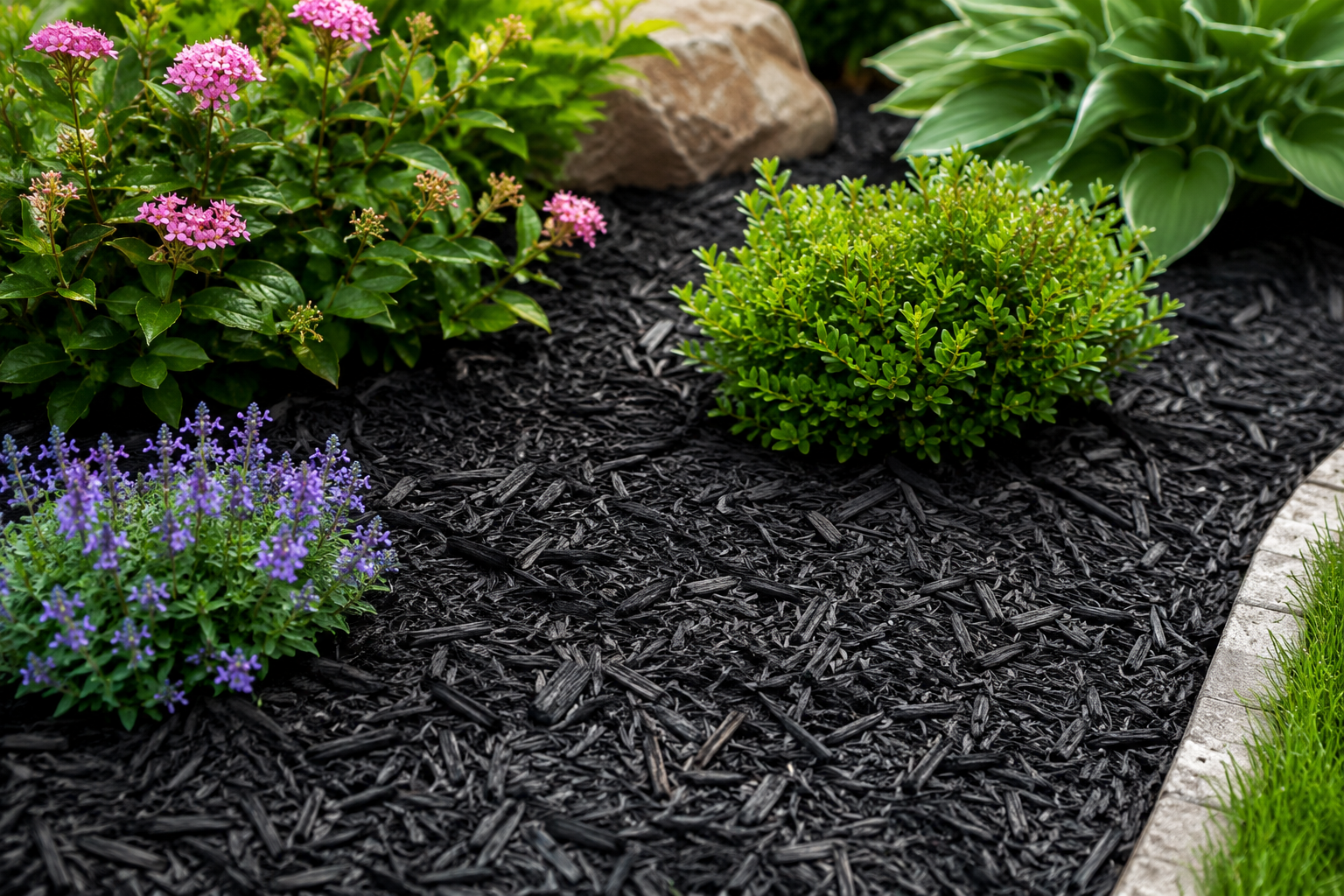
If you’ve walked through a garden center this spring, you’ve probably noticed it. Bags of jet-black mulch now sit stacked next to the usual browns and reds. Black mulch has quietly become one of the most requested landscaping materials in the United States. It looks sharp, holds moisture well, and gives flower beds that crisp, “just landscaped” finish homeowners love to show off.
Before you load up your cart or call a landscaper, though, it’s worth understanding what black mulch actually is. You should also know where it works best and where it might not be the smartest choice for your yard. I’ve spent years working with mulch, soil amendments, and landscape design for residential clients across different climates. Below, I’ll walk you through everything you need for 2026, including a few honest drawbacks that most sales pages conveniently skip.
What Is Black Mulch, Exactly?
Black mulch is typically made from shredded wood, bark, or recycled pallet wood. Manufacturers dye it black using carbon-based or iron-oxide colorants. Reputable brands stick to non-toxic, plant-safe dyes, so the material is generally considered safe for kids, pets, and vegetable gardens once it has cured.
You’ll come across three main categories while shopping.
Dyed wood mulch is the most common type sold at big-box stores and local nurseries. It’s made from ground-up wood chips, often recycled pallets, run through a dyeing process to reach that deep charcoal color.
Rubber mulch comes from recycled tires colored or painted black. It sounds convenient since it doesn’t decompose. However, that also means it never feeds your soil, and it tends to retain more heat than wood-based options.
Natural black mulch comes from naturally dark organic materials, such as composted bark or certain hardwood blends. This type is less common and usually pricier, but it skips synthetic dye entirely.
The Real Benefits of Black Mulch
1. Superior Weed Suppression
Because black mulch is dense and opaque, it blocks sunlight from reaching weed seeds sitting in the soil below. Without light, most weed seeds simply can’t germinate. That means fewer weekends spent on your knees pulling crabgrass out of your flower beds.
2. Moisture Retention
A properly applied layer, generally two to three inches, slows evaporation significantly. This trait proves especially useful in hotter states like Texas, Arizona, and much of the Southeast, where soil can dry out within hours during peak summer. As a result, you’ll likely water less often, which helps keep utility bills in check too.
3. Bold, Modern Curb Appeal
This is honestly the number one reason most homeowners choose it. The deep black tone creates a striking contrast against green shrubs, colorful annuals, and stone pathways. Real estate agents often recommend it before a home sale because it photographs beautifully and signals that a property has been well maintained.
4. Soil Warming in Cooler Climates
Black mulch absorbs heat from the sun, and that warms the soil underneath. In northern states such as Minnesota, Michigan, or Ohio, this can extend the growing season slightly and give spring plantings an earlier start. That said, this same heat-absorbing trait becomes a drawback in hot climates, which we’ll cover shortly.
5. Erosion and Soil Protection
Mulch of any color helps cushion soil from heavy rain, reducing splash erosion and soil compaction. It also limits nutrient runoff, keeping your topsoil where it belongs instead of washing into the storm drain.
The Drawbacks Nobody Talks About
Here’s where I’ll push back on the typical marketing copy. Black mulch isn’t perfect, and being upfront about its downsides is part of giving you trustworthy advice.
According to a University of California Agriculture and Natural Resources study, black dyed mulch can raise surface temperatures well above nearby plants during peak summer. In fact, the heat given off can resemble asphalt or synthetic turf on a hot afternoon. If you garden in the Southwest, Texas, Florida, or anywhere with intense summer sun, that extra heat can stress plant roots. It can also dry out surface soil faster and scorch tender stems that touch the mulch directly.
Because of that heat buildup, black mulch generally isn’t the best fit for vegetable gardens or raised beds in warm-weather regions. Straw, shredded leaves, or lighter-colored wood mulch typically perform better there, since they reflect sunlight instead of absorbing it.
Dyed mulch can also fade within a single growing season, especially in areas with intense UV exposure. You may need to refresh it yearly to keep that rich black look. Over time, this adds to the long-term cost compared to natural bark mulch, which simply grays instead of looking patchy.
Finally, cheaper mulch brands sometimes use lower-quality dyes or source wood from treated lumber. Old decking or pallets can carry contaminants you don’t want near your soil. That’s a real quality concern, so sourcing matters more than color here.
Where Black Mulch Works Best
Black mulch shines in ornamental beds, around trees for a defined edge, along walkways, and in front-yard landscaping where appearance matters most. It’s also a favorite for HOA communities and commercial properties, since it holds its shape and color reasonably well through a full season.
Raised planters that get partial shade are another good fit. So are foundation plantings on the north or east side of a house, along with mixed perennial beds where you want flowers to visually pop against a dark backdrop.
If you live somewhere with brutal summer heat, consider reserving black mulch for shaded areas. For beds that get full afternoon sun, a lighter mulch or living ground cover usually performs better.
How to Buy Black Mulch: A Practical Guide
Standing in front of a wall of mulch bags, a few details separate a good purchase from a wasted one.
Check the source material. Look for labels indicating “virgin wood” or “certified recycled wood.” Avoid anything vague about origin, since that’s often a sign of lower-quality filler material.
Ask about the dye. Trustworthy brands use carbon-based or iron-oxide dyes, both considered safe for gardens. If a supplier can’t explain what’s in their dye, treat that as a red flag worth taking seriously.
Buy in bulk for larger jobs. For anything over 10 cubic yards, bulk delivery from a local landscape supply yard is almost always cheaper than bagged mulch from a hardware store. Many yards across the U.S. deliver directly and can even blow mulch into place for large properties.
Time your purchase. Prices typically dip in late summer and early fall as demand slows after the spring rush. If you’re not in a hurry, waiting until September or October can save a meaningful amount on a full pallet.
Calculate your coverage. One cubic yard covers roughly 100 square feet at a three-inch depth. Measuring your beds beforehand prevents the frustrating scenario of running short mid-project, or worse, over-ordering and wasting money.
How to Apply Black Mulch the Right Way
Application matters just as much as the mulch itself. Start by clearing existing weeds and debris from the bed. Then lay a two to three inch layer evenly across the soil. Avoid piling mulch directly against tree trunks or plant stems, since trapped moisture there can lead to rot and pest problems. Landscapers often call this mistake “mulch volcanoing.”
Water the area lightly right after applying it. Doing so helps the mulch settle into place and reduces the chance of it blowing around during the first few windy days. If you’re mulching around younger plants, leave a small gap of bare soil immediately around the stem so airflow can reach the base.
Black Mulch and Regional Climate: A Quick U.S. Guide
Different regions call for slightly different strategies. Black mulch works well nearly everywhere in the Pacific Northwest and Northeast, thanks to milder summers. The Midwest is a solid all-around fit too, though beds in full sun during July and August benefit from a slightly thicker application to buffer the heat.
Humidity combined with heat means black mulch can encourage faster fungal growth in the Southeast and South, including states like Georgia, Alabama, and Louisiana, if it’s piled too thick. Two inches is usually plenty there. Meanwhile, in the arid Southwest, gardeners should lean toward using black mulch only in shaded or partially shaded beds, saving lighter-colored gravel or mulch for sun-scorched areas.
Sustainability Considerations
Many black mulch products today are made from recycled wood waste. This keeps material out of landfills and gives it a second useful life. If sustainability matters to your purchasing decision, ask suppliers whether their product carries certification through a recognized wood-recycling program. It’s also worth asking whether the dye is plant-based rather than petroleum-derived. This small question can meaningfully reduce your garden’s environmental footprint without sacrificing the look you want.
For a broader comparison of mulch colors and materials, including red, brown, and natural hardwood options, take a look at our full mulch color and material comparison guide to see which fits your specific landscaping goals.
Final Thoughts
Black mulch earns its popularity honestly. It suppresses weeds, holds moisture, and gives a garden a clean, professional look that’s hard to match with other materials. That said, it isn’t a one-size-fits-all solution. In regions with scorching summer sun, the heat-absorbing quality can work against you rather than for you.
The smartest approach is matching the mulch to your climate and your specific beds, rather than assuming one product works everywhere. A little planning before you buy will save you money, protect your plants, and keep your garden looking its best well into next season.
Frequently Asked Questions
Is black mulch safe for vegetable gardens? Generally, yes, as long as it comes from a reputable supplier using non-toxic, plant-based dyes. That said, many gardeners still prefer straw or untreated wood mulch for vegetable beds, since black mulch can raise soil temperature more than vegetables typically need, especially in warmer regions.
Does black mulch attract termites or other pests? Not inherently. Some suppliers note that certain dyes may mildly deter insects like termites and roaches, though this isn’t a guaranteed pest-control method. Keeping mulch a few inches away from your home’s foundation remains the best practice regardless of mulch color.
How often should I replace black mulch? Most homeowners refresh black mulch once a year since the dye can fade with sun exposure. If you’re mainly concerned with function rather than color vibrancy, though, a two-inch top-up every 12 to 18 months is usually sufficient.
Will black mulch harm my plants in hot climates? It can, if applied in full-sun areas during peak summer. Research shows dyed black mulch can heat surfaces significantly more than surrounding plants can tolerate. Because of that, it’s smart to use it in partially shaded beds if you live somewhere with intense heat.
Is black mulch more expensive than regular mulch? Slightly, yes. Dyeing adds a small cost to production, though the difference is usually modest, generally just a few dollars more per cubic yard compared to natural wood mulch.
Can I mix black mulch with other mulch colors? Absolutely, and many landscapers do exactly that to create visual zones within a yard. Just keep in mind that colors can bleed slightly when freshly applied and watered, so avoid mixing bags until the initial curing period has passed.
What’s the difference between black mulch and black rubber mulch? Wood-based black mulch decomposes over time and adds organic matter to your soil. Rubber mulch, on the other hand, doesn’t break down and can retain even more heat. That’s why it’s more common in playgrounds than garden beds.
Where can I buy quality black mulch near me? Most local landscape supply yards, garden centers, and home improvement stores carry it seasonally, with the widest selection typically available in spring. For larger projects, calling a bulk supplier directly is usually more cost-effective than buying bagged mulch.