

If you’re picking landscaping rock for your yard, here’s the quick version. Prices generally run from about $10 per ton for basic crushed stone up to $600 or more per ton for premium flagstone and large boulders. Specifically, most common decorative rock — river rock, pea gravel, lava rock — falls somewhere in the $45 to $180 per ton range. Your choice should come down to function first, then style. For example, pea gravel and crushed stone work best for pathways and drainage. Meanwhile, river rock and boulders work best as decorative accents or dry creek beds. Below is a full breakdown of each rock type, realistic pricing, and where each one performs best in a real yard.
Quick Answer: How Much Does Landscaping Rock Cost?
Expect to pay $10 to $50 per ton for basic crushed stone or gravel. Meanwhile, decorative river rock runs $45 to $180 per ton. Lava rock, on the other hand, costs $80 to $250 per ton. Boulders run $100 to $600 per ton, depending on size. Flagstone runs highest, often $200 to $600 or more per ton. For a full project including delivery and installation, homeowners typically spend anywhere from $300 for a small decorative bed up to several thousand dollars for a larger yard. On top of material costs, delivery adds roughly $75 to $150. In addition, professional installation typically adds another $40 to $140 per square yard, depending on complexity. Since prices vary by region and supplier, treat these as planning ranges, not a quote, and always get a local price before budgeting a project.
Landscaping Rock Types and What They’re Actually Good For
Not every rock does the same job. Retail displays often lump them together as generic “landscaping rock,” but the categories actually work very differently in practice. So here’s how the main types break down.
Pea gravel. Small, rounded stones, typically 3/8 inch in diameter, that shift comfortably underfoot without the sharp edges of crushed stone. It runs roughly $45 to $95 per ton. As a result, this is a strong choice for pathways, patios, and decorative garden beds where you want a soft, walkable surface. However, it’s less suited to sloped areas. Since the rounded shape doesn’t lock together, it can migrate downhill over time.
Crushed stone. Angular, machine-crushed rock that interlocks and compacts well. It’s generally priced between $10 and $80 per ton, depending on size and material. Thanks to that interlocking quality, this is the workhorse of the category. In fact, it’s what you want under a driveway, as a sub-base for pavers, or anywhere you need a stable, load-bearing surface rather than a decorative one.
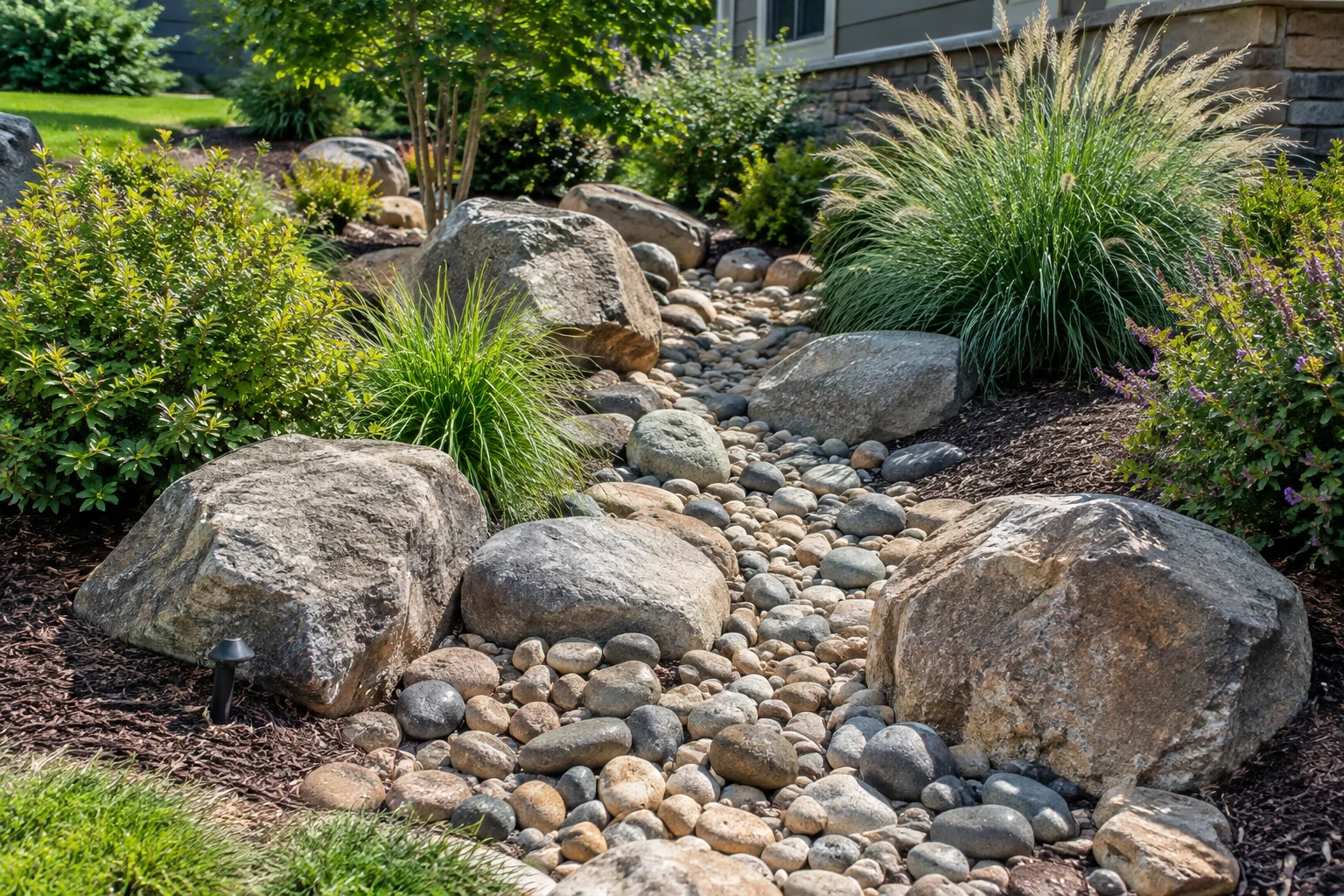
River rock. Smooth, naturally rounded stones, typically larger than pea gravel, running from about $45 up to $180 per ton. Polished or premium colored varieties, however, reach considerably higher. This is the go-to for dry creek beds, drainage swales, and decorative borders where you want a natural, water-worn look. On the other hand, it’s not a great choice for walkways, since the larger, rounded stones can roll underfoot.
Lava rock. Lightweight, porous, and typically red or black, priced around $80 to $250 per ton. Because it’s lighter than most other rock types, it covers more area per ton and costs less to deliver and install for the same visual footprint. As a result, homeowners commonly use it around fire pits, in xeriscaped beds, or anywhere they want strong color contrast against plantings. That said, its porous texture also makes it a poor choice underfoot, since it can be uncomfortable to walk on barefoot and tends to trap debris more than smoother rock.
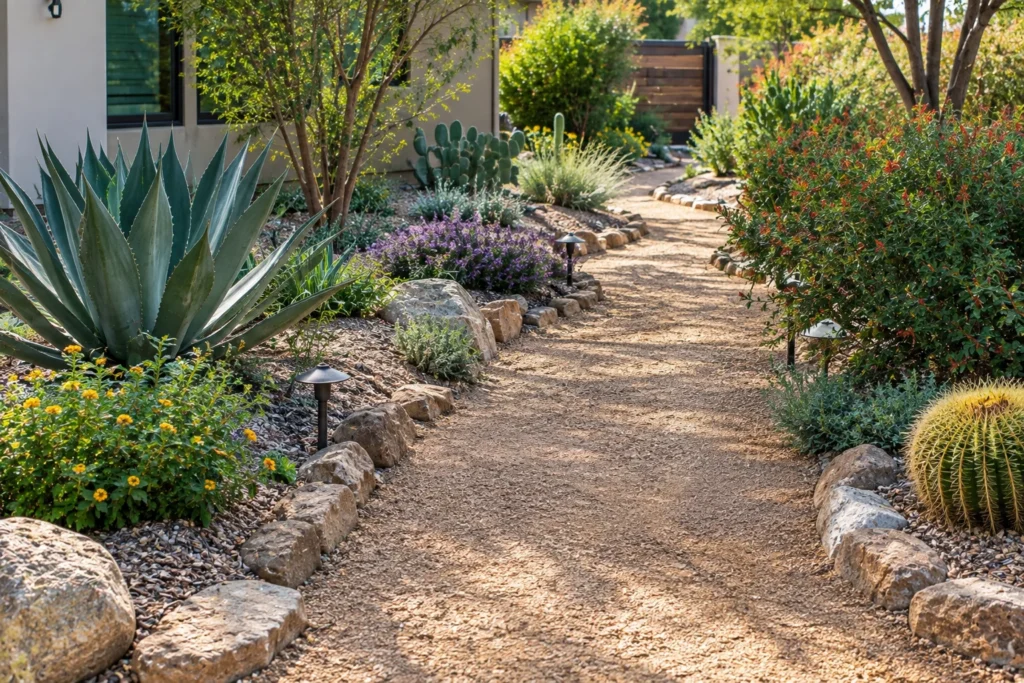
Decomposed granite. A finer, gravel-like material with small particles that compact into a firm, semi-solid surface. It’s typically priced $45 to $120 per ton. Consequently, it’s a popular choice for pathways in drought-tolerant or xeriscape designs, particularly in the Southwest, since it drains well and gives a clean, natural look without the cost of pavers.
Boulders. Large individual stones sold by weight, generally $100 to $600 per ton depending on size and density. These work well as focal points, retaining features, or accents in larger beds. However, they’re heavy enough that placement usually requires equipment rather than manual labor, once you get beyond a size you can lift yourself.
Flagstone. Flat, irregularly shaped stone slabs used for stepping stones, patios, and walkways. It’s typically the most expensive category, at $200 to $600 or more per ton. Still, homeowners pick it more for its clean, finished look than for budget-friendliness.
Riprap. Larger, rough stones used specifically for erosion control along slopes, embankments, or waterways. Prices run roughly $20 to $250 per ton depending on size. Unlike most rock on this list, this one is functional rather than decorative — you use it because water is actively eroding a slope, not because you like the look of it.
Comparison Table
| Rock Type | Price per Ton | Best Use | Least Suited For |
|---|---|---|---|
| Pea gravel | $45–$95 | Pathways, patios, garden beds | Slopes, driveways |
| Crushed stone | $10–$80 | Driveways, drainage, base material | Decorative beds |
| River rock | $45–$180 | Dry creek beds, borders, drainage | Walkways |
| Lava rock | $80–$250 | Fire pits, xeriscaping, color accents | Barefoot areas |
| Decomposed granite | $45–$120 | Xeriscape pathways, drought-tolerant design | Wet or muddy climates |
| Boulders | $100–$600 | Focal points, retaining features | Small budgets, DIY-only projects |
| Flagstone | $200–$600+ | Patios, stepping stones, premium walkways | Tight budgets |
| Riprap | $20–$250 | Erosion control on slopes and waterways | Decorative applications |
How to Choose the Right Rock for Your Project
Start with function, not color. It’s tempting to pick landscaping rock based on which one looks best in a photo. But the wrong shape in the wrong spot creates real problems. For instance, rounded rock on a slope migrates downhill after heavy rain. Similarly, sharp crushed stone under bare feet near a pool or patio isn’t pleasant. And porous lava rock in a high-traffic walkway breaks down faster than denser stone.
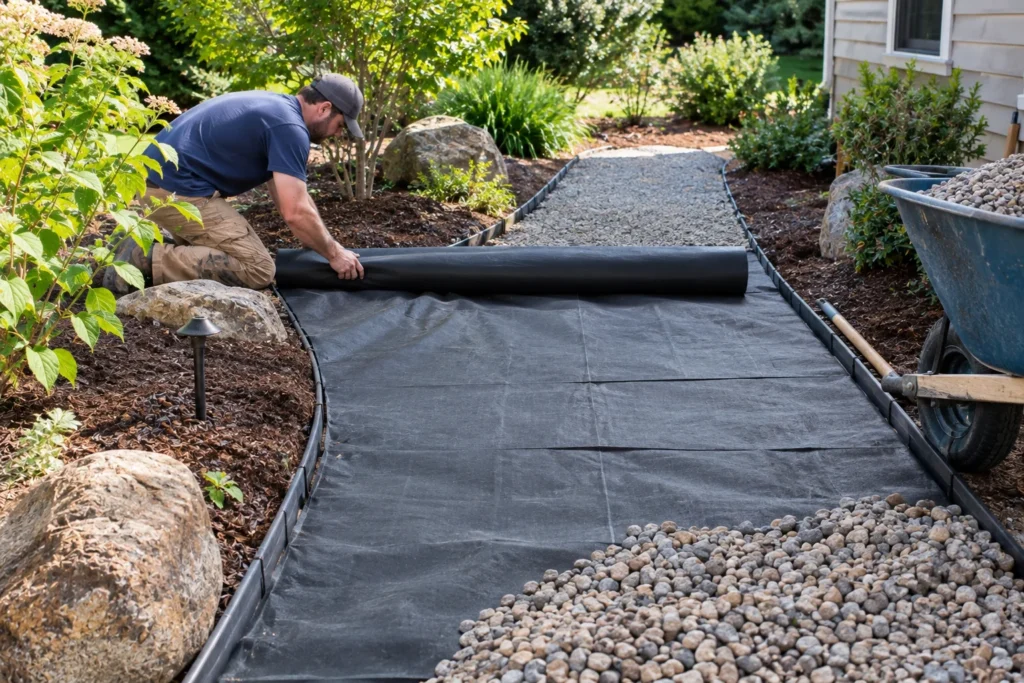
Next, think about drainage. Nearly every landscaping rock project benefits from a weed barrier fabric underneath. This suppresses weed growth and keeps the rock from slowly sinking into the soil beneath it over the years. In fact, skipping this step is one of the most common regrets homeowners report after a rock installation. Without it, rock beds often need topping off within a few years as material works its way into the ground.
Finally, match the rock size to the job. As a rough rule, smaller stones like pea gravel work best for walking surfaces and decorative beds. Meanwhile, mid-size river rock and crushed stone work well for drainage and borders. Larger rock, from bull rock up through boulders, works best for structural or accent purposes rather than ground cover you’ll walk across regularly.
How Much Rock Do You Actually Need?
This is where a lot of first-time buyers either overspend or run short. As a general guideline, one ton of typical landscaping rock covers roughly 55 to 135 square feet at a standard 2 to 4 inch depth. However, this varies by rock size and density. Larger, heavier rock, for example, covers less area per ton than smaller gravel.
To estimate your own project, start by measuring the square footage of the area you’re covering. Then decide on a depth: 2 inches for a thin decorative layer, 3 to 4 inches for most standard applications, and deeper for erosion control or heavy foot traffic. After that, use those numbers to calculate cubic yards needed, then convert to tons based on your chosen rock’s density. Most suppliers and landscaping calculators can help with this conversion if you give them the square footage and desired depth, so it’s worth calling ahead rather than guessing and ordering twice.
DIY vs. Professional Installation
Smaller decorative beds, borders, and simple pathways are reasonable DIY projects for most homeowners. This is especially true with lighter materials like pea gravel or lava rock, which don’t require heavy equipment to move and spread.
On the other hand, larger installations generally call for professional help. This includes anything involving boulders, extensive grading, drainage correction, or erosion control. Beyond the physical labor involved in moving heavy material, a professional crew will also handle proper grading and drainage planning. That matters more than most people expect, since rock installed on poorly graded ground tends to shift, pool water in the wrong spots, or wash out during heavy rain.
Because of this added expertise, labor costs for professional installation typically run $40 to $140 per square yard, on top of material and delivery costs, depending on project complexity. So factor that into your budget if you’re not planning to do the work yourself.
Common Mistakes to Avoid
Skipping the weed barrier. As mentioned above, this is the single most common oversight, and it leads to ongoing maintenance headaches as weeds push through and rock settles into bare soil.
Choosing rock size based on looks alone. A stunning photo of large river rock in a walkway, for instance, doesn’t account for how uncomfortable and unstable that surface actually feels underfoot in daily use.
Underestimating quantity needed. Ordering too little rock means a second delivery, often at a higher per-ton price for a smaller quantity. So measure carefully, and consider ordering slightly more than your calculation suggests, since actual coverage often varies a bit from theoretical estimates.
Ignoring drainage and grading. Rock placed on poorly sloped ground will shift and pool water. As a result, this undermines both the appearance and function of the installation, sometimes within the first year.
Not accounting for regional climate. Porous rock types, for example, can trap moisture and encourage algae or moss growth in consistently wet, humid climates like the Pacific Northwest or Southeast. Meanwhile, lighter-colored rock can reflect significant heat in already-hot climates like the Southwest, sometimes affecting nearby plantings.
U.S. Regional Considerations
Climate genuinely shapes which rock choice makes sense. For instance, in the Southwest, decomposed granite and light-colored river rock are common choices for xeriscaping. That’s because they pair naturally with drought-tolerant plantings and drain quickly during the region’s occasional heavy rains. Wetter climates like the Pacific Northwest or Southeast, however, call for a different approach. There, denser, less porous rock tends to hold up better against moss and algae growth than more porous options like lava rock. Colder Northeast and Midwest climates bring their own consideration, too: think about how rock interacts with snow removal, since smaller, angular gravel can get scattered by plows or shovels more easily than larger, heavier river rock or boulders.
Additionally, local availability affects pricing more than most buyers expect. Rock quarried closer to your region will generally cost less than material trucked in from farther away. So a rock type that’s a premium option in one part of the country might be a budget-friendly local option in another.
If you’re planning a broader yard or exterior renovation alongside your rock landscaping project, PlazmaHomes’ decomposed granite guide covers cost, uses, and pros and cons in more depth for one of the most popular landscaping rock options.
For general guidance on drainage and erosion control principles relevant to larger rock installations, the USDA Natural Resources Conservation Service publishes technical resources on erosion control that are useful for planning larger slope or waterway projects.
Frequently Asked Questions
What’s the cheapest landscaping rock option?
Basic crushed stone is generally the least expensive option, typically running $10 to $50 per ton depending on size and region. It’s also the most functional choice for driveways and base material rather than decorative applications.
Do I need a weed barrier under landscaping rock?
Yes, in almost all cases. A weed barrier fabric suppresses weed growth and keeps rock from gradually sinking into the soil below, which in turn reduces how often you’ll need to add more material over time.
How deep should landscaping rock be?
Most decorative applications use 2 to 4 inches of depth. Thinner layers work for purely decorative beds, while pathways and higher-traffic areas generally benefit from the deeper end of that range.
Can I install landscaping rock myself?
Yes, for smaller projects like decorative beds, borders, or simple pathways, particularly with lighter materials like pea gravel. However, larger projects involving boulders, grading, or drainage correction generally benefit from professional installation.
How much rock do I need for my yard?
One ton typically covers 55 to 135 square feet at a standard 2 to 4 inch depth, though this varies by rock type and size. So measure your area and desired depth, then check with your supplier for an exact conversion to tons.
What’s the best rock for a dry creek bed?
River rock is the standard choice. Since its naturally rounded, water-worn appearance mimics an actual streambed, it handles occasional water flow well.
Does landscaping rock need to be replaced over time?
Not entirely, but most installations need occasional topping off, especially without a weed barrier. That’s because rock naturally settles and works into the soil over years of exposure to rain and foot traffic.
Is landscaping rock a good alternative to mulch?
It depends on your goals. Rock is more permanent and requires less frequent replacement than mulch, but it doesn’t improve soil health or retain moisture the way organic mulch does. It can also reflect more heat in already-hot climates, which may stress nearby plants.