

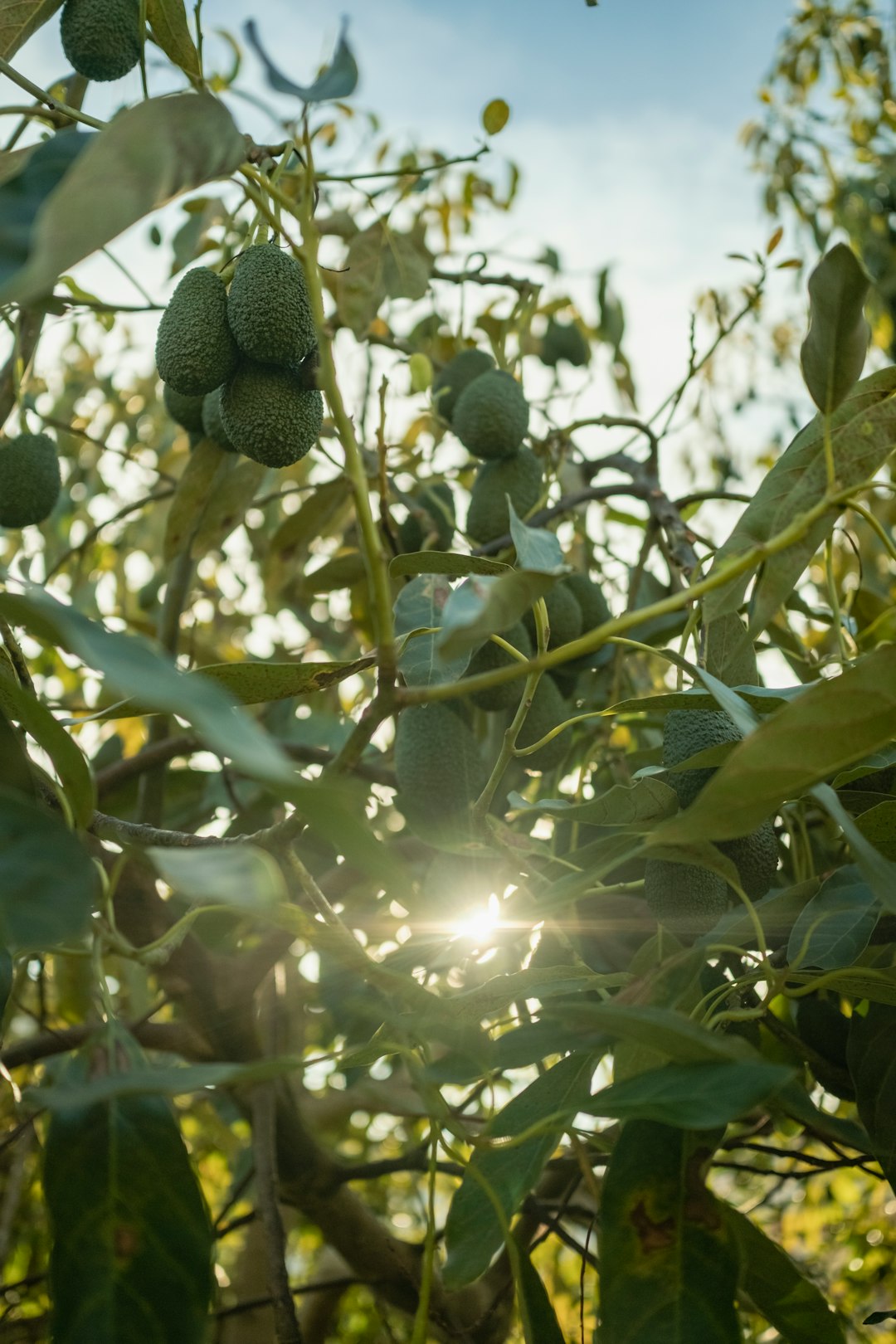
A grafted Hass avocado tree usually gives its fruit two to four years after planting. It does best in USDA zones 10 and 11 where winter lows rarely drop below the 20s °F. Zone 9b can work with a spot and frost protection. Outside those zones a Hass avocado tree is a container project or a gamble, not a backyard fruit tree.
That is the version. What most guides gloss over is that your winter low, your soil drainage and the kind of tree you buy matter more than the zone number. A Hass avocado tree planted in clay in a frost pocket can fail in a zone where the same variety would thrive on a sloped well‑drained lot.
Quick facts about the Hass avocado tree
| Factor | What to know |
|---|---|
| Best-suited USDA zones | 10–11 (marginal in 9b with protection) |
| First fruit from a grafted tree | Typically 2–4 years |
| Seed-grown tree | Often 5–10+ years, and fruit may not resemble Hass |
| Mature size, unpruned | Roughly 30 feet or taller; commonly kept smaller by pruning |
| Flower type | A-type |
| Sun | Full sun, with wind protection |
| Biggest threats | Poor drainage (root rot), frost, salty water, strong wind |
Where a Hass avocado tree will actually grow
Hass is a Guatemalan– hybrid. It is the commercial variety in California and the avocado that most Americans see in the grocery store. It is a tree so it prefers mild winters and does not do well in hard frost or extreme heat.
USDA zones are a rough guide. The hardiness zone is based on annual minimum temperature but avocados react differently depending on how long the cold lasts, how old the tree is and the local microclimate. Hass avocados are usually described as being damaged at around 28–30°F. Young trees are more sensitive than mature ones. Also a short drop in temperature causes damage, then a full night of freezing. So take that temperature range as an idea, not a strict rule.
Hass avocado tree zones by region
| Region | Outlook for Hass |
|---|---|
| Coastal Southern California, parts of the Central Coast | Excellent. This is the variety’s home territory. |
| Inland Southern California | Good, but watch for frost pockets and summer heat. |
| Southern Arizona | Challenging. Frost and extreme summer heat are both problems. Use microclimates and shade, or consider other varieties. |
| Gulf Coast and South Texas | Possible in the mildest areas, with a real risk in a hard-freeze year. |
| Florida | Often a poor fit. Humid conditions favor other varieties; check University of Florida/IFAS recommendations for your county. |
| Hawaii | Can work depending on elevation and rainfall. |
| Pacific Northwest, Midwest, Northeast | Not an in-ground tree. Container only, with winter protection indoors. |
If you’re mapping out what else will thrive alongside an avocado in a warm yard, our Sylvester palm growing and care guide covers another heat-loving tree and its cold limits.
The Florida entry surprises people. Hass is a California favorite. Florida heat and humidity are a different environment and varieties chosen in Florida tend to handle disease pressure better. If you are in the Southeast ask your extension office for recommended varieties, in your county before buying.
A better question than “what’s my zone?”
- What was the lowest temperature in my yard in the last five winters? Your own thermometer beats a zone map.
- Does cold air pool in my yard? Low spots and the bottom of slopes get colder than the tops.
- Do I have a south- or west-facing wall? Planting near a wall or under an eave can add a few degrees of protection on frosty nights.
Hass avocado tree fruit timeline: how long until you get avocados
People often get this part wrong because two clocks are running: how long until the tree first fruits and how long each fruit takes to mature.
Year of planting. Nursery trees are often 3 to 5 feet tall. Your goal is root establishment, not fruit. If it blooms in the year that’s fine but don’t expect a harvest.
Years 2–4. University of California Cooperative Extensions home-garden variety table says the cultivars it lists bear fruit in 3 years, which matches what most nurseries say for grafted trees. A seedling started from a grocery-store pit is a story: it can take many years and may never produce the Hass fruit you wanted because avocados don’t grow true from seed.
Years 5–7 and beyond. Crops usually get larger as the canopy fills out. Expect yields. Avocados are known for bearing with a heavy year often followed by a lighter one.
From flower to fruit. Hass typically blooms in winter to spring and the fruit takes many months to mature, often the better part of a year or more depending on climate. One useful quirk: Hass fruit generally doesn’t ripen on the tree. It matures there. Softens only after harvest. That means you can often leave mature fruit hanging and pick as needed though leaving it long can affect quality and the next year’s crop.
After picking. A mature Hass usually softens in a week at room temperature. The skin darkens as it ripens. A gentle squeeze is more reliable than color.
A practical way to tell if fruit is mature enough: pick one, set it on the counter and see whether it softens without shriveling over the one to two weeks. If it shrivels or stays rubbery, wait longer.
How to plant a Hass avocado tree
Buy a grafted tree. A grafted tree is a branch of Hass joined to a rootstock, which’s why it fruits sooner and produces true Hass. Look for a graft union near the base, a straight trunk and healthy glossy leaves. Avoid trees with circling roots or wilted foliage.
Choose the site carefully. Full sun, some wind protection and room to grow. Avocado branches are brittle so avoid spots exposed to gusts.
Prioritize drainage above everything. The common cause of death in home avocado trees is root rot from waterlogged soil usually caused by Phytophthora cinnamomi. If your soil is clay or water pools after rain, plant on a mound at least a foot high and wide or on a slope. Planting a bit high is safer than planting level.
Do not bury the graft or the trunk. Set the root ball so its top is at or slightly above the surrounding soil. Do not pile soil or mulch against the trunk.
Mulch,. Keep it back. Wood chips help hold moisture. Feed soil life. Keep them an inch from the trunk to reduce rot risk.
Protect the trunk from the sun. Young avocado bark can sunburn. A diluted white latex paint on the trunk or shade cloth is a common remedy.
Watering, feeding, and pruning
Watering. I have learned that avocado trees have roots and need steady moisture but not soggy soil. For avocado trees I recommend small frequent watering close to the root ball then spreading the water further as the roots grow. UC advisors say a mature avocado tree can use eight gallons of water each day which helps you understand how much a large tree needs when the weather is warm. Water avocado trees less often instead of a little water every day. Allow the top few inches of soil to dry slightly between waterings.
Water quality. I have seen that avocado trees are sensitive to salts. If your irrigation water has salt levels or if you notice leaf tip burn I suggest occasional deep leaching irrigation to move salts below the root zone.
Feeding. I advise using a fertilizer made for avocados or citrus following the label rates and giving trees only a light dose. If you see yellowing between leaf veins that can signal micronutrient shortages like zinc or iron. Do not guess. A soil or leaf test is cheaper than treating the problem.
Pruning. I know that an unpruned Hass can grow so big that it is hard to harvest. Many home growers top the tree early. Keep it at a manageable height often ten to fifteen feet. I suggest pruning lightly. Avoiding heavy cuts, during hot weather because newly exposed branches can burn in the sun.
Pollination: do you need a second avocado tree?
Hass can produce fruit on its own. Pairing Hass with another tree can increase yield. Hass carries an A‑type flower. Extension materials list Hass, Reed, Lamb Hass and Pinkerton among A‑flower types and avocado is mainly pollinated by bees. B‑type varieties such as Fuerte, Bacon or Zutano open their flowers on a daily schedule and can improve cross‑pollination.
If one tree fits on the property and the goal is maximum fruit UC notes that Lamb Hass appears to set more fruit than Hass shares a Hass‑like season and works well as a pollinator for Hass. It is worthwhile to ask the nursery about this option.
Growing a Hass avocado tree in a container
If you live outside the zones a container is really your only practical choice and it can work—just with a few important caveats.
- Use a pot with very good drainage holes. Start with at least 20 to 25 gallons for a young tree and go bigger as the tree grows.
- Keep the container in the place you can find. A dim window inside your home usually won’t give light for the tree to produce fruit.
- Move the container indoors. Into a sheltered area before temperatures start to drop near freezing. Cold damage is a risk.
If you want fruit from a pot, ask about compact or dwarf avocado varieties bred for container life. Hass can survive in a pot, but it isn’t naturally compact. If you’re building a patio of warm-climate plants, our dwarf banana tree growing and care guide covers another subtropical plant that handles container life well.
Common Hass avocado tree mistakes
Overwatering, especially in clay. It looks like drought, with wilting and leaf drop, so people water more and finish the tree off.
Planting in a frost pocket. One cold night in a low spot can undo years of growth.
Starting from a pit and expecting grocery-store Hass. It will grow into a tree, but fruit quality and timing are unpredictable.
Heavy mulch against the trunk. It holds moisture and invites rot.
Fertilizing hard right after planting. Young roots are sensitive, and too much nitrogen can burn them.
Expecting the same volume every year. Light and heavy years are normal.
Is a Hass avocado tree right for you?
A Hass avocado makes sense if you live in an area with winters like zones 10 through 11 or a sheltered spot in zone 9b. It also makes sense if you have soil that drains well. You are ready to wait a few years for it to grow. It makes sense if you have a short growing season, hard clay soil or only a shady balcony. In these situations a different type of avocado that is better suited to your area or a plant grown in a container with a plan for winter will be a choice, for your time and money.
Hass avocado tree FAQ
How long does it take a Hass avocado tree to produce fruit?
I have seen that a grafted tree usually fruits within two to four years.. A tree grown from a pit can take far longer and may not produce Hass‑quality fruit.
What is the lowest temperature a Hass avocado tree can handle?
Damage is often reported when temperatures drop into the 20s °F and young trees are especially at risk. How long the cold lasts is just as important as how low the temperature goes.
Can I grow a Hass avocado tree in zone 9?
I find that Zone 9b can thrive in a protected area that offers frost protection for example a frost cloth or a warm wall. Zone 9a however is more risky when frost protection is not guaranteed. Growing in containers is an approach for colder areas.
Do I need two avocado trees to get fruit?
No a single Hass can set fruit. A second tree, with a B‑type flower can improve fruit set in some situations.
Why are the leaves on my avocado tree turning brown at the tips?
Salt buildup from irrigation water or fertilizer happens often. It is a cause of problems. Deep watering sometimes can help wash the salts. Watering much and having issues with roots can also lead to problems with leaves. Always check how well the water drains first.
When is a Hass avocado ripe?
It is ready to pick when it is fully grown. It usually gets ripe after it is picked. Take one, put it on the counter and check if it becomes softer in a week or two without getting dry.
Can I keep a Hass avocado tree small?
Yes, regular pruning is key. Many home growers do it. Start shaping the prune gradually instead of all at once.
Can I grow a Hass avocado tree indoors?
You can keep a tree alive inside your house but growing fruit usually needs a lot of light that most houses don’t have. A sunny and protected place outside during weather is a much better choice. You can keep a tree alive inside your house but growing fruit usually needs a lot of light that most houses don’t have. A sunny and protected place outside, during weather is a much better choice.
Sources & references
- University of California Cooperative Extension, Avocado Production in Home Gardens, a practical overview of varieties, pollination, and irrigation for home growers.
- UC Cooperative Extension (Rios and Bender), Growing Healthy Citrus and Avocados in the Backyard, for flower types and water use.
- University of California Agriculture and Natural Resources, home-garden avocado variety table.
For Florida, Texas, or Arizona, check your state’s extension service for locally tested varieties and current pest guidance. Cold tolerance figures and fruiting times are general ranges and vary by site and tree.